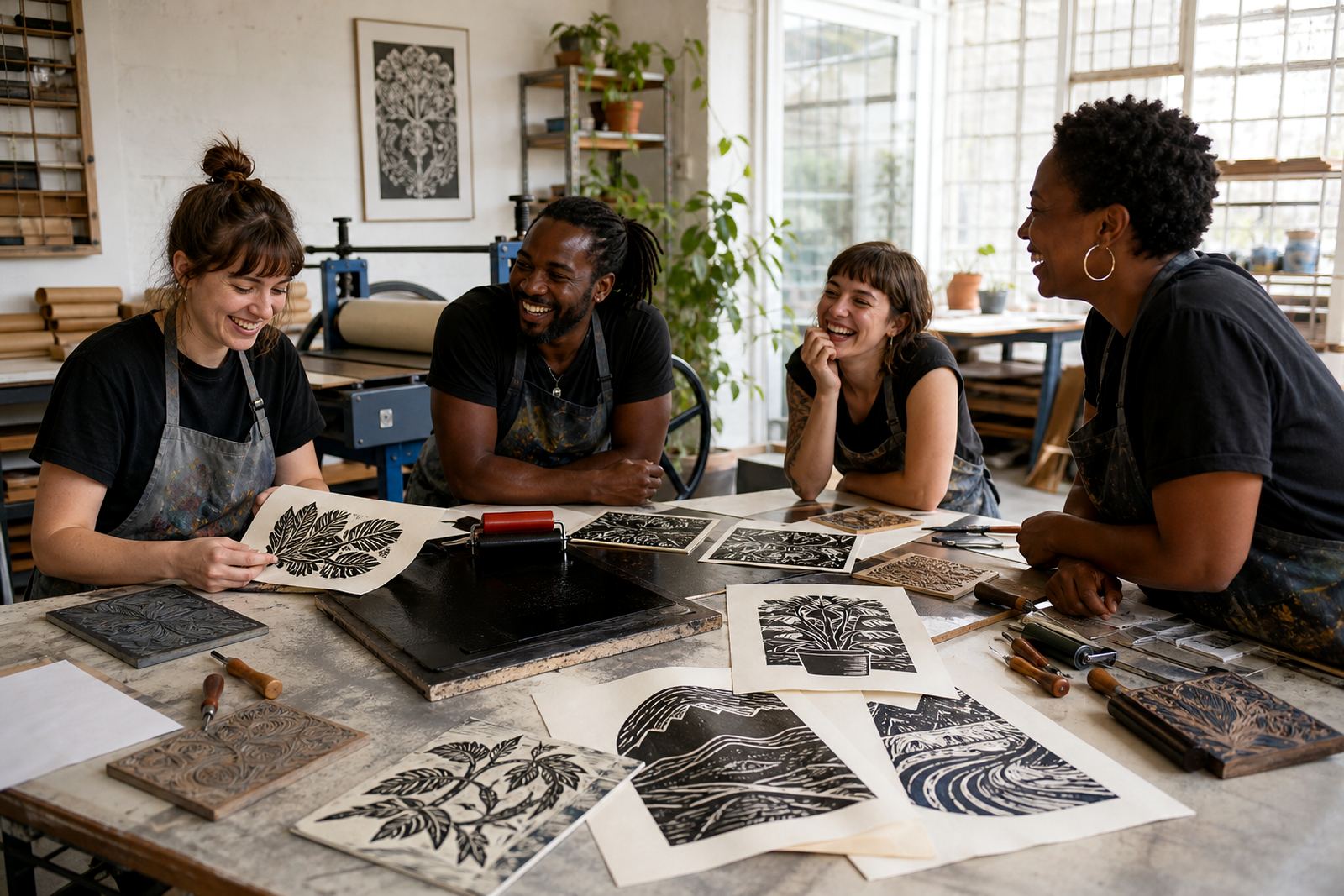
Different groups, one print table
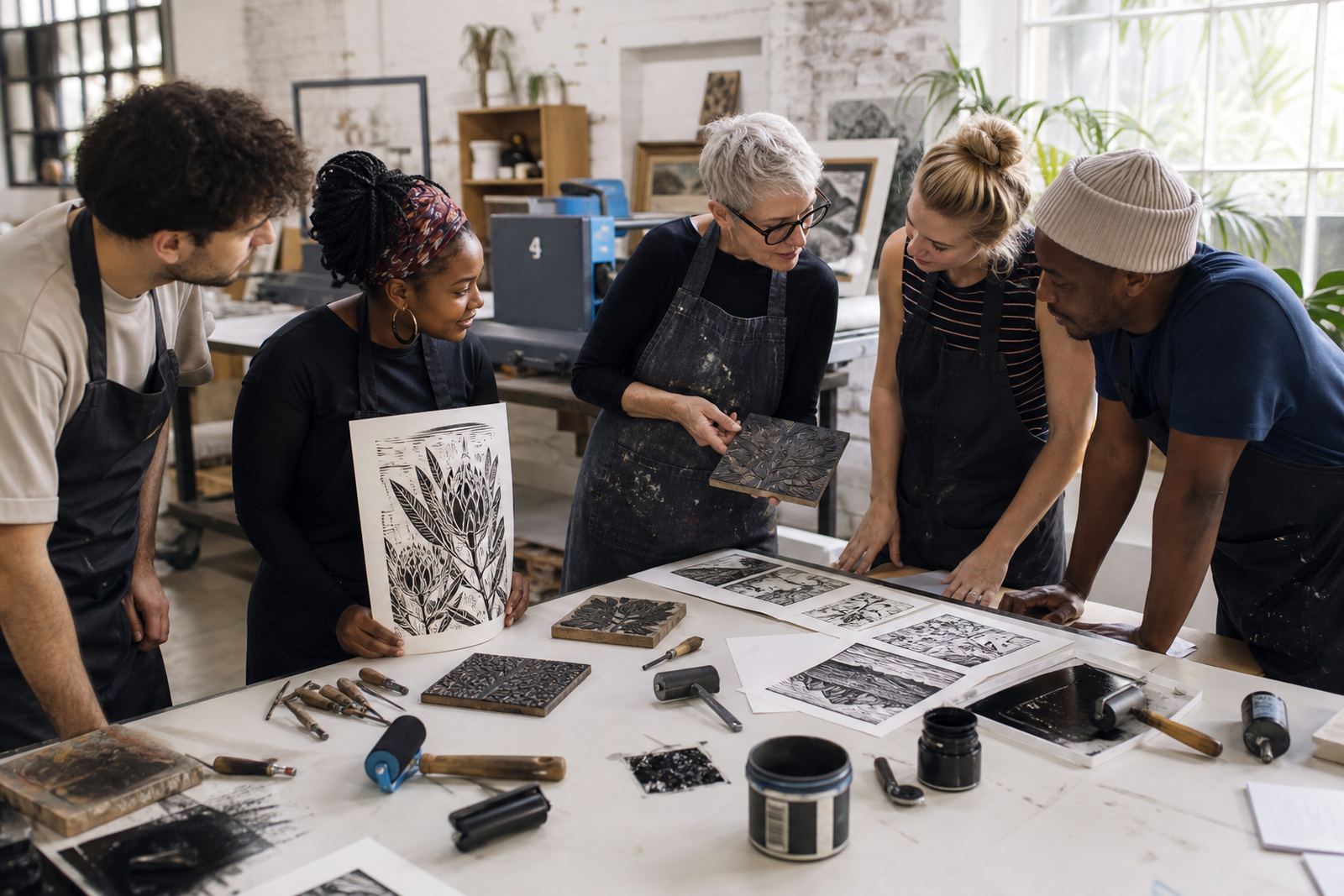
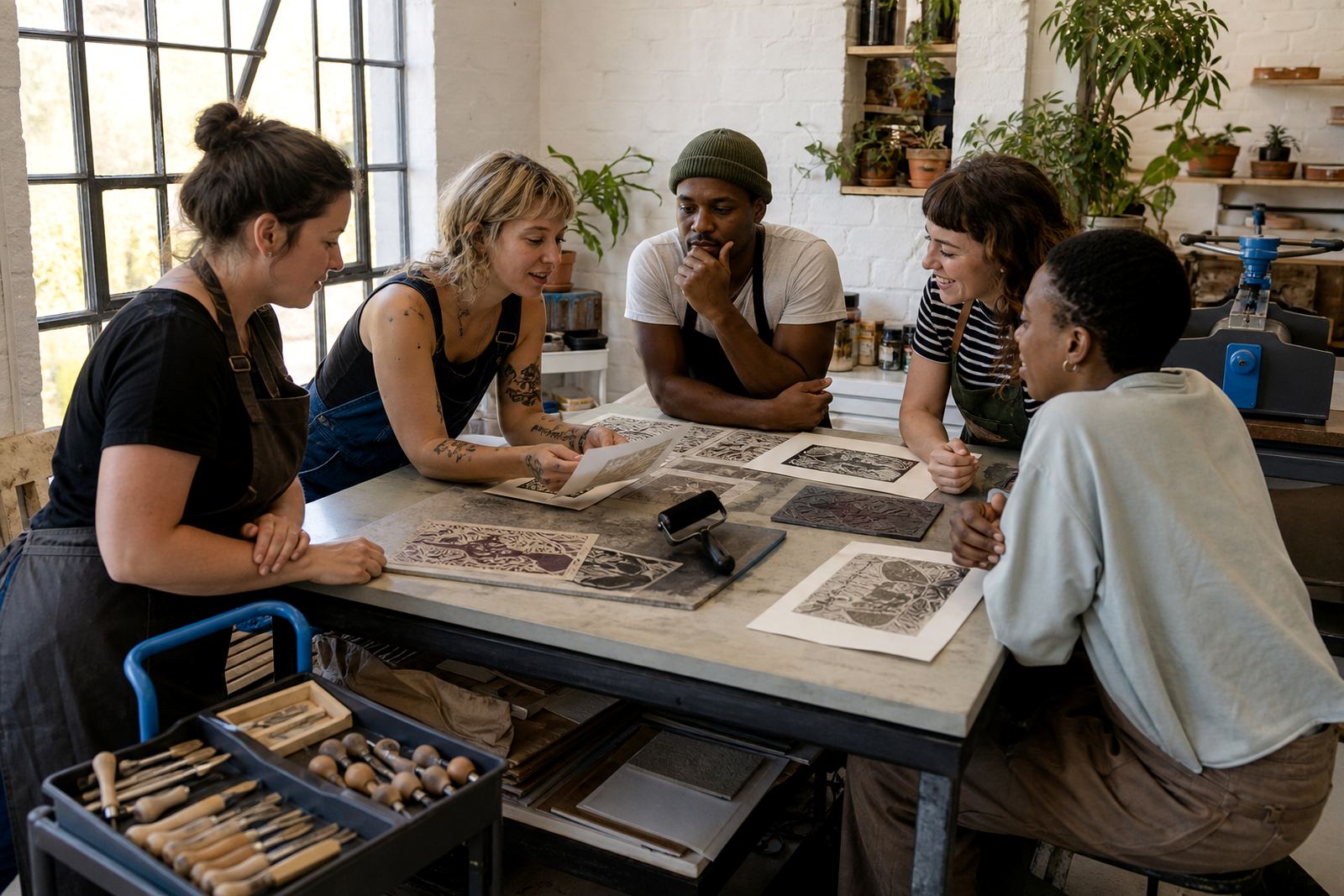
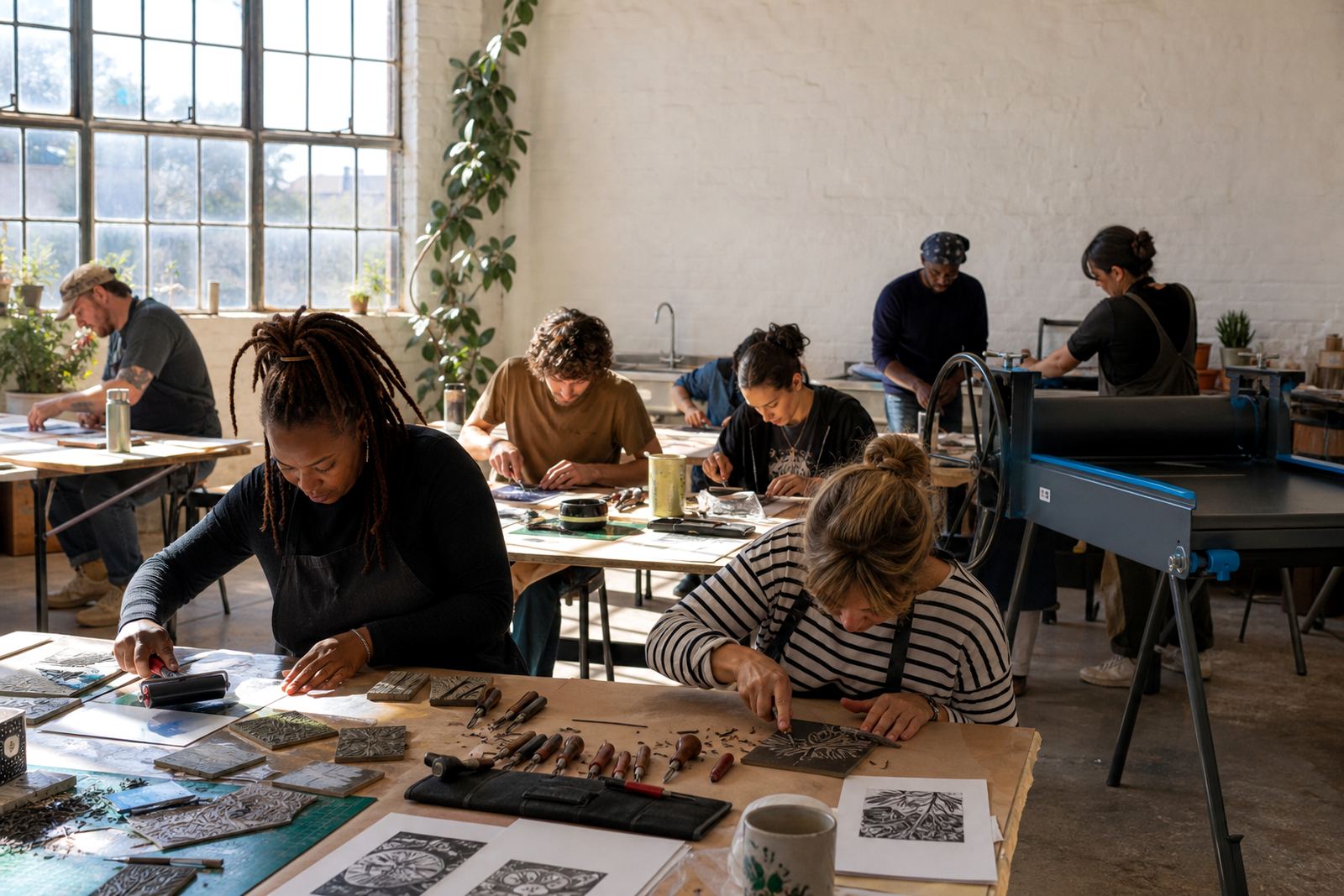
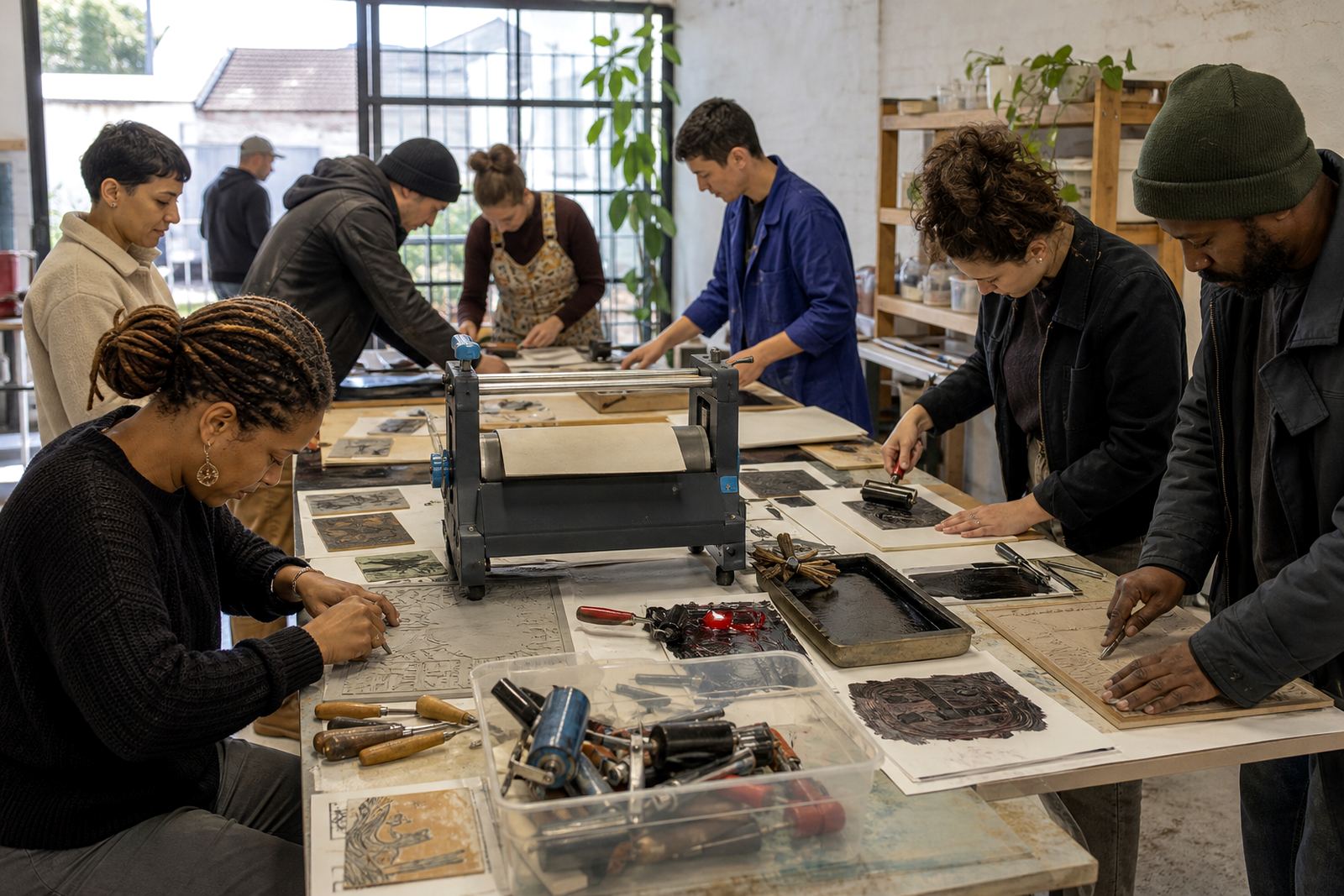
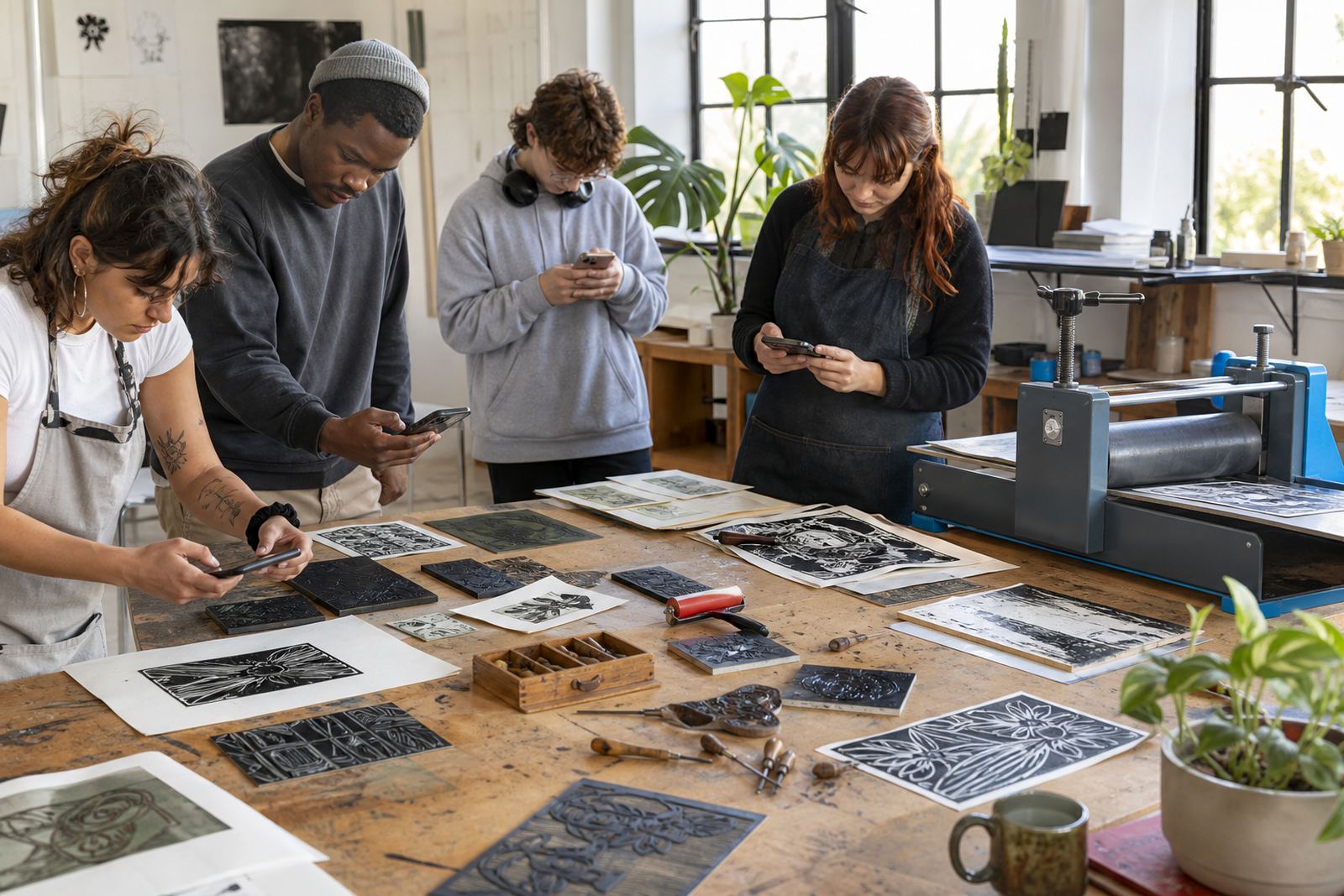
Some people arrive wanting a creative break, others want a skills session with a clear process, and some want a shared activity that keeps a room working together. Lino suits that kind of group. The same method can scale from a quiet studio lesson to a lively school class or a team session with multiple workstations.
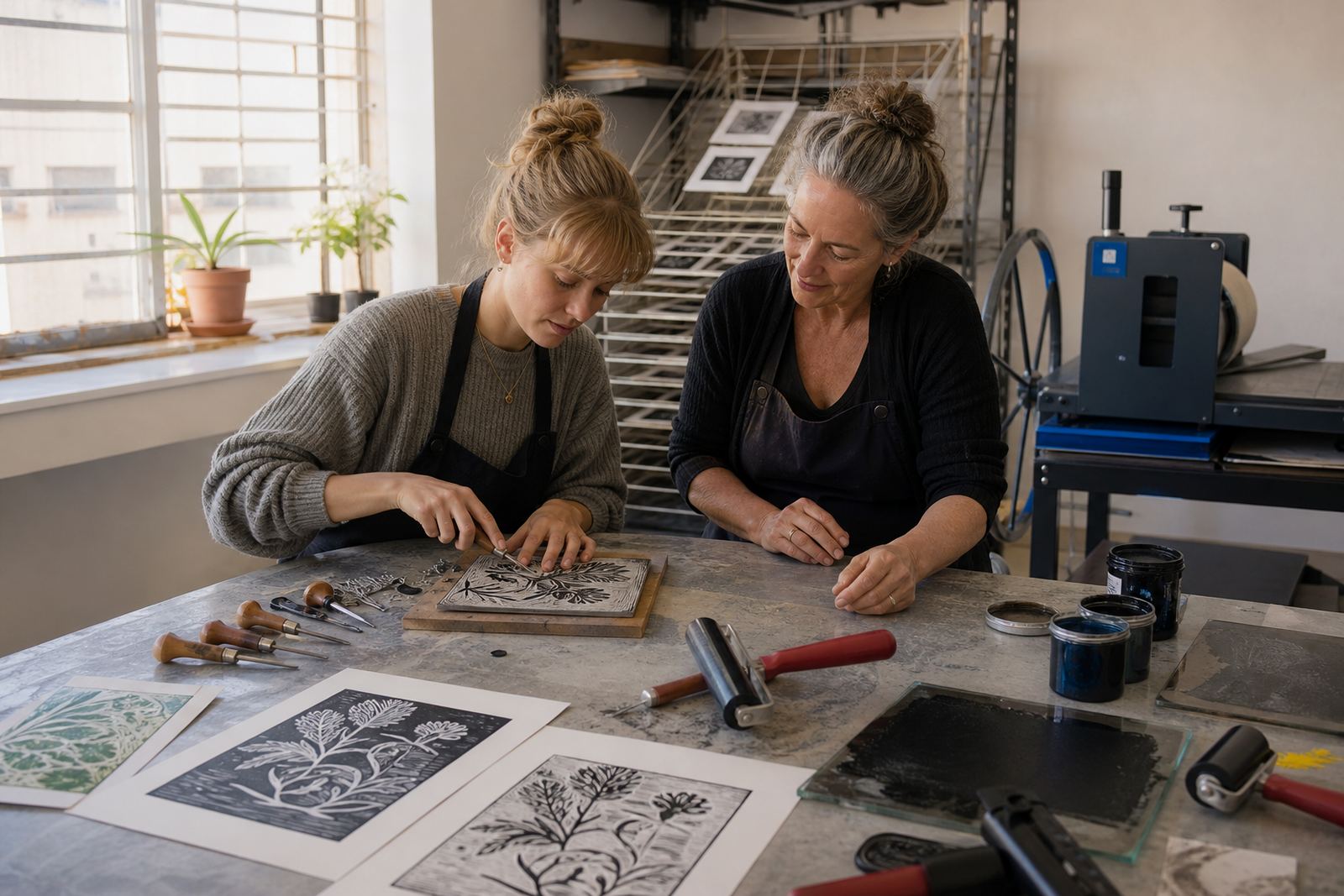
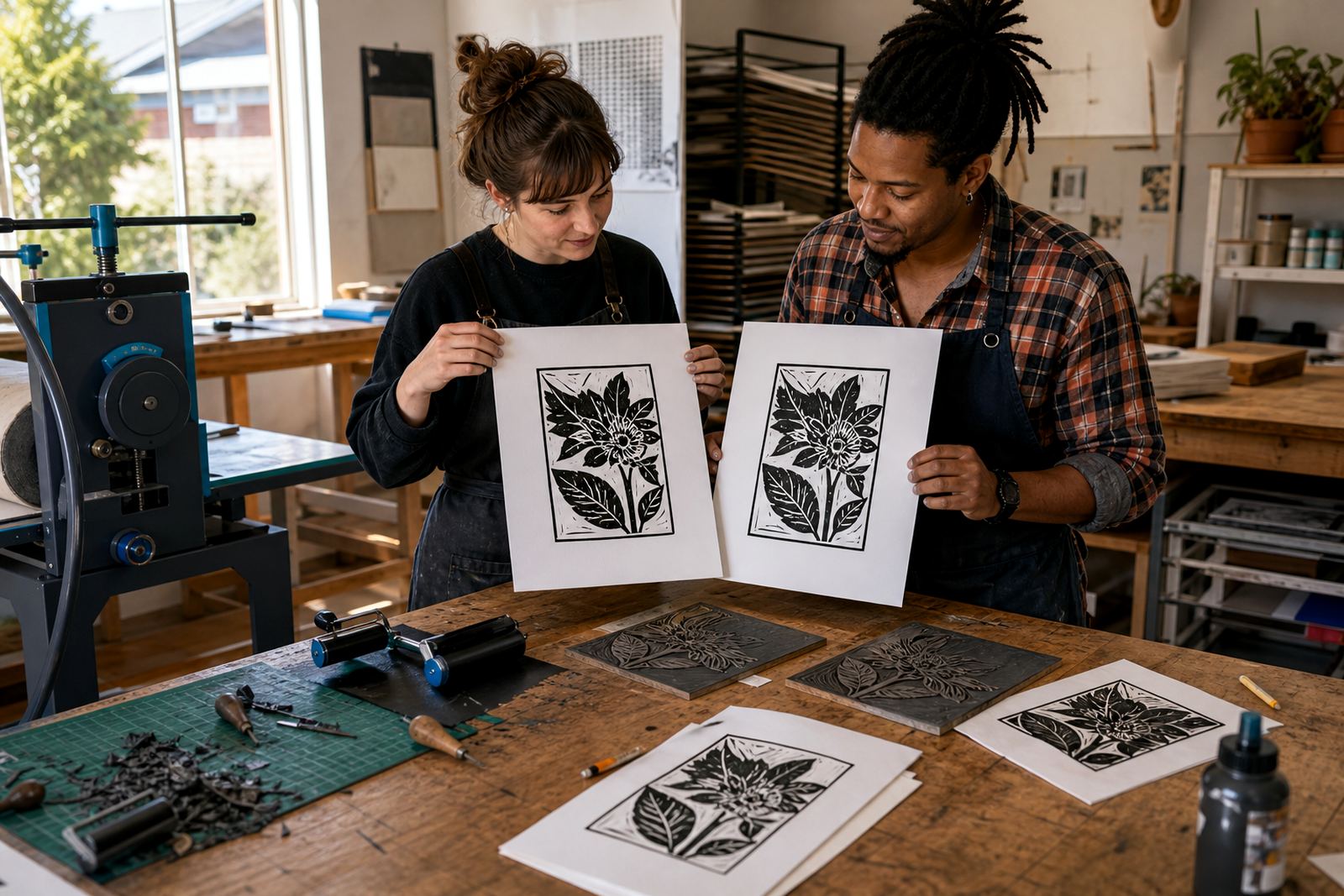
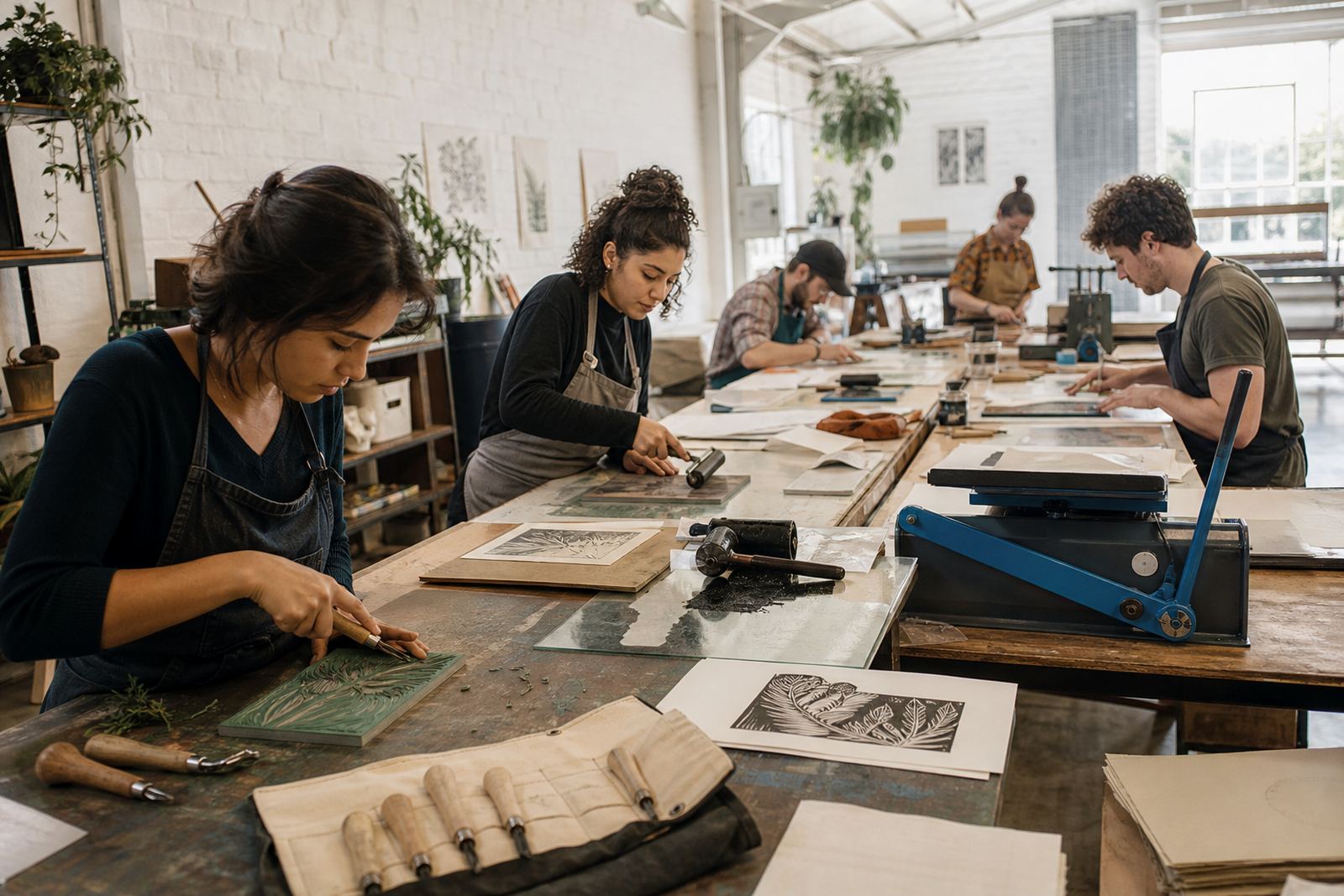
The core steps stay familiar. A design is transferred to a lino or soft-cut block, carved with gouges or V-tools, then inked with a brayer before a print is pulled by hand, with a baren or press where the session calls for it. Participants also learn registration, edition basics and how paper choice changes the final sheet.
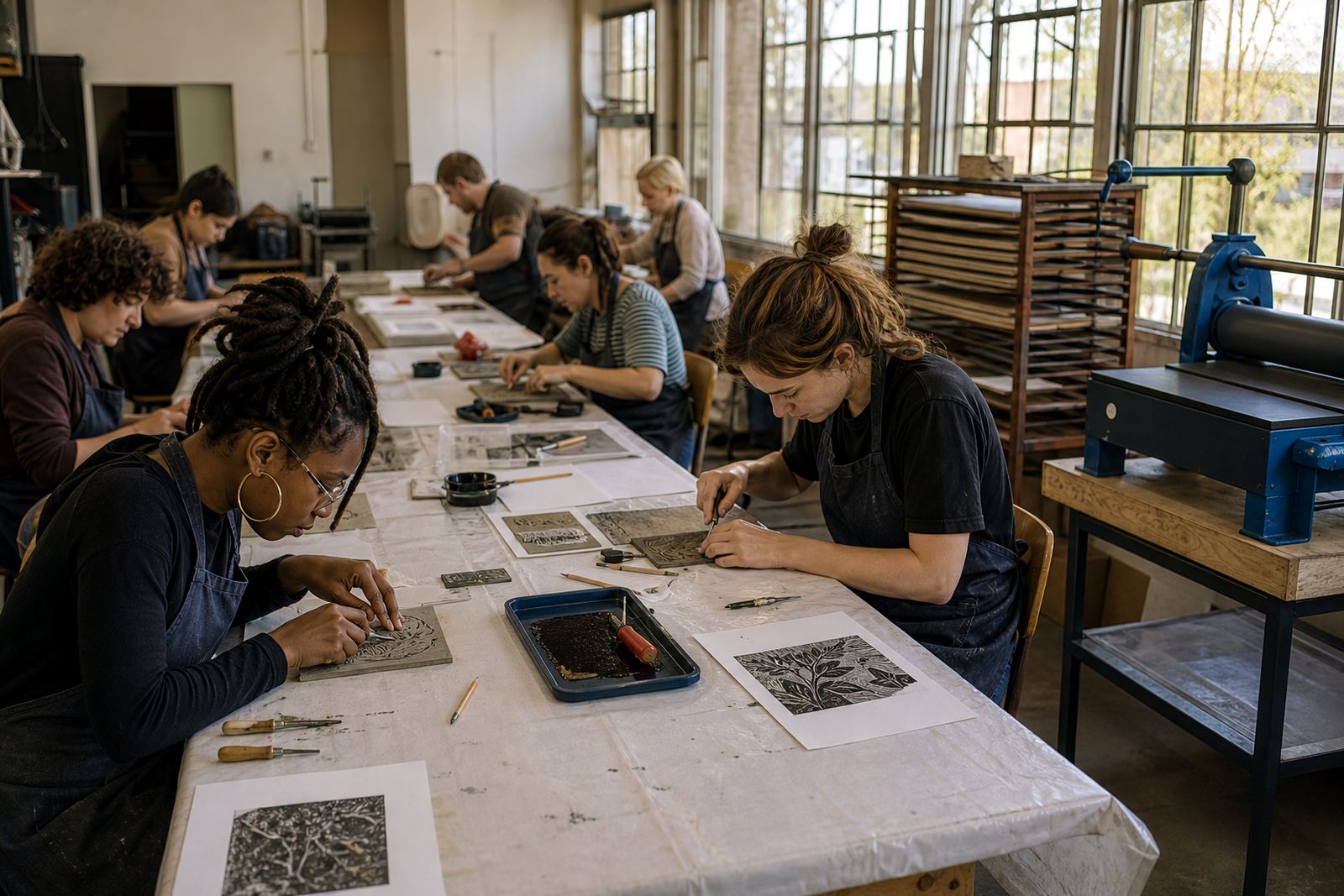
Adults who want a proper making session
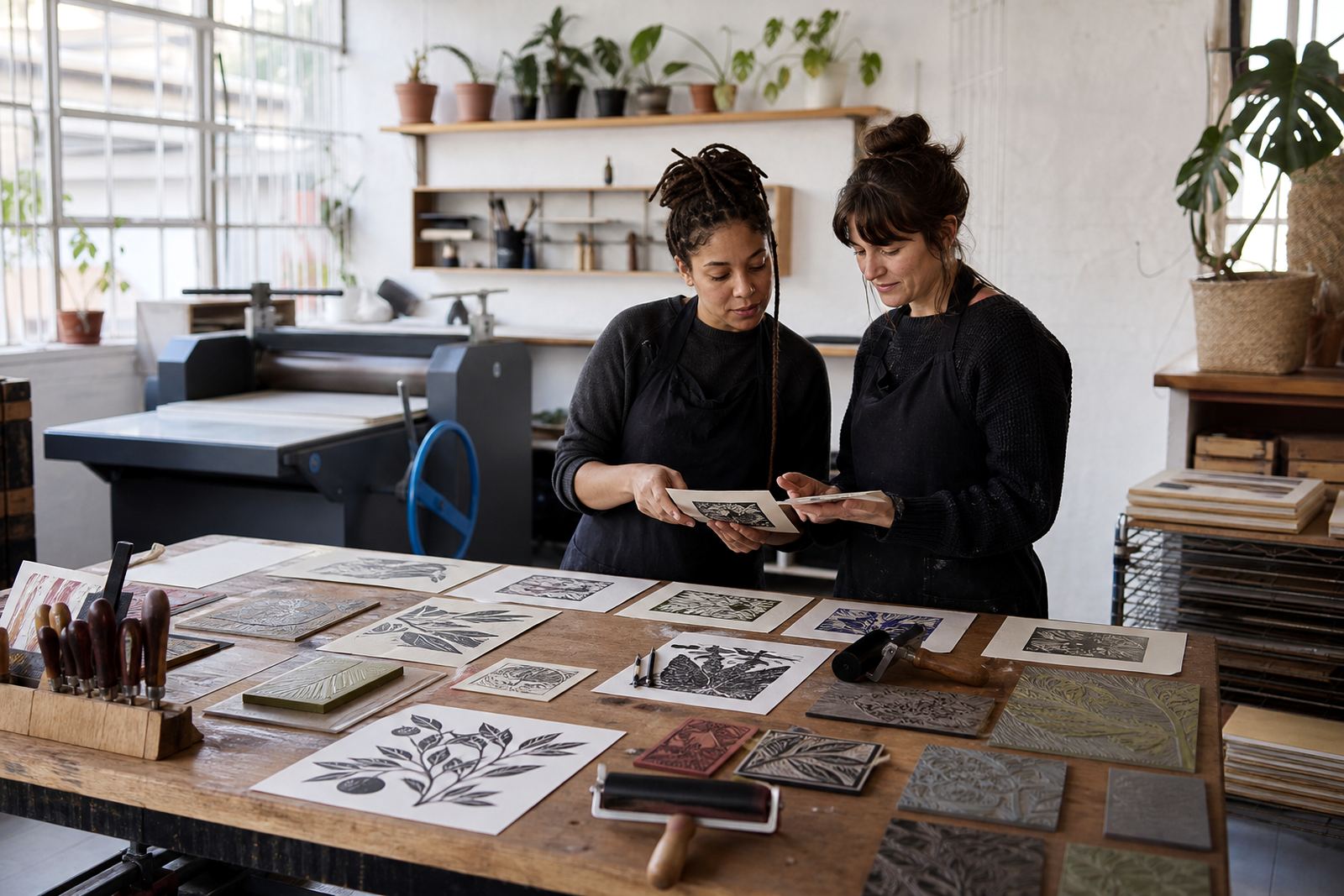
Adults often join for the pleasure of making something physical and detailed. A private studio workshop suits people who want more time with carving, inking and print pulling, while a beginner carving session keeps the focus on safe cutting and clean marks. The rhythm is calm, but there is still plenty to test and adjust.
- Beginner sessions cover block choice, tool grip and carving direction
- Inking and printing classes show even coverage and controlled pressure
- Edition print sessions move from first proof to a consistent set
- Print finish sessions help with trimming, drying and presentation
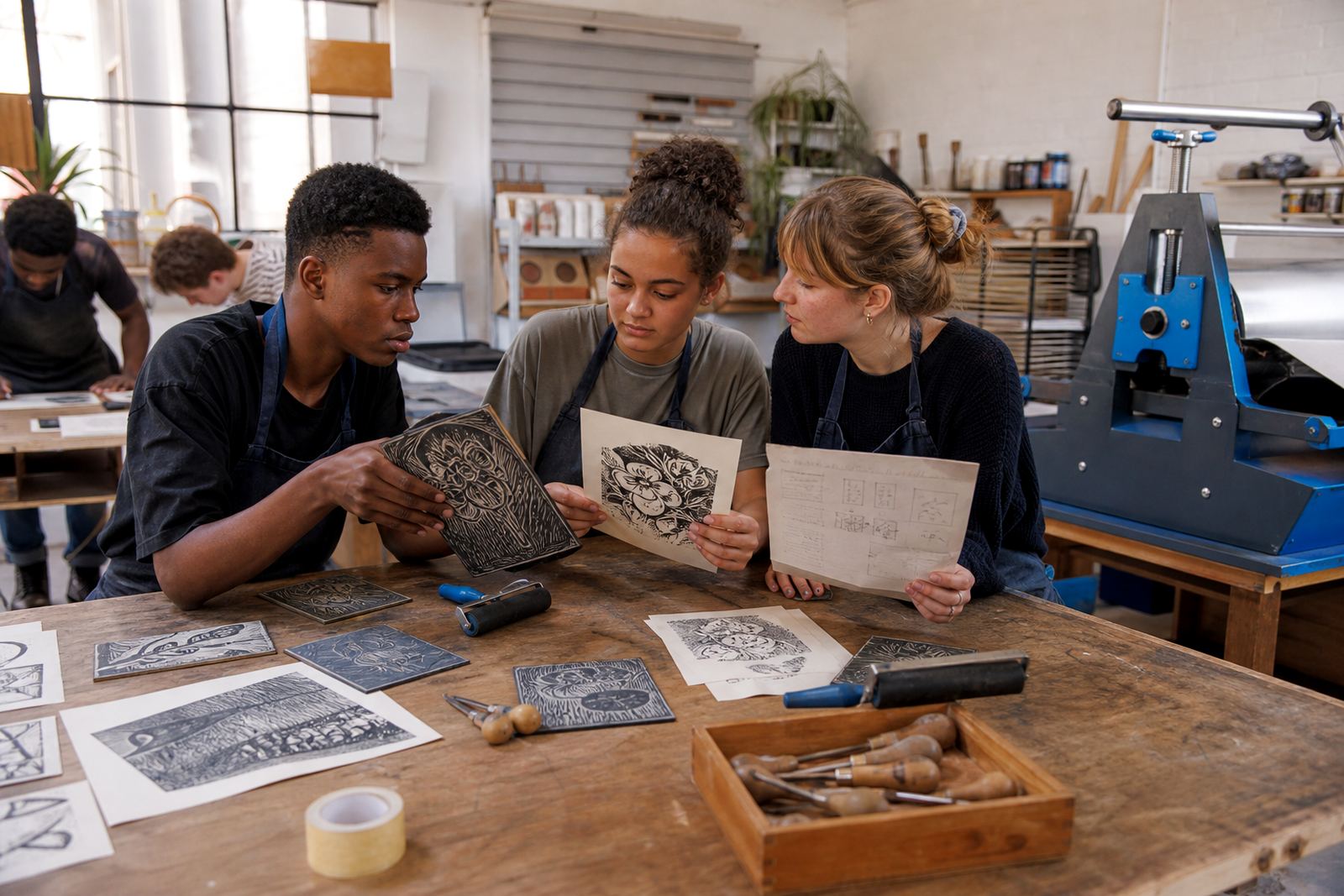
Students and learners who need structure
Student groups usually need a clear sequence, a visible process and enough guidance to work safely. A class can begin with sketching, then move into carving, proofing and printing in stages so each person sees how the image develops. Soft-cut blocks are useful when a group needs a gentler start, while traditional lino suits more confident hands and firmer marks.
Teachers and facilitators often want a session that supports classroom thinking as well as practical work. Paper handling, registration marks and ink control are all part of the lesson, and the finished prints give a useful record of what each participant understood.
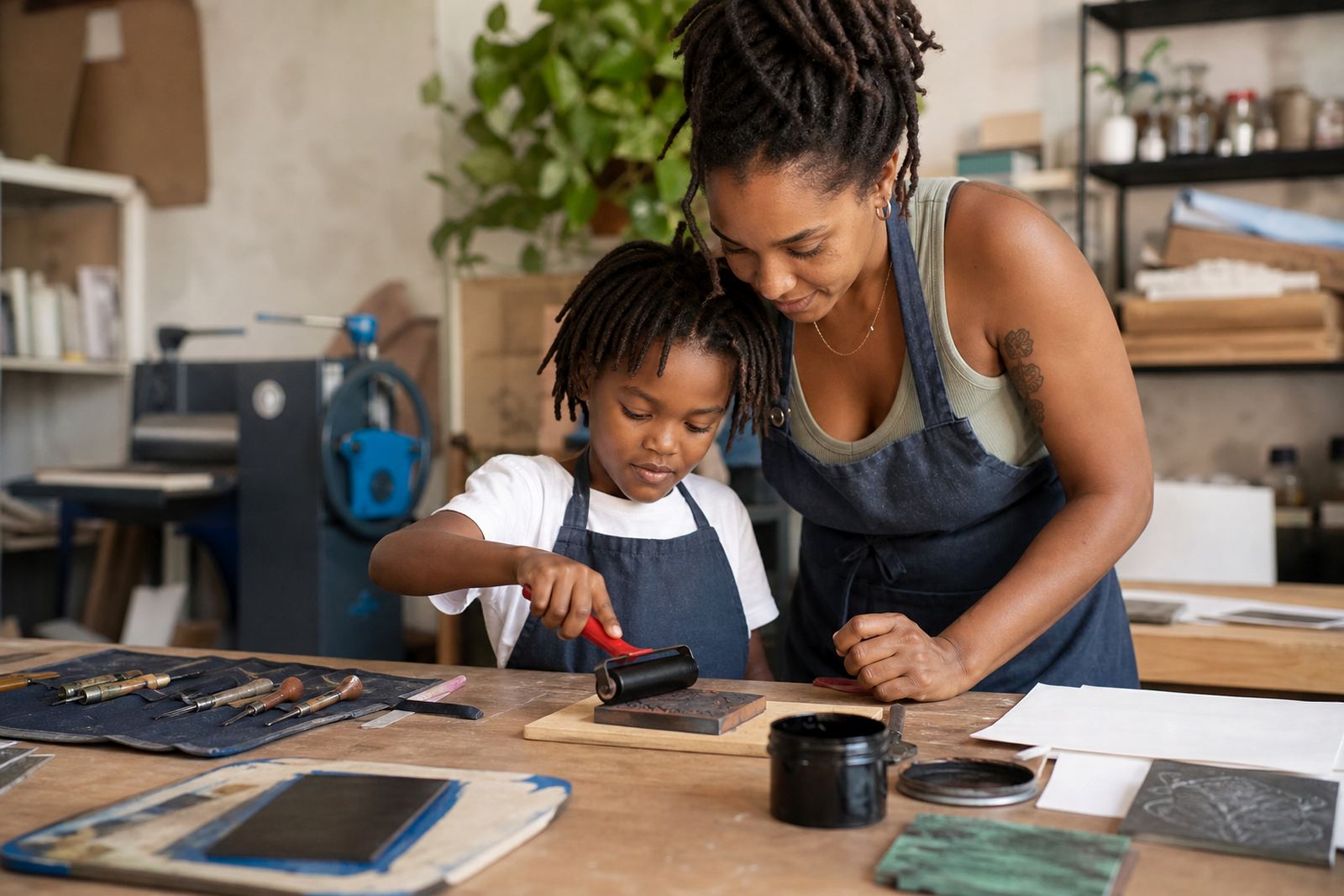
Families who want to work side by side
Family print sessions suit mixed ages because the process can be adapted without losing the feel of real printmaking. Younger participants can help with drawing, rolling ink or choosing paper, while older children and adults take on more carving and printing tasks. The studio atmosphere matters here, because everyone needs space to work at a steady pace.
- Simple motifs print well in a family setting
- Soft-cut blocks reduce resistance for first-time carvers
- Water-based inks are useful for easy studio handling
- Shared drying and stacking keeps the pace organised
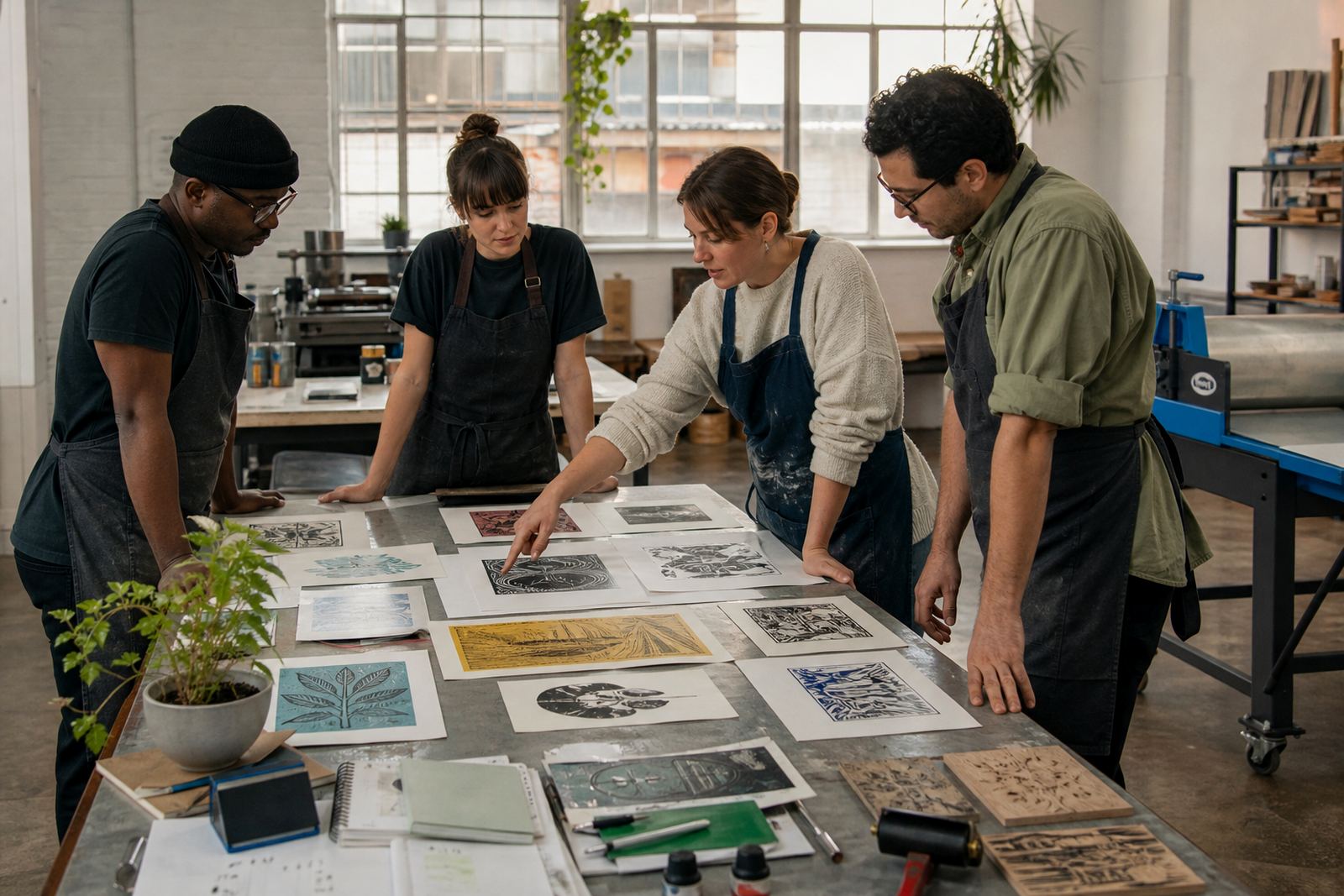
Teams that want to make together
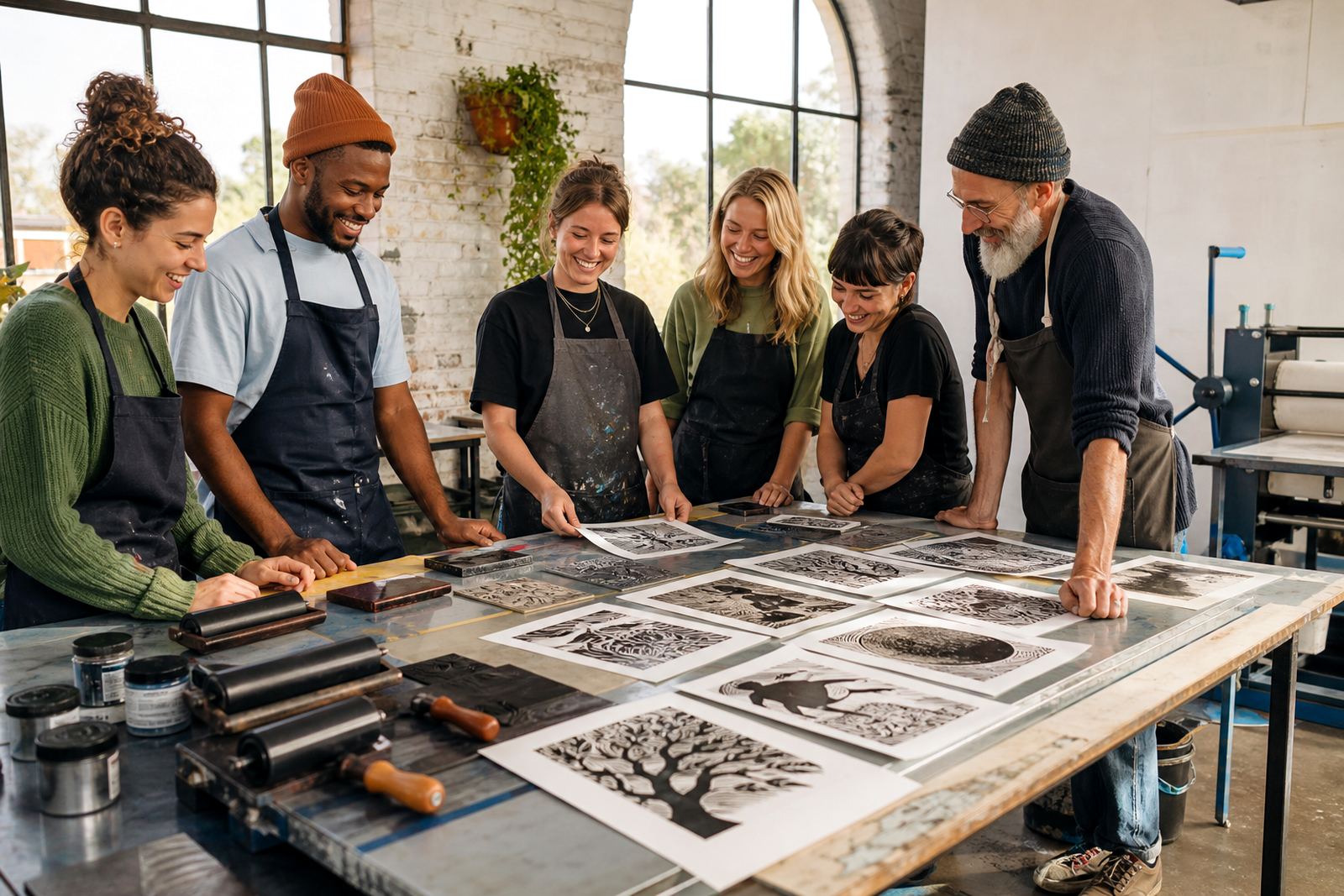
Team building sessions work best when people are making decisions, solving small problems and sharing tools without turning the room into a race. Block printing gives that balance. One person may carve, another may mix ink, and another may help with registration or paper placement, so the group stays involved from start to finish.
For office groups and project teams, the workshop creates enough movement to feel active while still being practical. The finished prints can be taken away as individual sheets or grouped into a shared series if the brief calls for a collective result.
Schools, venues and travelling setups
Some bookings stay in the Woodstock studio, while others move to schools, halls or event spaces across Cape Town, Stellenbosch, Johannesburg, Pretoria and Durban. A pop-up class needs a tidy layout, a clear print flow and enough table space for carving, inking and drying. Venue setup also depends on how many people are printing and whether the session uses hand pressure, a baren or a press.
When a session travels, the format is adjusted to the space and the group. School pop-up workshops, teacher skills workshops and venue-based print sessions all work a little differently, yet they still keep the same printmaking foundations.
The small choices that shape the result
Paper weight, ink body and block material all change how the final print looks. Some groups want bold contrasts and textured edges, while others prefer a cleaner image with more even registration. A workshop can lean toward single-colour printing, layered colour passes or a finished edition, depending on the goal of the session.
- Lino gives a firm carving feel and crisp detail
- Soft-cut is easier for early learning and quick trials
- Oil-based inks need more careful handling and cleanup
- Water-based inks suit faster movement between colour changes
Our contact form is the place to start when a booking needs to fit a specific group, space or learning outcome.