The studio hands behind each print
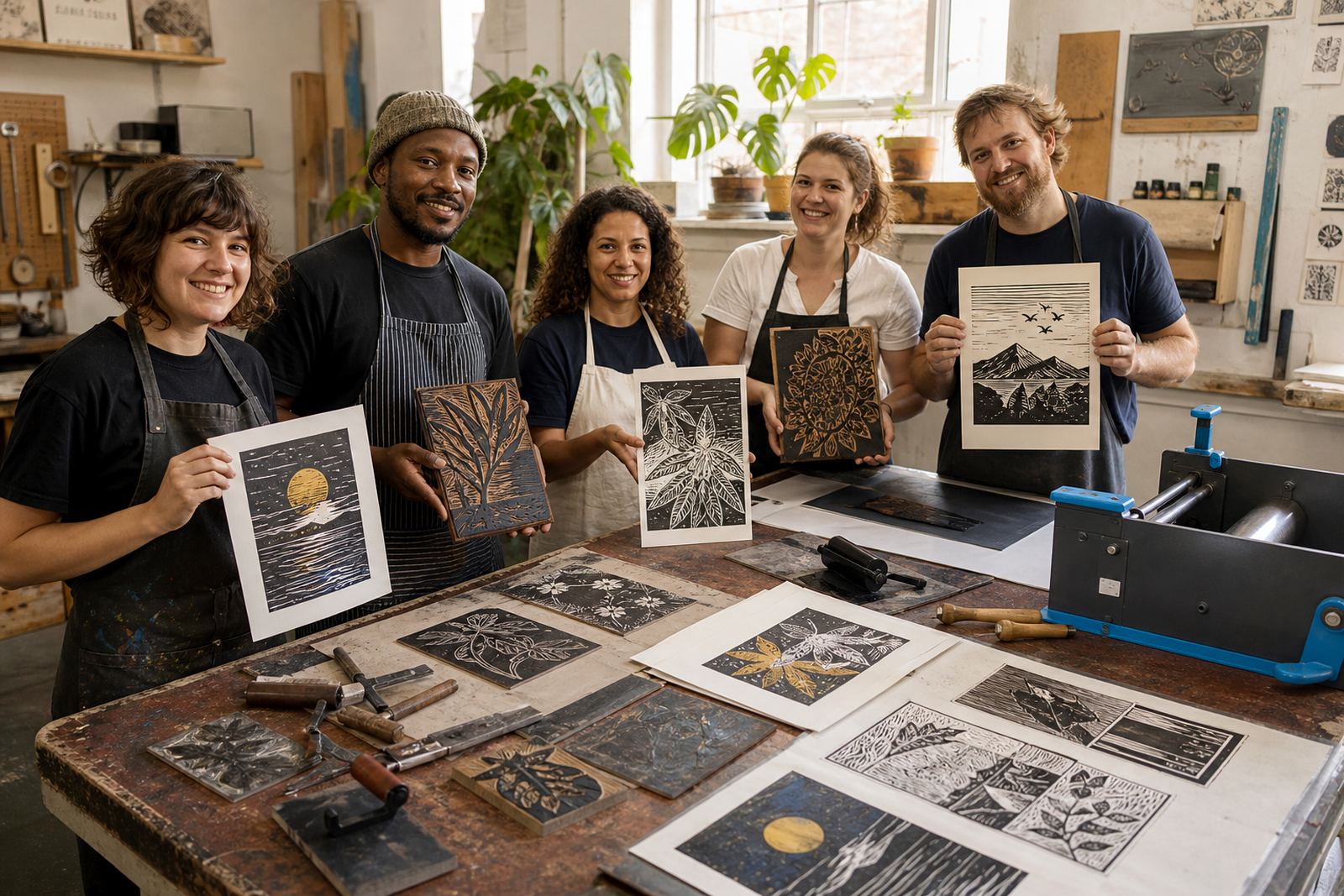
Our team works around the full hand-print process, from carving to the dry sheet. A workshop might start with a first lino sketch, move through safe carving with gouges and V-tools, then shift to inking, registration and pulling an edition by hand. That mix asks for calm instruction, tidy studio habits and a good eye for detail, especially when a class has different experience levels at the same table.
In Woodstock, the team keeps the studio practical for adults, students, families and group bookings. Some sessions use soft-cut blocks for easier carving, while others use lino for more defined linework and texture. We keep the materials varied too, with brayers, water-based and oil-based block inks, papers suited to hand printing, and baren or press work where the format calls for it.
Thandeka Mthembu, managing director
Thandeka Mthembu leads the direction of HandPrinter Art and keeps the workshop offer grounded in real studio use. She works closely with the teaching team on how each session is structured, whether it is a private class, a school pop-up or a larger group with mixed skill levels. Her focus stays on the full experience of making an image by hand, from first mark to finished print.
She also keeps the team aligned on how we present printmaking to new participants. That means clear guidance on carving, ink choice, edition making and paper handling, plus enough room for each person to make decisions for their own block. The result is a studio rhythm that feels organised without becoming stiff.
Jason Majola on the workshop floor
Jason Majola leads many of the hands-on sessions and keeps the carving side of the work steady. He explains how to handle a gouge, where a V-tool gives a sharper line, and how to work safely while removing material from a lino or soft-cut block. His teaching style is direct and patient, which helps when a class is learning the movement of the tool for the first time.
He also pays close attention to registration and printing order. In a multicolour block-print session, that matters from the first test sheet through to the final impression. Jason helps groups understand how pressure, paper choice and ink load affect the result, so people can see exactly why one print sits cleanly and another needs a small adjustment.
Leanne Phiri keeps the studio moving
Leanne Phiri coordinates the day-to-day studio flow, from materials on the table to the order in which a group moves through carving and printing. She keeps the working space ready for practical sessions, where brayers, inks, papers and drying areas need to be in the right place before the first block is inked. That kind of setup makes a big difference when a class has several hands moving at once.
She also supports the quieter details that help a workshop run properly, such as layout for edition sheets, labelling blocks, and making sure finished prints are handled neatly. When a session includes families or students with very different pace and confidence, Leanne helps the room stay organised without losing the relaxed feel people expect from a creative studio.
Sibusiso Kajee on printing methods and equipment
Sibusiso Kajee works with the print side of the process, especially where pressure, ink and paper need careful handling. He is the person the team turns to for press printing, baren work and the practical side of achieving a clean impression from a carved block. He keeps an eye on the tools that matter most, from rollers to pressure settings and the surface condition of each block.
His knowledge helps the team move between workshop formats with confidence. Some classes suit hand printing with a baren and simple pressure, while others benefit from a press for firmer transfer and repeat impressions. Sibusiso makes sure the methods fit the group, the paper and the design, which keeps the printing process steady from the first proof to the last sheet.
Ayesha Pienaar and Mpho Molefe on schools and group bookings
Ayesha Pienaar coordinates the schools programme and the moving parts that sit around it. She helps match the workshop structure to the age group, venue layout and time available, whether the session is at a school, a venue or a pop-up in another city. Her role needs good planning, because a school workshop often has a tighter timetable and a room that must be set up and cleared with care.
Mpho Molefe handles group bookings and keeps the practical details in view for team sessions, family groups and larger community workshops. He works across Cape Town, Stellenbosch, Johannesburg, Pretoria and Durban, so the logistics can vary a lot from one booking to the next. Between them, Ayesha and Mpho keep the people side of the work clear and orderly, which gives the teaching team space to focus on the printmaking itself.
- School pop-up sessions shaped around age, space and class size
- Team bookings that need a clear flow from carving to edition printing
- Venue setups for workshops outside the Woodstock studio
What the whole crew brings to the table
Each team member carries a different part of the same craft. One person leads the carve, another manages the print surface, someone else keeps the studio ready, and another keeps the schedule practical for schools or group work. That spread of roles matters in printmaking because the process only looks simple when every step is held with care.
HandPrinter Art works best when people can learn the method properly and still enjoy the room. The team keeps the language plain, the tools familiar and the materials true to the process. That is true whether the session is a beginner carving class in Woodstock, a family print session in Somerset West or a school workshop in Pretoria.
- Linocut and block printing taught through direct studio demonstration
- Edition work that shows how repeat prints stay consistent
- Sessions shaped for adults, students, families and teams