A studio built around the first cut
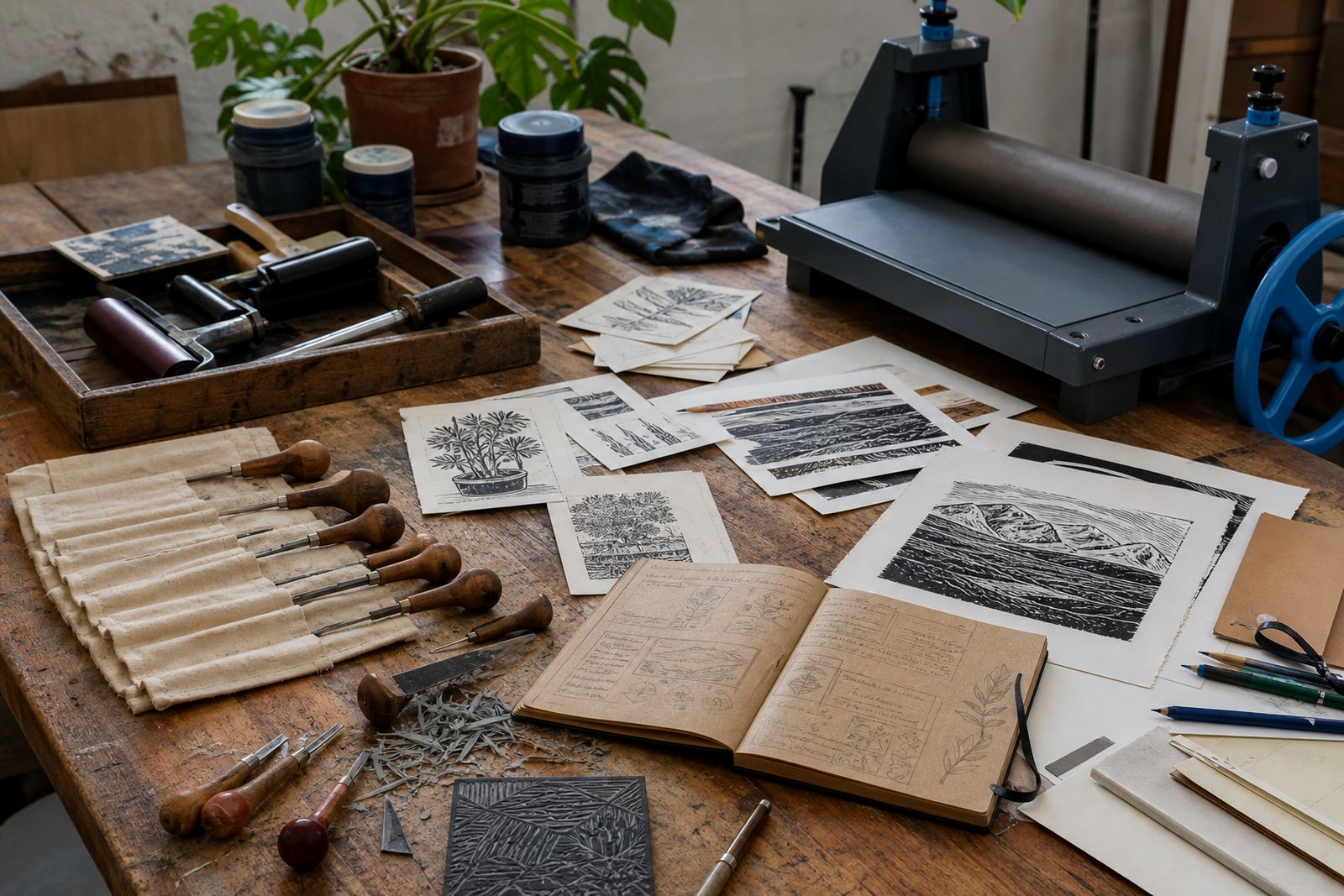
The early days were shaped by the sound of gouges meeting lino, the steady roll of a brayer and the moment a first print lifted cleanly from the paper. That hands-on process still sits at the centre of the work. People arrive to learn how a block becomes an image, and they leave with a better feel for carving, inking and printing by hand.
The studio was never set up as a gallery-only space. It was built for making, for learning and for the small surprises that come from block printing. A soft-cut block can suit a nervous first timer, while lino asks for firmer pressure and more confidence with the tools. Both have their place, and both teach control.
How the workshop format took shape
As the sessions grew, the teaching method became more structured. Each group now works through the same practical steps, but the pace changes with the people in the room. Some groups want a gentle introduction, while others want to carve, print and compare editions with a bit more technical detail.
- Safe carving methods with gouges and V-tools
- Block preparation for lino and soft-cut surfaces
- Ink rolling with brayers for an even coat
- Water-based and oil-based block inks, used with care
- Baren printing and press printing for clean transfers
- Registration so repeat prints line up properly
That mix of technique and freedom made the workshops useful for complete beginners and for people who already knew they wanted to push further. The process is tactile, and it rewards attention. A small change in pressure, paper choice or ink load can alter the finish more than people expect.
Who comes through the door
The first enquiries came from adults who wanted to try printmaking for themselves, then from students who needed practical workshop time, and after that from families looking for something creative they could share. Schools followed, then teams, venue hosts and groups planning sessions outside the usual office routine.
The audience is broader than many people expect. Some join for a private studio workshop in Woodstock, others book a family print session, and some want a student print class with enough structure to make the process easy to follow. The same craft can be adjusted without losing its character.
- Adults wanting a first printmaking session
- Families looking for a shared creative activity
- School groups working with clear step-by-step teaching
- Teams needing a practical session away from meeting rooms
- Students who want more time with carving and edition work
What the team handles behind the scenes
The studio now runs through a team that covers teaching, coordination, printing support and school bookings. Thandeka Mthembu leads the business side, Jason Majola handles workshop delivery, Leanne Phiri keeps the studio moving, Sibusiso Kajee supports the technical print work, Ayesha Pienaar manages schools, and Mpho Molefe handles group bookings. Each role matters because printmaking has many small parts that need attention at the same time.
One person may be preparing papers, another checking blocks, another sorting inks and tools, while a group is already at the carving table. That kind of coordination keeps sessions calm and practical. It also means visitors get the right balance of guidance and room to work things out for themselves.
From Woodstock to pop-up sessions around the country
The Woodstock base remains the studio anchor, but the work now travels well beyond one room. Pop-up workshops and venue sessions have taken the format to schools and spaces in Cape Town, Stellenbosch, Johannesburg, Pretoria and Durban. The set-up changes with the location, yet the core process stays the same.
That flexibility matters when a school wants a focused class or a venue wants a print activity for a larger group. Portable materials, table space, clean inking and a sensible layout make the session workable in different places. The printmaking itself still belongs to the hands.
- Private Studio Workshop in Woodstock
- School Pop-Up Workshop for classroom or hall settings
- Team Building Session for groups with mixed experience
- Venue Setup Service for hosted print events
- Teacher Skills Workshop for practical classroom use
The craft that keeps holding people’s attention
Linocut and block printing hold attention because every step is visible. A carved line shows the hand that made it. A printed edition shows repetition, variation and care. When the block is rolled with ink, pressed with a baren or run through a press, the result carries the marks of the process rather than hiding them.
That is one reason the workshops have grown in so many directions. Some people want a Beginner Carving Session, some want an Inking and Printing Class, and some want an Edition Print Session where the focus shifts to consistency across a small run. The studio works with both water-based and oil-based inks, different papers and a few printing methods, because the outcome depends on what the group needs and what the block calls for.
The story of HandPrinter Art is still tied to the same basic pleasures: a clean cut, a good roll of ink, a print that lifts well, and the satisfaction of seeing a hand made image take shape one layer at a time.