A good night starts with a small, clear print plan
Friends night sessions work well when the design does not fight the clock. A bold shape, a shared theme or a two-colour motif gives the group enough room to experiment without losing the rhythm of carving, inking and printing. For adults, students or mixed-age family groups, simple objects, initials, leaves, waves, pets or city skylines are easier to finish than finely detailed images.
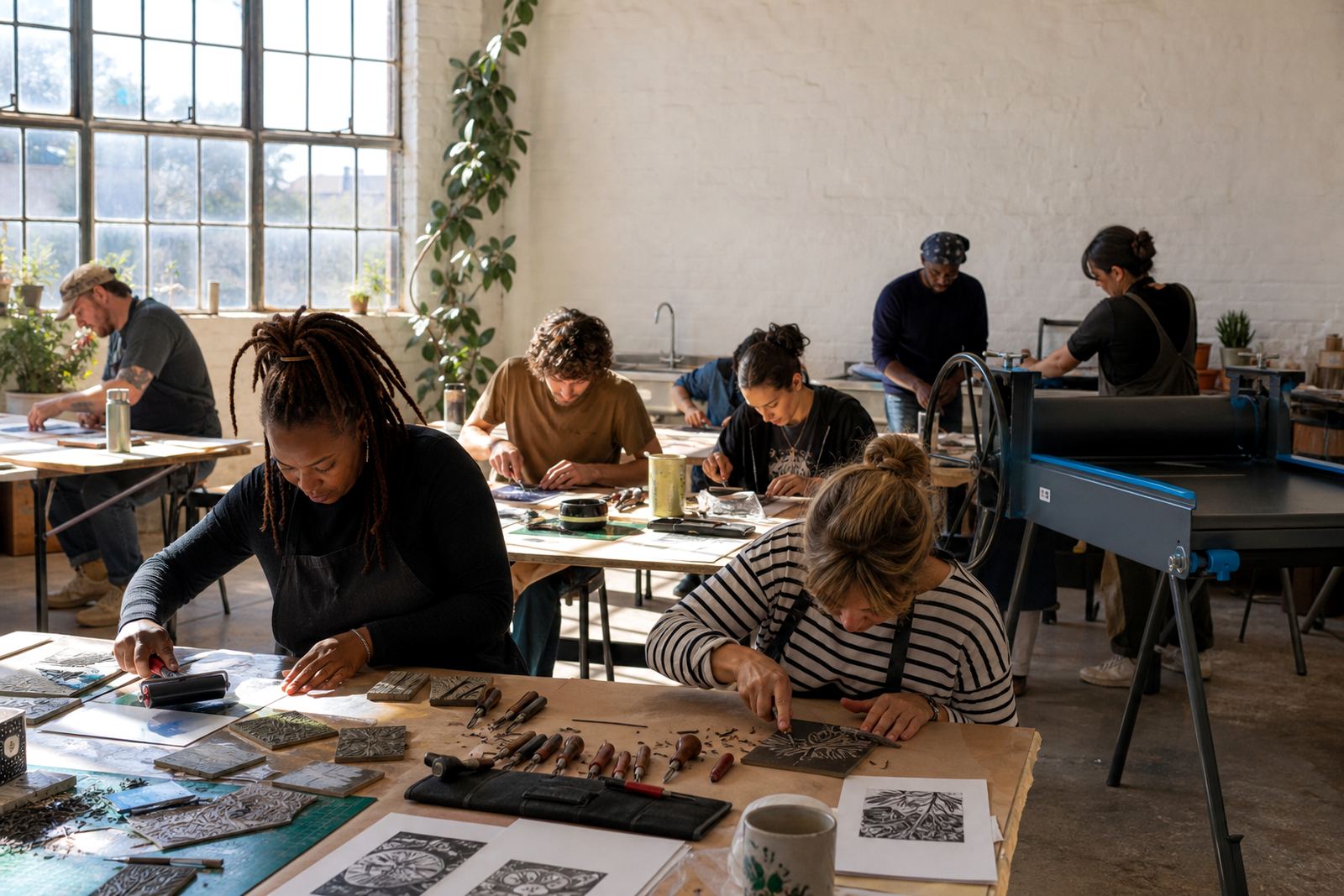
We usually set out the evening so the first part is spent sketching and transferring a design to lino or a soft-cut block. From there the group moves into cutting, then inking, then pulling test prints before making a small edition. That flow keeps the room calm and stops the session from becoming too rushed or too technical.
- One block per person works well for a social evening
- Two-colour printing needs extra registration checks
- Soft-cut blocks suit first-time carvers who want less resistance
- Lino gives a cleaner line for sharper images and edition work
Tools that keep the room moving without fuss
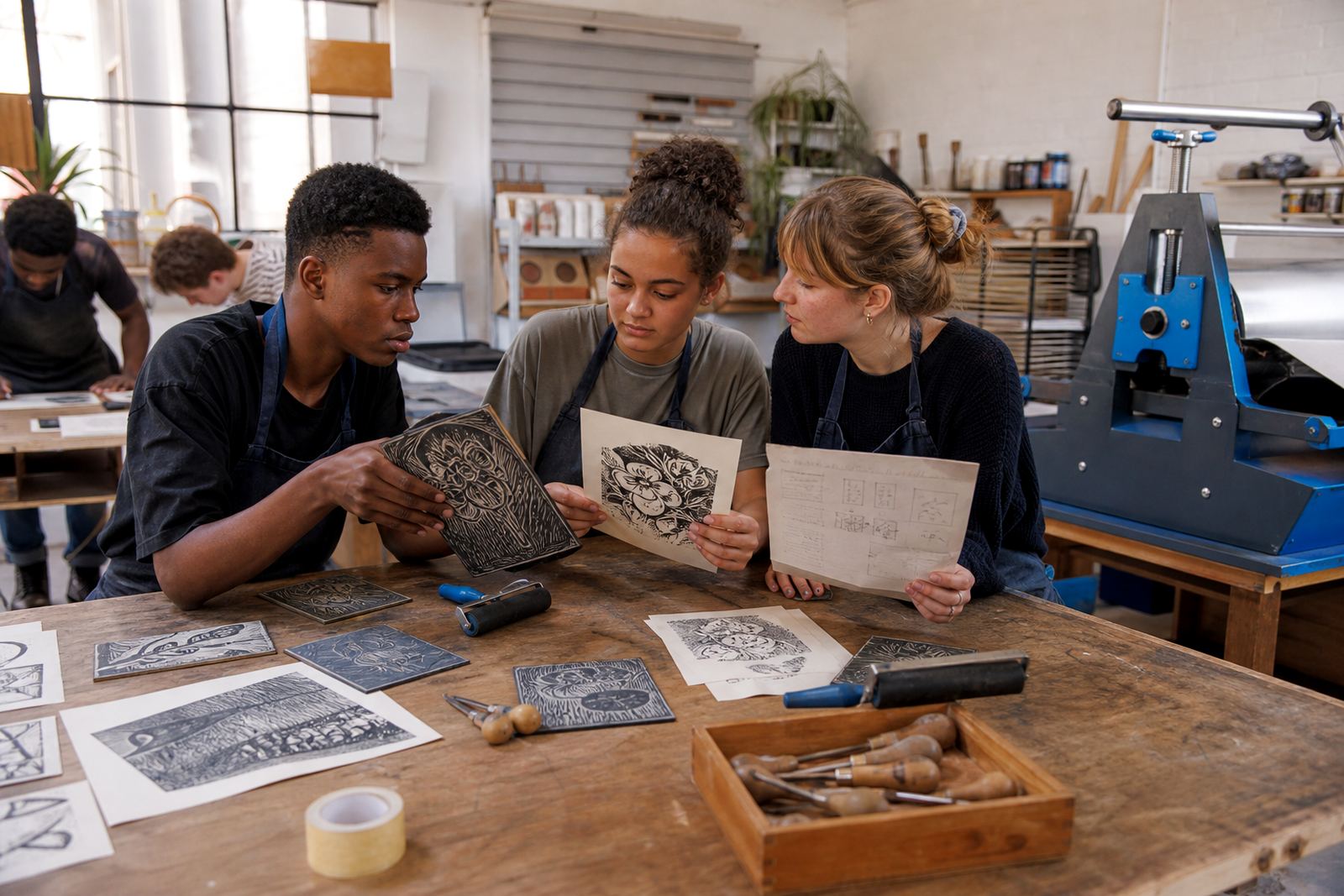
The usual setup is straightforward. Each guest gets a drawing sheet, a transfer method, a carving block, and a set of gouges or V-tools. We keep the blades clearly separated, show safe hand positions, and work from a bench layout that leaves enough space for paper, ink and drying prints. Brayers are used to roll out water-based or oil-based block inks, depending on the paper and the finish the group wants.
Hand printing can be done with a baren, a spoon burnish, or a press when the session calls for more even pressure. A press helps with larger groups and thicker papers, while hand pressure is often ideal for smaller editions and casual studio evenings. Registration marks are useful if the group wants a second colour or a repeat image, because a small shift can throw the whole print off.
- Gouges and V-tools give different line widths and depths
- Brayers should be matched to the ink load, not overloaded
- Water-based inks are easier for quicker clean-up in a shared room
- Oil-based inks need more careful handling and drying space
How to set the tables for a friends night
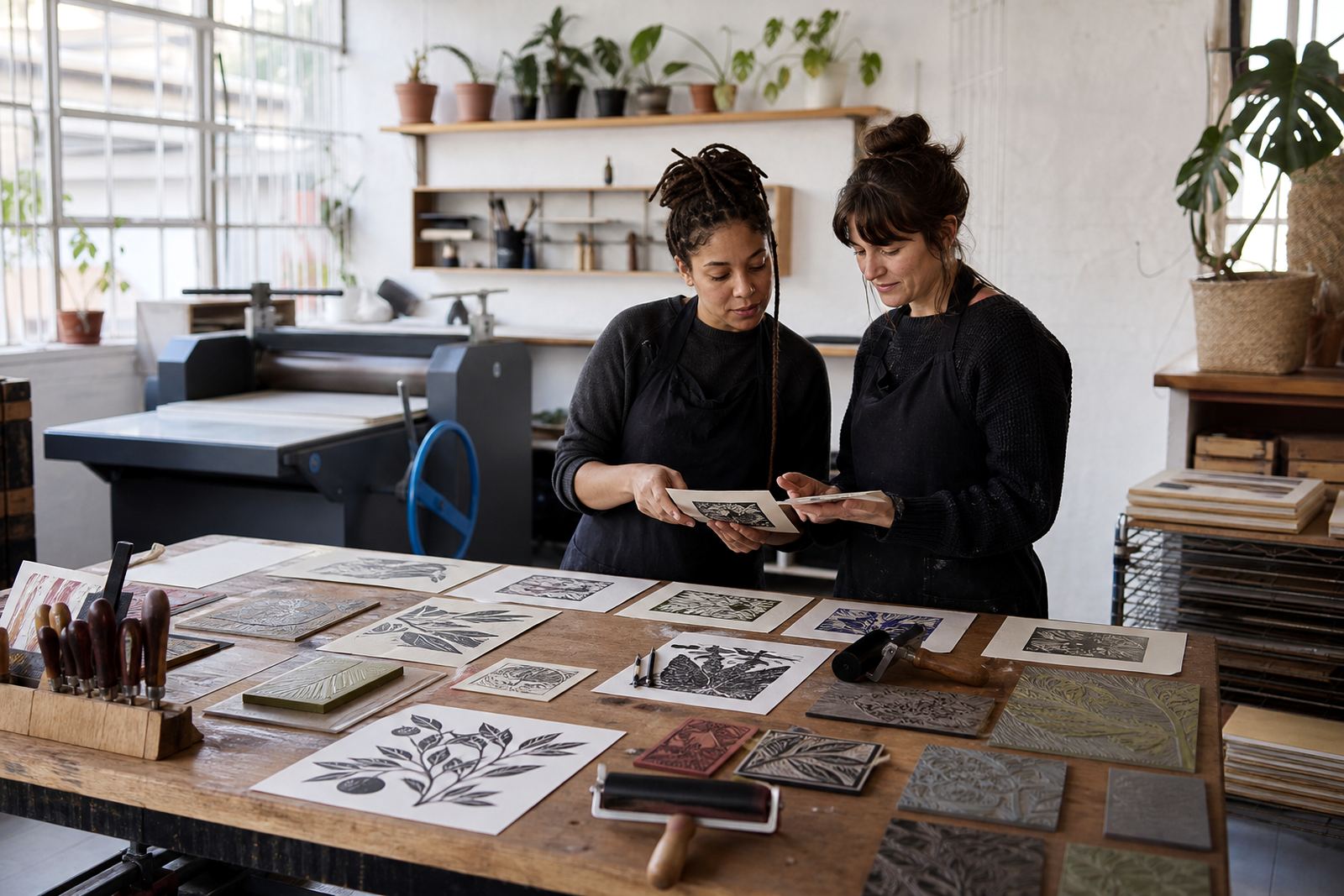
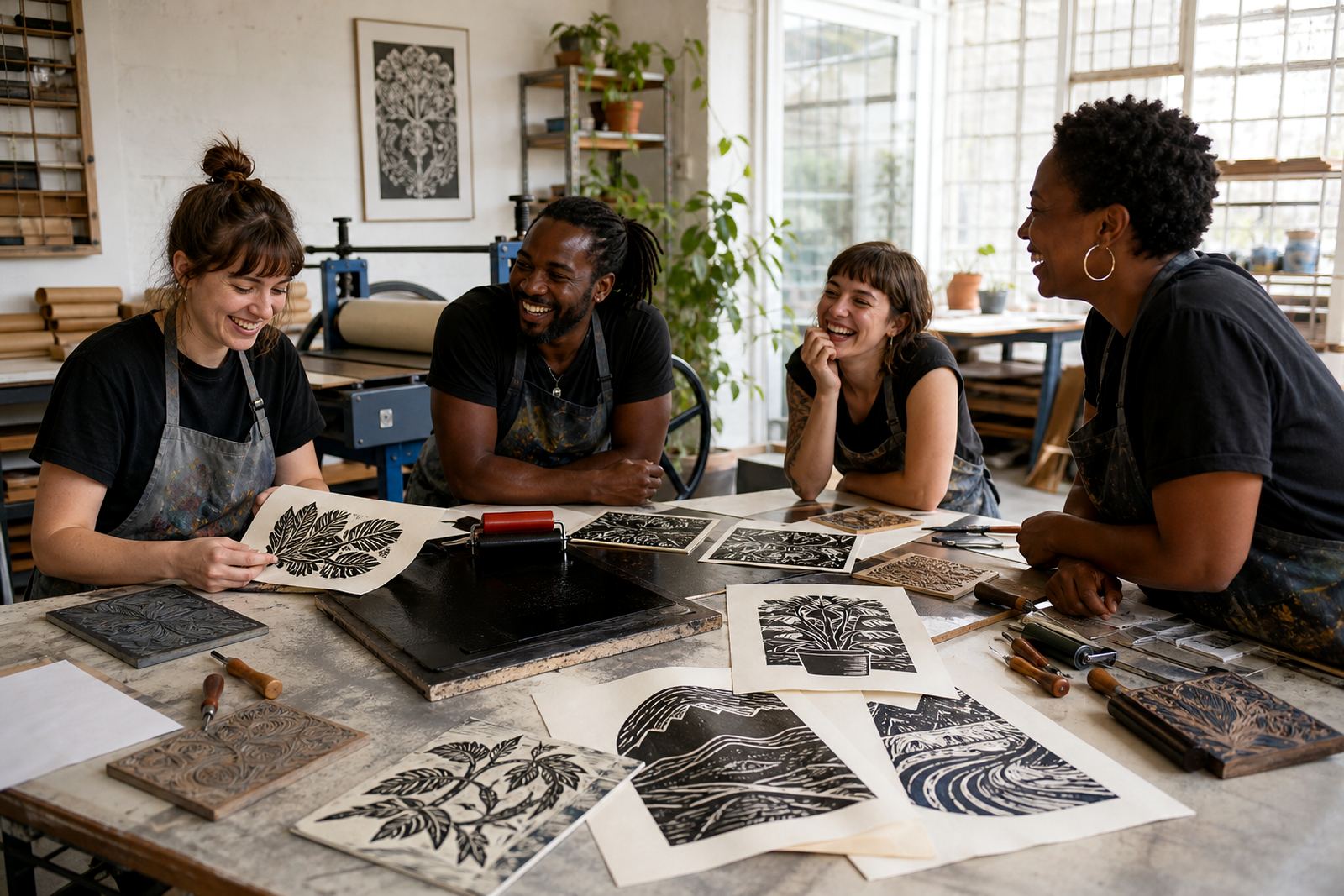
A good layout saves a lot of wandering around with wet prints. The best room plan leaves one area for carving, one for inking, and one for drying and stacking finished sheets. If the group is working in Woodstock, Stellenbosch, Johannesburg, Pretoria or Durban, we also think about humidity, paper curl and transport so the prints do not buckle before everyone leaves.
For venue planning, long tables with clear edges are easier than scattered small tables. Keep water containers, wipes and paper towels away from the cutting zone. Place finished paper in a separate stack, ideally with a clean board on top. If the night is at a home, studio or booked venue, a simple drop cloth helps keep ink off shared furniture and avoids a messy cleanup later.
- Allow one carving station per two people if space is tight
- Keep test sheets apart from final edition paper
- Use labels for blocks if the group swaps tools during the night
- Set out drying boards before the first print is pulled
Common mistakes when friends print together
The most common issue is trying to make the design too detailed. Small lines can close up when the ink is rolled on, and over-cut blocks can start to print patchy rather than crisp. Another problem is uneven pressure. One person leans hard with a baren, another barely touches the page, and the editions start to drift away from each other.
People also forget that registration needs patience. If the paper is laid down slightly off the mark, the second colour lands out of register. Over-inking is another easy trap, especially for guests who are excited and keep rolling the brayer back and forth. That leaves a glossy surface and blurred edges instead of a strong hand-printed mark.
- Too much detail makes a first block harder to print cleanly
- Flooding the block with ink softens the line
- Moving the paper after contact spoils the impression
- Mixing wet prints before they dry causes smudges
What a friends night costs
Friends nights can be planned at different levels depending on the room, the number of people and whether the group wants one block each or a shared print station. A small private studio session usually sits in a lower range than a pop-up booking that needs travel, setup and extra tables. If the night includes presses, specialty papers or a larger edition, the cost goes up because there is more prep and material use.
As a practical guide, modest social sessions for a small group often sit in the low thousands of Rand, while fuller workshop setups with more materials, venue coordination and print finishing can move into the mid-thousands or higher. The final figure depends on paper choice, ink type, block size and whether the group wants a take-home edition or just a few test sheets and finished prints.
- Smaller groups use less paper and fewer setup items
- Two-colour work needs more ink and more time at the press
- Venue setups usually add transport and layout preparation
- Extra print finishing lifts the material count quite a bit
A relaxed format that still feels properly made
A friends night should feel social, but the prints still need structure. That is why we keep the sequence clear: sketch, cut, ink, print, dry. The group can chat through the process, compare line work and swap ideas without losing the practical side of the workshop. The result is a set of prints that feel personal.
For mixed groups, we often balance one simple block with one slightly more ambitious design so nobody feels left behind. Some guests enjoy the carving more, others prefer inking and printing, and a good session lets both parts matter. When the last sheet is pulled, there is usually enough variation in the edition to make each print feel individual.
That mix of shared process and finished object is what suits friends nights best. It is calm, tactile and easy to arrange without turning the evening into a formal class.