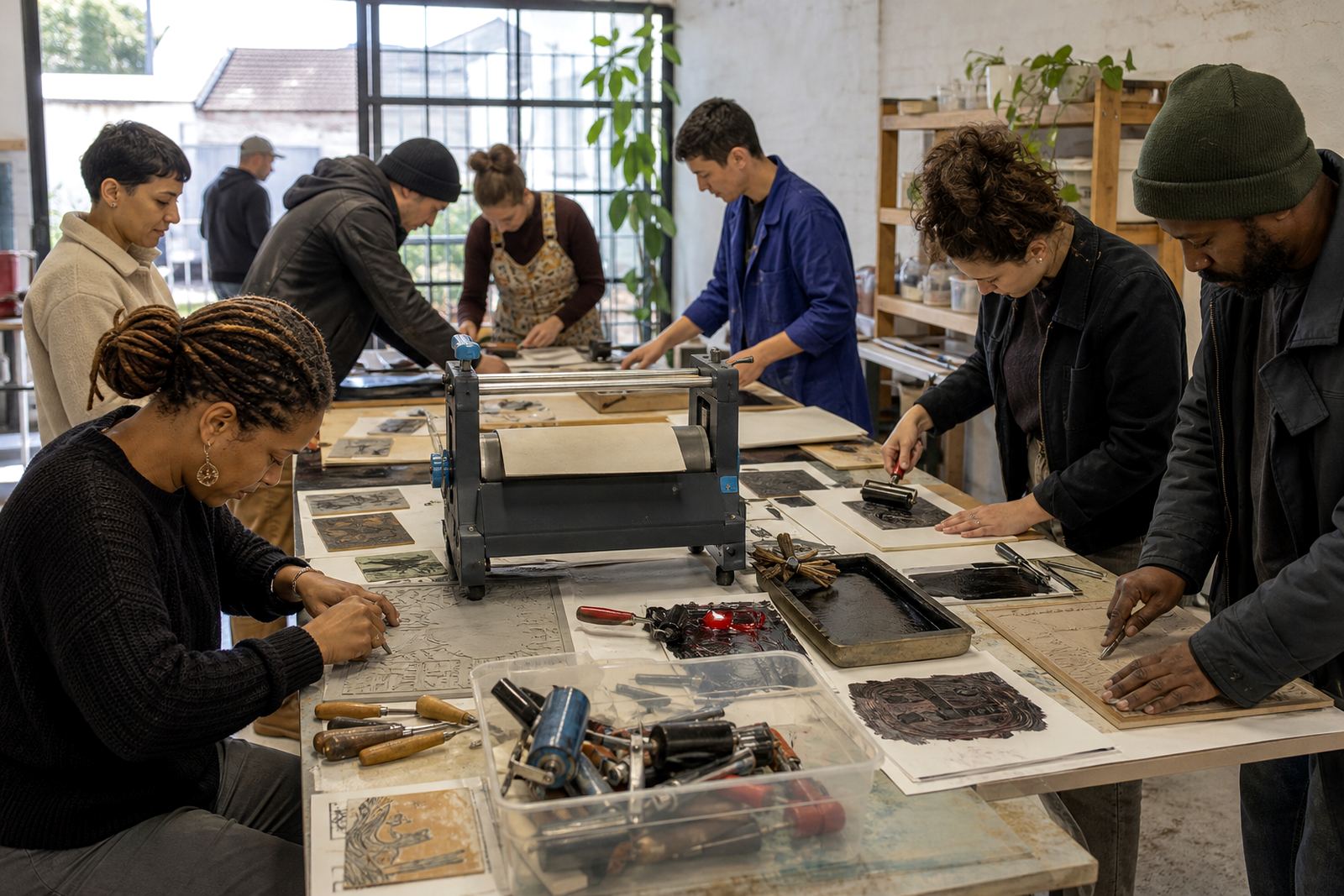
A group session for any experience level
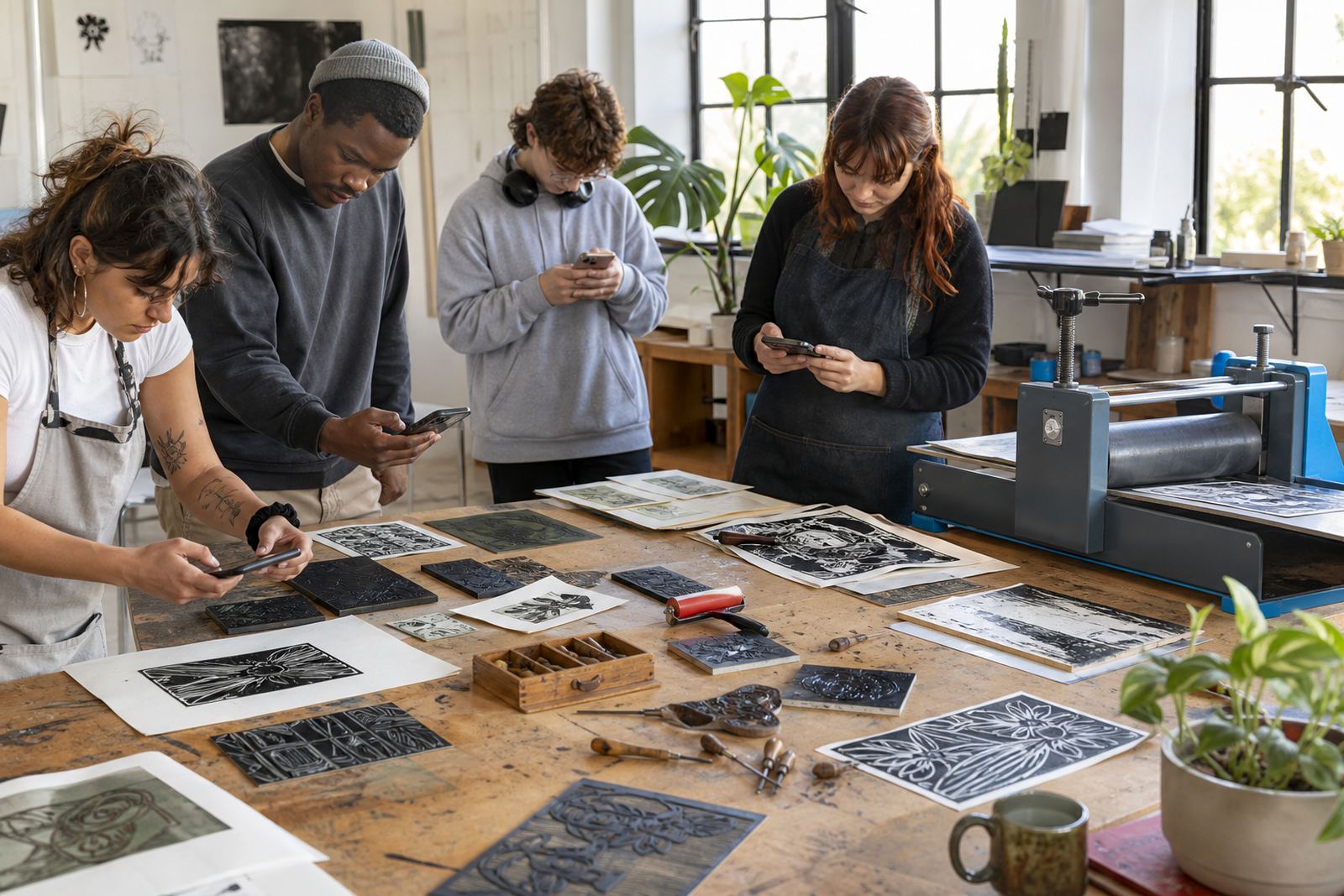
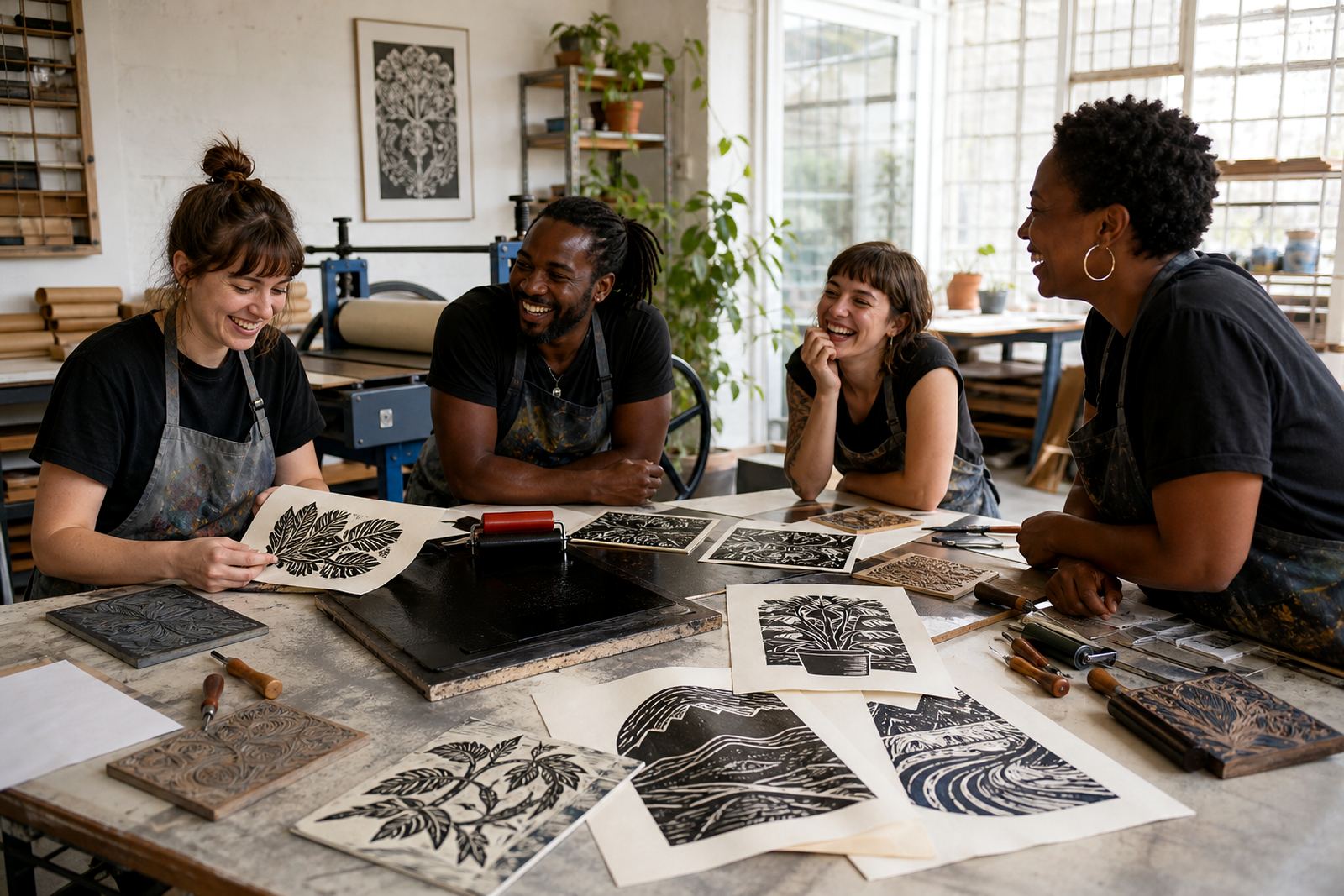
Community bookings work best when the method feels open from the first minute. Lino and soft-cut blocks are good for that, because participants can draw a simple design, carve with gouges or V-tools and move into printing without needing a long technical build-up. The process has enough structure for a group, but still leaves room for individual marks and different hand skills.
For mixed groups, we usually keep the imagery direct. A leaf, bird, house, pattern or local symbol gives enough shape for carving and printing, while keeping the block small enough to finish in one session. That matters when there are learners, parents, elders and volunteers in the same room. The work feels shared, but the prints still look personal.
- Best for 8 to 30 participants, depending on the room and format
- Works well for school halls, community rooms and studio bookings
- Suitable for adults, students, families and intergenerational groups
Tools that keep the table moving
A typical setup uses carving blocks, sharpened gouges, V-tools, pencils, masking tape, brayers, ink slabs, barens, clean rags and good paper. Water-based block ink is often the easiest place to start for a group. Oil-based ink has its place too, especially where a richer surface or longer open time is useful, but it needs tighter handling and more cleaning.
Registration becomes important once people want more than a single image. A two-colour print, or even a simple black-and-colour layer, asks for careful alignment so the second pass lands where it should. That is where a press can help, although hand burnishing with a baren still suits many community sessions. Both methods teach the same lesson: the paper and the block need to meet with enough pressure, but not too much.
- Brayers help spread ink evenly across the block
- Soft-cut material is useful for first-time carvers
- Press printing suits fuller editions and cleaner alignment
- Hand printing suits small groups and portable sessions
We give paper the same weight as the block. Lighter papers are easier for beginners to handle, while stronger print papers cope better with repeated impressions and more pressure. In humid coastal conditions around Cape Town, paper storage and drying space need a bit of planning, otherwise sheets cockle or pick up dust.
Planning a room that keeps people calm and productive
A good layout gives each person enough elbow room for carving, inking and drying. Tables should allow one side for block work and another for paper, otherwise wet prints get touched or folded before they set. For larger groups, it helps to separate carving from printing so the sharper tools stay away from the wet table and the movement in the room stays orderly.
If the session is in a school or community venue, we look at the floor space, table height, access to water and where drying sheets can sit without being bumped. A venue with narrow walkways can slow the room down, especially if people need to carry blocks between stations. Simple signage and a clear sequence keep things moving. That is what lets the group settle into the work.
- One table for drawing and carving, one for inking and printing
- Drying lines or flat racks keep editions from smudging
- Clear waste bins help with tape, offcuts and used paper
- Aprons or old shirts save clothing from ink marks
Common stumbles in community print sessions
The usual problems are practical. New carvers often press too hard and take away more block than they meant to. That can flatten fine lines and leave the print looking busy in the wrong places. Others rush the inking, which gives patchy surfaces or blobs at the edge of the image. A steady brayer and a short pause before printing usually fixes more than people expect.
Another common issue is trying to make every block carry too much detail. Community workshops work better when the image has clear spaces, bold shapes and a few strong lines. Fine lace-like carving belongs in a smaller, more advanced session. If the group wants an edition, it also helps to decide early whether every print should match closely or whether small hand-made differences are part of the outcome.
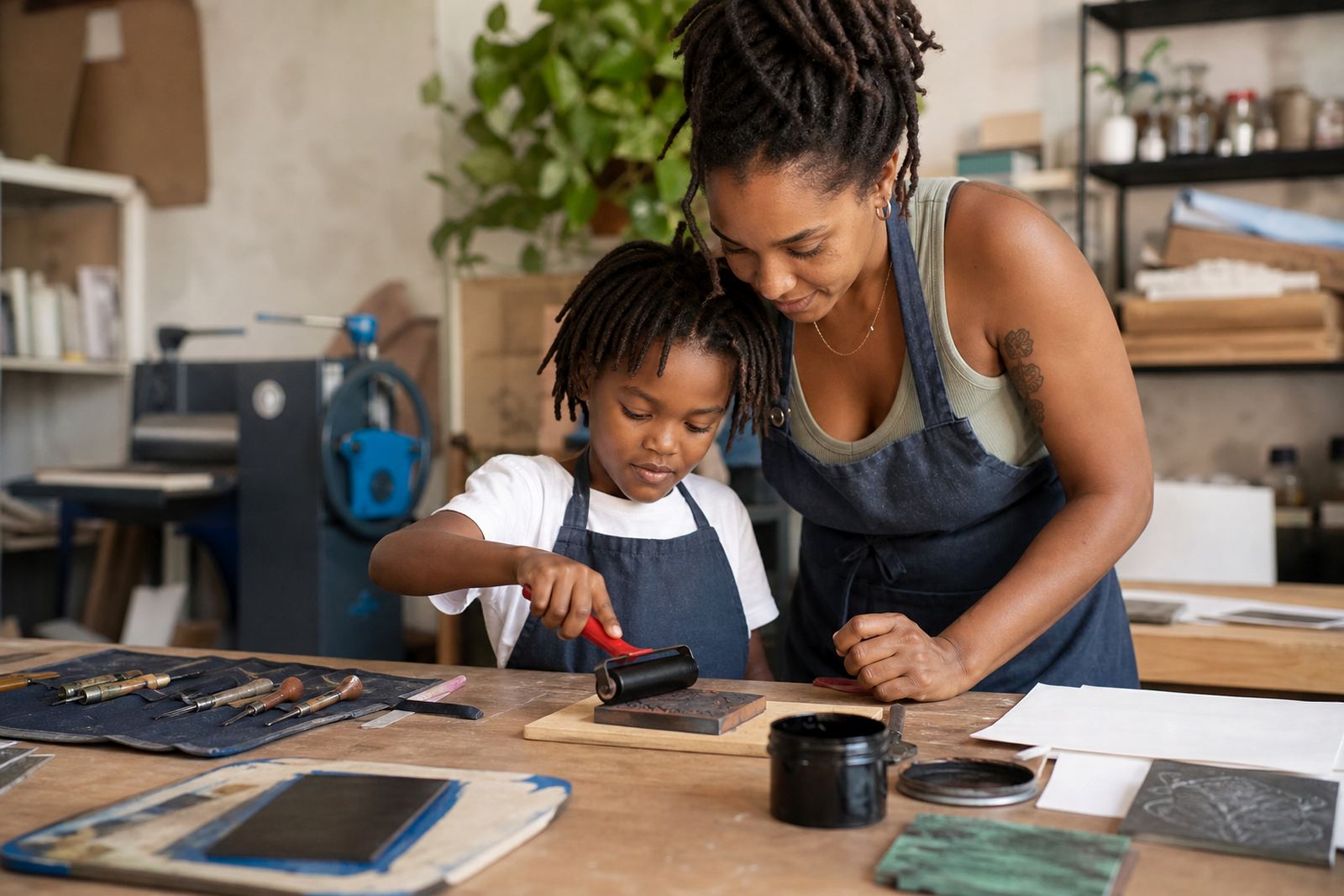
Families and mixed-age teams sometimes need a split approach. Children can draw, roll ink or print under supervision, while adults handle the carving. That keeps the session moving and avoids crowding around the sharp tools. It also lets the final prints carry more than one hand in the process, which suits community work well.
Budgets that make sense for shared workshops
Community print budgets usually depend on group size, venue setup, travel and whether the session needs portable tables, presses, extra paper or a finishing pass. A small studio-based group in Woodstock can sit at a lower budget than a full pop-up with transport, set-up and materials for a larger crowd. When planning, think in a range.
As a practical guide, a short intro session for a small group may sit in the low thousands of Rand, while a larger school or community booking with more materials and venue work can move into the middle or upper thousands. Sessions that include edition printing, teacher support, or press setup usually need a higher budget because the materials and handling take more time and more paper.
- Small studio group with shared materials: lower Rand band
- Pop-up session with travel and setup: mid Rand band
- Full group booking with press work and finishing: higher Rand band
For bookings across Cape Town, Stellenbosch, Johannesburg, Pretoria or Durban, the venue and format shape the cost. A school hall, community centre or private room each brings its own set of questions around space, materials and drying. That is why the budget works best when the group size and setting are settled early in the planning.