A studio built around hands-on printmaking
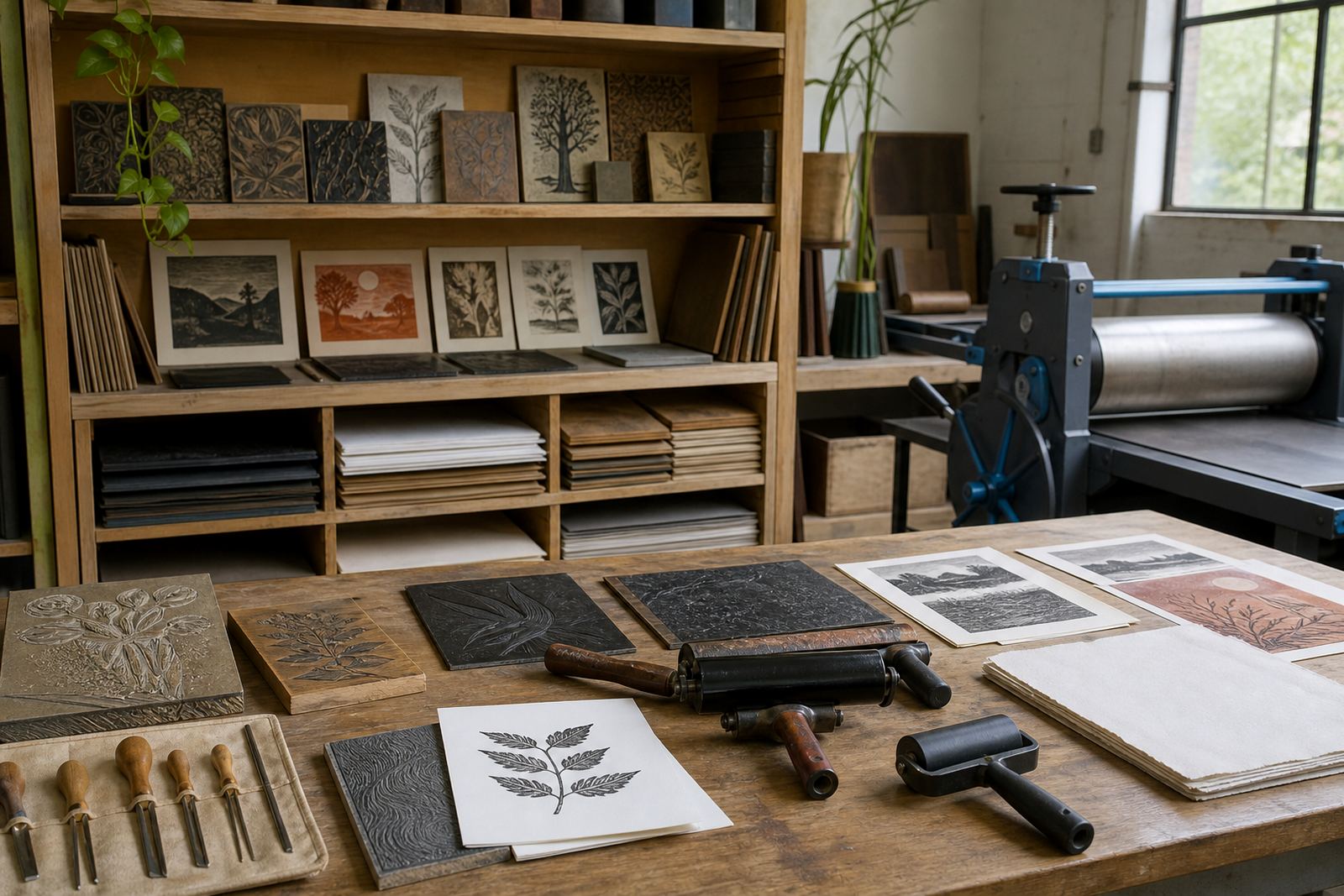
HandPrinter Art works with lino and soft-cut blocks, carving tools, brayers, barens, presses and water-based or oil-based block inks. The process is physical and careful: sketch the image, transfer it, cut the block, proof the first print and then refine the image until the marks carry the right weight. That rhythm suits beginners and experienced makers alike, because printmaking rewards patience, pressure and clean decisions.
The studio in Woodstock is set up for real workshop use, with enough space for small groups, school sessions and mixed-level classes. People arrive with different starting points, some want a first print that feels bold and simple, others want cleaner line work, tighter registration and a fuller edition. We make room for both. The teaching stays practical, with clear steps and proper studio habits from the first gouge cut to the last sheet on the drying rack.
What the team holds in place during a session
Our team includes Thandeka Mthembu, Jason Majola, Leanne Phiri, Sibusiso Kajee, Ayesha Pienaar and Mpho Molefe. Each person carries a different part of the work, from workshop flow and group bookings to studio prep, print finishing and school programme planning. That shared structure keeps the classes steady when a group is learning fast, asking practical questions and handling inks, papers and tools for the first time.
We pay close attention to safe carving and clean studio handling. Gouges and V-tools need respect, and the first lesson is often about control rather than force. We show how to brace the block, work away from the hand, clear waste from the cut lines and keep the surface readable for printing. The same care applies to registration, where paper placement and repeat printing need a careful eye so an edition stays consistent across every pull.
- Clear carving methods for lino and soft-cut blocks
- Brayer loading that gives even ink without flooding the plate
- Hand pressure and press use for clean transfers
- Paper choices that suit line work, texture and edition printing
How a workshop tends to unfold
A workshop usually begins with looking at the image and deciding what belongs in the block and what should stay open. From there, the carving starts and the block slowly changes shape. Some groups work with bold shapes and large black areas, others build finer detail with narrow cuts and smaller marks. Once the block is ready, the inking stage brings the image into view, first as a proof, then as a repeated print when the edition begins.
We use both hand printing and press printing, depending on the class, the paper and the result the group wants. A baren gives direct contact and a strong handmade feel, while a press can help with even pressure for certain papers and larger groups. Water-based inks are useful for some classes because they clean up neatly, while oil-based inks suit other editions and finish styles. Each step of the process shows on the paper, which is why we teach it slowly and in order.
- Sketch and transfer the image to the block
- Carve the positive and leave the image to print
- Ink with brayers and test the first proof
- Adjust the block, then print the edition
- Dry, sort and finish the sheets for display or handover
Groups, schools and private sessions across South Africa
HandPrinter Art runs private studio workshops, school pop-up workshops, team building sessions, family print sessions, student print classes, beginner carving sessions, inking and printing classes, edition print sessions, press printing demos, teacher skills workshops, venue setup service and print finish sessions. That range matters because each group carries a different energy and a different pace. A family session may lean toward simple forms and shared fun, while a teacher workshop may need clearer method, classroom handling and repeatable steps for school use.
We also travel for pop-up classes at schools and venues in Cape Town, Stellenbosch, Johannesburg, Pretoria and Durban, with work across Woodstock, Bellville and Somerset West as well. Some venues already know what table space and drying room they can offer, others need a fuller setup with inks, tools, paper and print surfaces brought in. We plan for that practical side before the first cut is made, because a good print session depends on the space and the block together.
- Adults looking for a first printmaking class
- Students who want direct studio learning
- Families wanting a shared creative session
- Teams needing a group activity with a tangible result
- Schools and educators needing structured print workshops
Paper, pressure and the finish that stays visible
Printmaking lives in the small details. Paper weight changes the way an impression reads, ink viscosity changes how a line carries, and pressure changes whether the image looks crisp or slightly soft around the edge. We talk through those differences during the session, because part of the learning is seeing why one sheet takes a strong image while another gives a gentler result. That is often where people start to understand why linocut remains such a dependable medium for teaching and edition work.
Editioning also brings discipline into the room. Once a block is set, the prints should read as part of the same family, even if tiny variations remain from hand pressure or paper grain. Those small shifts give hand printing its character. We help people keep the edition tidy, number the sheets in order when needed, and look after the final prints so they dry flat and clean. The work feels physical, but it still needs a careful eye.
A word on the studio values that matter here
The studio values are practical ones. We keep the teaching clear, the tools in order and the process open to learning. People should be able to ask why a cut behaves a certain way, why a proof looks heavy, or why a press print differs from a baren pull. Those are normal questions in printmaking, and they belong in the room. Good workshops leave people with a finished sheet and more confidence around tools, ink, paper and sequence.
Our work also respects the pace of different groups. A school class needs structure and supervision. A private studio session may allow more time for layered cutting and careful inking. A team group might want a lively session that still leaves enough room to make something worth keeping. Through all of that, the method stays the same: plan the block, cut with control, print with care and finish the edition properly.