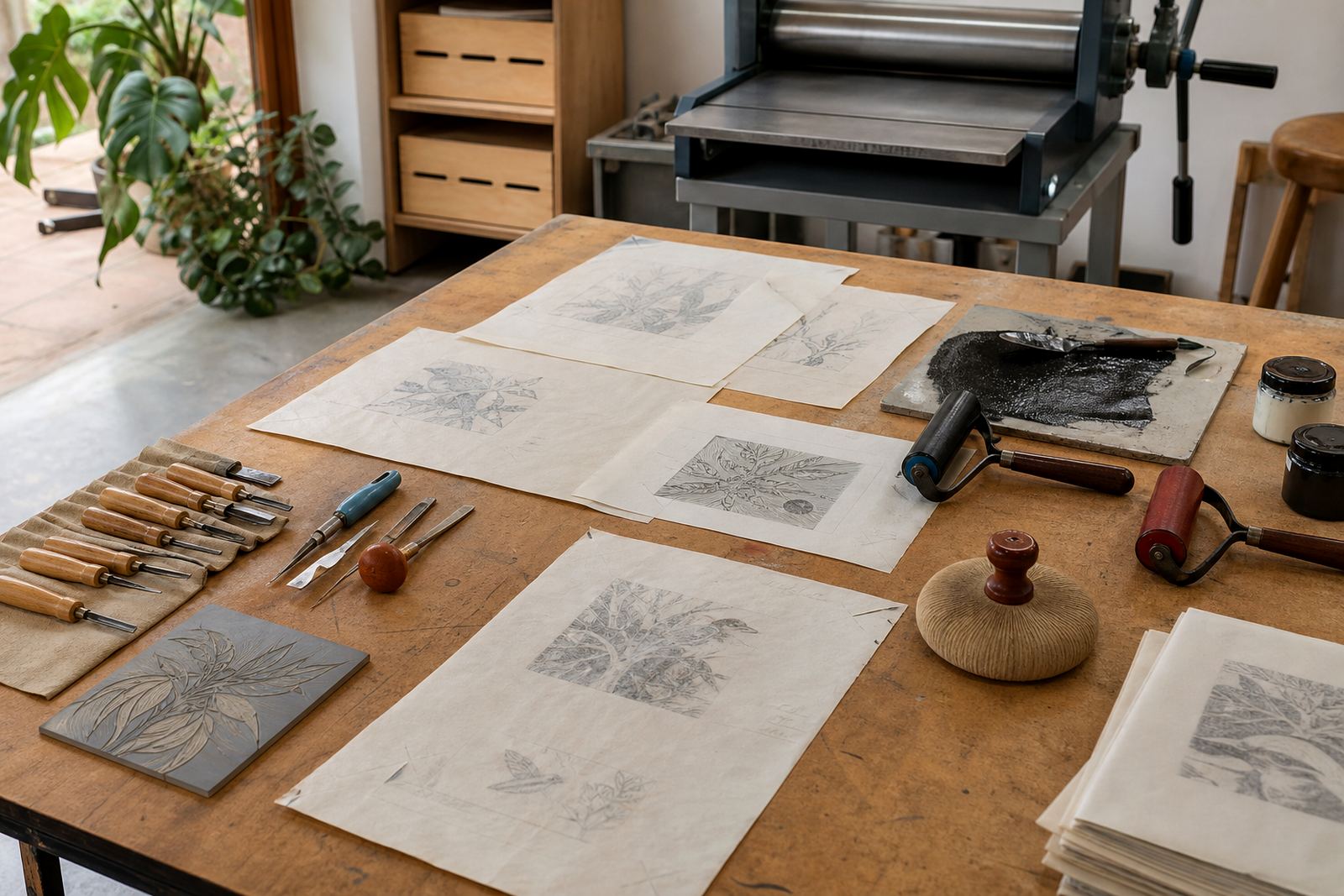
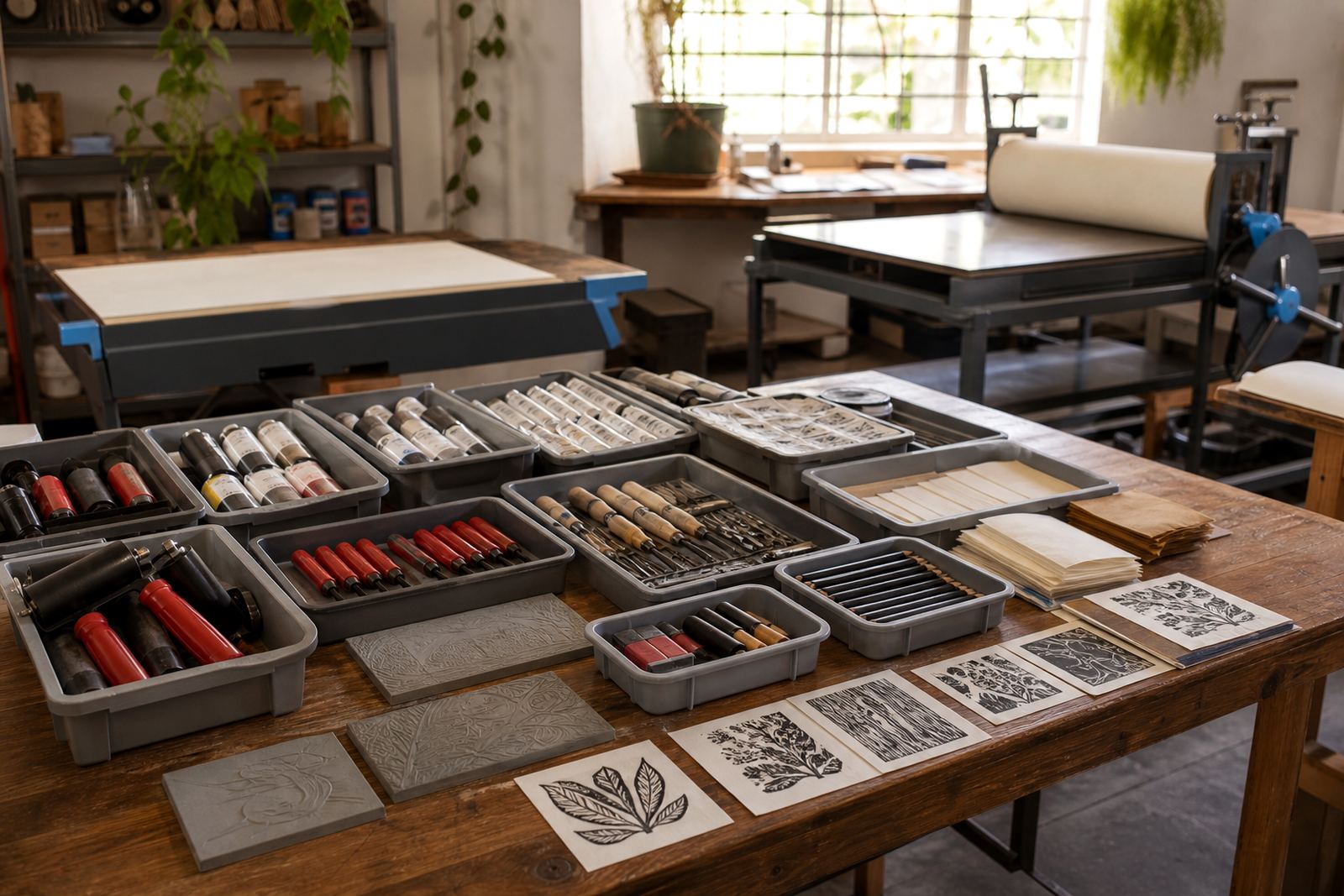
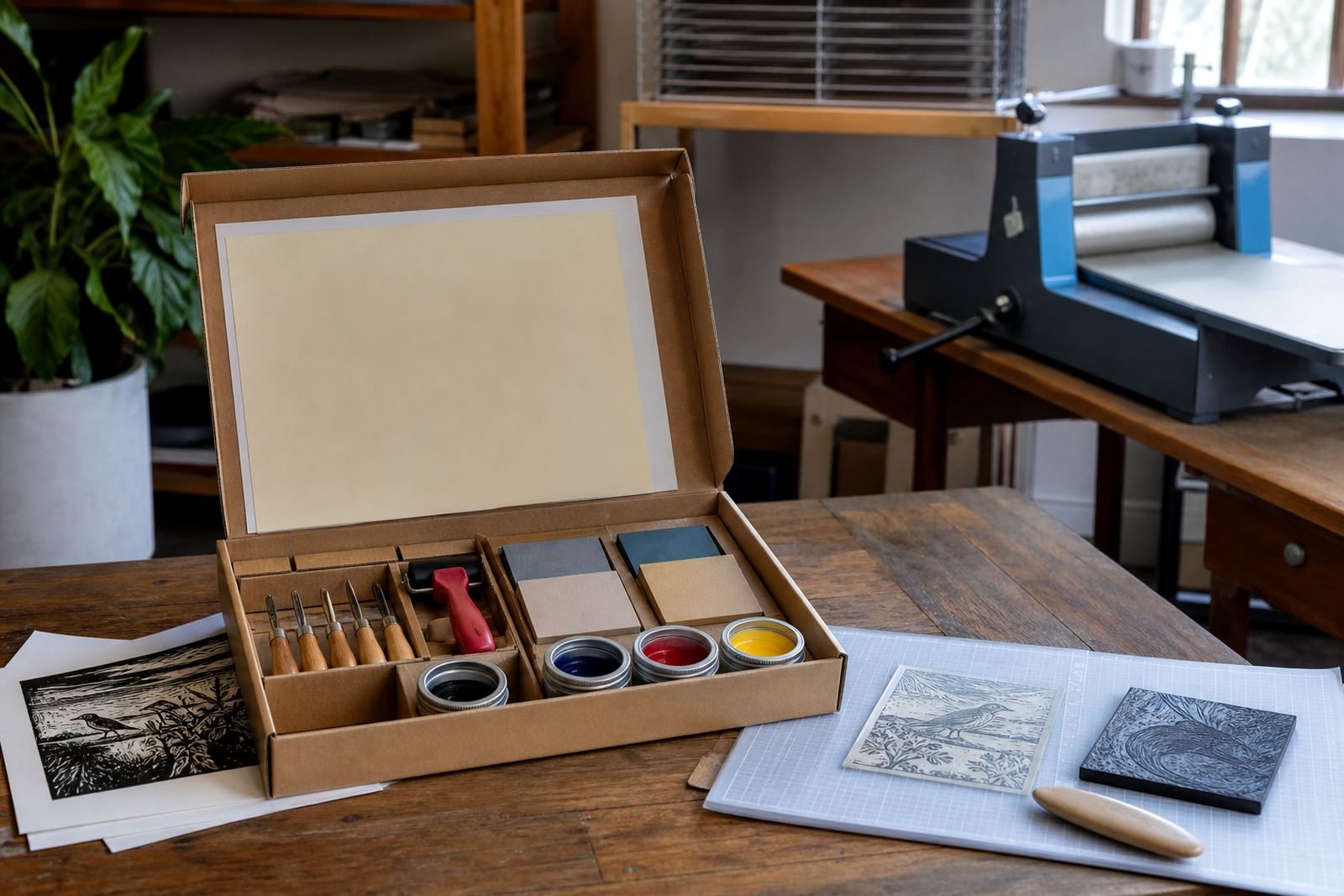
Pick the block first
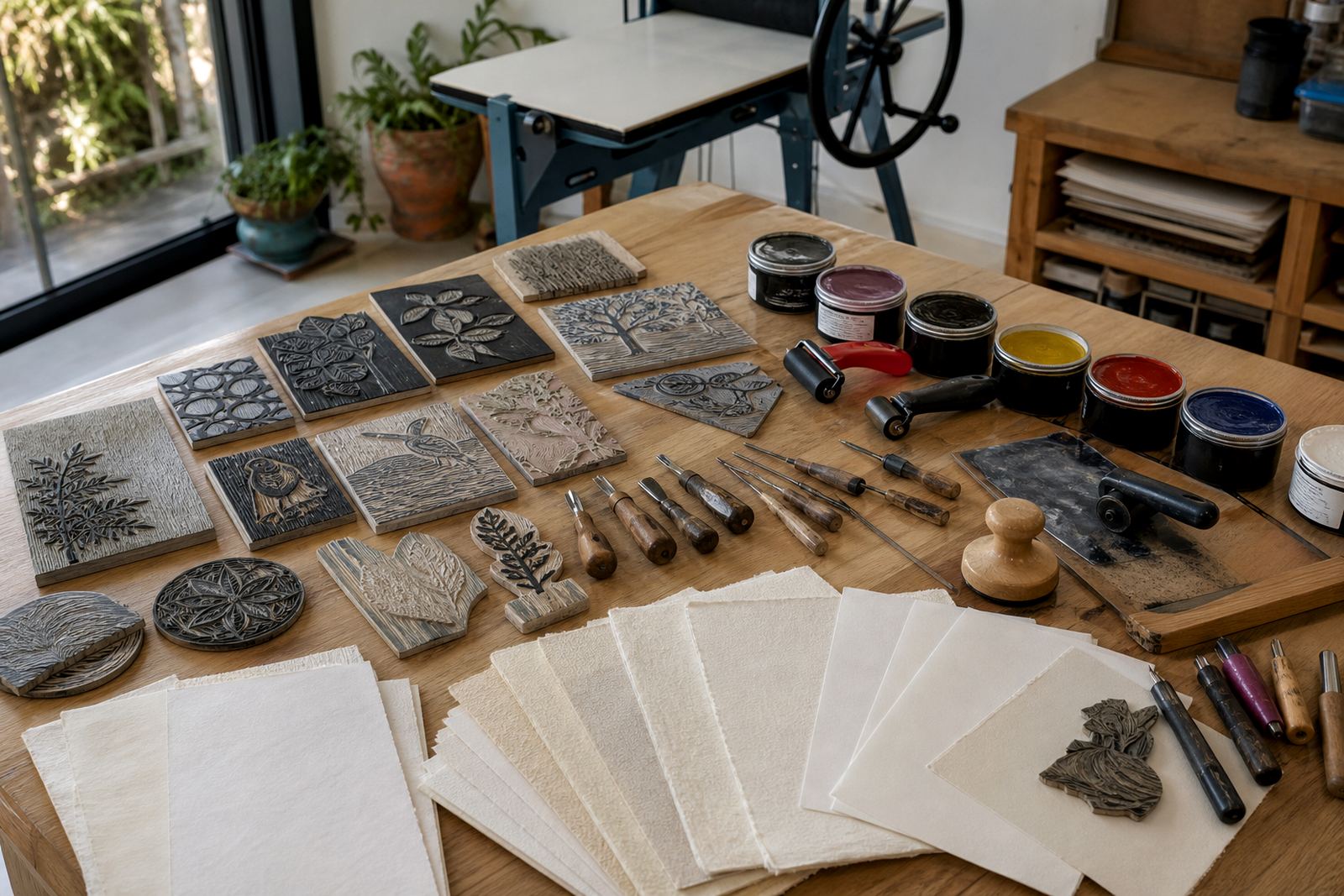
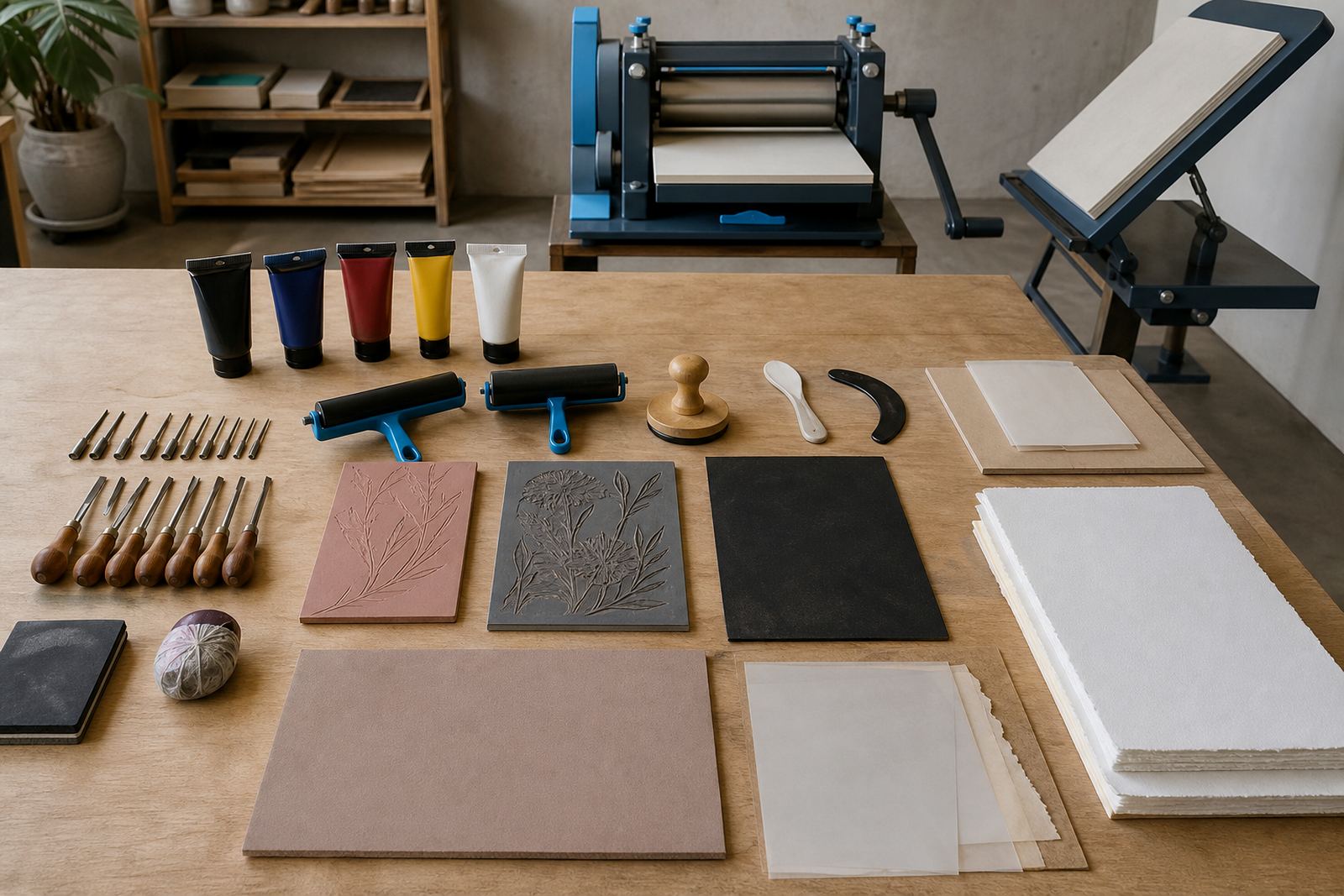
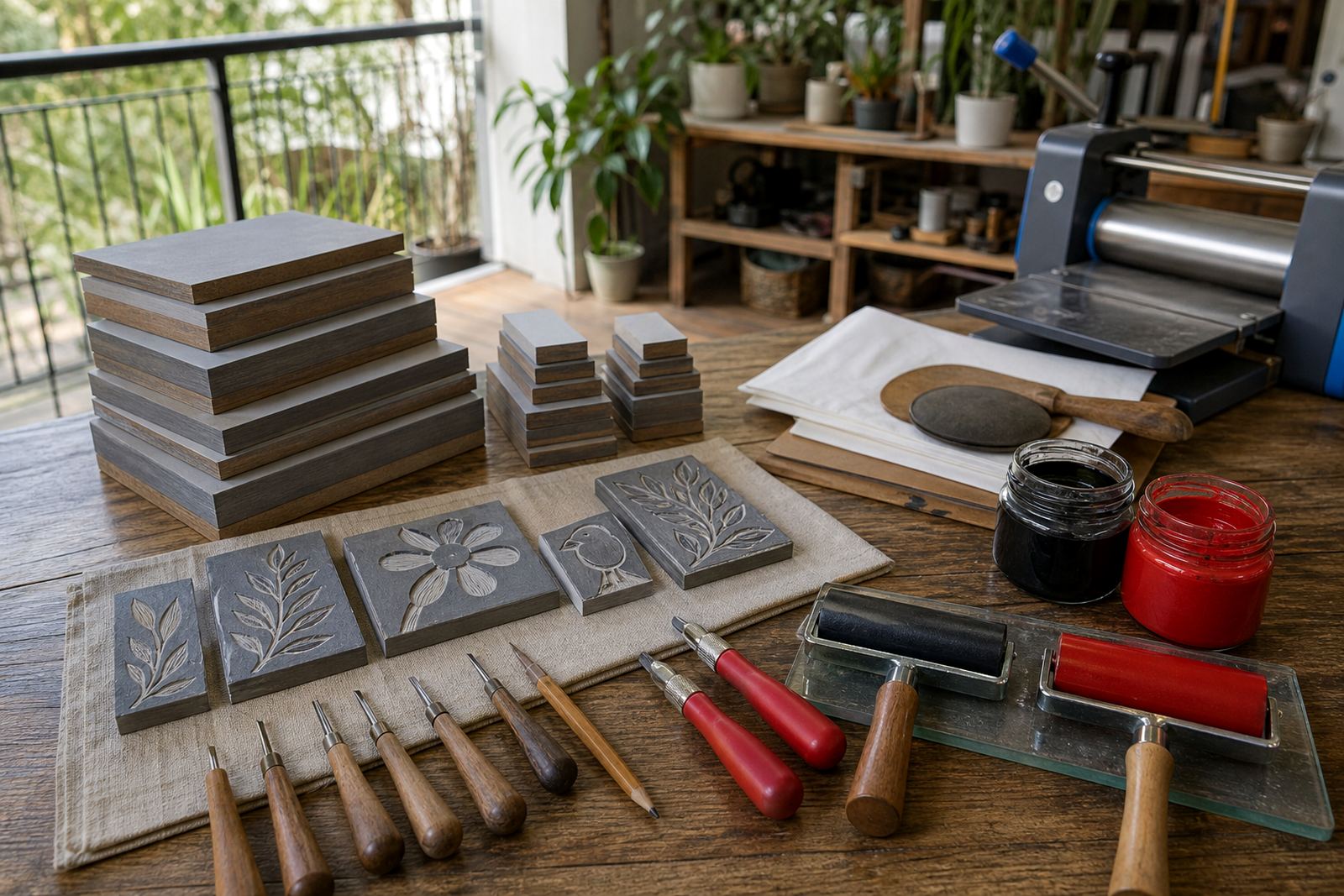
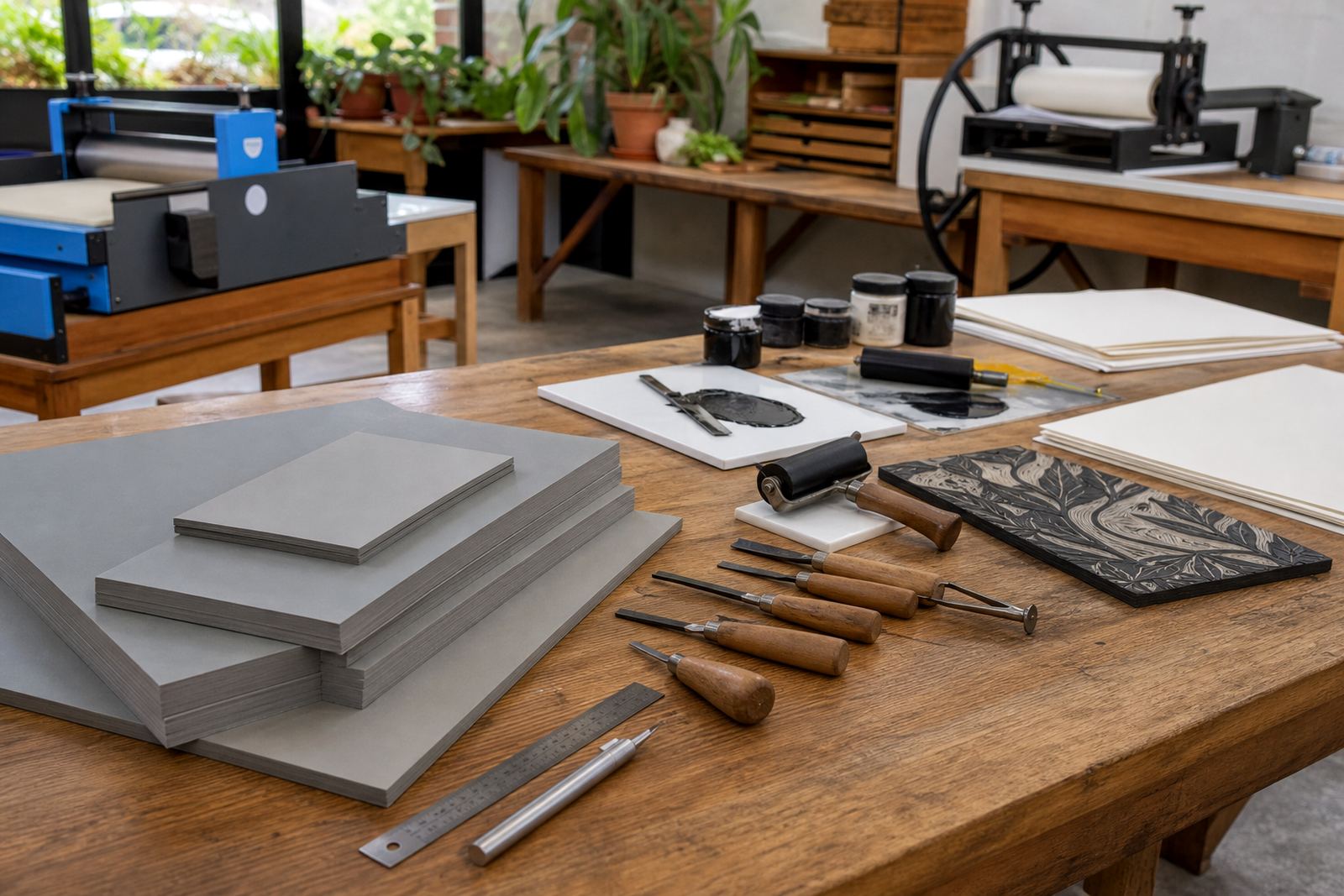
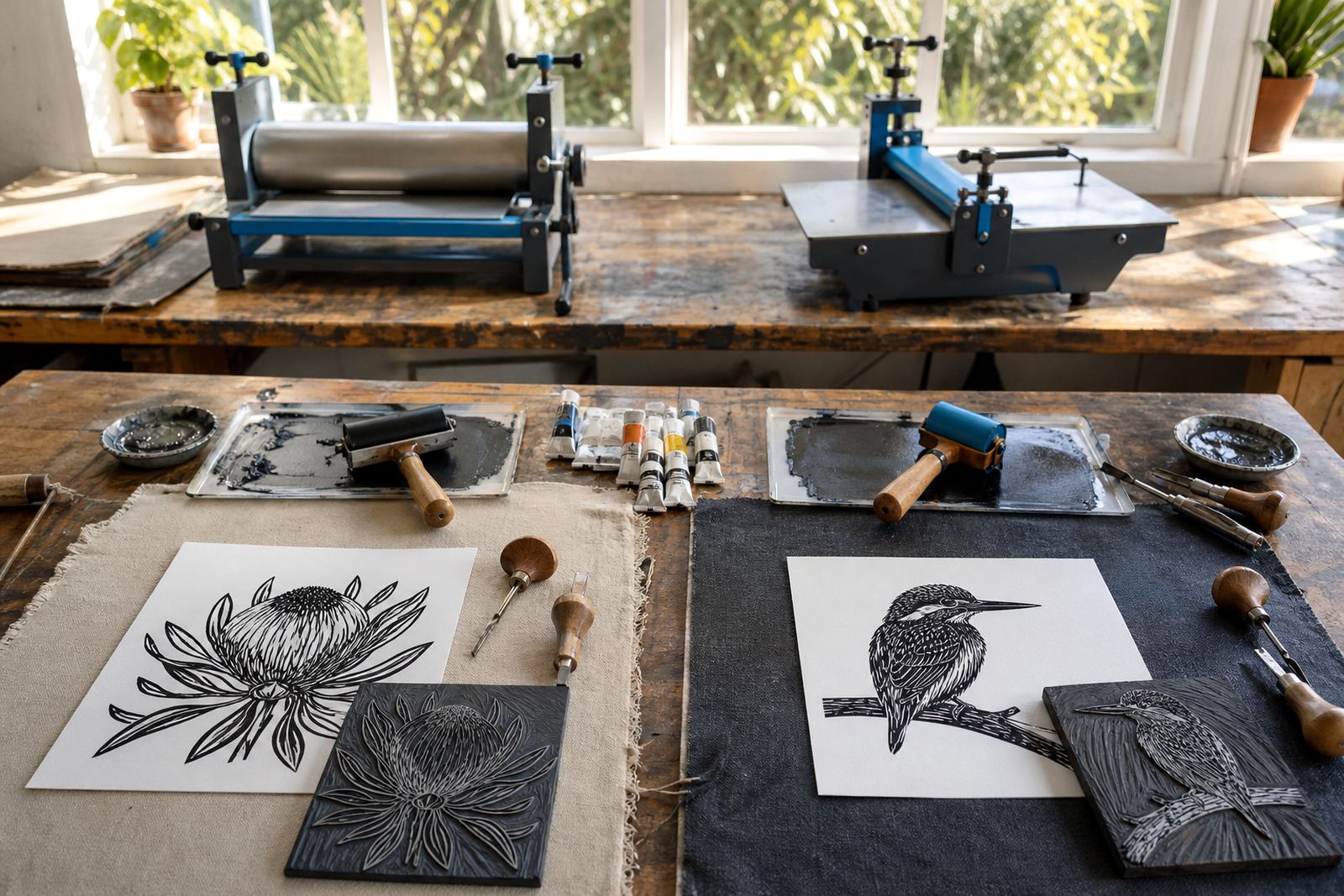
Linocut begins with the block you carve, and the choice changes how the work feels in your hand. Soft-cut blocks are kinder for first cuts and classroom sessions, while traditional lino gives a firmer surface and holds finer detail once your knife control settles. The right material depends on how much line work you want, how much pressure you are happy to use, and whether the finished print needs a clean edge or a softer mark.
For guided sessions in Woodstock or at a venue, we often talk through the block before anyone starts cutting. A smooth face, clear pencil transfer and a stable backing board all help, especially when the design has small spaces or close parallel marks. Whatever block you pick shapes the carving, the inking and the paper that follow.
Gouges, V-tools and safer carving habits
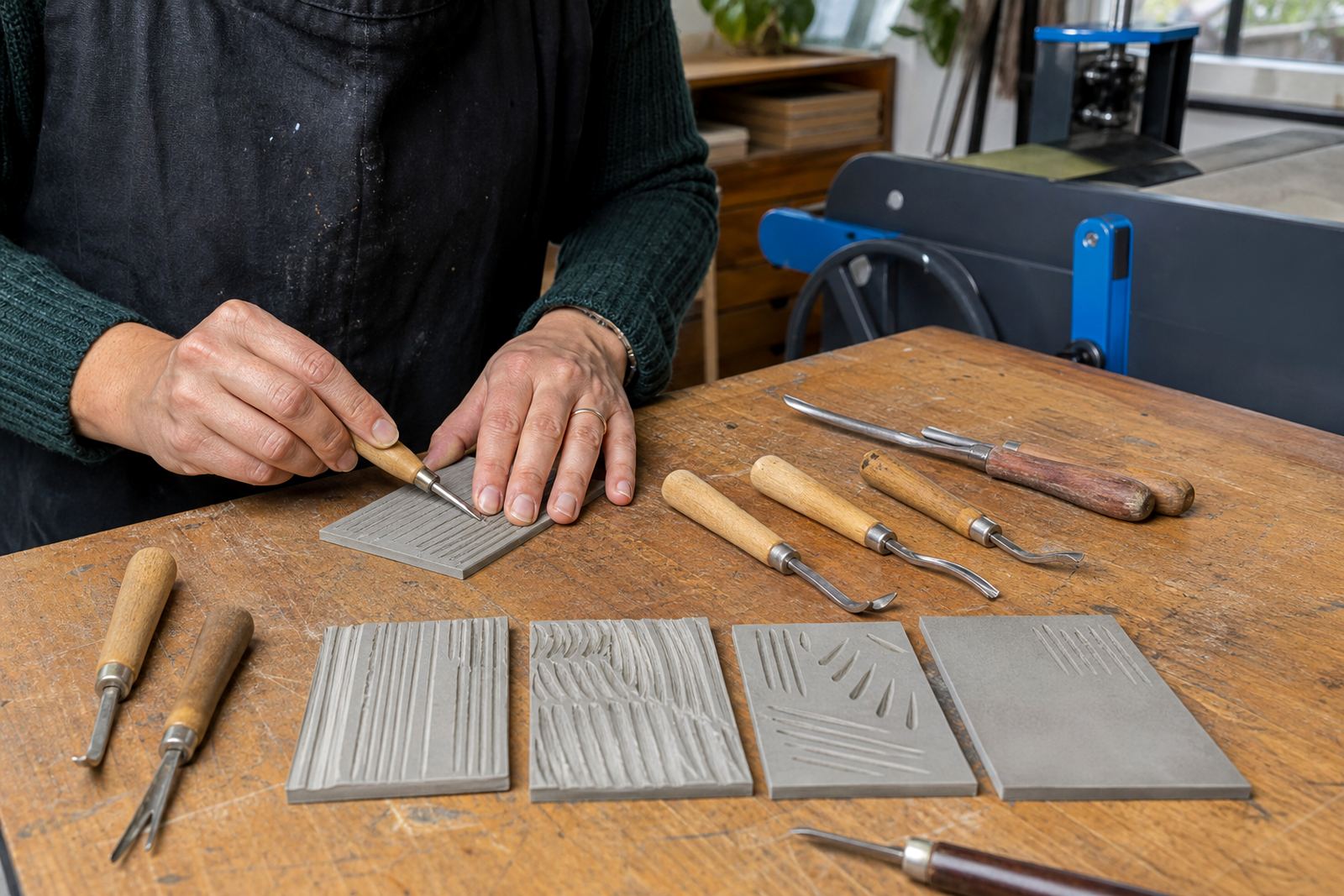
Carving tools do the real work, so the hand position matters. V-tools are useful for narrow lines and lettering, while U-gouges clear wider channels and remove larger areas more quickly. A sharp tool cuts cleanly and needs less force, which is one reason we keep the focus on control rather than pressure. Safe carving means working away from the body, bracing the block well and keeping the other hand clear of the cutting path.
- Keep the block flat on a bench or carving board.
- Use short strokes instead of forcing a long cut.
- Clear chips often so the line stays visible.
- Check the grip before moving to a tighter curve.
In a mixed group, those habits matter because different hands move at different speeds. A tidy cutting rhythm helps the block stay readable before ink even touches it.
Ink, rollers and the look of the final impression
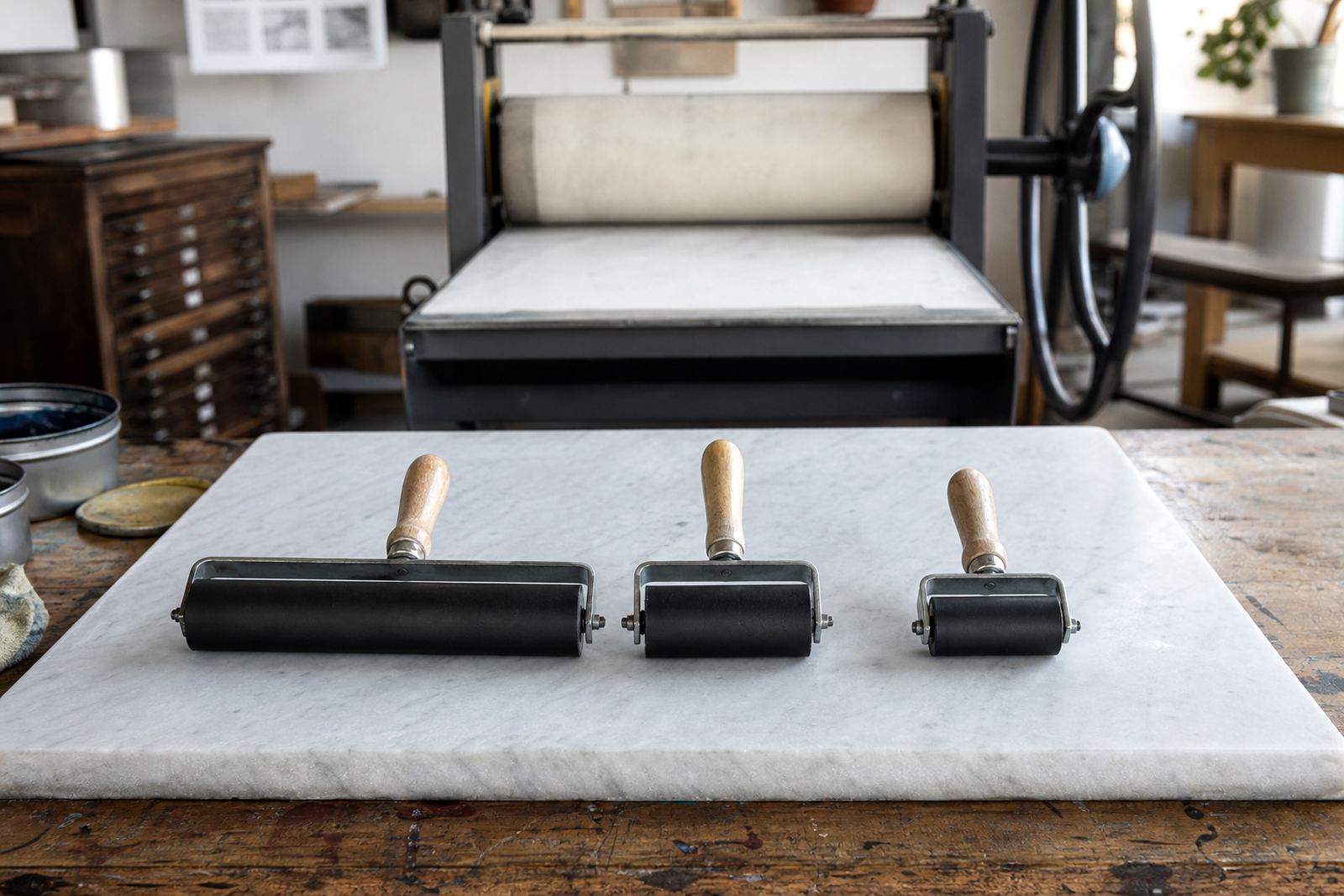
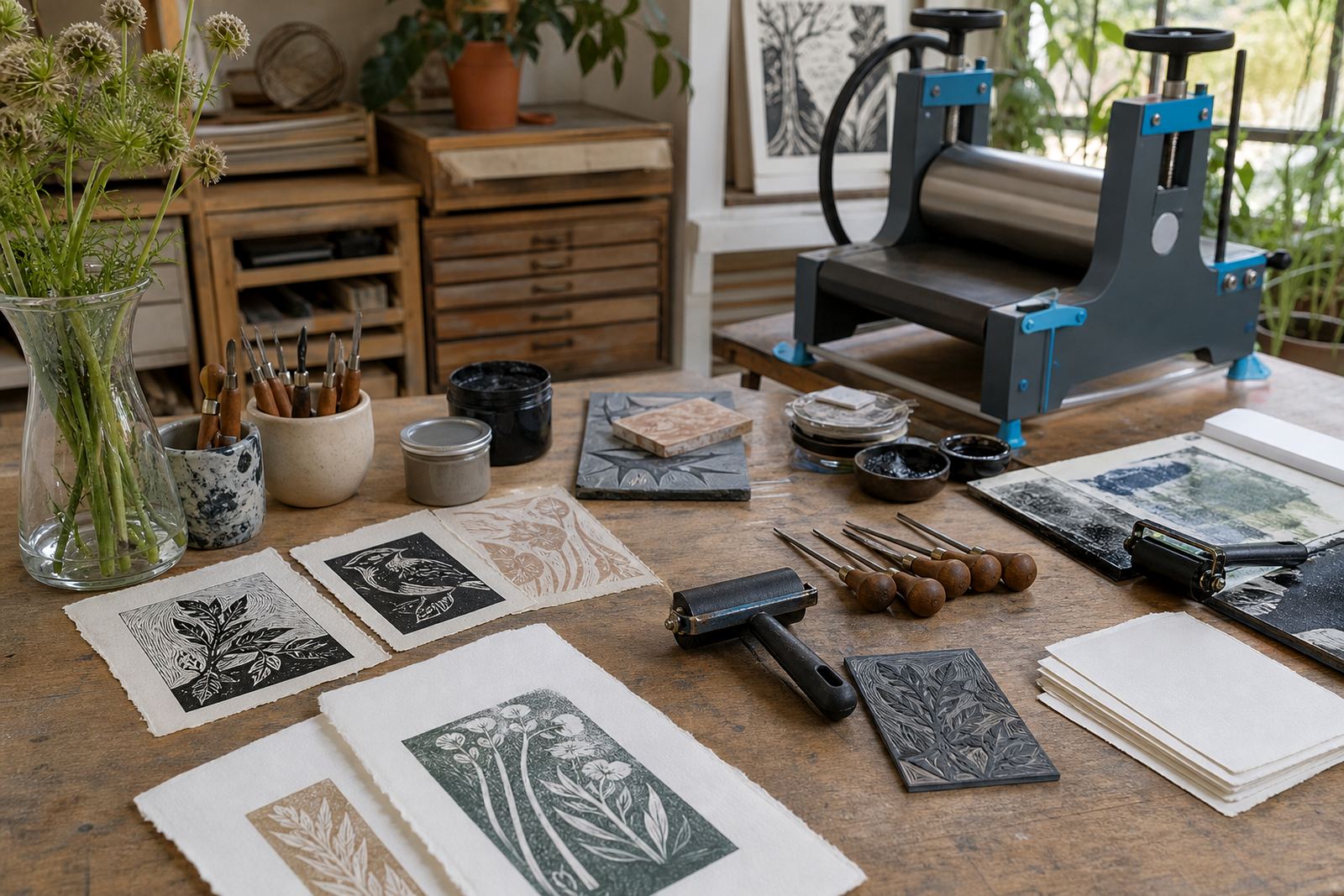
Block inks behave differently depending on whether they are water-based or oil-based. Water-based ink is often easier to clean up and works well for teaching, while oil-based ink can hold a richer body on some papers and stays open a little longer on the slab. A brayer spreads ink evenly across the roller, and the amount loaded on the roller sets how much ink reaches the block. Too much ink fills the carved gaps, too little leaves the surface patchy.
The final impression also changes with pressure, paper choice and the amount of ink sitting on the block. A light roll can leave a crisp, airy print, while a more loaded roller gives a deeper field of colour. That is why ink tests are part of any sensible workshop plan.
Registration, editions and repeat prints
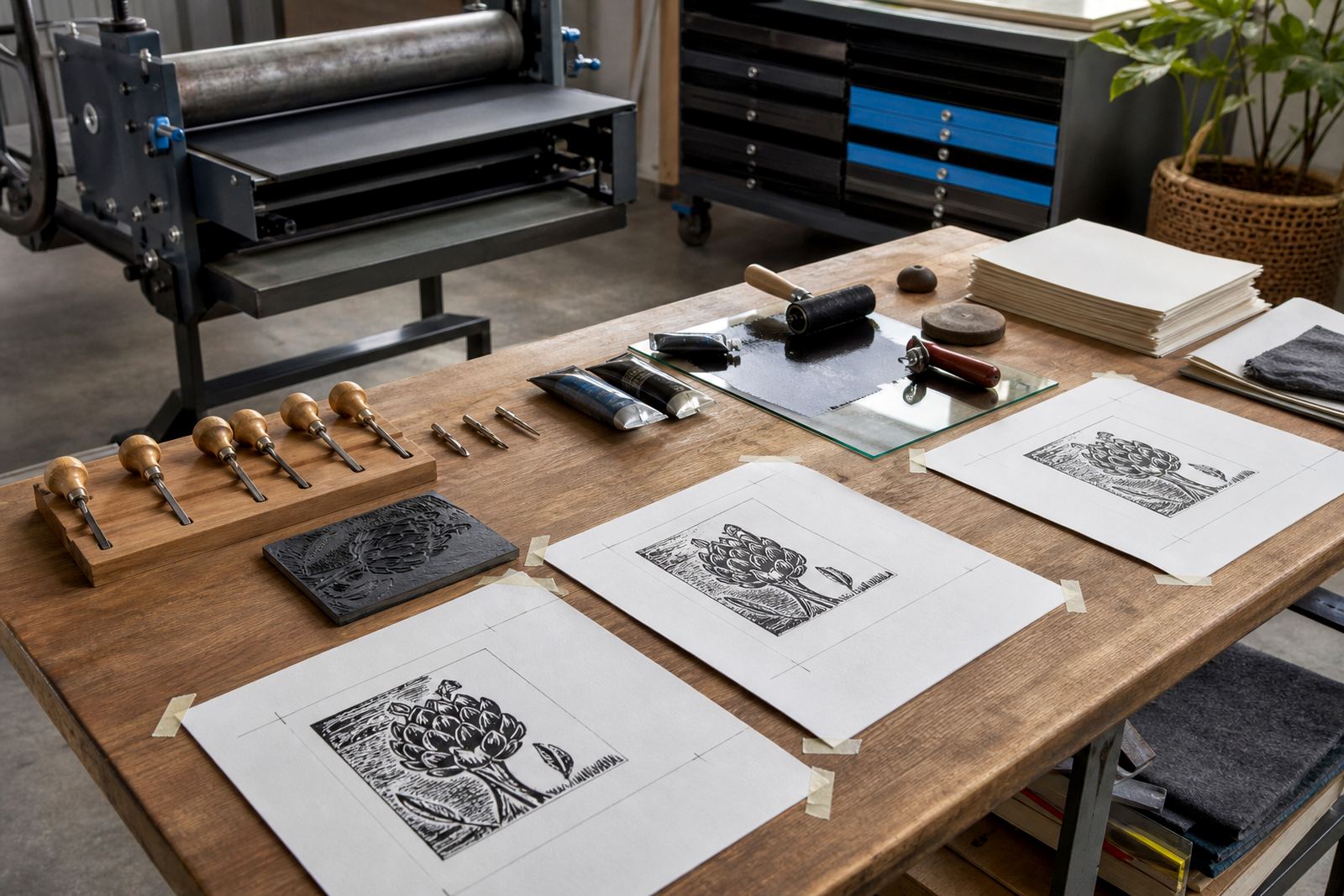
Once a block is ready, registration keeps the image where it belongs. That matters for multi-colour work, layered shapes and any print that needs one pass to sit over another without drifting. Simple pencil marks, corner guides or a registration board can do the job, provided the paper returns to the same place each time.
Edition printing means pulling several prints from the same block with as much consistency as the method allows. Paper fibres, ink load and hand pressure can still shift from one sheet to the next. A good edition accepts those natural changes and keeps the set close enough for the work to read as one group.
Paper choices that suit block print methods
Paper changes the whole print, even when the block and ink stay the same. A smoother sheet can show fine detail and tight line work, while a more textured paper gives the impression a softer feel and can hold a deeper bite from the block. Weight matters too, especially when the print is pulled by hand and needs to stay flat after drying.
- Softer papers suit hand-pulled impressions and learner sessions.
- Heavier sheets cope better with layered ink and repeated handling.
- Smooth surfaces favour detail, lettering and clean line work.
- Textured stock can add warmth to bold, open designs.
In humid coastal weather, paper can curl and shift, so storage and handling are worth thinking about before the first print is made.
Hand pull, baren or press
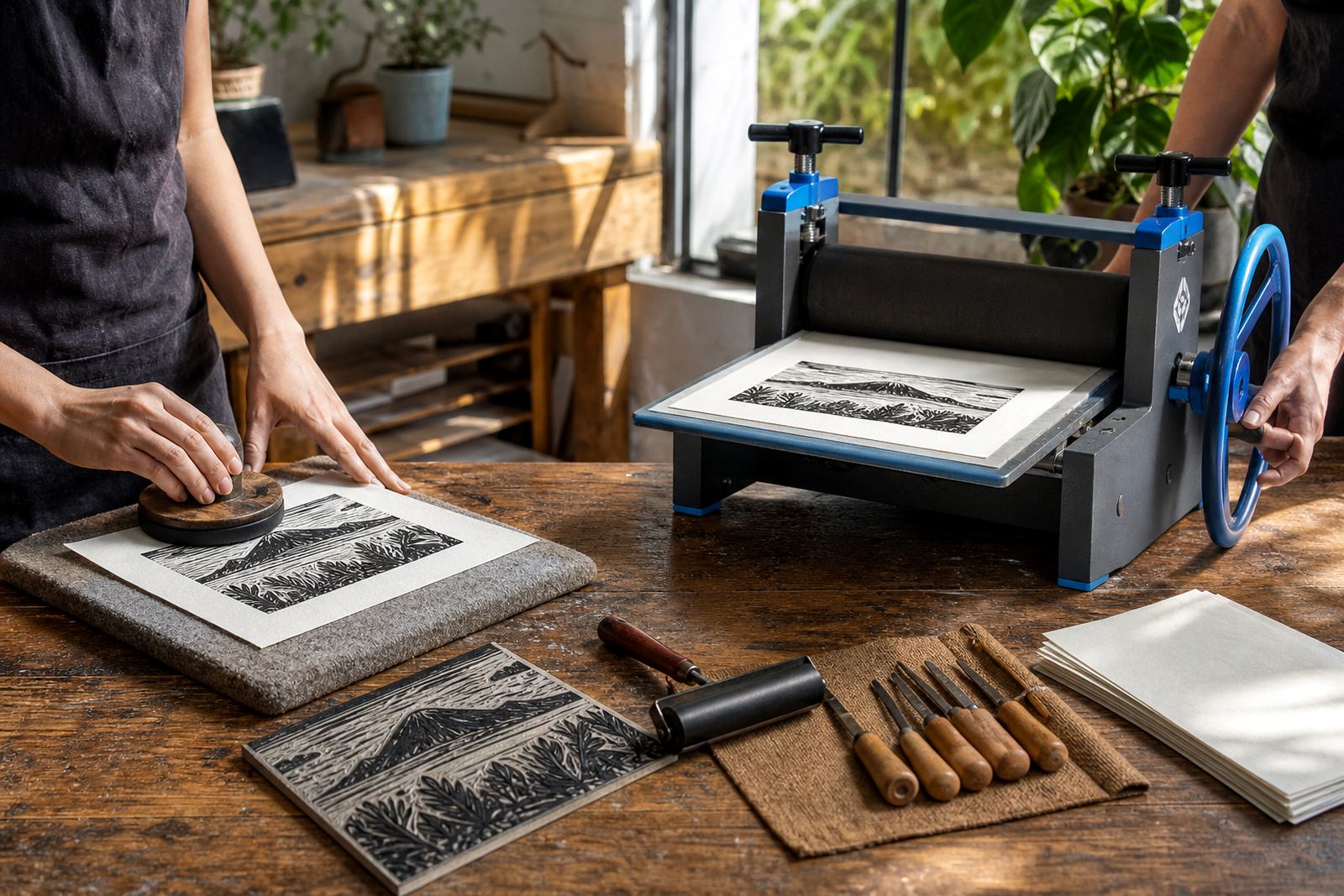
There are two main ways to transfer an image from block to paper. A baren gives direct hand pressure across the back of the sheet and suits smaller prints or teaching sessions where the process stays visible. A press gives more even contact and helps with larger sheets or more detailed editions, especially when the block surface is even and the paper is aligned carefully.
Neither method is automatically better. The choice depends on the scale of the image, the paper, the depth of the carved marks and the result you want on the day. For some groups, a hand-pulled print feels more immediate; for others, the press helps show how pressure changes the final image.
Before your first workshop
Teachers, parents and club organisers usually ask about materials first. Some people want a first look at lino and soft-cut blocks, while others need clearer notes on ink, paper and edition printing before booking a studio session. The common thread is practical choice, with enough detail to make the tools and steps less mysterious.
- Choose a block that matches the level of carving skill.
- Match the ink and paper to the look you want.
- Plan registration before any colour layers are printed.
- Allow space for drying, trimming and signing the edition.
When the method is clear, the workshop runs with fewer surprises and the finished prints carry more of the maker's hand.