A holiday day that has a clear making rhythm
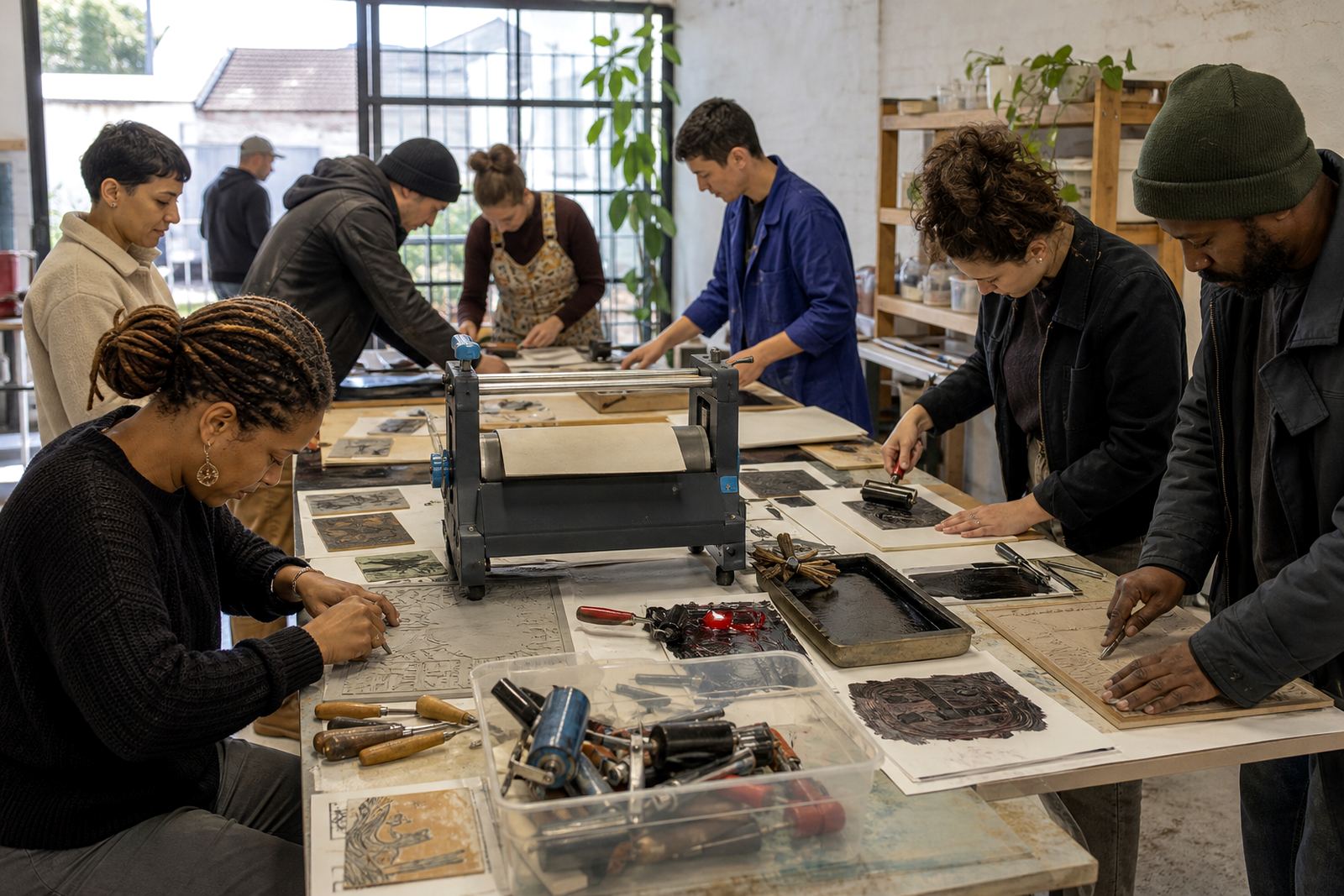
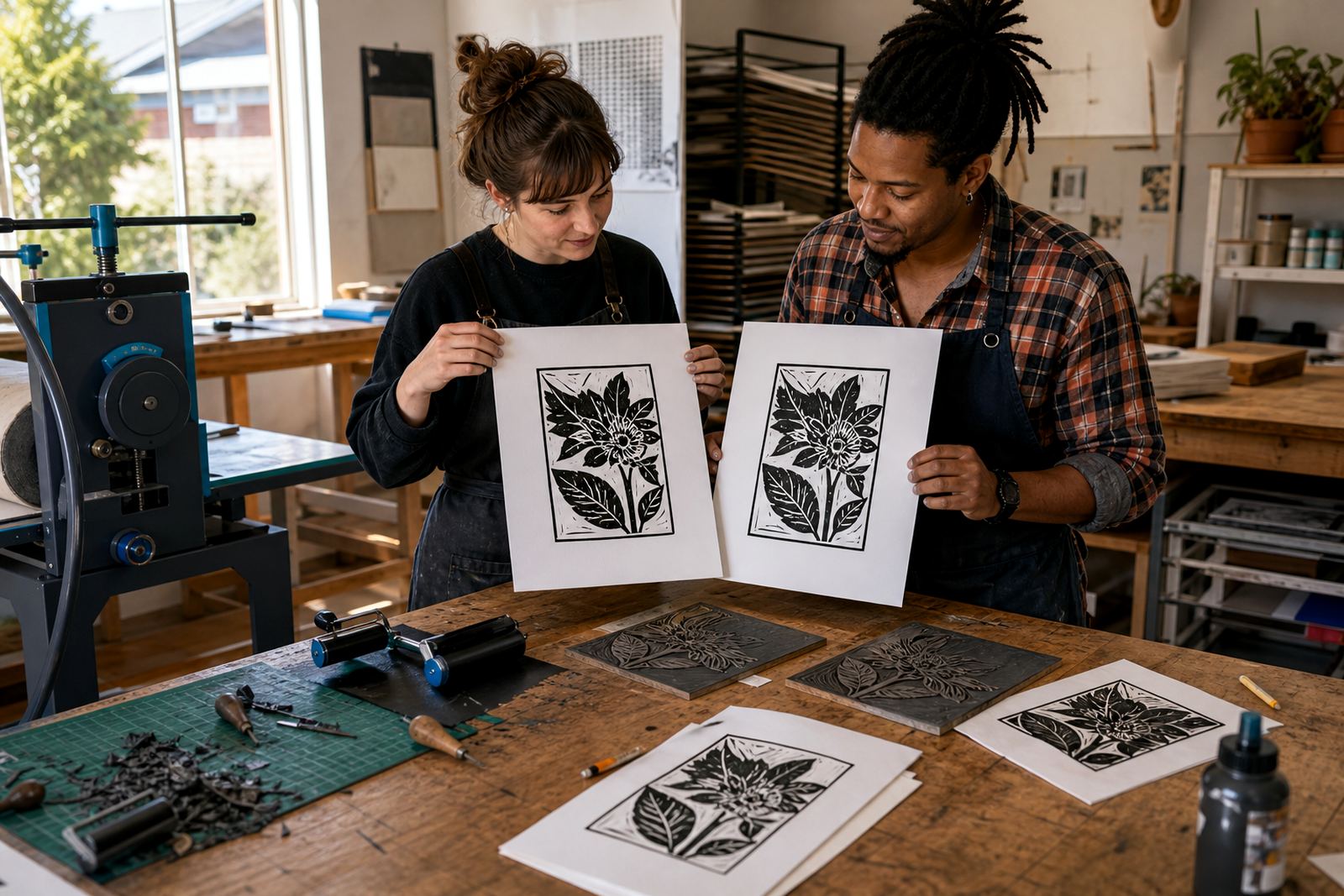
A good holiday programme gives people something real to do with their hands, without turning the room into a mess of half-finished pieces. Linocut and soft-cut printing suit that pace because participants can sketch, carve, ink and print in stages, with natural pauses between each part.
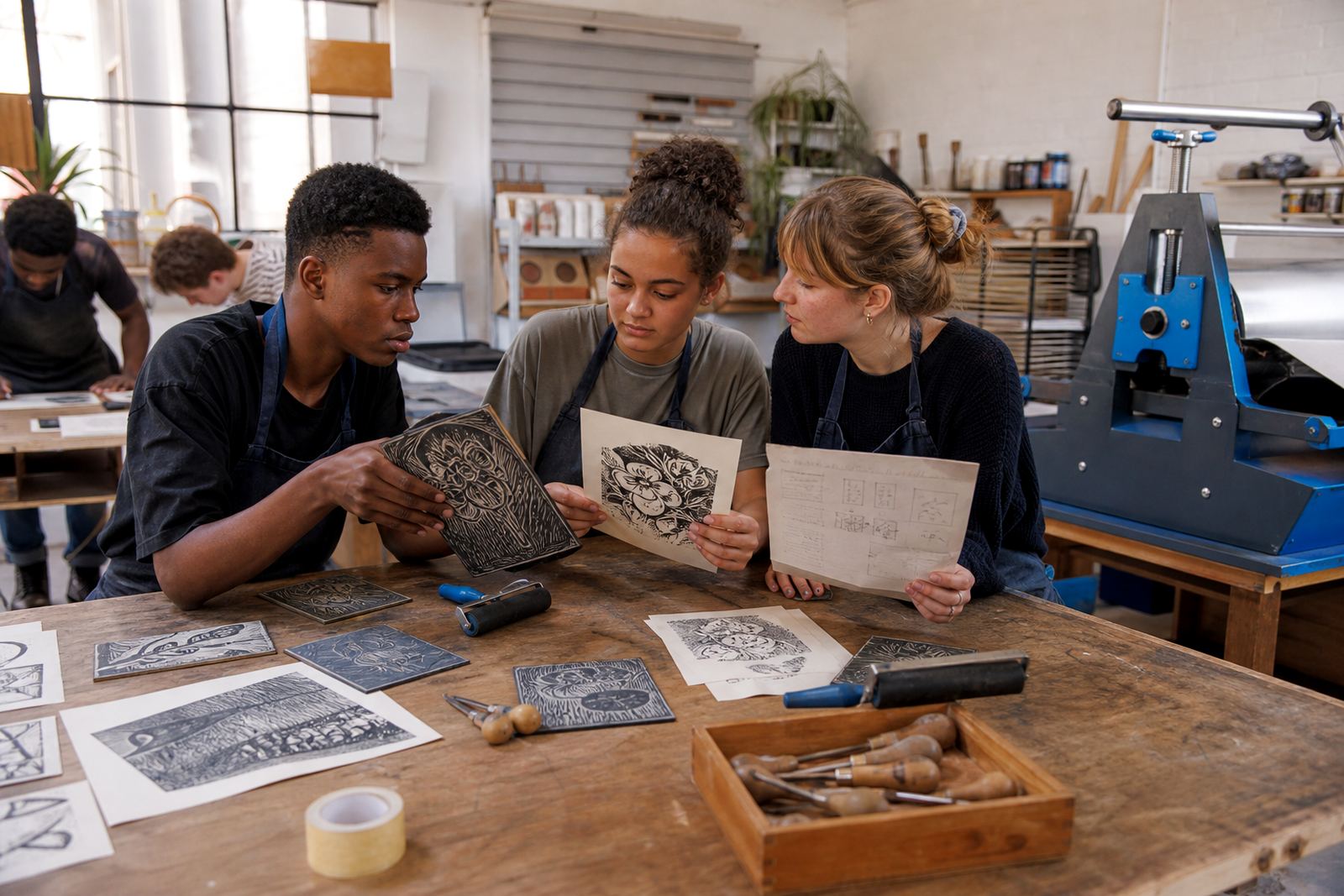
For schools, community venues and family bookings, the workshop flow usually starts with a short demo, then carving, then test prints before the final edition. That keeps the group moving, and it also gives space for questions while the block is still workable. Children and younger teens often do best with softer blocks, while older students and adults can handle lino with proper gouges and V-tools.
Tools and print surfaces that suit mixed groups
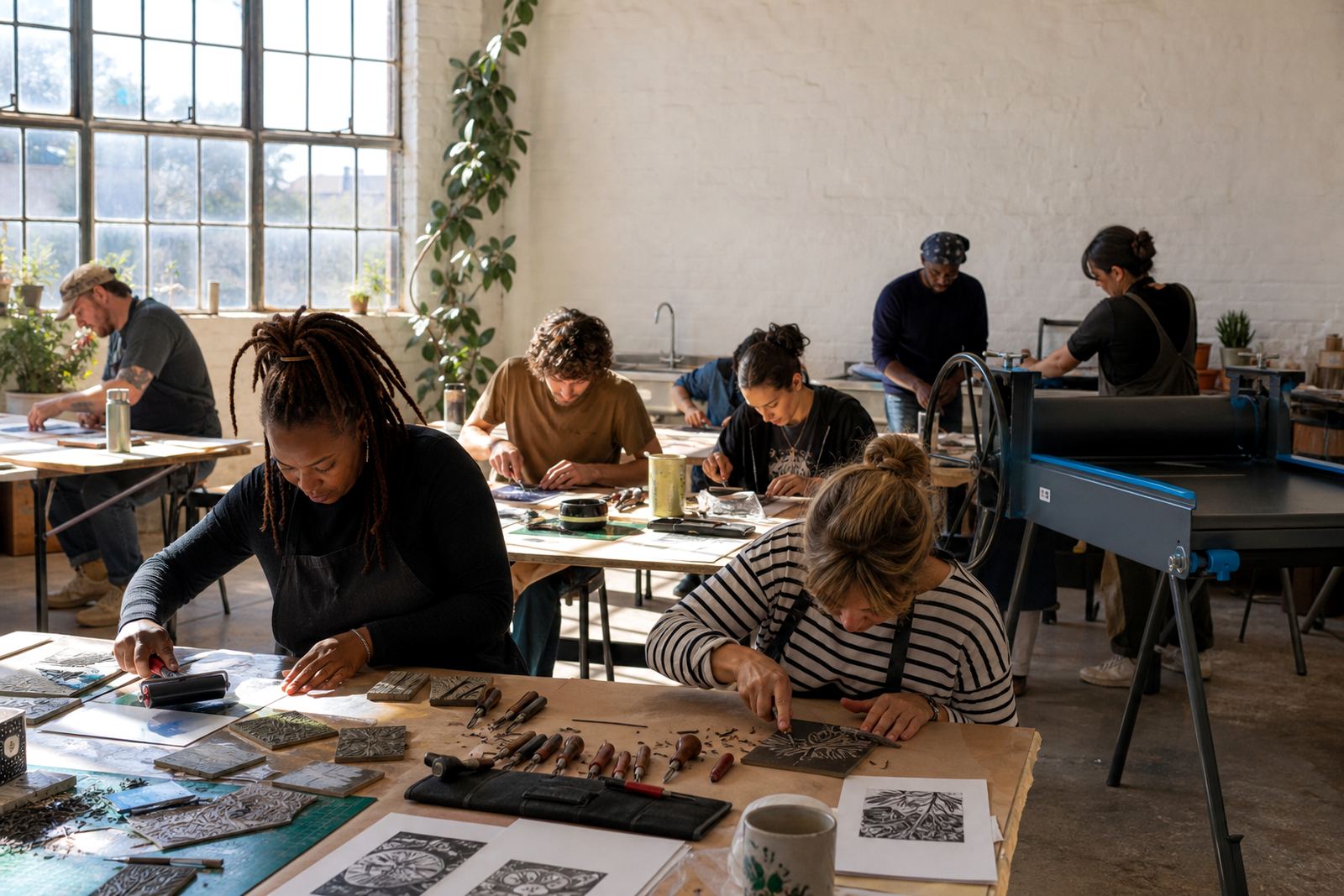
The usual set-up includes lino or soft-cut blocks, carving tools with safe handles, brayers, ink slabs, water-based or oil-based block inks, newsprint for proofs and print paper for the final edition. In a holiday session, each table needs enough room for carving boards, wet wipes, scrap sheets and drying space, because once the inks are open the work area changes fast.
- Gouges and V-tools for line work, texture and clean edges
- Brayers for even inking across the block face
- Baren or press printing for firm contact and cleaner impressions
- Registration guides so repeated prints sit in the same place
- Paper choices that suit the ink, the edition size and the drying time
Soft-cut blocks suit younger hands and shorter sessions. Lino gives sharper marks and holds detail well, but it needs a steadier grip and more care while carving. For larger groups, a mix of hand printing and press printing helps keep the queue moving.
How the room is usually planned
Holiday workshops work best in a room with separate zones. One table is for drawing and tracing, another for carving, and a third for inking and print drying. If the venue has polished floors or narrow walkways, the layout needs to leave space for trays, paper stacks and finished sheets, especially when people are carrying wet prints between stations.
At schools, halls and galleries, the setup often needs table covers, hand-wash access, drying racks and a clear place for finished editions to flatten. In Cape Town, Johannesburg or Durban, humidity can affect drying, so the session plan should allow for extra drying space and packaging that keeps prints from sticking together. Outdoor pop-ups can work too, but wind and dust need managing from the start.
- Keep carving tables separate from wet-print areas
- Plan one dry surface for proof sheets and one for final editions
- Use a labelled drying zone so prints do not mix up
- Set aside a cleanup table for used rags, gloves and waste paper
What tends to go wrong in holiday groups
The most common problems are rushed carving, too much ink and unclear print order. People often want to carve deep lines quickly, then the block catches or tears at the edge. Others load the brayer too heavily and lose fine detail, which makes the print look muddy instead of crisp.
Another common issue is skipping test prints. A quick proof shows whether the block needs more trimming, whether the registration mark is set correctly, and whether the paper is taking the impression evenly. Holiday groups get a short demo first, which saves tears later in the day. A second mistake is using paper that is too thin for wet ink or too smooth for the chosen block, especially where the group wants a clean edition rather than a loose experimental result.
- Carving too fast and breaking a thin bridge of lino
- Over-inking the block and losing line detail
- Printing without checking registration marks
- Choosing paper that wrinkles when it meets the ink
Budget planning for a holiday booking
Holiday programme budgets in Rand usually depend on group size, venue access, number of facilitators, materials and whether the session includes press printing or take-home kits. A smaller studio session with basic materials sits in one band, while a school pop-up with tables, inks, blocks, paper and cleanup support sits in another. Longer formats, multi-table groups and custom print outcomes move the total up.
For planning, it helps to think in three parts: facilitator time, consumables and venue handling. Consumables include blocks, paper, ink, carving tools where needed, cleanup materials and packaging for finished prints. If the group wants a full edition print session or a teacher skills workshop attached to the holiday booking, the material list changes and the budget follows that shape.
Clear numbers are easier to work with when the session brief includes the age group, preferred town, expected headcount and whether the final prints must be flattened, labelled or packed for transport.
Holiday formats that fit different groups
Different groups need different workshop shapes. Families usually do well with a simpler image, fewer carving stages and more time for printing. Student groups can handle a more technical brief, including registration, edition control and cleaner finishing. Team groups often enjoy shared imagery, where each person prints part of the same visual set and the finished pieces sit together as a wall group.
In Woodstock, studio sessions work well for smaller holiday groups that want a contained print room with proper tools. Pop-up classes suit schools, venues and community spaces in Stellenbosch, Pretoria, Bellville, Somerset West, Johannesburg and Durban. For larger groups, the best result usually comes from keeping the image language clear, the carving manageable and the printing station well organised.
- Family sessions for shared making and easy cleanup
- Student classes for editions, proofs and cleaner line control
- Team sessions for group prints and coordinated layout
- School pop-ups for structured holiday activity days
HandPrinter Art runs holiday programmes through private studio workshops, school pop-ups, team building sessions, family print sessions, student print classes and edition print sessions, with our contact form used for bookings and brief details.