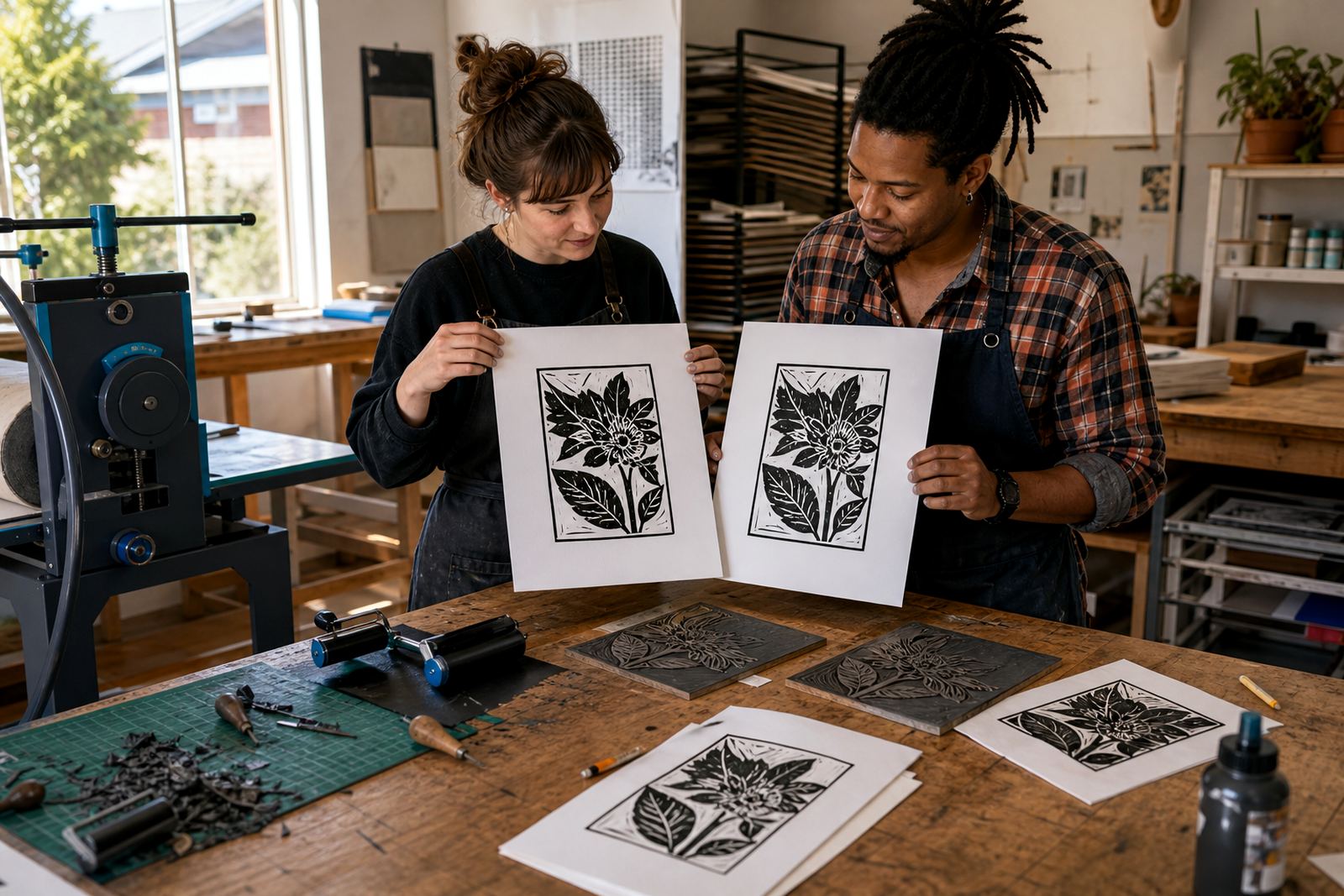
A shared print table for two hands
Couples usually book when they want a date that feels hands-on rather than formal. The workshop suits partners, newly engaged pairs, long-married couples and two friends who want to make work together without needing prior printmaking experience. One person may take to drawing and carving quickly, while the other prefers mixing ink, setting the paper or pulling the print. That split is normal and it often works well.
For a couple, the session is best when the image plan stays clear. A single block can hold a joint motif, or each person can cut a block that echoes the other in shape, line or subject. The finished sheets can be identical, mirrored or slightly different, depending on how the pair wants to work.
Tools that sit neatly beside the two of you
The usual kit includes lino or soft-cut blocks, tracing paper, pencils, gouges, V-tools, safety hand protection where needed, brayers, block inks, registration guides, paper, scrap sheets and drying space. For some couples, water-based inks are the cleanest fit because they are easy to handle in a studio setting. Others prefer oil-based block inks for a deeper surface and a slower working rhythm.
Carving is always introduced with safe blade handling and a steady bench position. We explain how to keep fingers out of the cut path, how to work from larger shapes into finer detail, and how to test pressure before the final pull. A baren or press may be used, depending on the image size and the session plan.
- Small blocks suit bold marks and first-time cutters.
- V-tools help with narrow lines and texture marks.
- Brayers spread ink evenly without flooding the block.
- Registration keeps layered prints aligned when each colour has its own pass.
- Paper choice changes how the final print holds ink and detail.
How the layout usually works in the studio
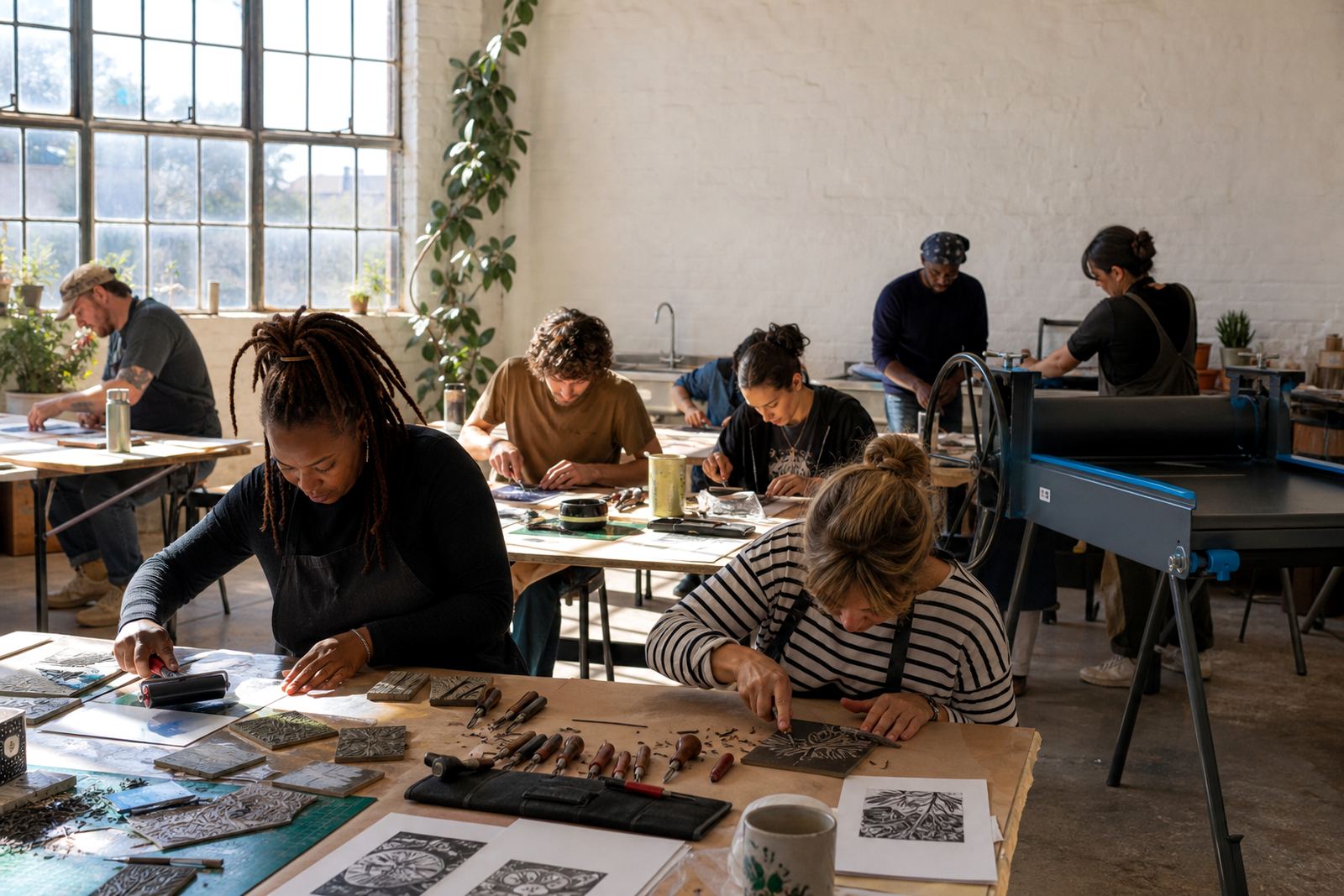
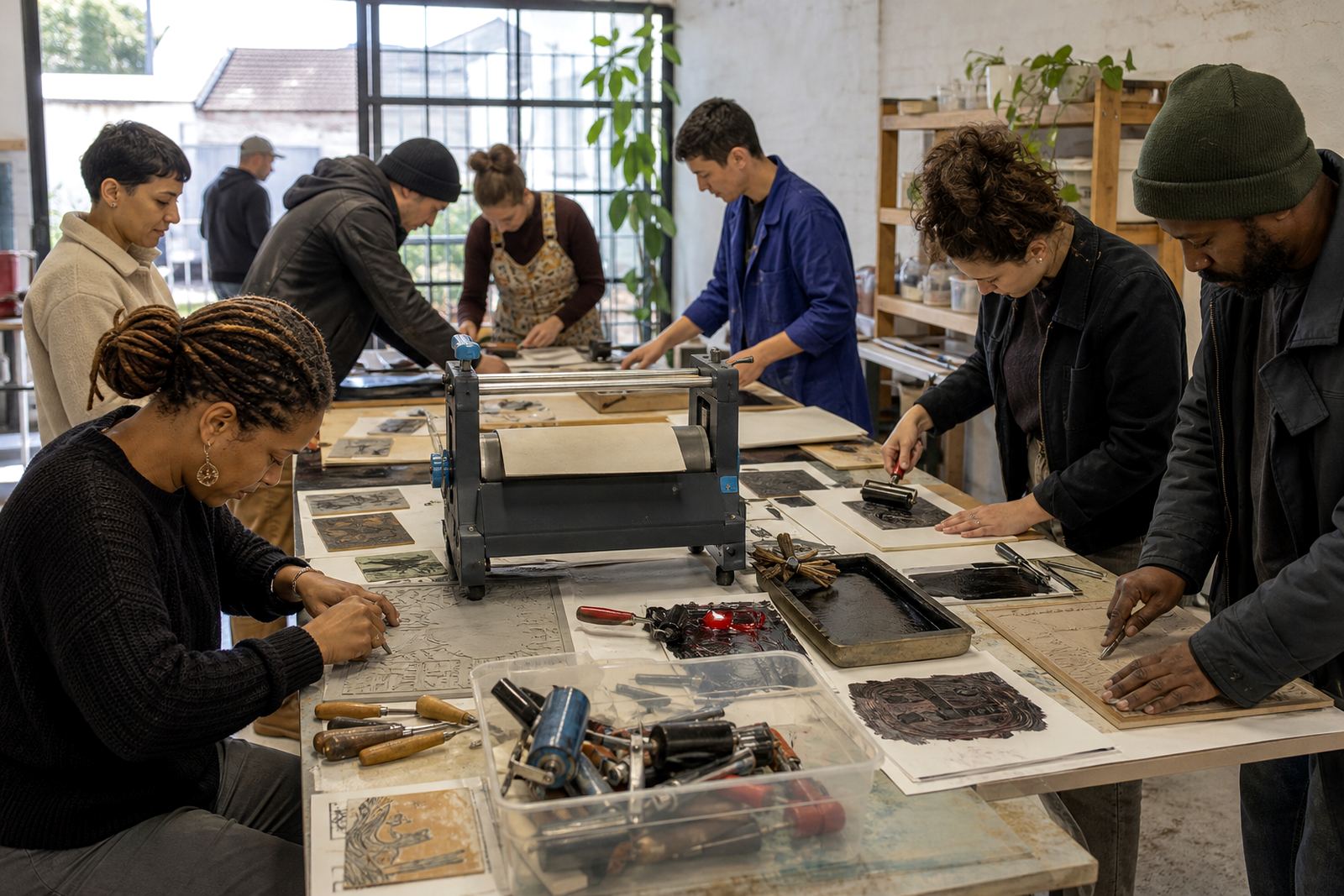
The table layout needs enough elbow room for two people to carve without bumping hands. A side bench for papers and proof sheets helps keep the main work area clear. We usually set out the tools so both people can see the block, the ink slab and the sample prints at the same time. That matters, because couples often make small changes as they watch the first proof come up.
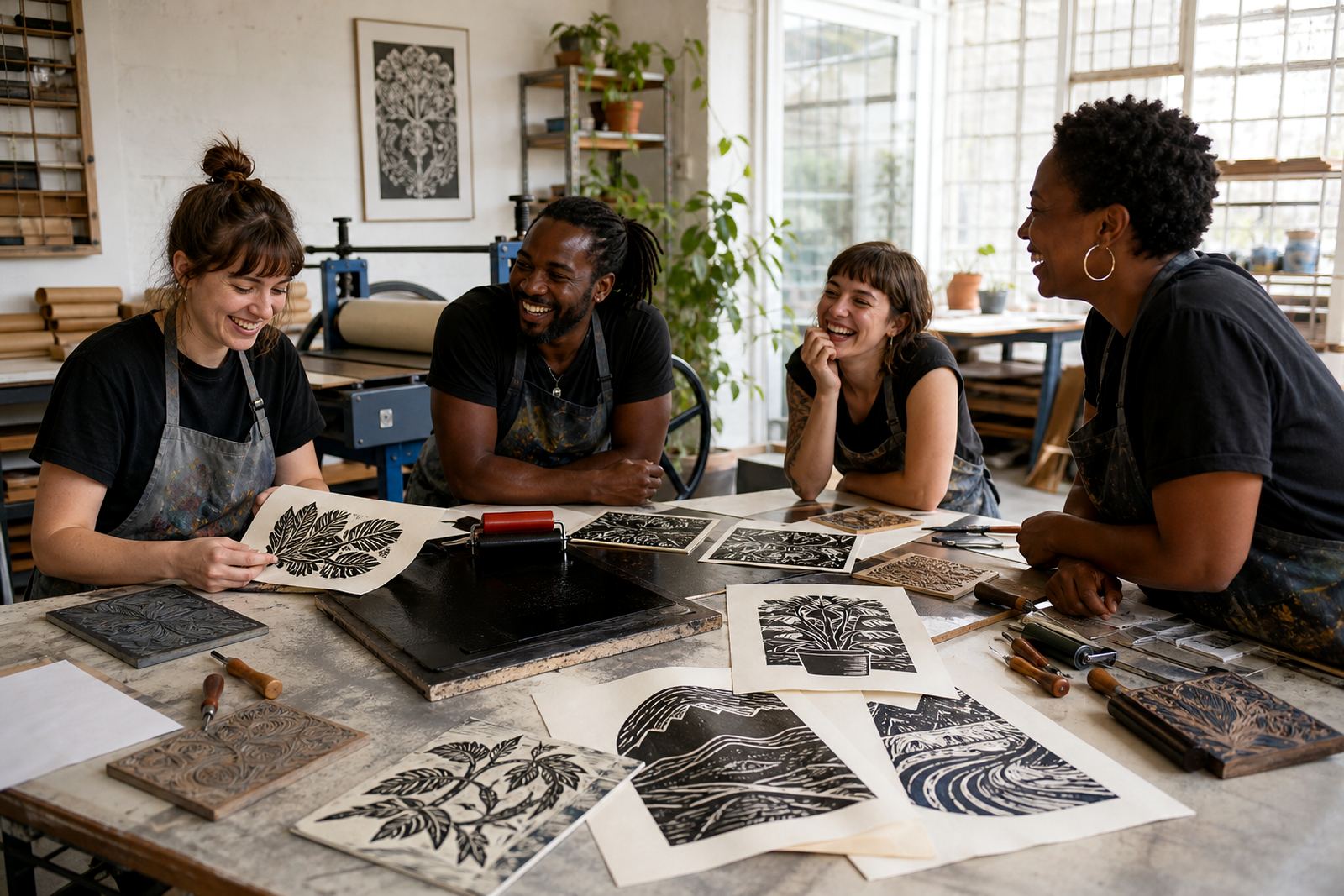
If the pair wants matching prints, the plan is often simple: one shared concept, one shared palette and one aligned edition. If they want complementary prints, each person can work in a different colour range while keeping the same paper size and edition count. For school holidays or family visits that include a couple, the pace can be adjusted so the session still feels calm.
- Keep the image size modest if the session is short.
- Allow drying space for fresh sheets so prints do not smudge.
- Plan for a test print before the final run.
- Choose paper that holds the block impression without buckling too much.
Where couples trip up on the first edition
The biggest error is putting too much detail into your first block. Fine hairlines and tiny text can disappear once ink and pressure are added, especially on softer blocks. Another issue is over-inking, which can fill the cut areas and flatten the image. A light hand with the brayer usually gives a cleaner result.
Some pairs also start with two very different ideas and then spend too much time forcing them into one image. That can make the session feel crowded. It is better to agree on a shared shape, a shared subject or a shared colour family before carving begins. A couple that works with separate blocks should still think about scale, margins and how the final pair will hang together on a wall.
What a couples session costs
Couples workshop budgets depend on the session type, the number of prints, the size of the blocks and whether the work is in our Woodstock studio or set up at another venue. A shorter introductory session with basic materials will sit lower than a full edition print class with layered colour, press use and finer papers. Travel, venue setup and extra materials can also shape the final figure.
For a couple in Cape Town, a private studio session is often the cleanest option when the goal is to make one or two finished prints each. Group venue bookings for schools, wedding showers or private events may need more setup, more paper and a larger materials list. The practical way to plan it is to decide first on the format, then on the paper size and edition count, then on the ink system.
- Introductory couples sessions usually suit a lower materials budget.
- Edition-based work needs more paper and repeat proofing.
- Venue sessions may add setup and transport costs.
- Press printing, if included, can change the equipment line-up.
What a good couple brief should include
A useful brief gives us the number of people, the preferred suburb or venue, the kind of image you want and whether you want one shared print or two separate prints that belong together. It also helps to know if the couple wants beginner carving, inking only, a full printmaking session or a finished edition to frame later. From there, the workshop can be set up with the right blocks, inks, papers and drying space.
We run couple sessions in Woodstock and also take pop-up work to venues in Cape Town, Stellenbosch, Johannesburg, Pretoria and Durban. That mix suits people who want a private studio feel or a visit at a home, school or event space. The main thing is to keep the print plan realistic for the time available, because a clean edition always beats a rushed idea.
For bookings and setup notes, use our contact form and give the workshop team the basics of the brief.