The block you will carve
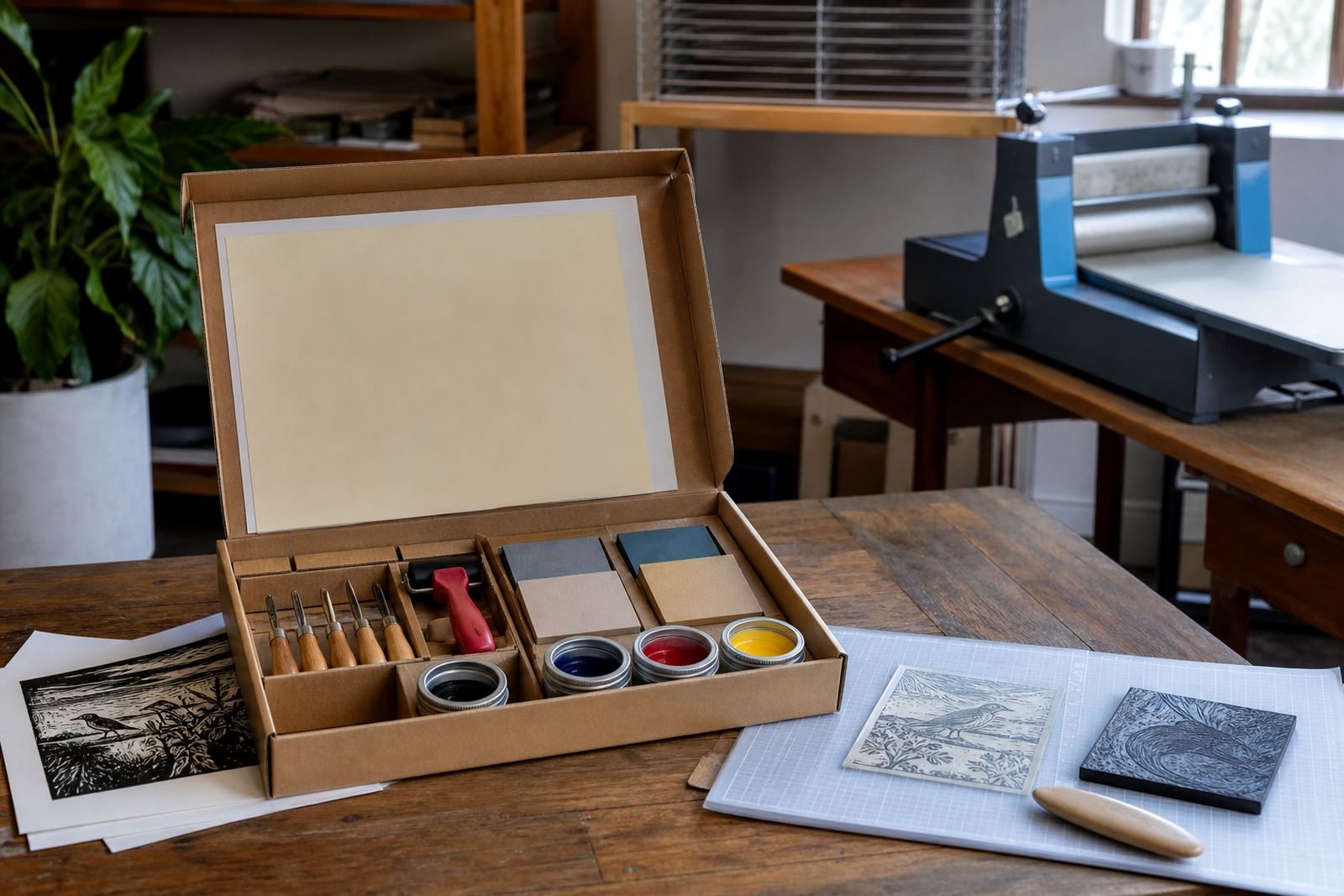
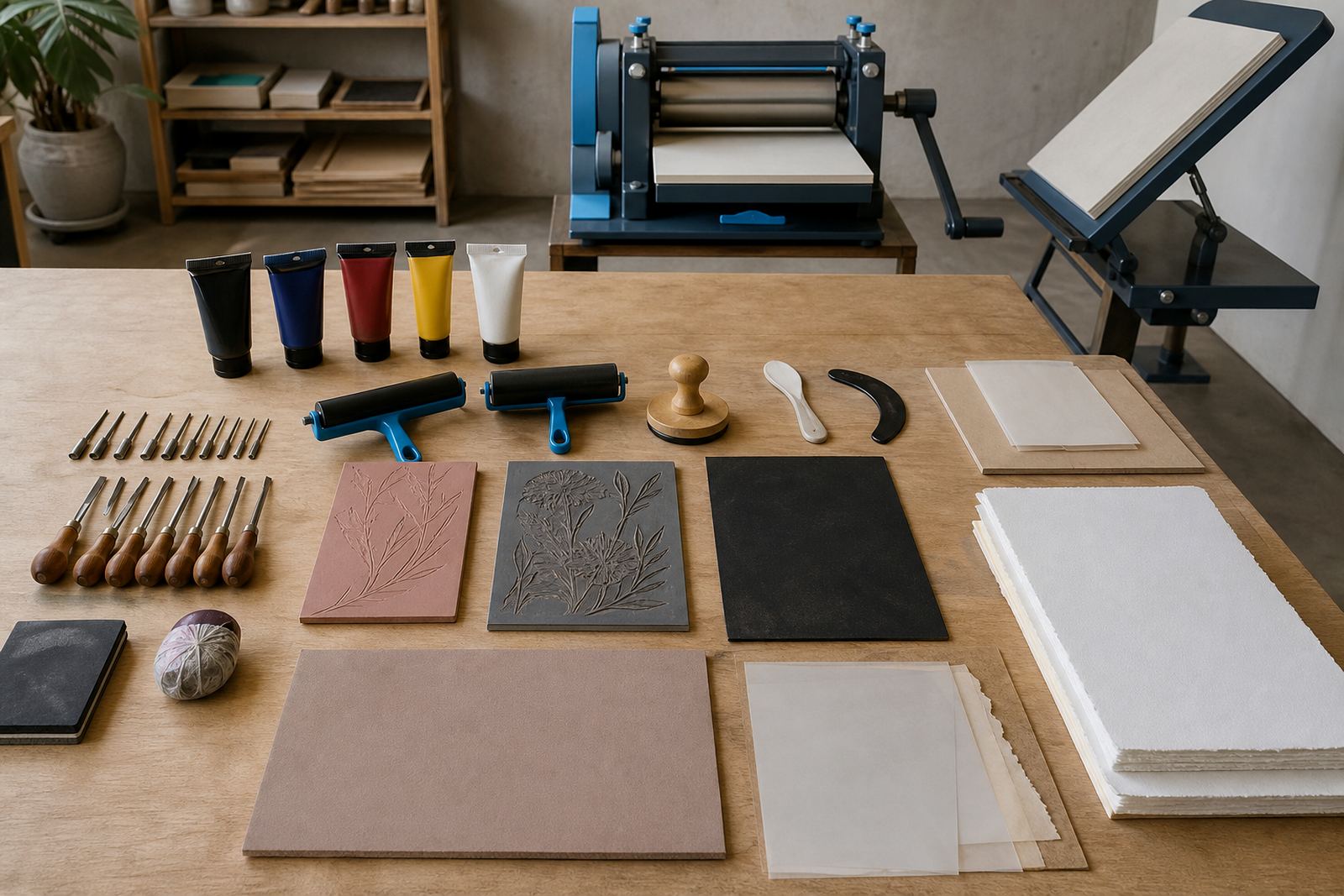
Beginner kits usually centre on either lino or soft-cut blocks. Lino gives a firmer, more traditional feel under the tool, while soft-cut is kinder to the hand and easier when you are learning line control. If you want crisp marks and strong contrast, lino is a sound choice. If you want a gentler first session with less resistance, soft-cut is often the better starting point.
Block size matters too. A small block is easier to manage on a table at home and it teaches you to plan a design with care. A larger block gives more space for texture, but it asks for more time and steadier carving. For most first kits, one or two blocks around postcard size are enough to learn the full process without wasting material.
- Choose lino for a firmer cut and sharper edges.
- Choose soft-cut for lighter pressure and easier carving.
- Pick a block size that suits your hand and table space.
- Keep the first design simple enough to finish well.
The tools that matter
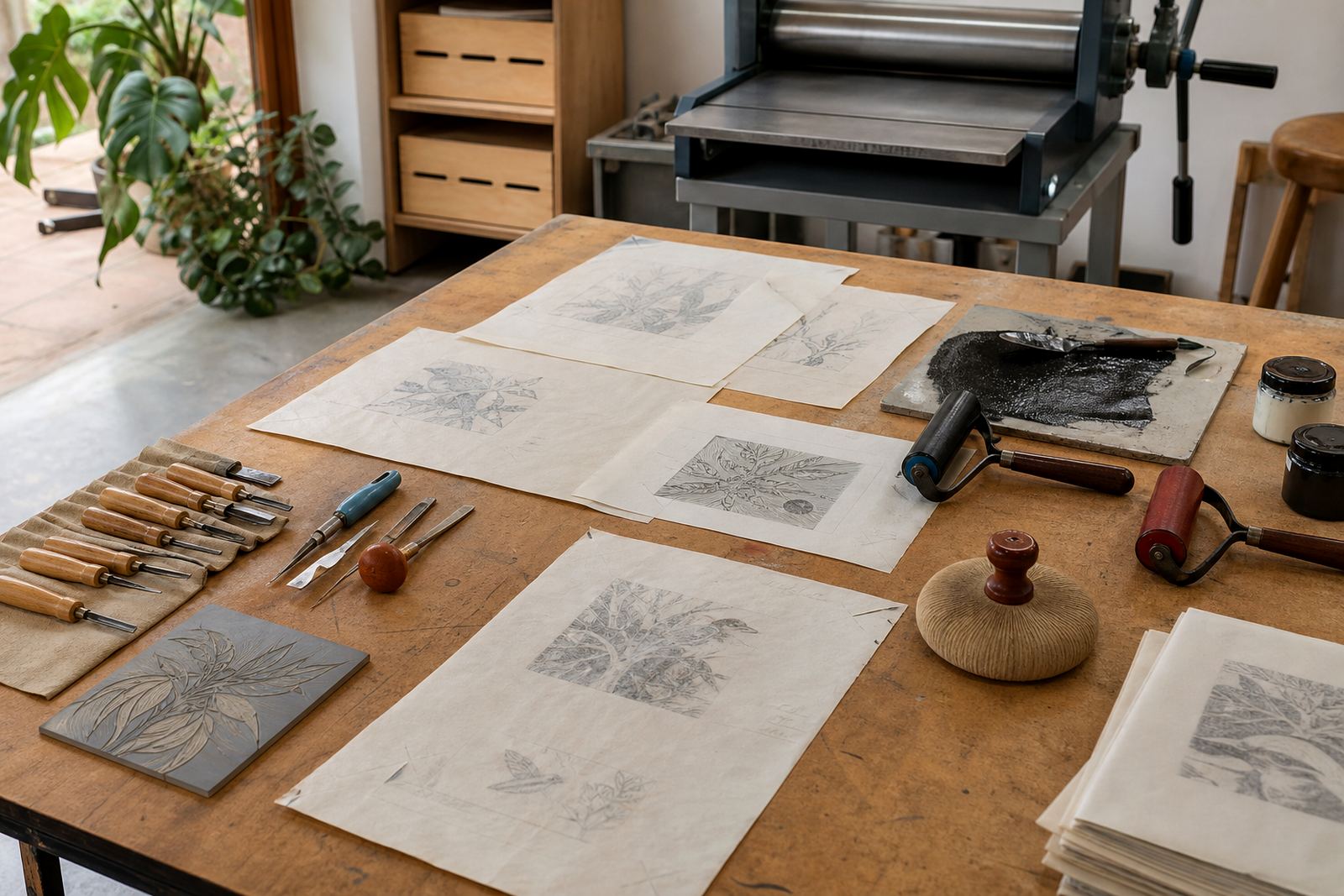
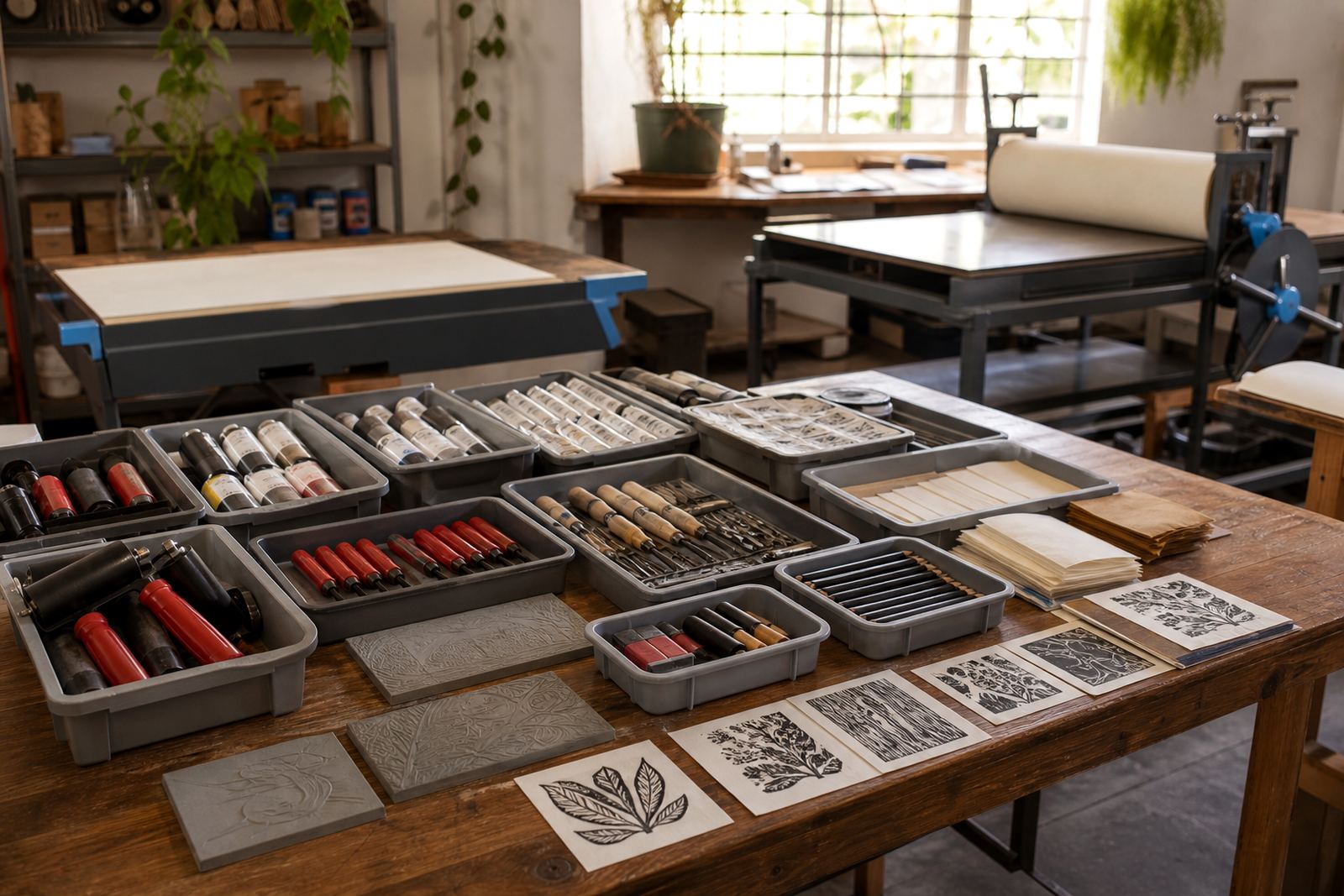
The key carving tools are the ones you will keep reaching for. A starter set should have a safe handle and a small selection of gouges, usually a V-tool for fine lines and one or two U-tools for clearing broader areas. A small tool roll is enough to make a strong print. In fact, too many cutters can slow the learning process and make the first session feel harder than it should.
Check that the tools sit firmly in the handle and feel balanced when you make short cuts. A blunt or loose tool is frustrating and can make the block harder to control. Good beginner kits also include a way to protect the blade edge between sessions, because carving tools stay useful longer when they are stored properly.
- One V-tool for detail and line work.
- One small U-tool for clearing medium areas.
- A stable handle with a comfortable grip.
- Storage that keeps cutting edges protected.
Inks, brayers and the feel of the first print
A starter kit should include a brayer that rolls ink evenly without leaving ridges. A small to medium roller is usually enough for home use and studio sessions. When it comes to ink, water-based block ink is often the easiest first choice because it is simpler to clean and suitable for a wide range of practice prints. Oil-based block ink gives a different working feel and can produce rich surfaces, but it asks for more care with clean-up and studio habits.
The right ink load is part of the lesson. Too much ink floods the cut lines, while too little can leave the block patchy. A first kit should help you learn that balance. If the roller is too hard or too narrow, it can be awkward to coat the block properly and you will spend more time fighting the tool than reading the print.
Many beginners also benefit from a small palette knife or ink knife for mixing colour, because a controlled mix gives more even results than guessing with the roller alone.
Paper choices that make the marks behave
Paper changes the whole result, even when the carving is sound. Beginner kits often include a practice paper and a better printing paper so you can compare the difference. Lightweight paper can be good for proofing because it shows the image quickly, while a slightly stronger paper handles repeated pulls more cleanly and stands up better to editions.
For hand printing, the surface should take the ink without buckling too badly. Smooth papers show fine line work clearly, while textured papers can soften the image and add a different character. If you are planning to print by hand with a baren, choose paper that is forgiving but not flimsy. If a press is available, stronger sheets can take the pressure better and give a cleaner edge to the print.
It helps to have enough sheets for proofing, trimming and one final edition, because the first few prints are part of the learning.
What makes a kit useful beyond the first afternoon
A useful beginner kit gives you a block, a blade and the pieces that teach the full process. It should support safe carving, good ink control and a way to print cleanly. Look for pieces that work together rather than a pile of extras you may never use. A baren is valuable for hand printing because it helps transfer the ink evenly, while a small press opens up another way to make consistent impressions when the design is ready.
Registration is another detail worth including in a beginner set, especially if you want to print more than one colour or make an edition with repeated alignment. A simple registration guide, corner marks or a printed template can save a lot of frustration. The same is true for proofing sheets, masking tape and a clean surface to work on. These may seem minor at first, but they shape the whole rhythm of the print session.
- Baren for hand printing and even pressure.
- Press access or press-ready materials where possible.
- Registration aids for layered or repeated prints.
- Proofing paper, tape and a clear work surface.
A short checklist before you buy
Before choosing a first kit, look at how you will actually use it. A school group, a family session and a lone home printer need slightly different balances of tools and materials. A kit for teaching should be sturdy and simple to share. A kit for a serious first edition may need better paper, a few extra blades and a more dependable brayer.
These points narrow it down:
- Does the block suit your carving confidence?
- Are the tools enough for line, detail and clearing?
- Is the ink easy to handle for your workspace?
- Will the paper hold a clean impression?
- Is there a way to print by hand or with a press?
- Are the pieces easy to clean and store?
If the answer is yes to most of those points, the kit is probably right for a first run. If not, trim the extras and focus on the basics that help you carve well and print with control.
How a first kit fits a real workshop rhythm
In a studio or pop-up class, the best beginner kits are the ones that move at the pace of the group. Adults may want a firmer block and a fuller set of carving tools, while families often do better with soft-cut blocks and simple shapes. Students usually need enough paper for test pulls and a clear method for inking without crossing into mess that takes too long to recover from.
A good first kit supports the whole route from first sketch to edition. It should let someone carve safely, roll ink evenly, register the block, and pull a print that feels like a proper result rather than a one-off experiment. When the pieces are matched well, the learner can focus on line, pressure and the pleasure of seeing a block turn into a print.
That is the real test of a beginner kit: how well its parts help the hand learn the process.