Choose a print your family can finish
A family kit with fewer parts may be the best option. It is the one that matches the youngest hand in the room, the amount of time you have, and how much mess you can live with on the day.
For children and mixed-age groups, soft-cut blocks are usually easier to carve than harder lino. They take a gouge or V-tool with less force, so the hand does not tire so fast and the pressure stays more controlled. A first project should be small, with bold shapes and a few clean lines, not a full landscape with tiny details.
- Choose soft-cut blocks for easy carving at home.
- Keep the design to one or two main shapes.
- Use a block size that fits a child or adult hand comfortably.
- Leave room around the image for trimming and handling.
Tools that belong in a family box
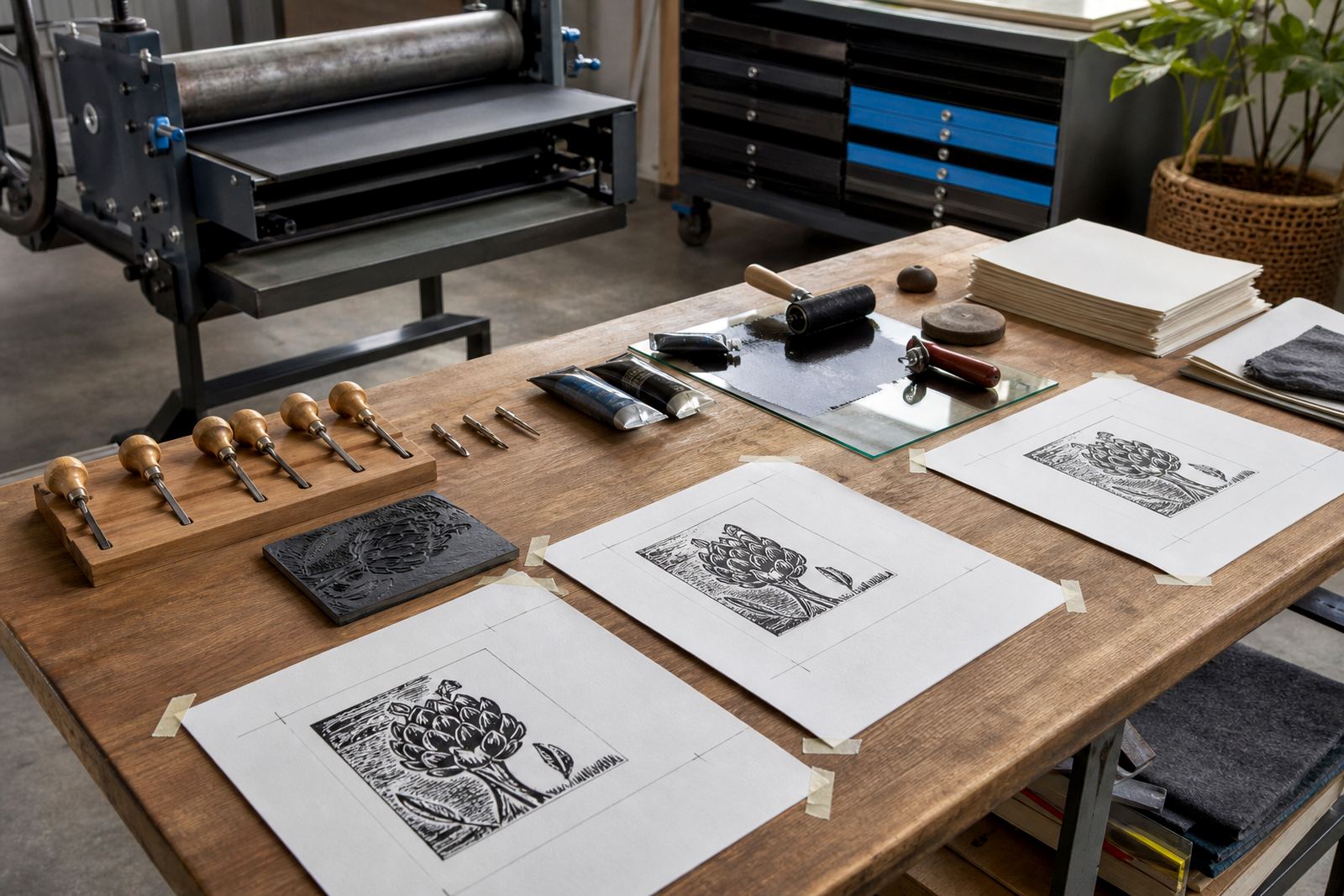
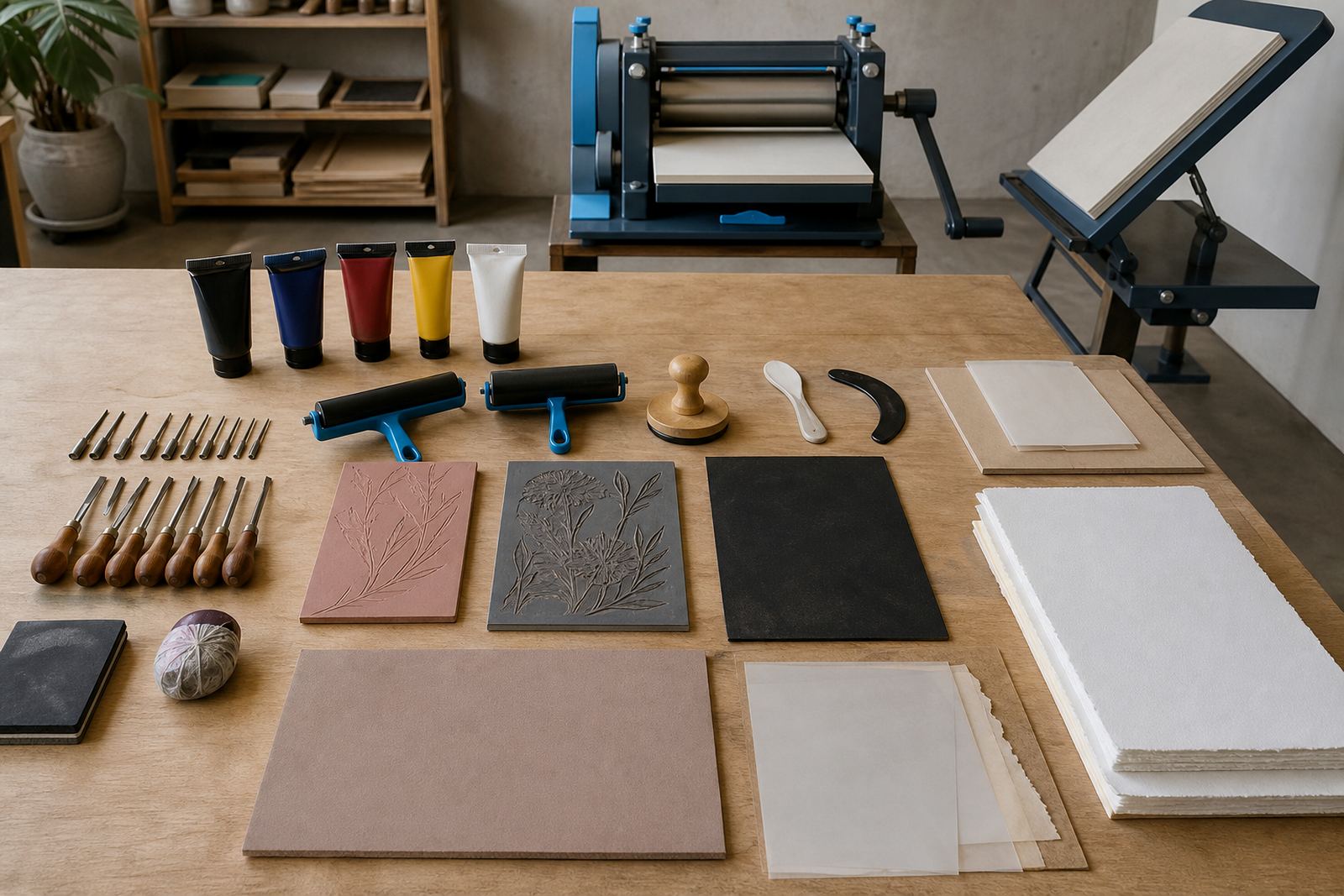
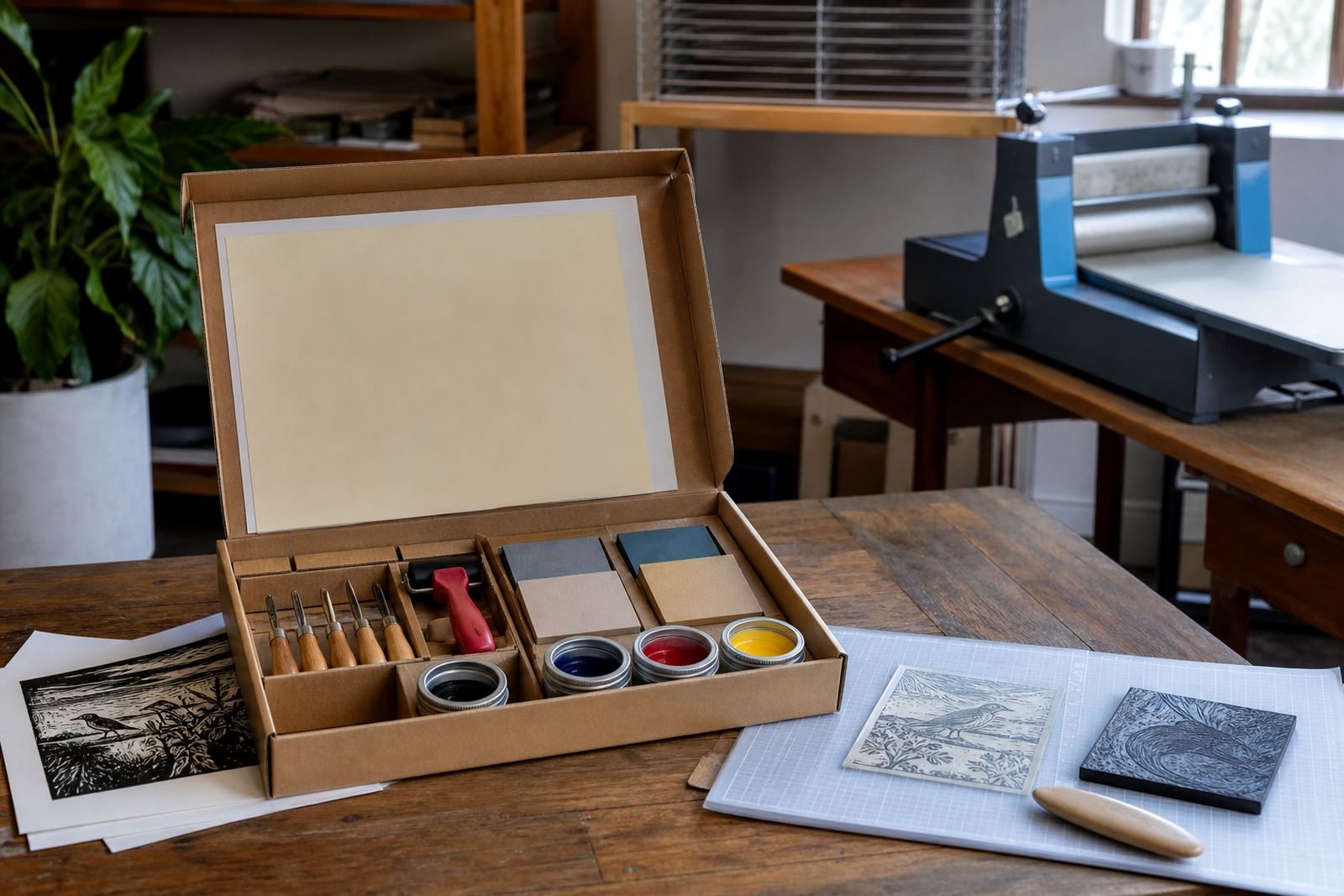
A useful kit has fewer tools than people expect. Safe carving starts with stable blocks, a clear cutting direction, and tools that fit the hand rather than forcing the wrist into awkward angles. A V-tool is good for outlines and texture, while a wider gouge can clear larger areas without scraping the whole surface.
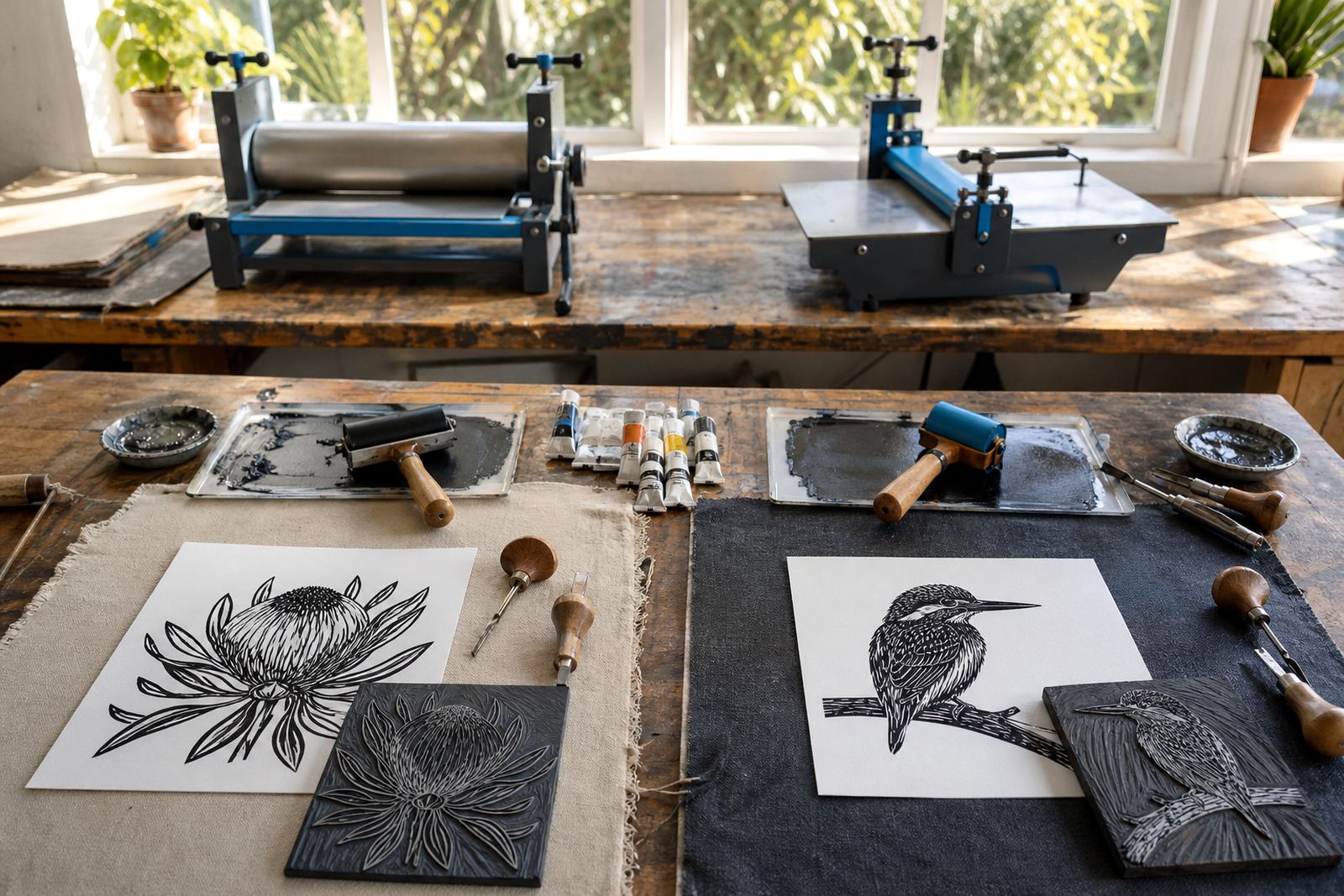
Brayers should roll smoothly and not leave ridges of ink. For younger printers, a small brayer is easier to control. A baren can be used for hand printing on paper when there is no press, while a small press gives more even pressure for repeated editions. Keep a sheet of scrap paper nearby for testing the first pull and checking whether the block needs more ink or a firmer rub.
- Soft-cut block or lino cut to a manageable size.
- One or two carving tools with covered storage.
- A brayer that rolls evenly and feels light in the hand.
- Baren or simple hand printing tool for pressure.
- Masking tape, scrap paper, pencils and a bench mat.
Ink for table tops, decks and holiday floors
Ink changes the whole mood of a family session. Water-based block inks are usually the easiest for indoor work because they clean up with less fuss and suit short sessions. Oil-based block inks give a different feel and can hold a richer print, but they need more care with cleaning and drying, so they suit a longer, more organised setup.
If you are printing on holiday, think about the surface under the work rather than only the image. A tablecloth or wipeable mat helps protect the room, and a few layers of newspaper can catch stray marks. Drying space matters too. Prints need to lie flat without touching each other, so a spare table, shelf or clean floor space becomes part of the kit.
- Choose water-based ink for easier shared use.
- Carry wet wipes or cloths for quick cleaning.
- Pack baking paper or newsprint between prints.
- Plan a dry area where finished sheets can rest flat.
Paper that shows whether the block is working
Paper deserves early thought. Softer papers pick up fine carved marks better, while heavier sheets can handle repeated handling and make a sturdier print for framing. A family kit should include both test paper and final paper, because the first few pulls are often where the pressure, ink and registration are sorted out.
When working with more than one colour, registration marks help keep the layers in line. Simple pencil marks at the corners can be enough for a family class at home. If you are printing with children, it helps to keep the paper sizes the same so each sheet sits in the same place on the block and the image does not wander.
- Test on plain cartridge or newsprint first.
- Use one paper size for the full session.
- Keep final sheets clean, dry and flat before printing.
- Try a heavier paper if the image needs stronger handling.
A shared workflow that keeps everyone busy
The smoothest family printing session gives each person a role. One person can roll ink, one can place paper, another can pull the print and a fourth can prepare the next sheet. If there are young children, let them help with safe jobs first, then move into carving under close supervision when the design is ready.
Set the order before the block is inked. Dry run the placement, check where hands will move, then start printing. If you are making more than one copy, numbering the edition helps everyone keep track of which sheet is the first good pull and which ones need a lighter or heavier press. That bit of order turns a busy table into a proper family project.
- Agree who carves, who inks and who prints.
- Keep one clean sheet for a final test pull.
- Number each print if you are making an edition.
- Let the work dry before stacking anything on top.
What to pack for a weekend or holiday session
Holiday printing works best when the kit fits into one box or tote. Keep the contents simple enough to unpack without a long setup, and strong enough to survive the car boot. A sharp blade cover, a rag for wiping tools, spare paper and a small cutting mat all help when the nearest art room is a kitchen or a guesthouse table in Woodstock, Stellenbosch or Durban.
Pack a bit more than you expect to need. Someone will make a second impression, someone else will want to try another colour, and the first sheet often teaches you what the block really needs. A good family kit leaves room for that change without forcing the whole session to stop.
- Block, tools, brayer and ink.
- Paper in more than one size.
- Scrap sheet, cloths and cleaning supplies.
- Container for finished prints so they do not smudge.
When a family session needs more structure
Some families want a guided start as well as a box of tools. They want a guided session where the block is cut safely, the ink is controlled and the prints are pulled in a steady order. That can help when the group includes grandparents, school-age children and adults with very different levels of confidence.
A structured workshop can cover carving, inking, pressure, paper handling and edition printing in one sitting. It also helps people see how a loose sketch becomes a finished print with sharp edges and clean layers. For families planning a group day at home, in Cape Town or at a venue elsewhere in South Africa, that kind of guidance can save the whole session from becoming guesswork.
If you want help choosing between a basic starter set and a more complete family kit, our contact form is the right place to send the details of your group, your location and the space you plan to use.