First decide what print you want
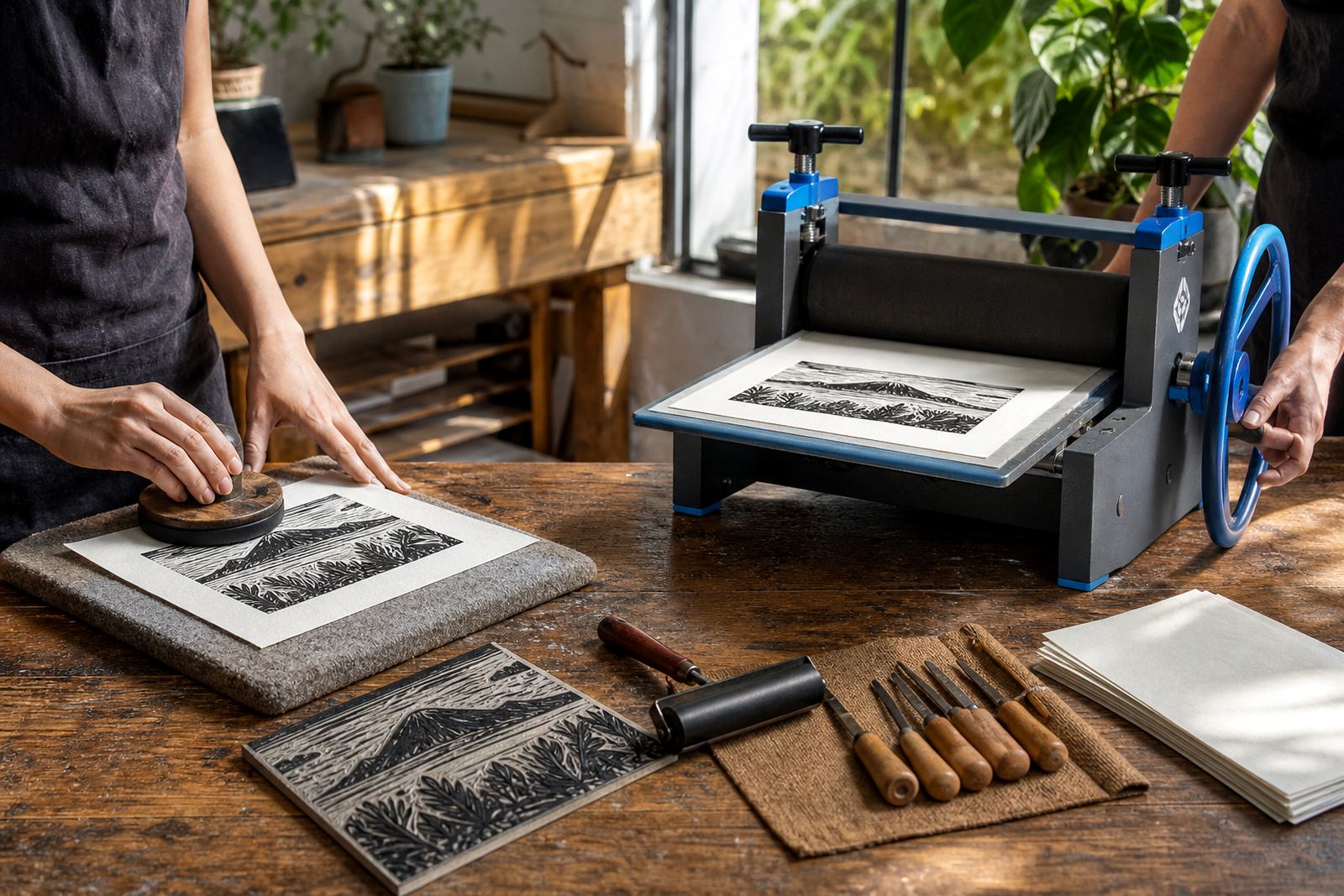
Baren printing suits a direct, hands-on session where each pull carries the pressure of the maker. It works well for small to medium blocks, short editions, and images that can handle a little variation from print to print. A press gives more even pressure across the whole block, which helps when the design has fine detail, flat colour areas or a larger format.
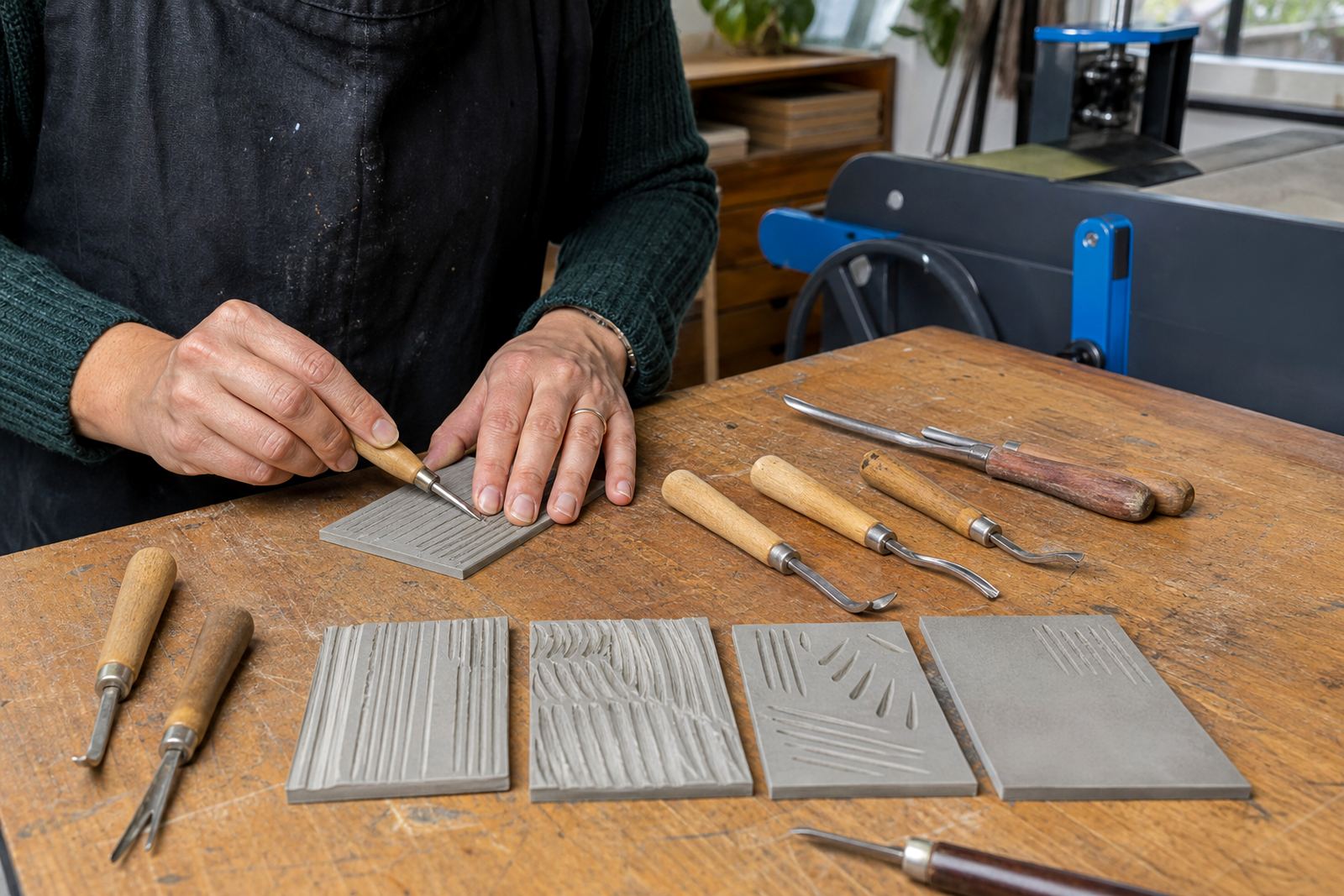
At our Woodstock studio we often begin by looking at the block itself. Soft-cut material is easier for beginners, while lino and harder blocks can hold a sharper line once the carving is clean. If the image has bold shapes, a baren can be enough. If the block is large, the paper is thick or the marks are very fine, a press may give a cleaner result.
Match the pressure to the carving, the paper and the edition you want to print.
What a baren gives you at the table
A baren is a hand tool used to transfer pressure across the back of the paper. In a workshop, it keeps the process close to the block, the ink and the person printing. That can be useful for adults, families and student groups because everyone can feel how pressure changes the image. It also suits pop-up sessions where the setup needs to stay light and portable.
With baren printing, the paper choice matters. Lightweight printmaking paper will often pick up a clear impression with less effort, while thicker sheets may need more careful burnishing. Water-based block inks are common for this method because they stay open long enough for hand work and clean up easily between pulls.
A good baren session usually includes:
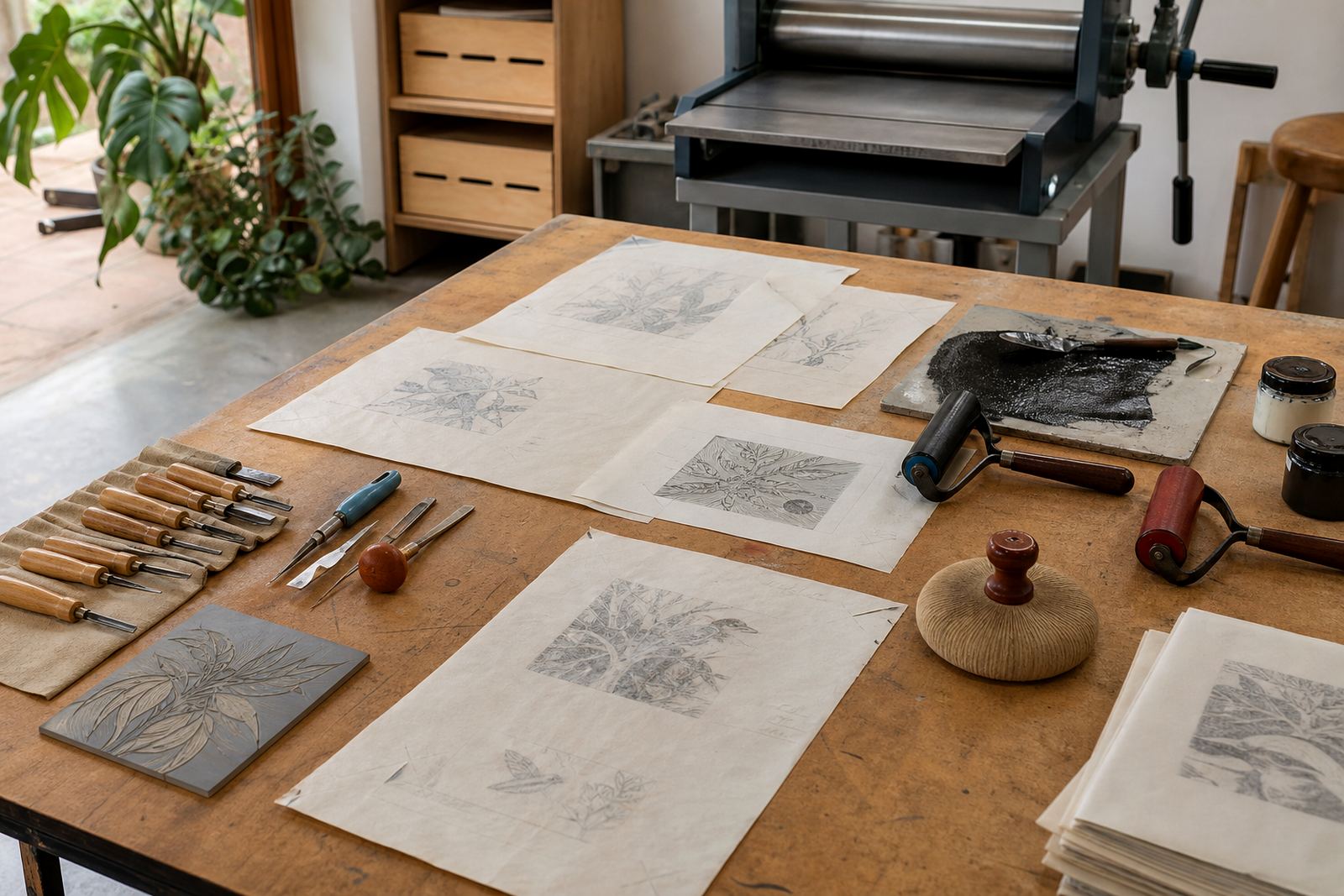
- careful carving with gouges and V-tools before any ink goes near the block
- a test pull to check the carved whites and the line weight
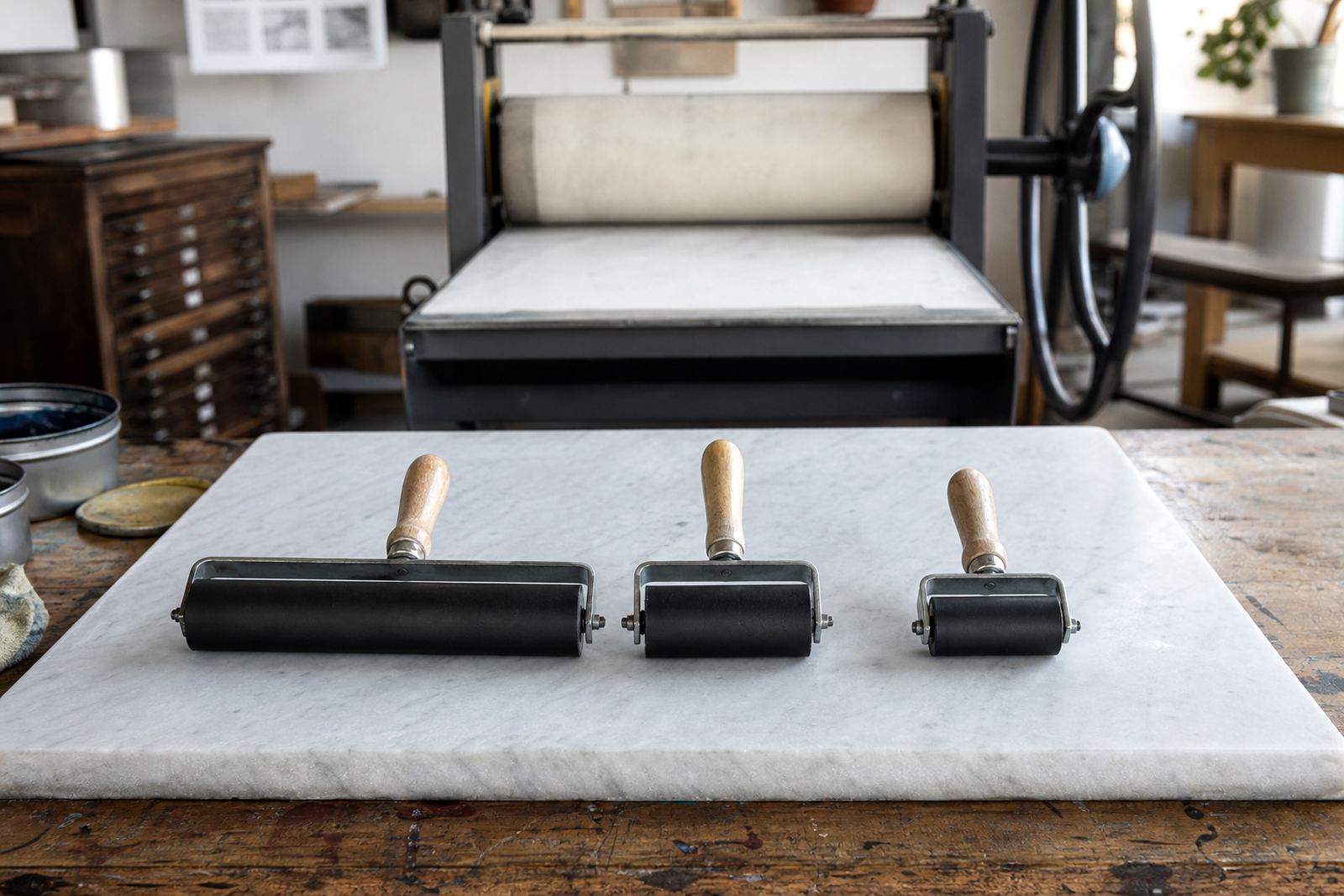
- controlled inking with a brayer so the surface is even, not flooded
- steady pressure over the whole block, including the edges
- registration marks if the print is a two-colour or layered edition
Where the press earns its place
A press is useful when the image needs an even and repeatable impression. It handles layered colour, sharper edges and larger blocks with more control, especially when the paper is heavier or the edition needs a consistent finish. In a school or team workshop, the press also helps when several people are printing the same block and the results need to stay close from sheet to sheet.
Press printing works well for lino and soft-cut blocks alike, though the surface depth and the ink choice matter. Oil-based block inks can be used for richer density and longer working time, especially on larger editions. Water-based inks are easier for fast clean-up and shorter sessions. The right choice depends on the paper, the image and how long the workshop has for drying between layers.
Press work asks for a little more setup. The bed, blankets or packing, and the paper placement all affect the result. Once that setup is sorted, the press can make edition printing more predictable, which helps when a class is producing several copies from the same block.
Use the block, paper and ink as one system
Each printmaking job suits its own method. A shallow carving on soft-cut block may print nicely by hand, while a dense lino block with small details may benefit from the press. The paper also changes the outcome. Smooth papers can show crisp lines, while textured papers take on a softer character and may need more pressure to reach the valleys of the cut.
Ink choice plays a part too. Water-based inks are practical for beginner carving sessions and family workshops because they allow cleaner handling during the class. Oil-based block inks can give a deeper colour and more open working time, which helps when the session includes registration, layering or a longer edition. Brayers need to carry an even film of ink, not heavy ridges, or the block can fill where the cut should stay white.
Before a session, we usually check three things: the block surface, the paper weight and the marks needed for registration. That keeps the print method tied to the image rather than forcing the image to fit the tools.
Choosing the right method
If you are planning a private studio workshop, a school pop-up or a team session, a short checklist helps narrow the method. The same image can behave differently depending on group size and the time available for cutting, inking and drying. Press printing can suit more structured editions, while baren printing can suit looser hands-on work.
- Is the block small enough to print comfortably by hand?
- Will the paper hold the pressure of a baren or need a press?
- Does the image need fine detail, flat colour or multiple layers?
- Is the group printing one image or several editions at once?
- Will the session use water-based or oil-based block ink?
- Do the prints need clean registration across two or more colours?
If those answers lean toward control and consistency, a press is usually the safer call. If they lean toward portability, direct handling and a lighter setup, a baren may be the better fit.
What to expect in a mixed-format session
Some workshops use both methods. A group may carve the block, proof it by hand with a baren, then print the final edition on a press. That approach gives people a clear sense of the image at each stage. It also helps learners see how pressure changes the same block from one method to another.
In a mixed session, registration becomes part of the teaching. The block needs to sit in the same position for each pull, whether the print is pressed or hand burnished. A narrow shift can change the edge of a colour layer or blur a fine line. This is where careful setup pays off. Clean carving, tidy inking and a patient eye on the paper usually decide how well the print comes out.
For schools, family groups and adult classes, mixed sessions can also leave room for different comfort levels. Some people enjoy the control of the press. Others prefer the feel of the baren and the direct contact with the paper.
Booking the right format for your group
When you send details through our contact form, it helps to mention the group size, the age range, the venue and whether you want hand printing, press printing or a mix of both. That gives the workshop plan enough shape to match the method to the block, the paper and the setting. Woodstock studio sessions, school pop-ups and venue-based print classes each need a slightly different setup.
For team building sessions, the press can keep a larger group moving through the same edition with less variation. For a family print session, a baren can keep the process light and accessible. For student print classes, a mixed format often works well because it teaches the difference between proofing, registration and final printing without rushing the carving stage.
The best choice is usually the one that suits the image and the room. With that settled, inking and registration fall into place more easily.