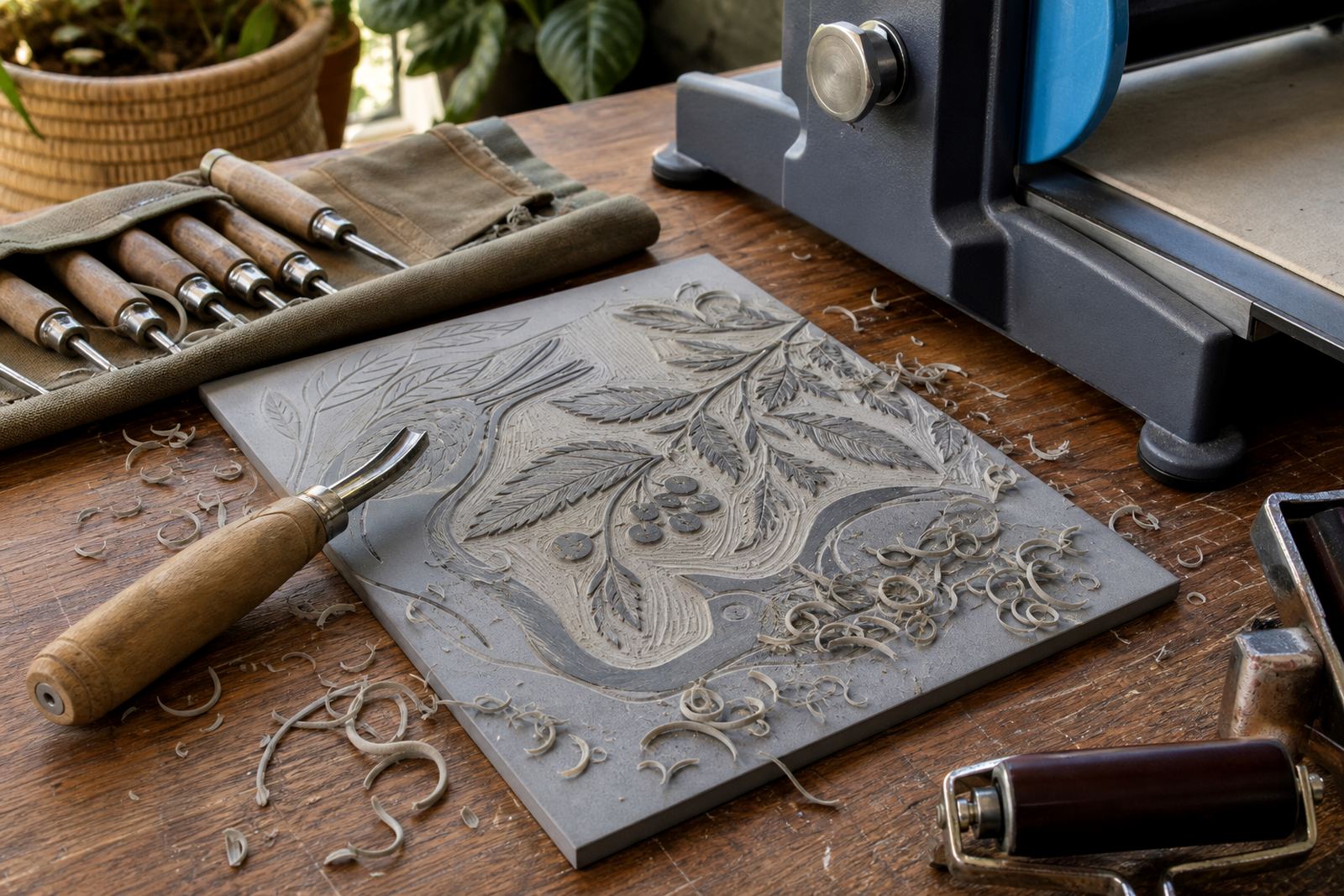
A rounded cutter for clean background work
The u-gouge is shaped to remove material in a curved groove, which makes it useful when a block needs open spaces, shallow hollows or softer interior marks. In lino and soft-cut work, that curve helps the hand move through the block with less snagging than a square edge and without the pointed profile of a V-tool.
At HandPrinter Art, this is the sort of cutter we place in adult workshops, student classes and teacher sessions when the block needs steady clearing rather than tight detail. It suits lino, softer carving blocks and many printmaking exercises where the artist is learning how pressure, angle and grain change the cut. The tool is guided by hand, so the result depends on the block surface, the sharpness of the edge and how firmly the block is anchored on the bench.
- Rounded cutting edge for sweeping channels and background clearing
- Works well for broad marks, shallow texture and softened contours
- Commonly used after layout lines are transferred to the block
- Best handled with a secure bench position and careful thumb support
Sizes, curves and handle feel
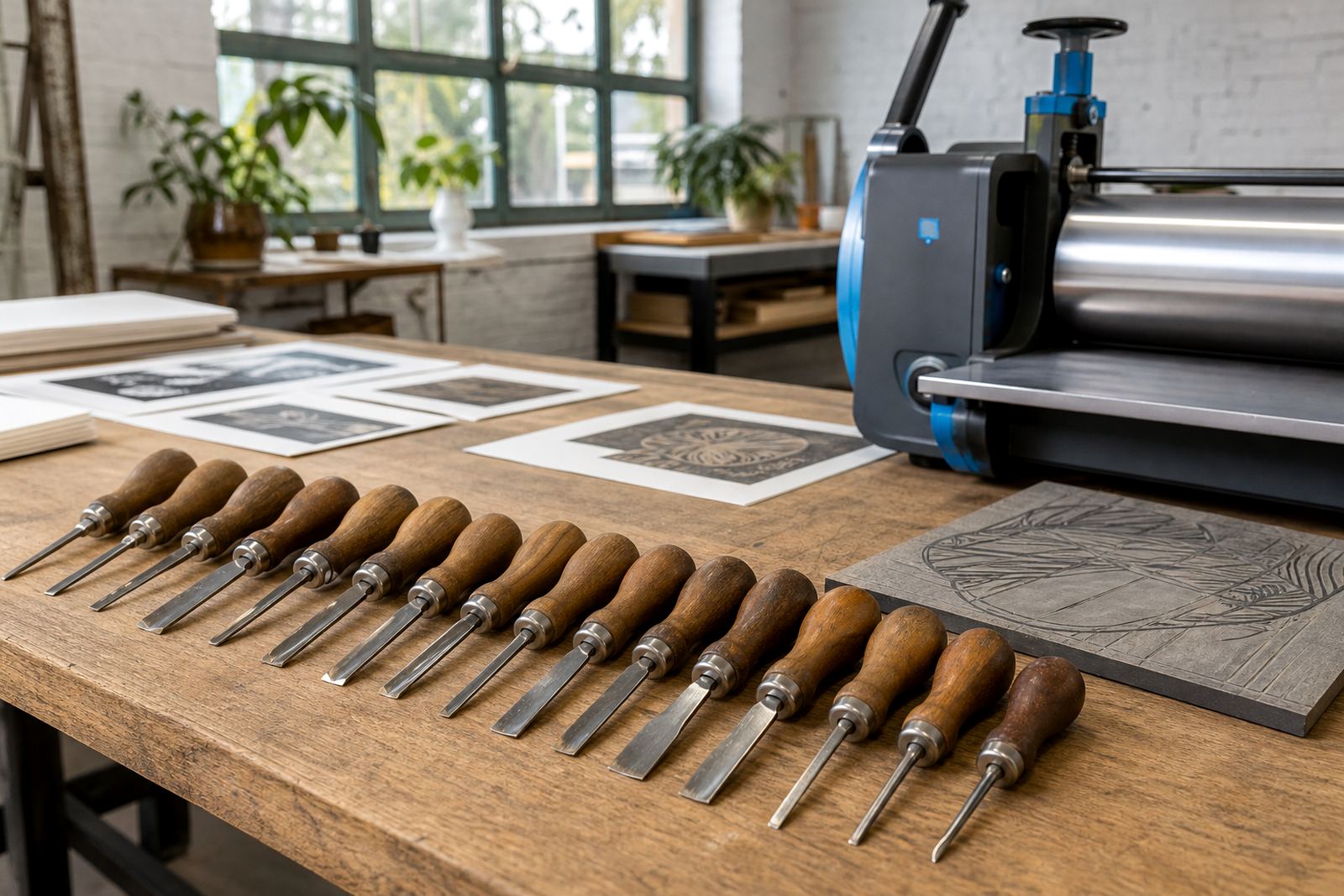
U-gouge cutters are usually selected by width and sweep. A narrow gouge can lift slimmer curls and help with tighter spaces, while a wider profile removes more material in each pass and is often chosen for open backgrounds, floral fields and large shapes. The curve may be shallow or deeper, and that changes the mark it leaves on the block.
Handle shape matters too. A comfortable grip helps during longer carving sessions, especially when the block has a dense surface or when the maker is working through several proofs. Some artists prefer a short handle for close control and others like a fuller handle that sits more securely in the palm. The useful choice depends on the maker's hand size, the block format and whether the carving is being done for a classroom edition or a personal artwork.
- Small gouges for detail clearing around edges and interior shapes
- Mid-width gouges for general carving and background removal
- Wider gouges for open fields, texture passages and speed of cut
- Different sweeps change whether the mark looks shallow or broad
Where the u-gouge fits in a lino workflow
This cutter is often used early in the block stage, after the image has been transferred and the artist has marked the areas that must stay white or print as open space. It is handy for clearing around a motif before moving to a V-tool for line work or to other gouges for finer texture. In workshop settings, the u-gouge also helps learners understand positive and negative space, because the carve-out area becomes very visible once the first proof is rolled and pulled.
It suits many teaching formats at our Woodstock studio and on pop-up sessions in schools, venues and group bookings across Cape Town, Stellenbosch, Johannesburg, Pretoria and Durban. The tool is equally at home in beginner carving sessions and edition printing work where students need a dependable shape for repeated use. In printmaking terms, this is a practical cutter for carving fields that must print white, hold ink cleanly around the edge, or support a wider composition that still needs hand control.
- Useful for block preparation before inking and proofing
- Pairs well with brayers, paper registration and hand-press or baren printing
- Good for classroom editions where repeatable marks matter
- Supports both expressive carving and cleaner graphic shapes
Use with secure carving habits
The u-gouge is a hand tool, so fitting means a safe workshop setup. The block should sit on a firm, non-slip surface and the cut should move away from the hand steadying the work. For students, we often begin with controlled strokes, short passes and a clear carving angle, especially when the block is softer and the tool can travel faster than expected.
Good carving habits make the edge last longer and keep the cut more even. A sharp tool takes less force, gives a cleaner channel and reduces ragged lifting around the carved area. For sessions with younger learners or mixed ability groups, the tool is usually paired with safety rules, simple grip checks and a workspace that keeps loose paper and inked prints clear of the carving path. That matters whether the session is a family print day or a school workshop with multiple stations.
- Use a stable bench or carving cradle where possible
- Keep fingers behind the cutting line and work in short controlled strokes
- Choose the right sweep for the block density and the mark needed
- Clean the tool before it is put away so dried ink and fibres do not build up
Ink, paper and the print surface it likes
We choose the cutter by looking at the print it leaves behind. A broad, curved channel can leave a cleaner white field when the block is rolled with water-based or oil-based block inks and then printed onto suitable paper. Softer marks can hold a textured edge that looks strong on hand-pulled prints, especially when the paper has a slight tooth and the pressure from the baren or press is well balanced.
The right u-gouge helps when the artwork needs open shape rather than fine hatch marks. It is often used in designs for workshop editions, studio exercises and finished prints where the artist wants a clear contrast between carved space and printed surface. If the block is being used for an edition, the consistency of the cut matters because repeated pulling can expose rough edges that were not visible on the first proof.
- Supports clean white areas in relief prints
- Works with hand burnishing and press printing alike
- Pairs well with paper that can take repeated pressure without buckling
- Useful for prints that need a softer visual edge than a V-cut gives
Ordering details for workshop use
When ordering a u-gouge cutter for lino or soft-cut work, it helps to confirm the block type, the size of the marks you want to carve and whether the tool will be used for class sets, studio kits or personal carving. A wider sweep can suit background clearing, while a narrower one is better for tighter shaped passages. Handle length, blade width and the intended use all matter, especially if the tool is being matched with beginner kits or shared workshop equipment.
For HandPrinter Art workshop supply planning, it is useful to note the age group, class size and the style of printmaking session. We look at the kind of block being used, the pressure of carving expected and whether the cutter is needed for initial carving, finishing passes or edition work. If you are confirming details through our contact form, include the block material, the number of users and the level of carving experience so the tool choice matches the job rather than just the label.
- Block material: lino, soft-cut or similar relief block
- Gouge width and sweep needed for the image
- Use case: beginner, classroom, studio edition or demo work
- Quantity required for individual kits or group sessions
Key facts
| Tool type | Hand-carved u-gouge for relief printmaking |
|---|---|
| Primary use | Clearing backgrounds and carving broader curved marks |
| Compatible blocks | Lino and soft-cut carving blocks |
| Common size range | Narrow, medium and wide sweeps for different carving tasks |
| Best pairing | Baren printing, press printing, brayers and relief inks |
| Typical workshop use | Beginner carving, student classes, editions and studio sessions |