
A smoother sheet for controlled block printing
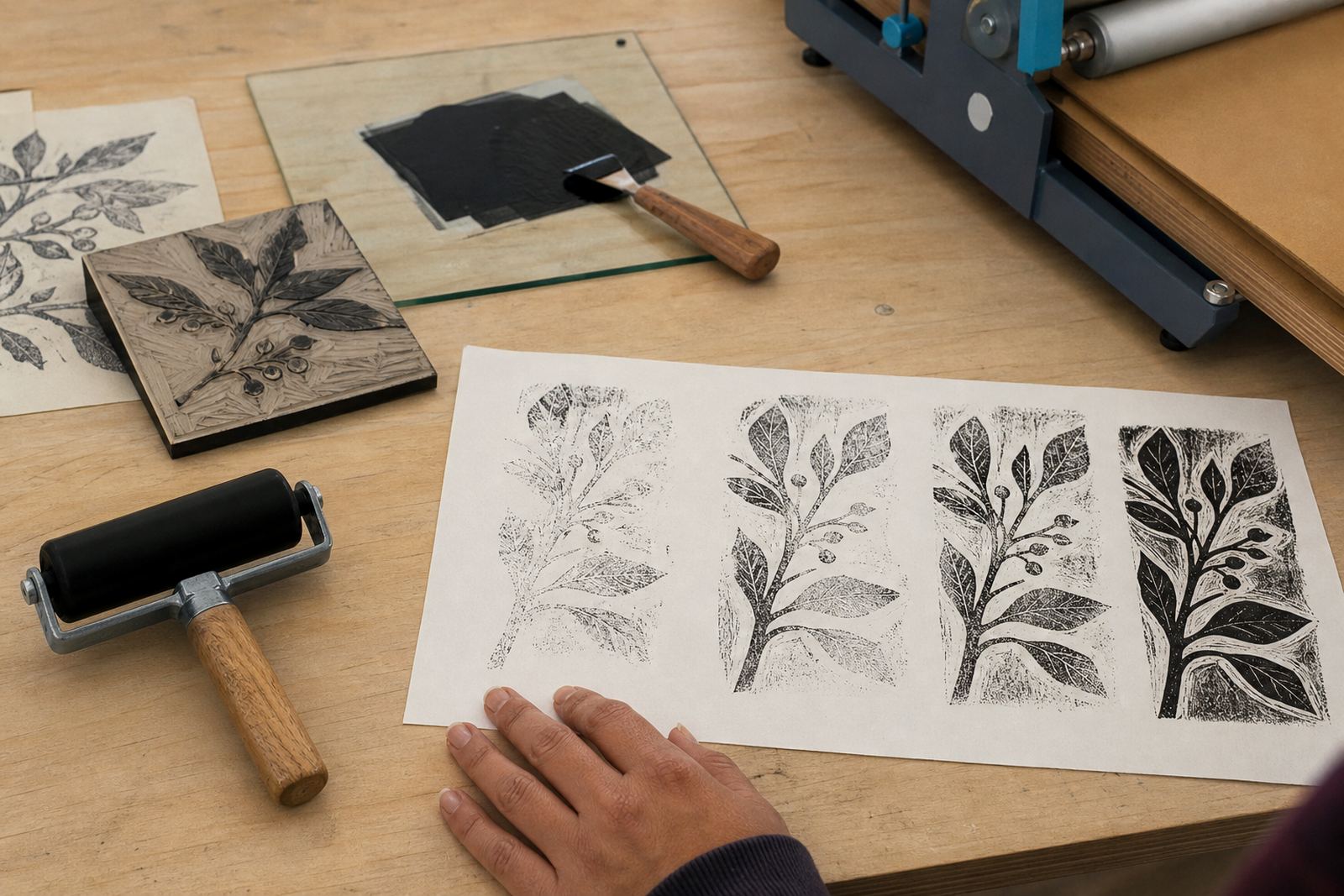
Fine Print Paper suits linocut and soft-cut printing where the image needs to sit cleanly on the surface rather than sink into a rough texture. The sheet has a tighter, smoother finish than an everyday sketch paper, so fine lines from V-tools, shallow cuts and small relief marks stay legible after inking and pressing.
In a workshop setting, that matters when students move from a first proof to a numbered edition. A smoother paper gives better contact under a baren or press, and it helps the printed area hold cleaner solids when the block carries even ink. It is useful for black ink, coloured layers and simple reduction work where the last pass has to land neatly on top of the first.
- Fine tooth for crisp line work
- Works with lino, soft-cut and mounted relief blocks
- Suitable for proofing, edition printing and final sheets
- Handles repeated handling during workshop sessions
Sizes, sheet weight and edition options
Fine Print Paper is generally supplied in formats that suit hand printing tables, drying racks and portfolio sleeves. For workshop use, the common choice is a sheet large enough for a small image with room for a clean border, but it can also be cut down for smaller classes, note cards or proof sheets. The right size depends on the block area, the edition plan and whether the work is being printed by hand or with a press.
Paper weight matters because a sheet that is too light can wrinkle under water-based ink, while a sheet that is too heavy may need more pressure and a slower pull. A balanced sheet gives enough body for repeated pulls, registration marks and handling between stages. If the edition is being printed in multiple layers, the paper also needs stable corners and even grain response so the print does not wander during the second pass.
- Sheet size matched to block size and border allowance
- Available for proof sheets and edition runs
- Compatible with trimming after printing
- Useful for single-colour and layered relief work
Where this paper suits real workshop work
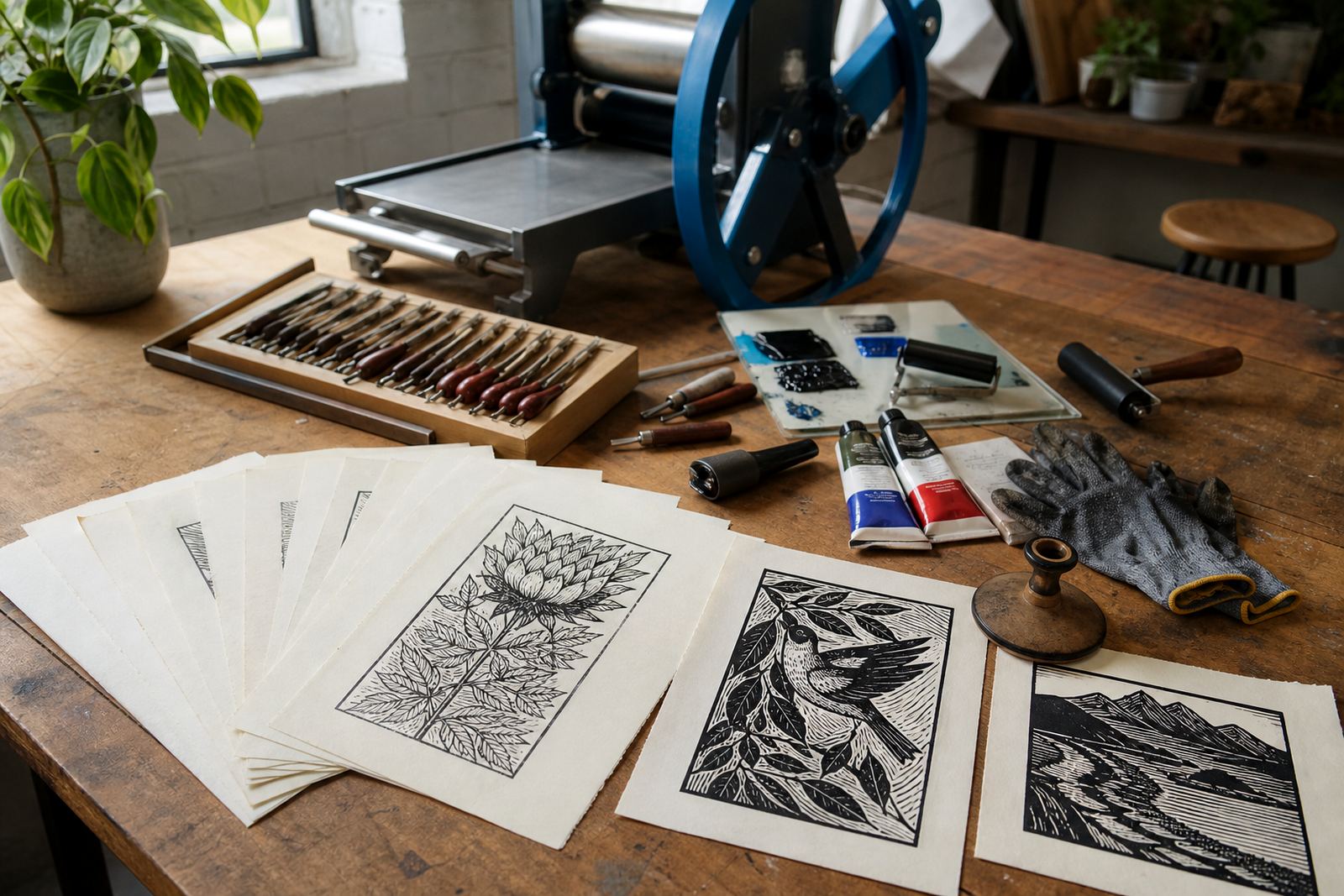
This paper is a strong match for adult studio sessions, student print classes, family sessions and school pop-ups where the aim is a neat print that can be taken home or framed. It suits images with text, pattern, portrait blocks and botanical subjects, because those subjects often rely on crisp edges and a clean surface finish. When the class is working with registration marks, the sheet keeps its shape better than rougher papers that shift with every pass.
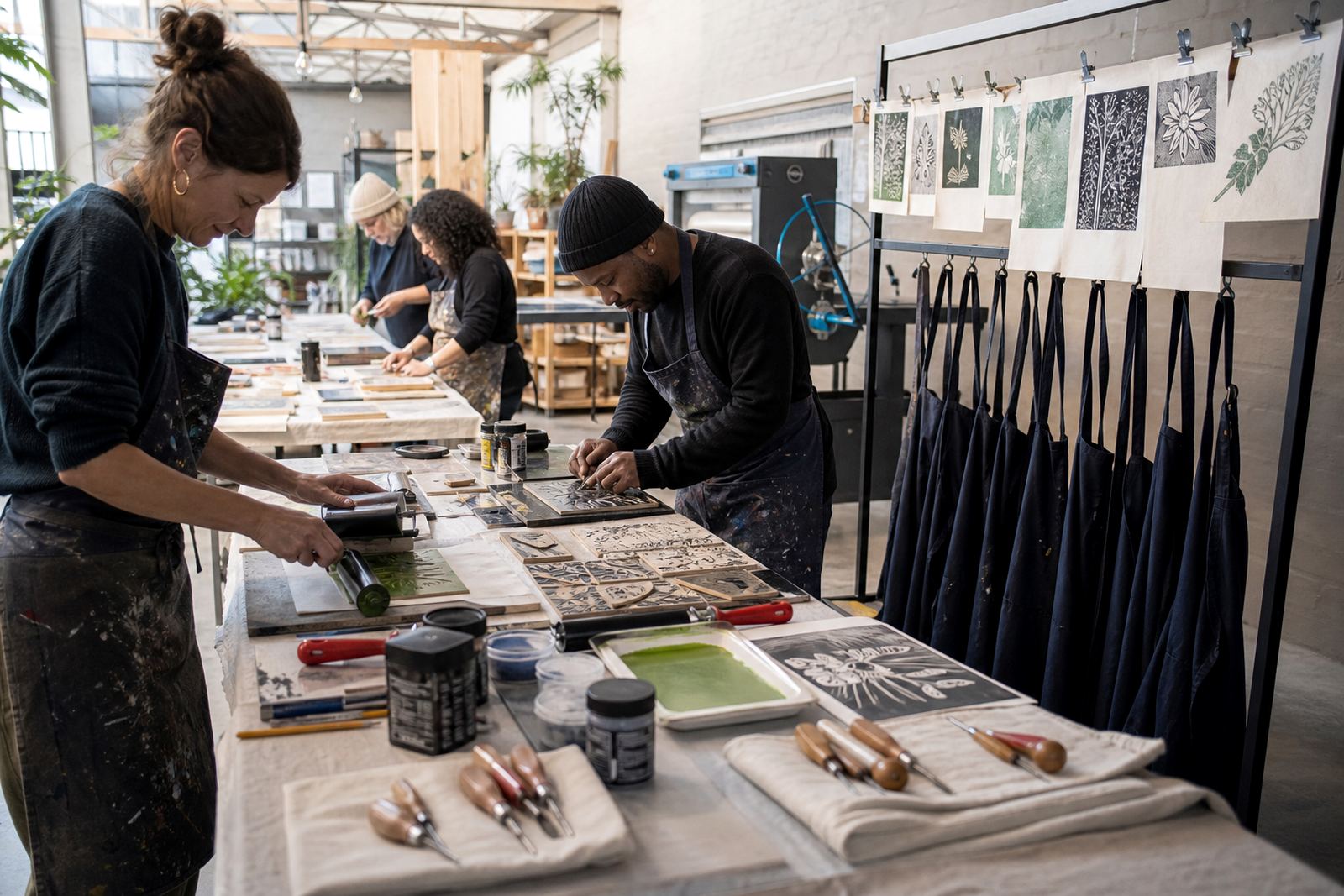
For team bookings and venue sessions, Fine Print Paper also helps when the group is making a shared edition or a set of individual prints from the same block. It gives a consistent result across a table of different hands, which is useful when some people are carving for the first time and others are already confident with gouges and ink rolls. The paper also stores neatly in flat stacks, which helps when the workshop produces multiple prints that need drying and sorting before they are signed.
- Good for beginner and intermediate printmaking groups
- Suitable for framed artwork and finished class editions
- Works well in school, studio and pop-up sessions
- Useful when several printers share the same image plan
Printing fit and handling on the table
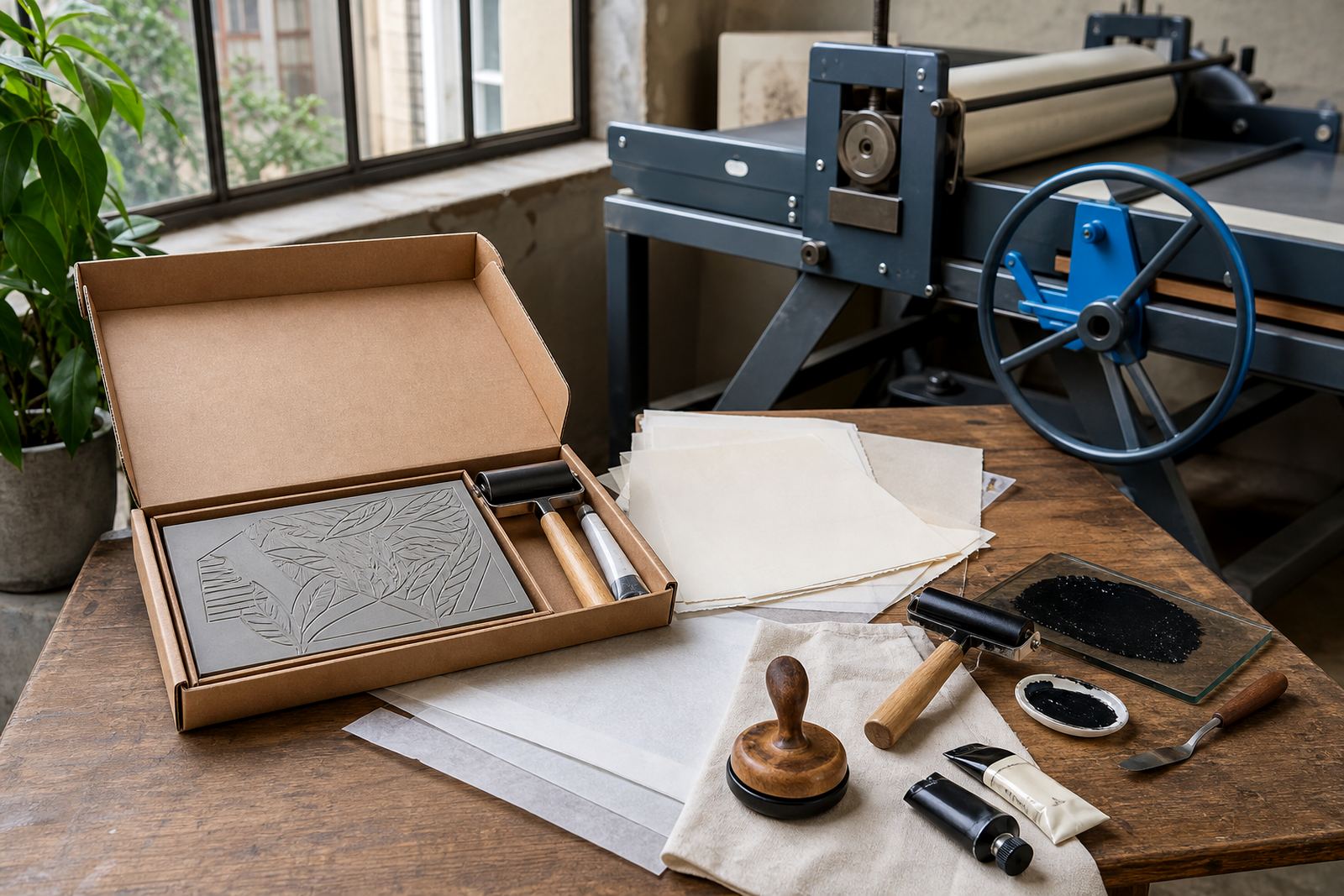
Fine Print Paper is chosen for the way it responds under a brayer, baren or press blanket, and for how it takes ink without blotching at the edges. In a hand-pulled workshop, the sheet should lie flat, sit square to the block and accept even pressure across the image. If the paper is being used on a press, the sheet needs a sound feed line, a clean platen area and enough strength to pass through without tearing at the corners.
For smoother editions, the block face should be inked with a light, even roll rather than a heavy load. That helps the paper pick up the cut marks without flooding the open spaces. Water-based inks dry differently from oil-based block inks, so the paper choice should be checked against the ink body and the planned drying space. In humid coastal conditions around Cape Town, careful drying spacing is useful to avoid set-off between sheets.
- Suitable for hand burnishing with a baren
- Works on a press with correct pressure settings
- Supports clean registration between layers
- Best handled on flat, dust-free drying surfaces
Care after printing and storage of finished sheets
After printing, Fine Print Paper should be moved onto a drying rack or clean flat surface without dragging the wet image across another sheet. If the ink is still open, use interleaving and keep the stack level. Once dry, the prints should be stored away from direct sunlight, damp corners and heavy weight that can mark the printed surface. A flat archive sleeve or portfolio board is better than a rolled tube for most workshop editions.
When a print is being kept for framing, avoid touching the image area with bare hands before the ink has fully settled. If the edition uses multiple colours, allow each pass to dry enough to protect the next layer. The smoother finish on this paper makes it easier to spot dust, fibres and accidental smudges, so clean storage helps. In a busy studio, a simple label on the back of each sheet helps keep editions in order after drying.
- Dry flat or on a rack with spacing between sheets
- Store in sleeves, folders or portfolio boards
- Avoid damp rooms, dust and strong sunlight
- Keep edition sheets labelled and separated
Order details to confirm before a workshop run
When Fine Print Paper is being set aside for a class or print run, a few details should be matched to the block and the printing method. The sheet size needs to suit the image area, the paper weight should suit the chosen ink, and the quantity should match the number of proofs plus the planned edition. If the session includes school groups or mixed ages, paper that trims cleanly and takes a clear first pull is usually the practical choice.
It also helps to confirm whether the printing will be by hand only, by press only or by both methods in the same session. Different workshop formats use different pressure levels, and that affects paper choice. For larger group bookings across Cape Town, Stellenbosch, Johannesburg, Pretoria or Durban, the paper order should allow for test sheets, final sheets and a small margin for handling errors. Send those workshop details through our contact form, with the block size and the planned ink type.
- Confirm block size and printed image area
- Choose sheet weight for hand or press printing
- Allow extra sheets for proofs and set-up pulls
- Note the ink type and drying plan for the edition
Key facts
| Material type | Fine art paper for relief printing |
|---|---|
| Surface | Smooth finish for cleaner detail and flatter ink lay |
| Typical use | Linocut, soft-cut and block print editions |
| Print methods | Hand burnishing, baren work and press printing |
| Sheet format | Available in workshop-friendly cut sheets and larger formats |
| Best suited to | Proofs, final editions and framed workshop prints |