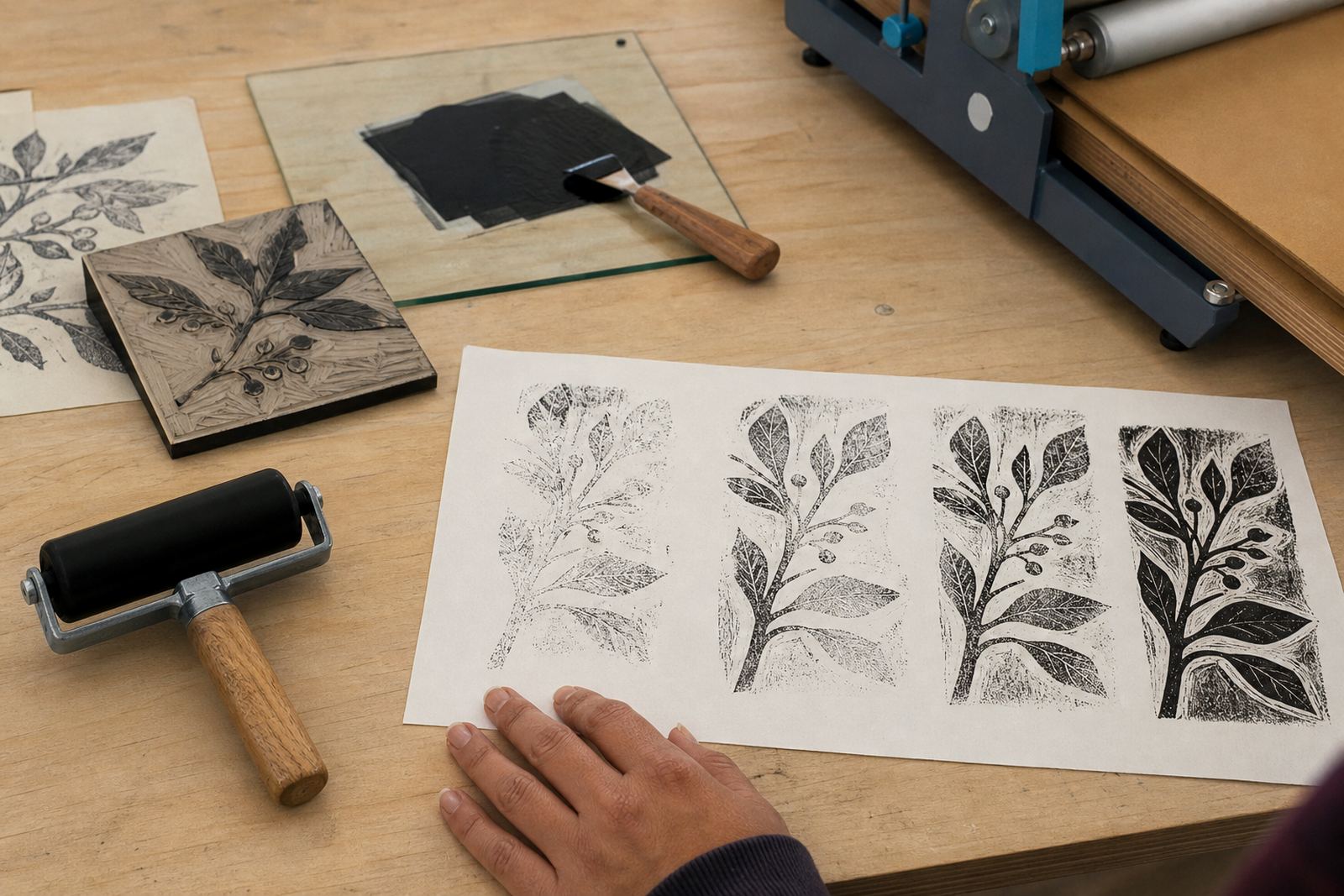
A softer roller for hand-printed work
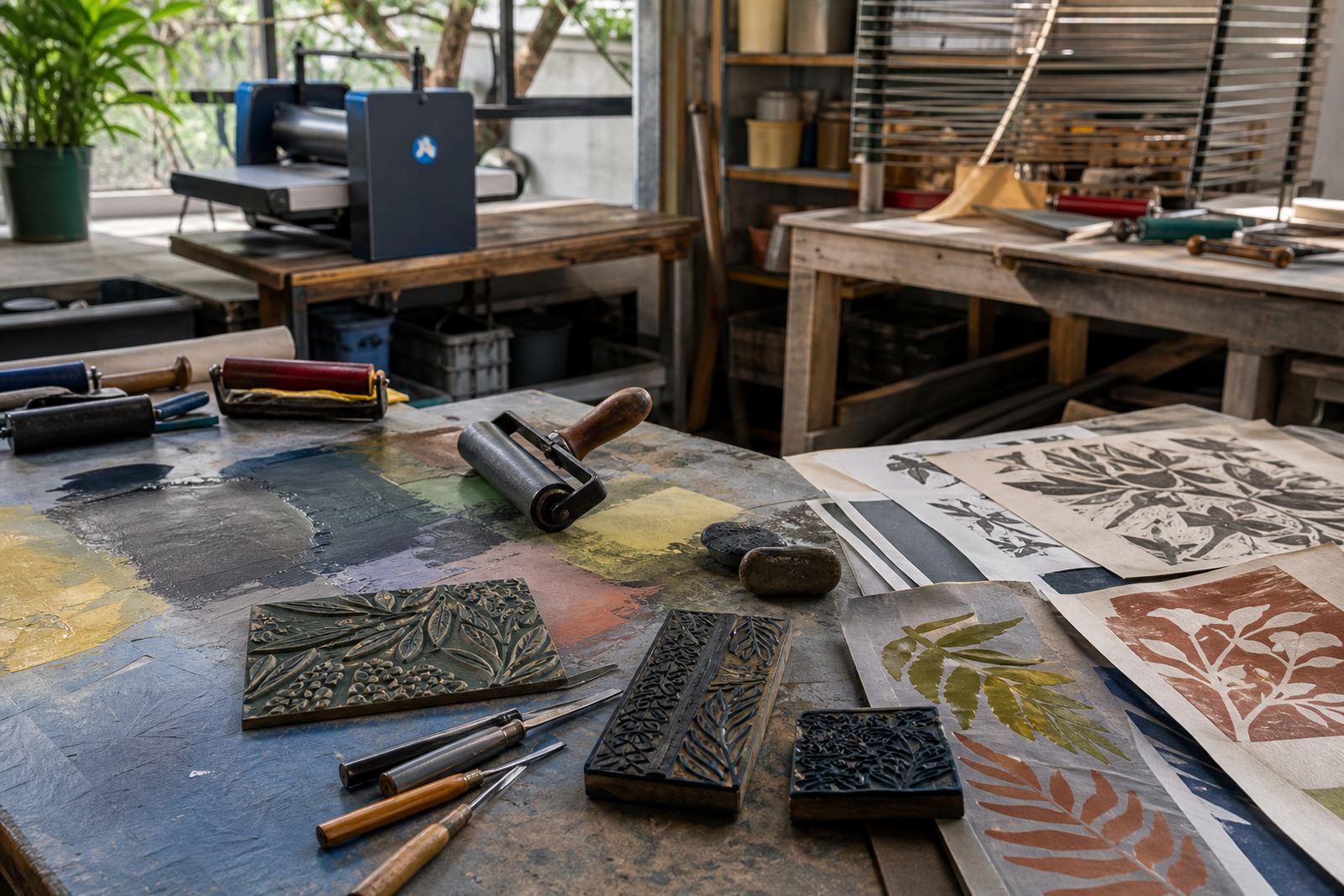
A soft rubber brayer is a hand roller used to spread block ink across carved lino, soft-cut blocks and other relief surfaces. The softer roller face compresses a little as it moves, which helps it follow the small dips and raised edges that appear in hand-carved work. For beginners, that softer feel can make inking less tiring and give better control when you are learning how much pressure to use.
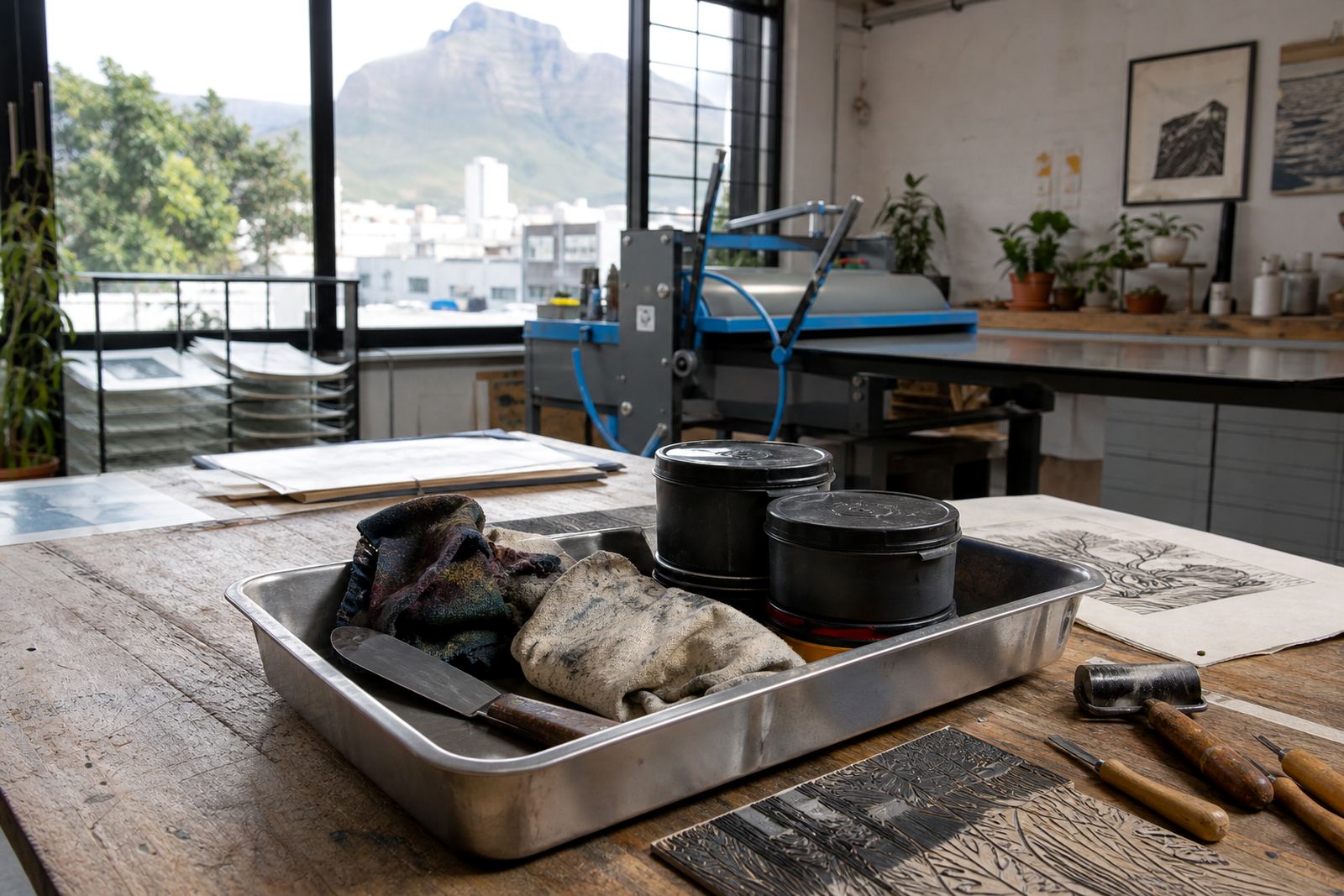
In a print studio, this type of brayer is often kept for linocut, block-print classes and short edition runs where the paper needs a clean, even ink laydown. It works well with water-based block inks and with oil-based block inks, depending on the rollers material and the cleaning routine you keep in the studio. The aim is a smooth film that transfers without flooding the fine lines cut with gouges or V-tools.
- Hand roller for relief printing
- Soft roller face for textured surfaces
- Useful for lino, soft-cut and rubber blocks
- Suitable for studio classes and edition work
Sizes that suit table work and class sessions
Soft rubber brayers are usually supplied in a few common widths, so the roller can match the block size and the way the work is done. Smaller rollers are handy for postcard blocks, proofing and detail work, while wider rollers help when you are covering a full sheet or a larger carved surface. The right size keeps the ink layer even and reduces unwanted marks at the edges.
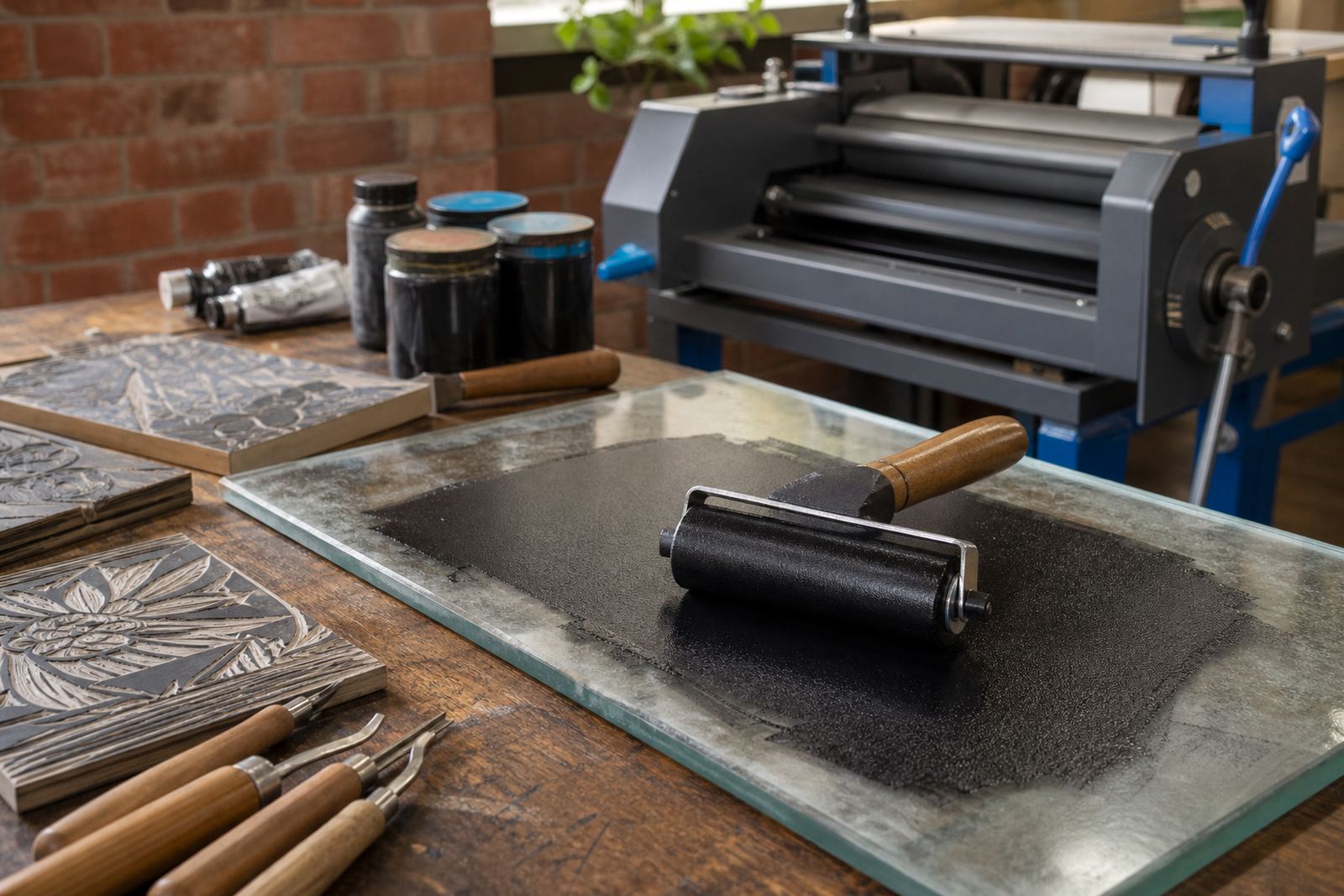
For workshops, a compact brayer is often easier for first-time printmakers to handle. It moves comfortably on a glass, perspex or metal slab where ink is rolled out before printing. A wider roller makes more sense for repeated studio use, family sessions and school groups where several people need to ink blocks quickly and keep the pace steady around one work table.
- Small brayers for proofing and detail blocks
- Medium rollers for common class sizes
- Wider options for larger prints and group use
- Works on slab surfaces used for rolling out ink
Where the softer roller earns its keep
This kind of brayer suits textured papers, lightly uneven hand-carved blocks and prints where a softer touch is preferred. When a block has shallow channels, carved lettering or small cut marks, the roller can help ink the raised areas without forcing pigment into every recess. That makes it practical for workshop editions, student exercises and family sessions where the priority is clean hand-printed results.
It is also a good match for lino that has been used a few times and is no longer perfectly flat, especially if the block has softened at the edges. The roller can bridge small surface changes and still lay ink across the highest points. In schools and pop-up workshops, it helps participants focus on carving, registration and pressure, instead of fighting a stiff roller that feels harsh on the hands.
- Textured paper and slightly uneven blocks
- Edition printing where consistency matters
- Beginner classes learning ink control
- Short runs for cards, posters and art sheets
Fitting into a studio routine
A soft rubber brayer needs to be matched to the way your workshop runs. The roller should feel balanced in the hand, with a handle that sits comfortably for repeated passes across the slab and block. In a teaching studio, that matters because the same roller may be used by different people across one session.
When ordering for a studio or mobile workshop kit, check whether the roller axle runs smoothly, whether the handle sits securely and whether the roller width suits the press bed or hand-printing table. If you work with both baren printing and press printing, the brayer may be used mainly for inking blocks, while the final transfer comes from a baren or a press. The piece should still be easy to clean between colours so the next layer stays true.
- Comfortable handle for repeated studio use
- Smooth axle movement matters in class work
- Match width to block and paper size
- Useful alongside baren and press printing
Looking after the roller after each session
Care depends on the ink system you use. Water-based block inks should be washed off before they dry on the roller face, then the roller should be dried cleanly and stored away from dust. Oil-based block inks need more attention, with a suitable cleaning fluid and a careful wipe so the surface does not stay tacky. If the roller is left with dried ink, the finish can harden and the next pull will not roll evenly.
A soft rubber roller should be kept out of direct sun and away from hot shelves or rough edges that can nick the surface. In a busy print room, it is sensible to store it flat or hanging in a place where the roller does not pick up grit. Even a small grain can leave a line through a smooth edition and make the next print harder to register cleanly.
- Wash water-based inks before they dry
- Use suitable cleaner for oil-based inks
- Store away from heat, sun and grit
- Check the roller face for nicks or flat spots
Roller width and hardness for your blocks
When you are ordering a soft rubber brayer for a print workshop or studio kit, it helps to confirm the roller width, roller diameter, handle style and the type of rubber face. The hardness of the roller matters too, because a softer surface gives more give under hand pressure, while a firmer surface may suit different block surfaces. If the roller will be shared in classes, ask about a size that fits both individual table work and group demonstrations.
It also helps to know whether the brayer will be used with lino, soft-cut blocks, carved rubber, oil-based inks or water-based inks. That tells you how much cleaning will be needed and whether the finish should be smooth or slightly grippy in the hand. For schools, studios and pop-up workshops, a reliable brayer is one of those tools that quietly affects the whole print from the first ink roll to the last edition pull.
- Roller width in millimetres or centimetres
- Roller diameter and overall handle length
- Softness of the rubber face
- Ink type and block material in use
- Single-user or shared workshop use
Key facts
| Product type | Soft rubber hand brayer for relief printing |
|---|---|
| Common widths | Small, medium and wider workshop sizes |
| Roller material | Soft rubber face on a hand roller body |
| Typical use | Inking lino, soft-cut and rubber blocks |
| Ink compatibility | Water-based and oil-based block inks |
| Care notes | Clean after use and keep away from grit, heat and direct sun |