A mixing set built for hand-printed colour work
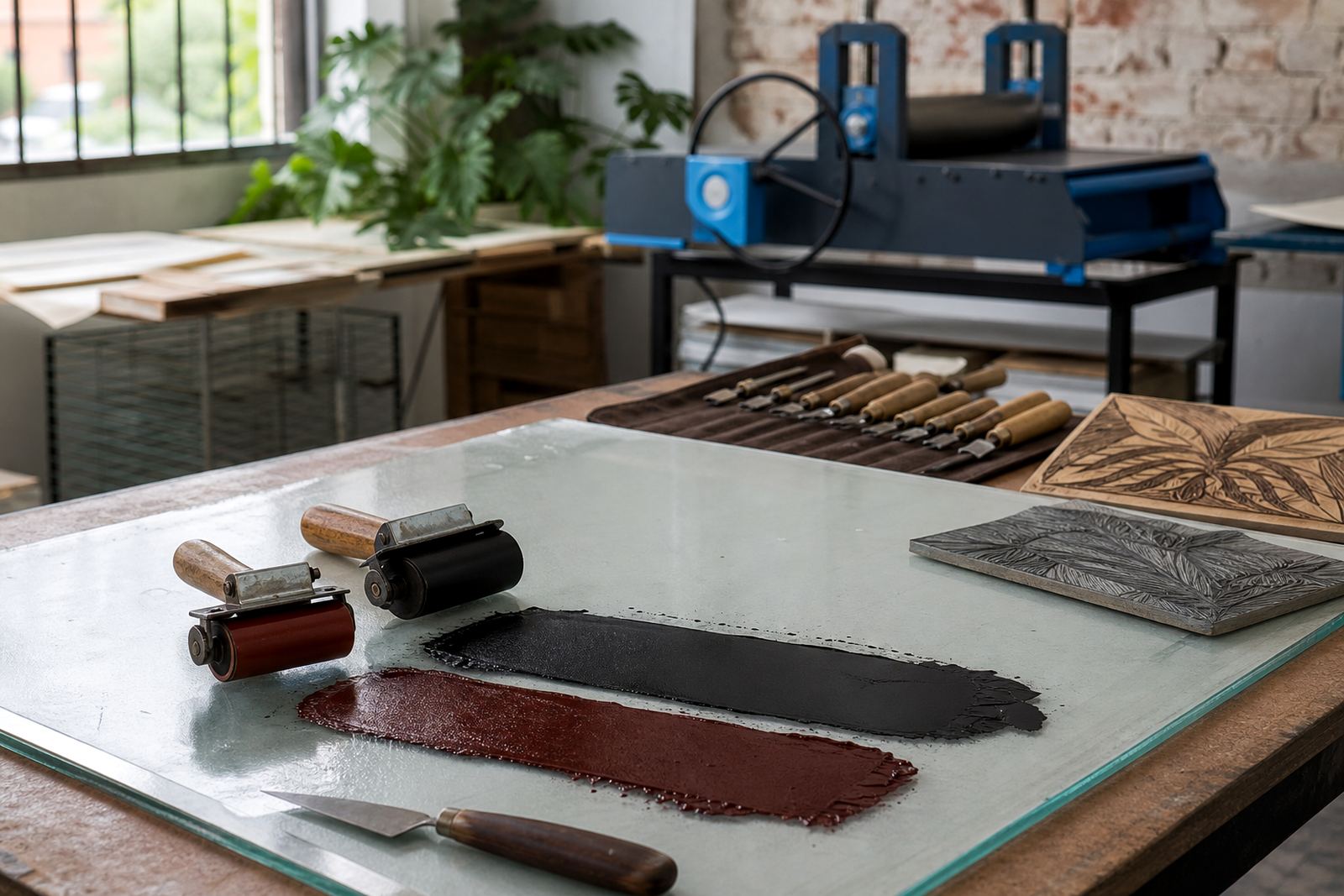
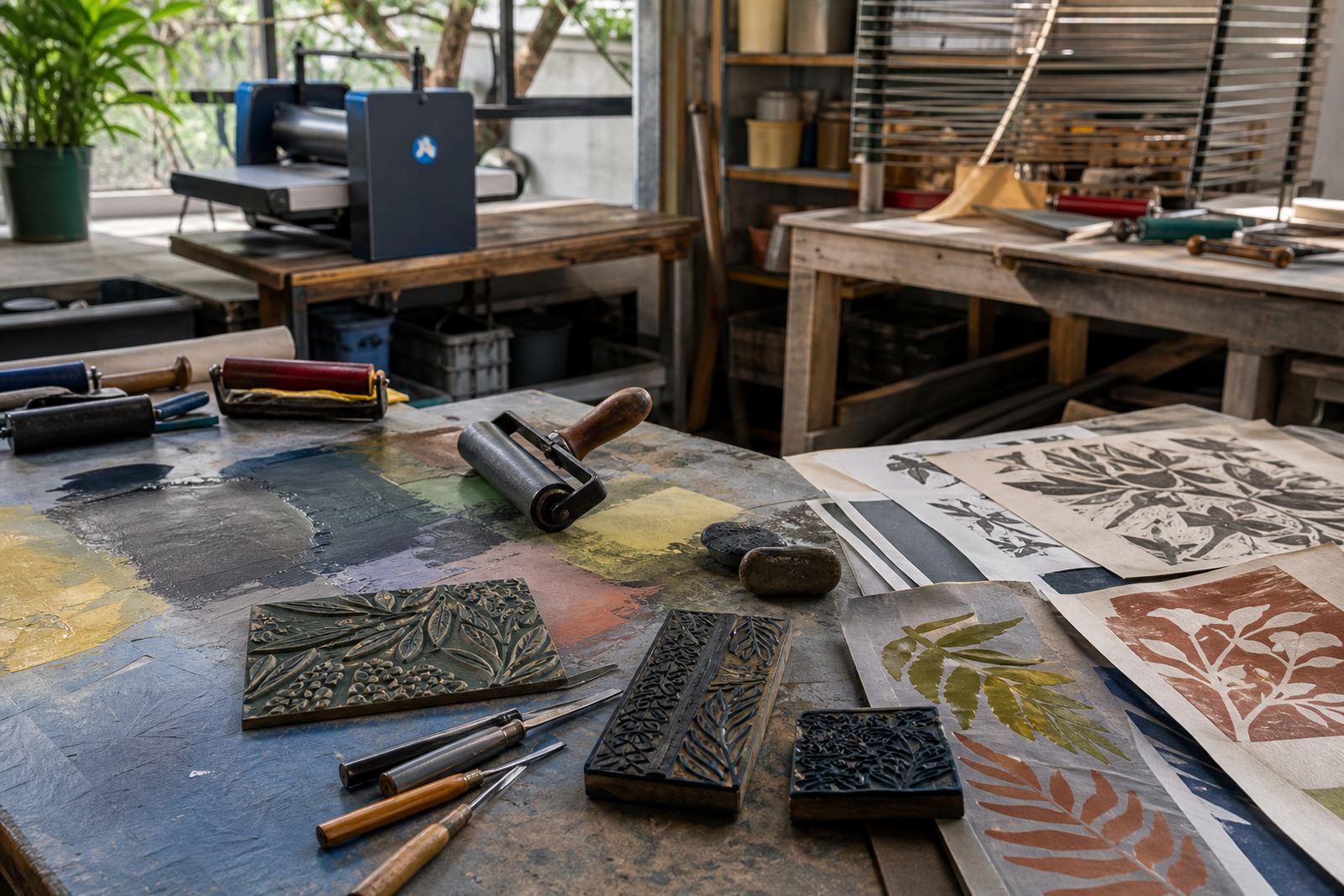
This set is put together for linocut and block-print sessions where the colour is mixed, rolled out and judged by eye before it reaches the block. It suits people learning to move between one colour, two colours and overprinted layers, with enough flexibility for simple studies and more considered edition work. In a workshop, that usually means working from a palette, loading a brayer evenly and checking how a water-based or oil-based block ink behaves on paper, on the carved surface, and under hand pressure.
We use the set in studios, school groups and team sessions where people need a practical way to understand colour stacking and registration. The set teaches how a tint shifts when it is pulled thinner, how a mixed ink reads on cream paper versus white, and how a second pass can either sharpen the image or muddy it if the layer is too wet. Small slips in the roll show up quickly, which is exactly why the set is useful in training.
What is in the colour mixing range
The set can be supplied in different workshop sizes, from compact starter packs to fuller studio packs for repeat class use. Depending on the session, it may include primary inks, a mixing white, a transparent extender, a dark neutral for shading, and a clear surface for test pulls. Some groups prefer a tighter set with fewer tones, while others want enough choice to build gradients, muted mixes and split-fountain effects on one block.
- Starter set for beginner carving and first proofs
- Intermediate set for layered colour and simple reduction prints
- Studio set for group teaching, demonstration and edition printing
- Ink choices in water-based or oil-based formats
- Paper test sheets for checking tone before the final pull
Where a class is working on soft-cut, the set often pairs well with lighter pressure and a smoother paper. For harder lino, the same colours can be pushed with firmer wiping and a more deliberate roll, especially when the block has fine cuts and small channels that need to stay open.
Where the set fits into a workshop day
This product suits private studio workshops, school pop-up classes and venue-based sessions where the group wants to explore colour rather than stay with a single black print. It is also useful for family print sessions, student classes and teacher training when the lesson needs a practical route into registration, editioning and simple colour planning. In Cape Town humidity, and in coastal towns along the same belt, the handling of paper and ink needs a steady table and a clean, dry stack for finished sheets.
The set works well when the class is learning how to align a second block or a second pass over the first image. It can support a reduction method where the same block is carved away in stages, or a layered method where separate blocks carry different colours. In both cases, the mixing set gives a shared language for what the colour should do before anyone presses the paper down.
- Workshop tables with enough flat space for palettes and proofs
- Clean drying area for sheets between passes
- Good lighting for judging colour shifts and edge detail
- Registration marks or pins where the print plan needs alignment
Using the set with brayers, barens and press work
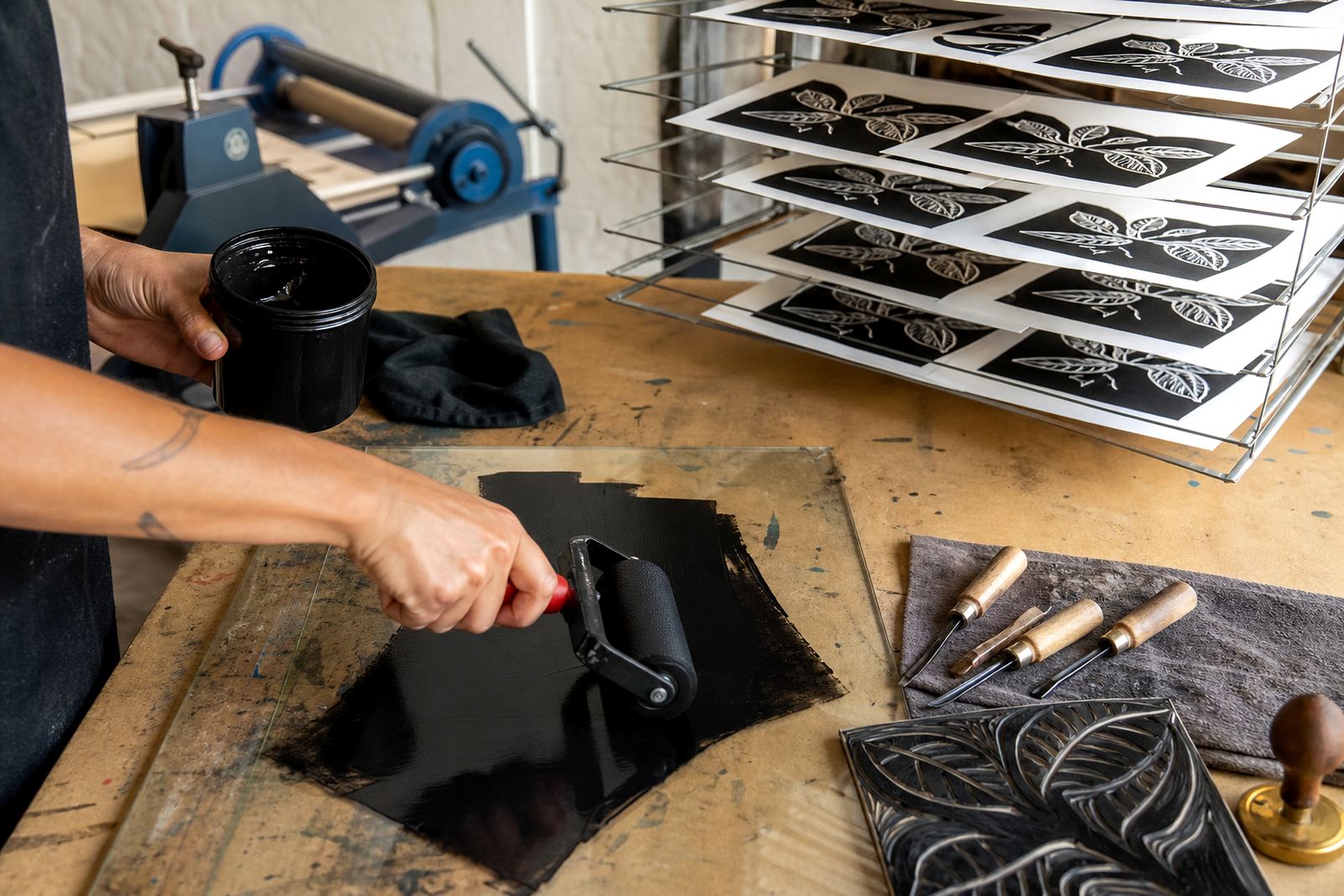
For hand printing, the set is rolled out with a brayer so the ink sits evenly and does not ridge at the edges. The printer can then transfer the image with a baren, or move to a press print where the pressure is more even across a larger edition. A well-mixed colour should load the carved area without flooding the fine marks, and that balance matters when the block has shallow cuts or tight detail around text or pattern.
In a press session, the colour set is useful when the edition must stay consistent from sheet to sheet. A mixed tone that looks right on the slab may print darker once it meets textured paper, so workshop leaders usually test a small proof first. That is part of the learning. Students see how little changes in pressure, inking speed or paper choice can shift the final sheet quite a bit.
Care, storage and workshop handling
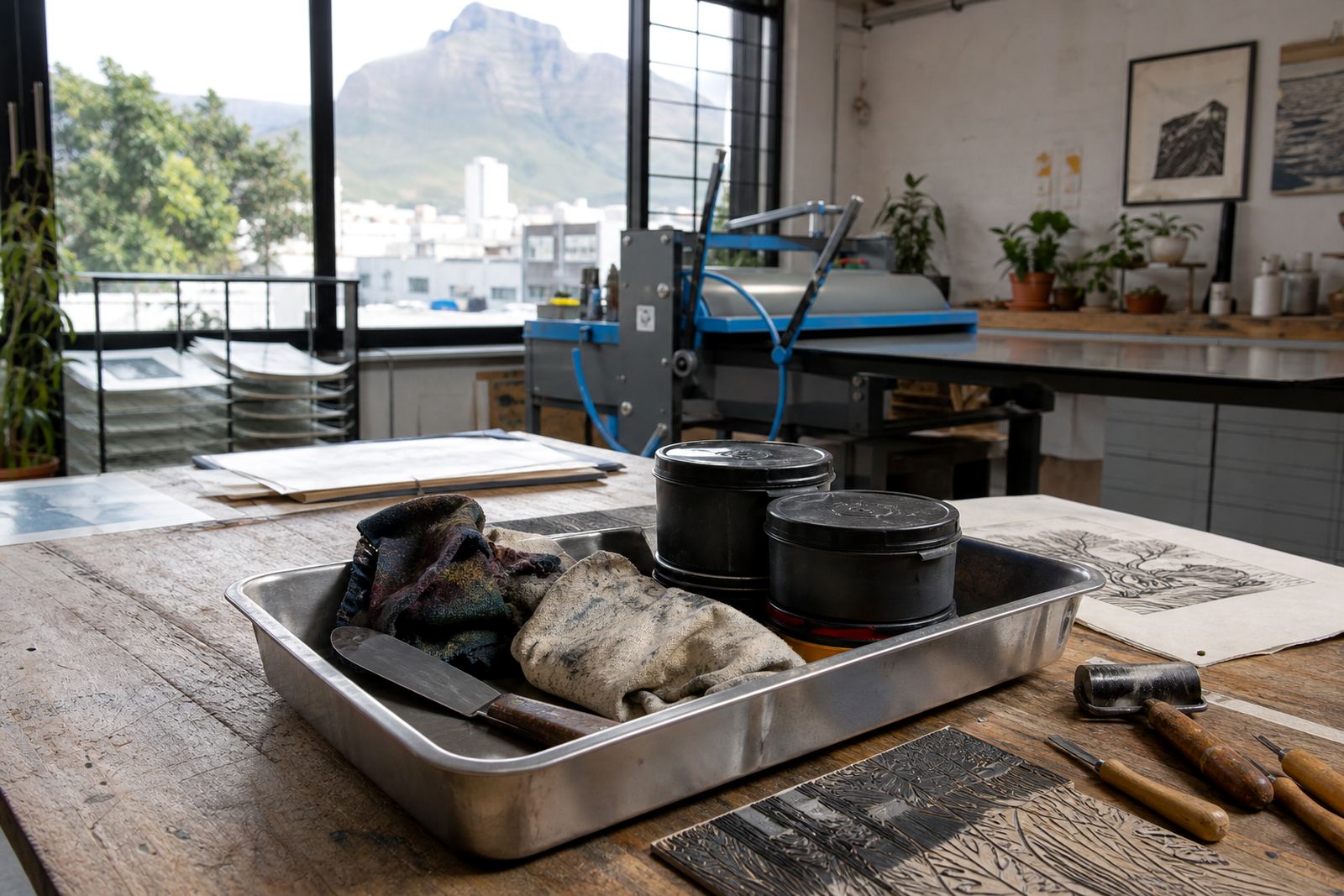
Keep the inks sealed when not in use, and wipe lids, trays and mixing knives before residue starts to skin over. Water-based colour needs prompt cleaning from tools and hands, while oil-based ink asks for a bit more patience and proper cloths. Either way, the colour set lasts better when it is stored away from dust, direct sun and rough handling in transit. On pop-up jobs, we pack it so the lids stay upright and the tubs do not slide against each other.
Paper should be stored flat and dry, especially for edition work where moisture can make a sheet buckle at the edges. If a group is printing in a school hall or borrowed venue, a protected table and a spare set of test sheets help the class settle before the final run. A neat bench makes colour judgement easier, and the prints look better for it too.
How many colours and tubes a group needs
When a Colour Mixing Set is ordered for a workshop, we confirm the number of people using it, the kind of block being printed, and whether the class is aiming for proofing, final edition sheets or teaching demos. It also helps to know if the session needs water-based inks for faster clean-up or oil-based inks for longer open time. The paper type matters as well, since smooth printmaking paper takes colour differently from a more textured sheet.
- Group size and age range
- Water-based or oil-based ink preference
- Workshop format, such as studio, school or venue session
- Block type, including lino or soft-cut
- Edition size and whether registration guides are needed
- Paper size, sheet count and finish
For schools and travelling classes, it also helps to note whether the room has enough flat surface for drying racks, palette space and safe carving stations. If the set is going to be used with a press, the table height and the available floor area matter too, especially when several students are moving between inking, alignment and pulling sheets by hand.
Key facts
| Product type | Colour mixing set for linocut and block printing |
|---|---|
| Use | Layered colour, blends, reduction exercises and edition work |
| Ink compatibility | Water-based and oil-based block inks |
| Workshop fit | Studio classes, school pop-ups, family sessions and team groups |
| Print methods | Brayer, baren and press printing |
| Typical components | Primary colours, mixing white, extender and test paper |
| Block compatibility | Lino and soft-cut blocks |