A tray built for inking, wiping and set-downs
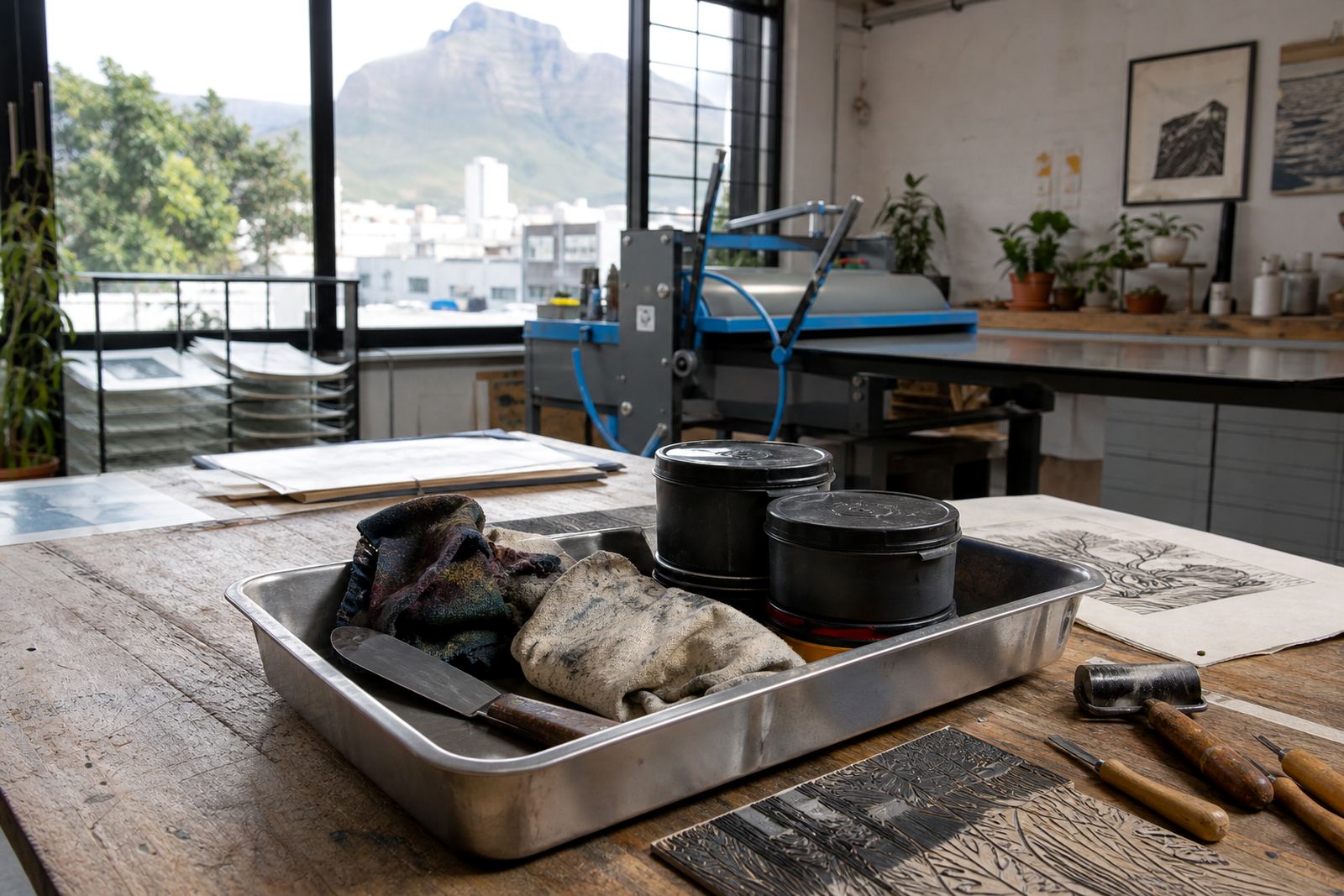
The solvent safe tray is a contained work tray for block-print sessions where ink handling needs to stay orderly. It gives you a defined surface for mixing small amounts of ink, resting brayers, setting down wipes and keeping cleanup in one place. In a lino studio, that matters when several people are carving, inking and printing at the same time, because loose tools and wet ink can spread across a table in a hurry.
In practical use, the tray sits under the workflow rather than away from it. You can place it beside a carving board, near a press table or on the same bench as your registration marks and papers. The raised sides help keep drips, scrapings and wash-up residue contained. For workshops in Woodstock, school halls or pop-up venues, that small boundary makes the session easier to manage.
- Contained surface for ink handling and cleanup
- Raised sides for controlled wipe-downs
- Suitable for brayers, cloths and small tools
- Useful during edition printing and demo sessions
Tray sizes and options for various print setups
Tray sizing depends on how many printers are working from the table and how much ink movement the session needs. Smaller trays suit one or two people doing careful inking, proof pulls or block cleaning. Wider trays make more sense for class settings, where the tray may need to hold several rollers, scrap paper, rags and a small container of wash-up liquid in the same area.
Common options are shallow trays for light handling, deeper trays for more contained cleanup, and wider formats for team workshops or school groups. A smooth internal finish helps with wiping and keeps ink from catching in corners. Some studios prefer a rigid tray with a firm base, while others ask for a lighter unit that can be moved between tables or packed for venue setup. The right choice depends on the block sizes, paper sizes and the way the room is laid out.
- Compact trays for individual carving and inking stations
- Mid-size trays for family or student groups
- Large-format trays for team sessions and teaching tables
- Shallow or deeper sidewall options
Where solvent safe trays earn their place in printmaking
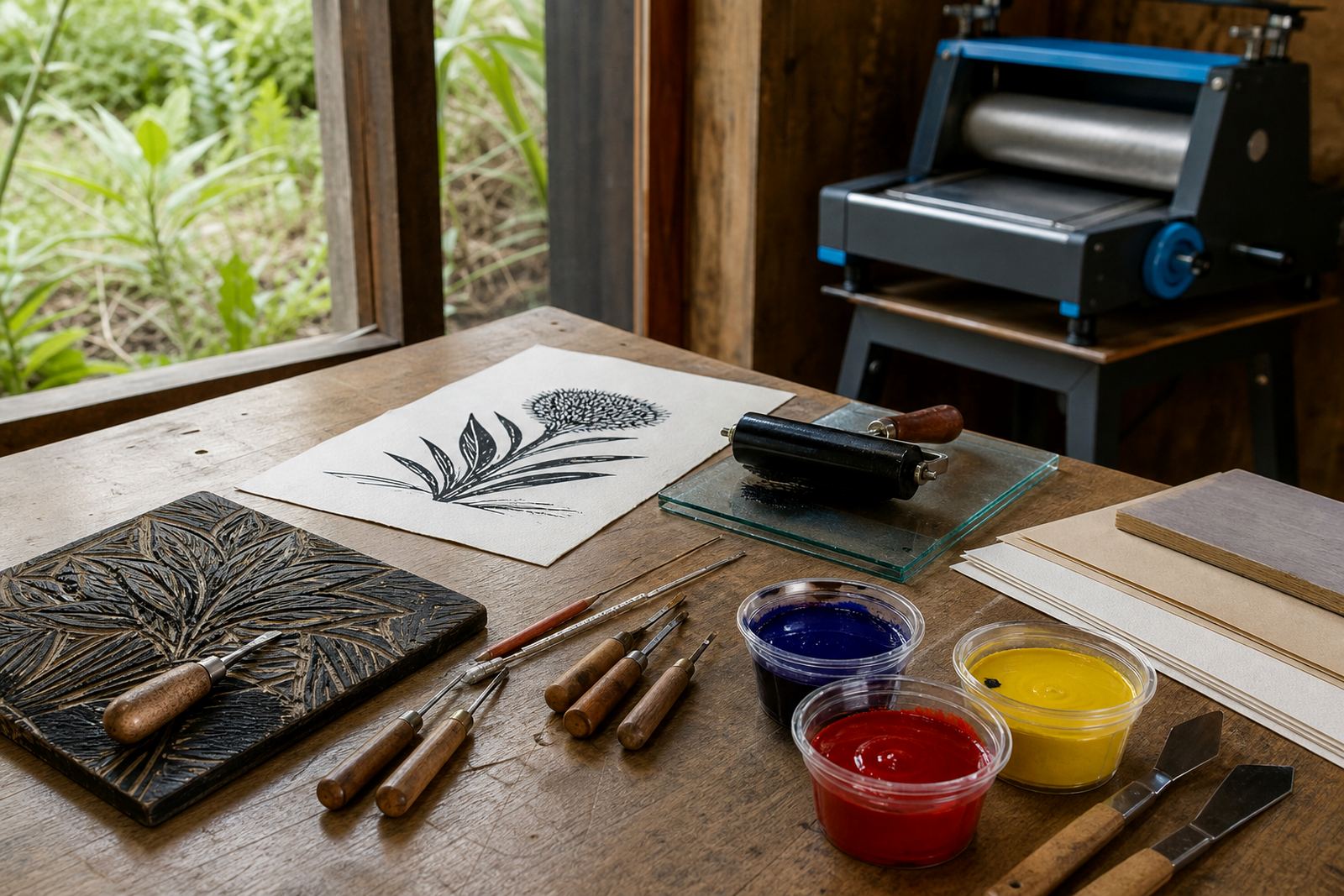
This tray suits linocut and soft-cut block printing, especially where water-based and oil-based inks are used in the same session. It is useful during brayer charging, colour mixing and wipe-back steps, when ink needs to stay separated from paper piles and carving tools. In a teaching environment, it also helps keep test sheets, masking tape, bench scraps and cleaning cloths in one controlled zone.
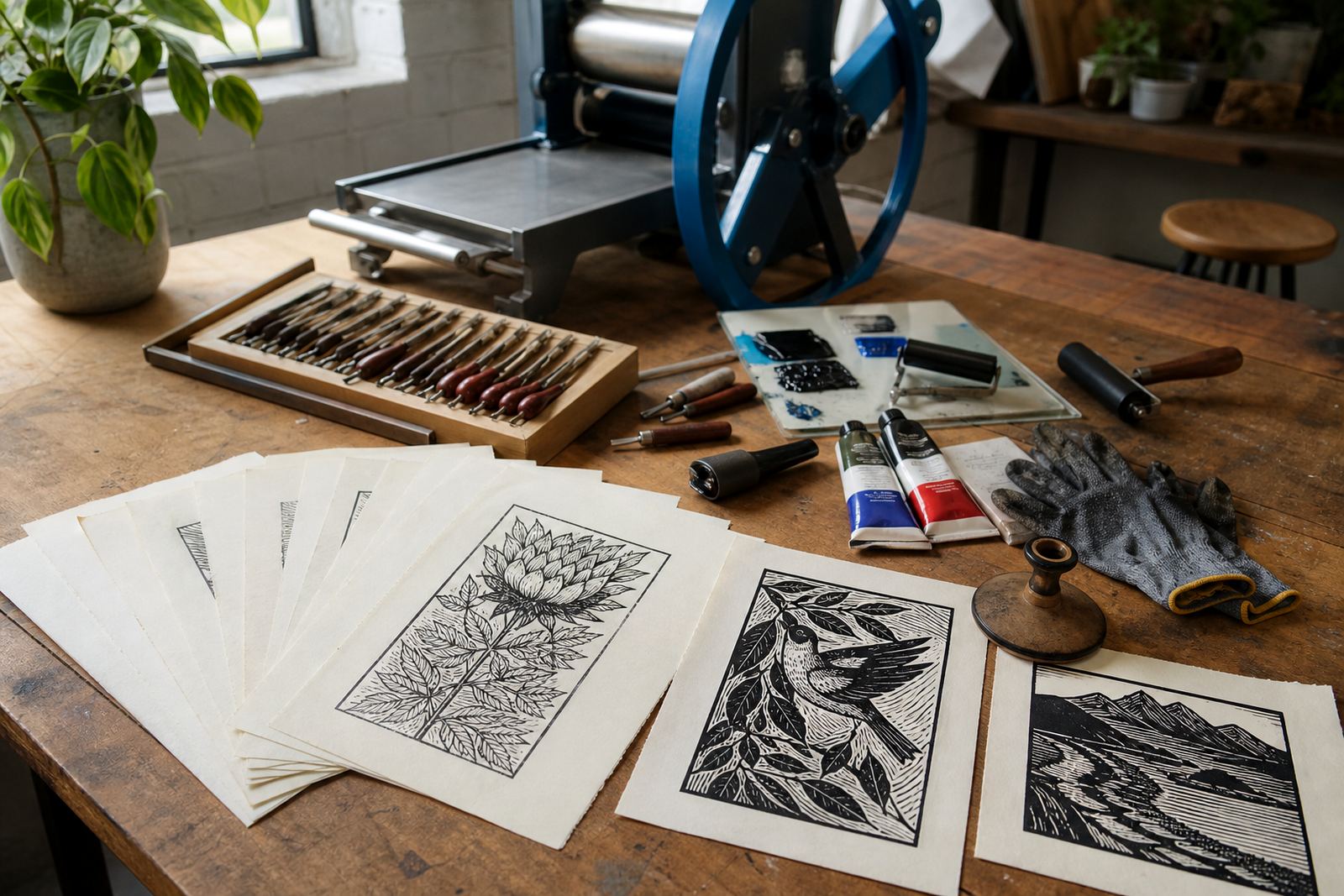
Workshops for adults, students, families and school groups benefit from that kind of order. A tray can sit on a print table during a beginner carving session, move alongside a press for edition printing, or stay near the sink area for controlled cleanup after a press printing demo. It also works well in venues where tables are shared and the floor space has to stay clear for movement between carving, inking and drying racks.
- Linocut workshops and block-print classes
- School pop-up sessions and teacher training
- Edition work with registration marks and proof pulls
- Mobile setups in studios, halls and rented venues
Fitting and setup details that keep the tray useful
The tray needs a sensible place in the workflow. A level table gives the best result, especially when rolling ink or setting a brayer across the surface. If the tray is going to live near a press, check the working height so hands can move between the tray, the block and the paper stack without strain. For mobile classes, the tray should fit in with the rest of the packing so it can be loaded with rags, ink knives and registration tools without tipping.
When ordering for a studio or school programme, it helps to know how the tray will be used. A tray for block ink handling may need a deeper lip than one used only for set-downs. If the class uses a hand press, the tray can sit beside the machine for ink mixing and small cleanup. If the session relies on baren printing, a flatter tray may be easier to work from. The aim is to keep the print process flowing without crowding the bench.
- Confirm table size and available bench depth
- Check whether the tray will move between stations
- Match tray depth to ink volume and cleanup style
- Allow space for brayers, cloths and paper offcuts
Care after oil-based and water-based sessions
Care depends on the inks used that day. Water-based block inks can usually be wiped down with a damp cloth and a mild studio cleaner, while oil-based inks need a more careful wipe with the right cleaning medium before the final wash. The tray should be cleaned before residue builds up, because dried ink can mark the surface and make later cleanup slower. In a busy studio, that means clearing the tray at the end of each session rather than leaving it for the next print group.
To help it last, keep the tray flat and away from direct sunlight. Heat can affect some plastics, while rough stacking can warp lighter units or scratch the working surface. If the tray is used in a humid coastal space, dry it fully, especially after solvent contact or repeated wash-downs. A neat tray lasts longer and keeps the bench cleaner during carving, rolling and edition printing.
Ordering bench hooks
Before ordering, confirm the dimensions, depth, material and edge profile. If the tray will be used with larger brayers or wide rollers, make sure the internal width gives enough room for safe movement. If it will sit beside a press or drying rack, ask for the footprint so the bench layout can stay practical. For schools and touring workshops, it also helps to note whether the tray needs to stack or nest for transport.
We also recommend confirming the intended ink type, the number of users and whether the tray will be used for mixing, wipe-downs or both. That tells you whether a shallower format will do the job or whether a deeper containment edge is safer for the way the class works. If the session includes repeated editions, ask how many trays are needed so colour changes and cleanup can stay organised across the table.
- Overall length, width and internal working area
- Tray depth and sidewall height
- Material finish and cleaning method
- Use case: mixing, wiping, transport or set-down
Key facts
| Product type | Contained tray for ink handling and controlled cleanup |
|---|---|
| Typical use | Linocut, soft-cut and block-print workshop stations |
| Common sizes | Compact, mid-size and large-format options |
| Material options | Rigid plastic or similar wipe-clean studio material |
| Use compatibility | Water-based and oil-based block inks |
| Setup note | Works on level tables beside carving and printing stations |