Transfer materials that sit between sketch and block
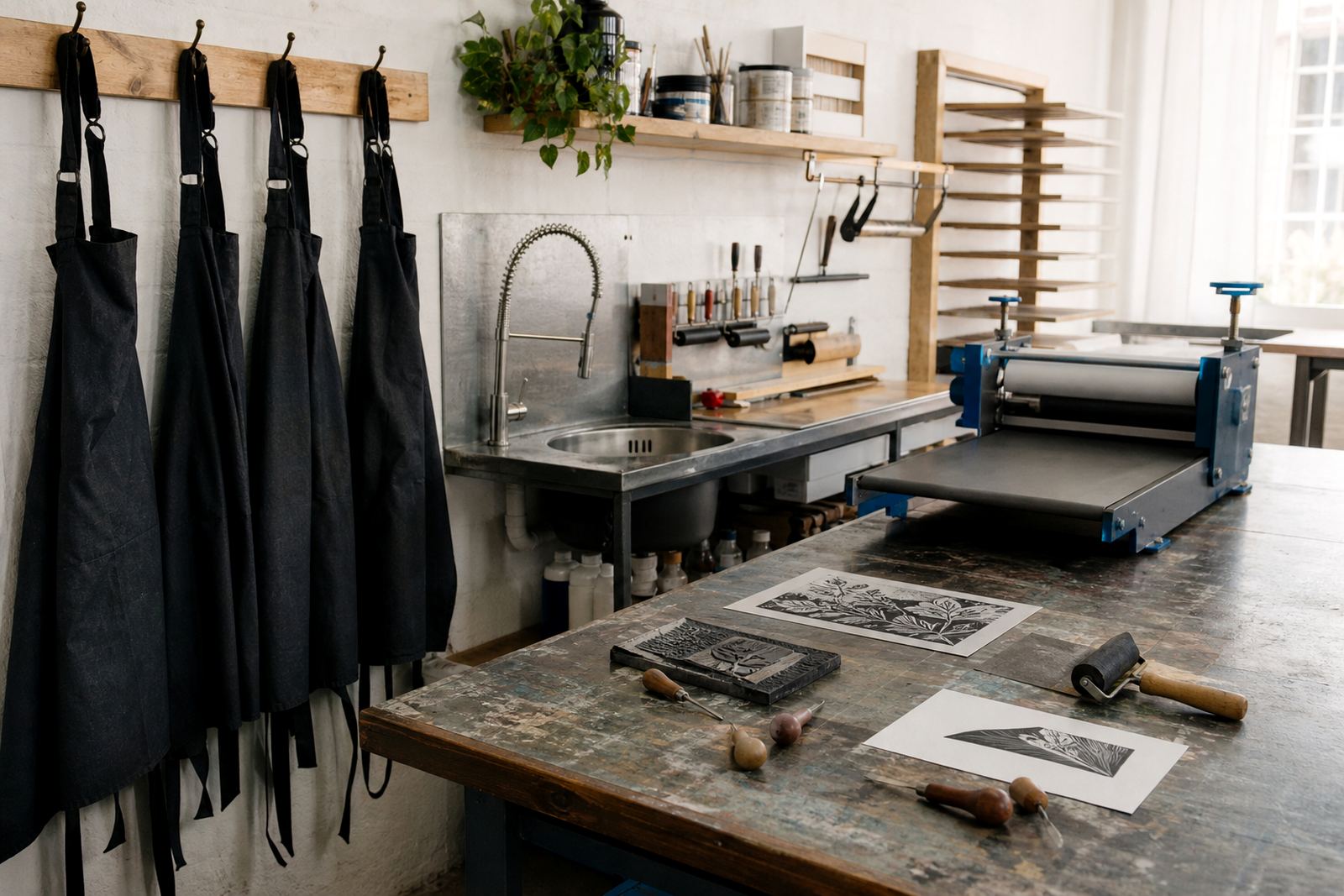
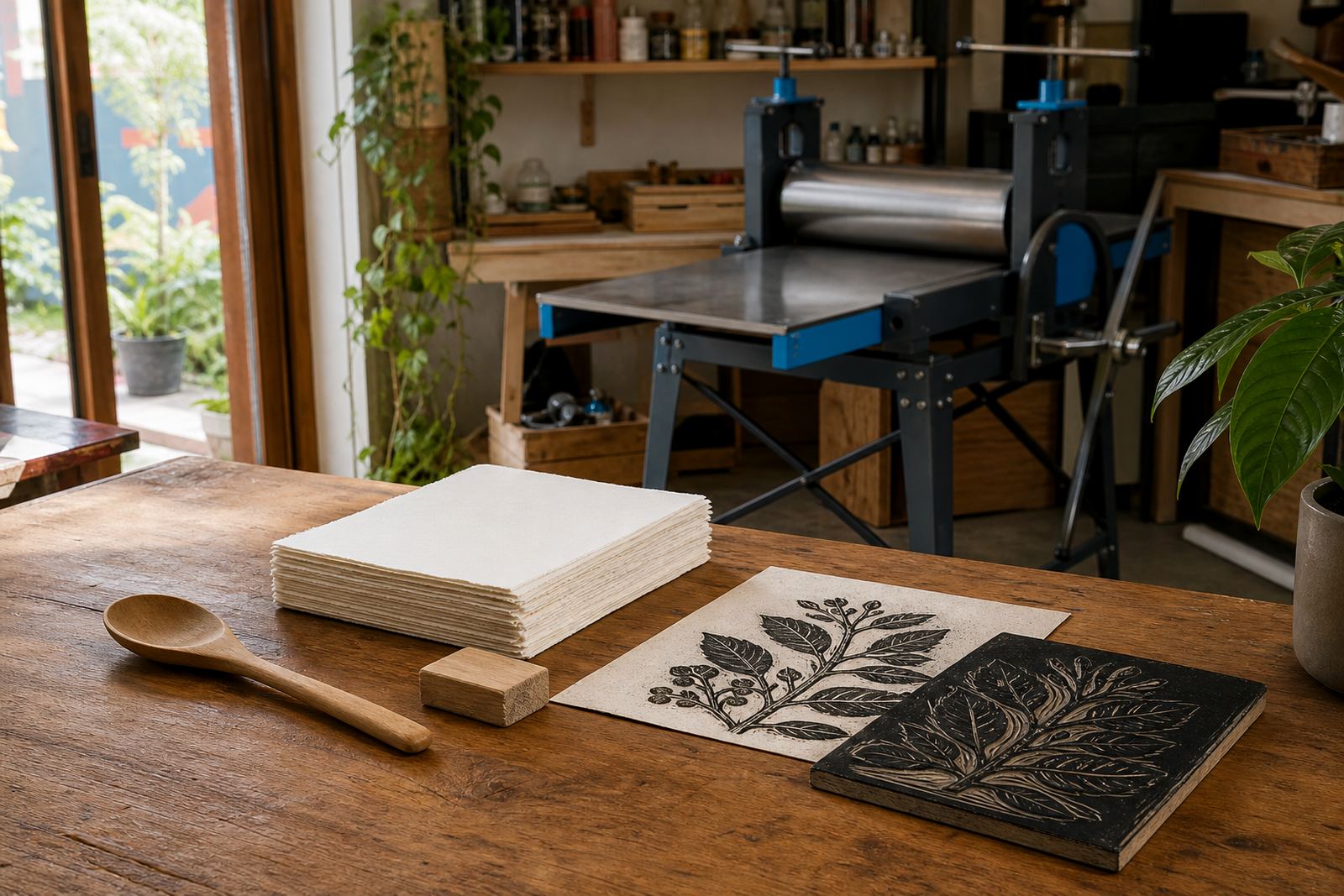
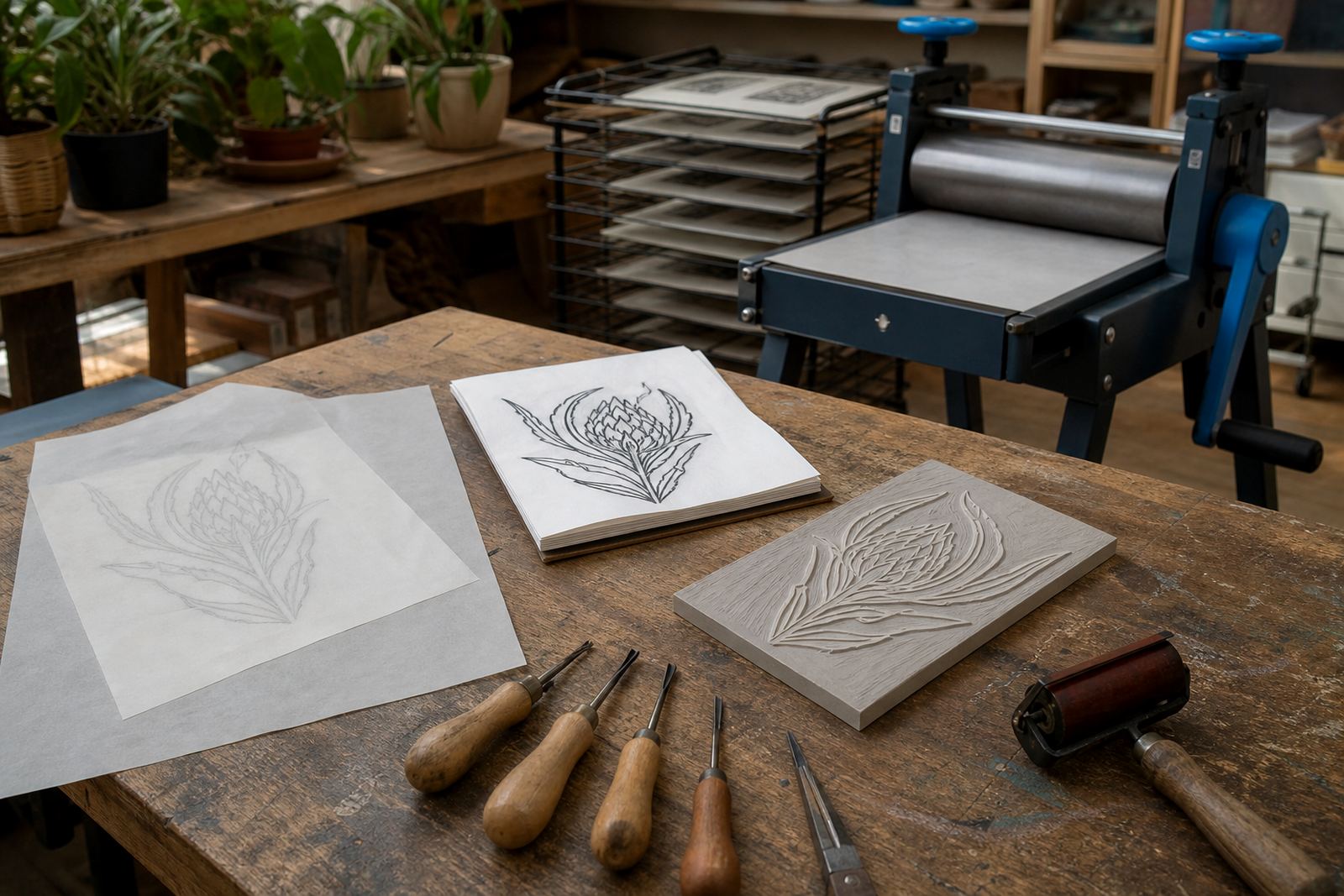
This pack brings together the practical items used before the gouges come out. The transfer stage matters in linocut and block print work because the drawing on the block guides every cut, every relief area and every line that stays in print. In a teaching studio or a classroom table, that step saves time and keeps the image readable while carving begins.
Depending on the workshop method, the pack can include tracing paper, carbon or graphite transfer sheets, pencils, masking tape, layout sheets and a clean reference surface for the block. The purpose is straightforward: move the design onto lino or soft-cut with enough clarity to work from, without chewing up the block face or smudging the drawing before the first pass.
For groups working with mirrors, text or repeat motifs, the transfer stage also helps place the artwork the correct way round. That matters with relief printing because the printed image reverses on paper, and an image with lettering or a directional motif needs a careful setup before carving begins.
Who orders the transfer pack
The pack suits adults learning their first block, students building a print assignment, and families making a small edition at home or in a studio session. It also fits teacher-led workshops where several blocks need to be prepared in one lesson and each person needs the same clear starting point.
Use it with standard lino, soft-cut blocks and mounted practice sheets. It is useful where the image has fine detail, repeated borders or a planned edition size, because the transfer needs to stay legible while the block is moved between drawing, carving and proof printing. In schools, the pack helps keep the class work orderly when several people are tracing at once.
- Suitable for first-time carving sessions
- Useful for edition planning and repeat motifs
- Works for hand carving and press-led workshops
- Handy when the design includes lettering or direction-sensitive elements
Sizes, sheet counts and block fit
Transfer packs are usually chosen by block size, class size and the amount of drawing detail involved. A small pack may suit one or two blocks for a personal project, while larger workshop packs are better for school groups or team sessions where several people are preparing artwork at once. The block face should be matched to the paper size and the final image area, so the transfer sheet does not waste space around the drawing.
Common options include A4 and A3 transfer sheets, narrow tracing formats for smaller studies and larger layouts for school or venue workshops. Some jobs need only a clean graphite transfer, while others work better with carbon sheets that give a stronger line on pale or textured blocks. If the artwork includes a border, registration marks or a repeat pattern, the pack can be grouped to suit those needs.
- A4 for compact studies and smaller blocks
- A3 for workshop posters and larger image areas
- Single-image sets for studio use
- Group packs for classes and pop-up sessions
How the transfer stage fits the carving table
The transfer pack supports the stage before carving, not the carving itself. Once the sketch is on the block, the next tools are usually gouges and V-tools, with safe carving technique used to keep the hand steady and the cut controlled. A clear transfer makes it easier to separate line, white space and printed area before the block is touched with blades.
In lino and soft-cut work, the drawing should sit flat enough to be read under studio light and still hold up once the block is turned by hand. If the workshop uses a press later, the design needs to stay readable when inks, registration and paper placement are added. That is why the transfer stage is treated as part of the print process.
For school and venue sessions, the pack can also support grouped setup where each participant needs their own block marked with name, edition space and orientation notes. It keeps the table organised without crowding the cutting area.
Care, storage and surface handling
Transfer sheets and tracing materials should be kept flat, dry and away from damp studio corners. Coastal air in Cape Town can curl light paper if it is left open on a table, so it helps to store the pack in a folder or sealed sleeve when not in use. Keep graphite and carbon sheets away from oily hands, because marks can travel onto the block face before the drawing is fixed in place.
Blocks should be wiped clean before transfer, especially if the surface has sanding dust or cutting residue from a previous proof. If the pack includes masking tape or layout tabs, remove them carefully so the block edge stays neat for later inking and printing. A tidy transfer stage keeps the edition cleaner too, because the image sits where it should and the carved areas remain easier to read.
- Store flat to avoid curling
- Keep away from moisture and dust
- Wipe block surfaces before tracing
- Remove tape gently to protect the block edge
What to confirm when ordering a pack
When ordering, it helps to confirm the block size, the paper size, the number of artworks in the group and whether the image contains text, borders or a mirrored layout. The type of block matters as well, because lino and soft-cut can take different levels of pressure when transferring a sketch. If the workshop will use a baren or press later, the image area should be planned with that final print size in mind.
Also confirm whether the pack is for a studio session, a school class, a family group or a teacher skills workshop. That changes the sheet count and how the materials are packed for the table. If you need edition work, say how many impressions are planned and whether the artwork needs registration marks. Those small details make the transfer stage easier to set up and simpler to teach.
- Which carving surface you use
- Artwork size and final paper size
- Text, borders or mirrored elements
- Group size and edition count
- Manual printing or press printing later
Best fit for studio, school and group sessions
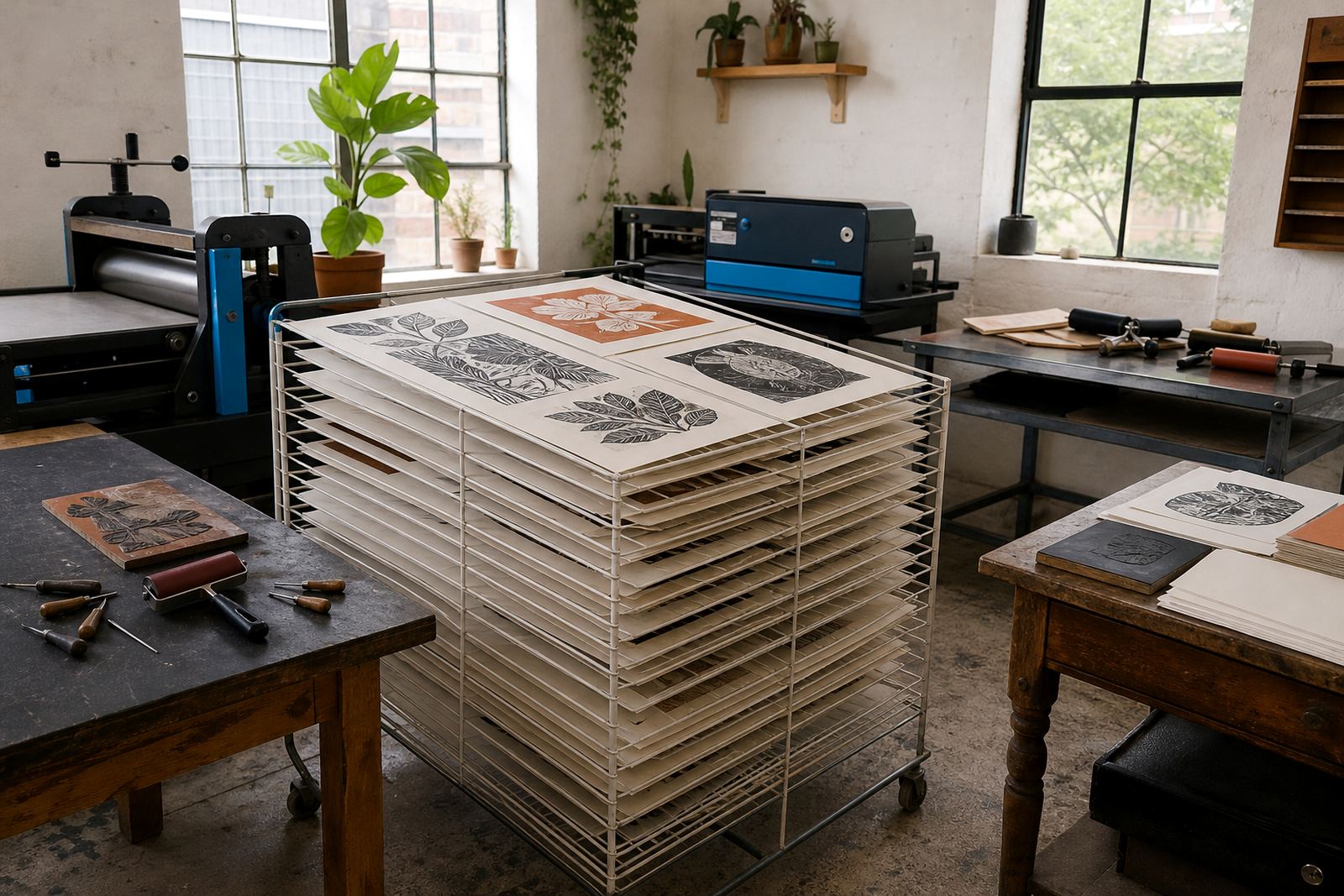
This pack suits private studio workshops in Woodstock, pop-up classes in schools and venue setups where several hands are working at once. It is also a practical fit for student print classes, family print sessions and team building sessions that include a short carving and printing sequence. The transfer stage keeps the work moving in a sensible order, from drawing to block preparation to the first proof on paper.
For sessions that include beginners, the pack helps each person start with a clear image rather than guessing the lines while carving. For more experienced printmakers, it supports cleaner edition planning and sharper registration decisions. That makes it a steady part of the hand-print process, especially when the final work is going to be inked with water-based or oil-based block inks and printed by hand or press.
Key facts
| Product type | Block transfer materials for lino and soft-cut printing |
|---|---|
| Primary use | Moving a sketch onto the block before carving |
| Common formats | A4, A3 and workshop pack formats |
| Compatible surfaces | Lino, soft-cut blocks and practice sheets |
| Workshop use | Studio sessions, schools, family groups and team sessions |
| Included items | Tracing sheets, transfer sheets, pencils, layout aids and masking tape depending on pack |