Aprons made for ink, paper and busy hands
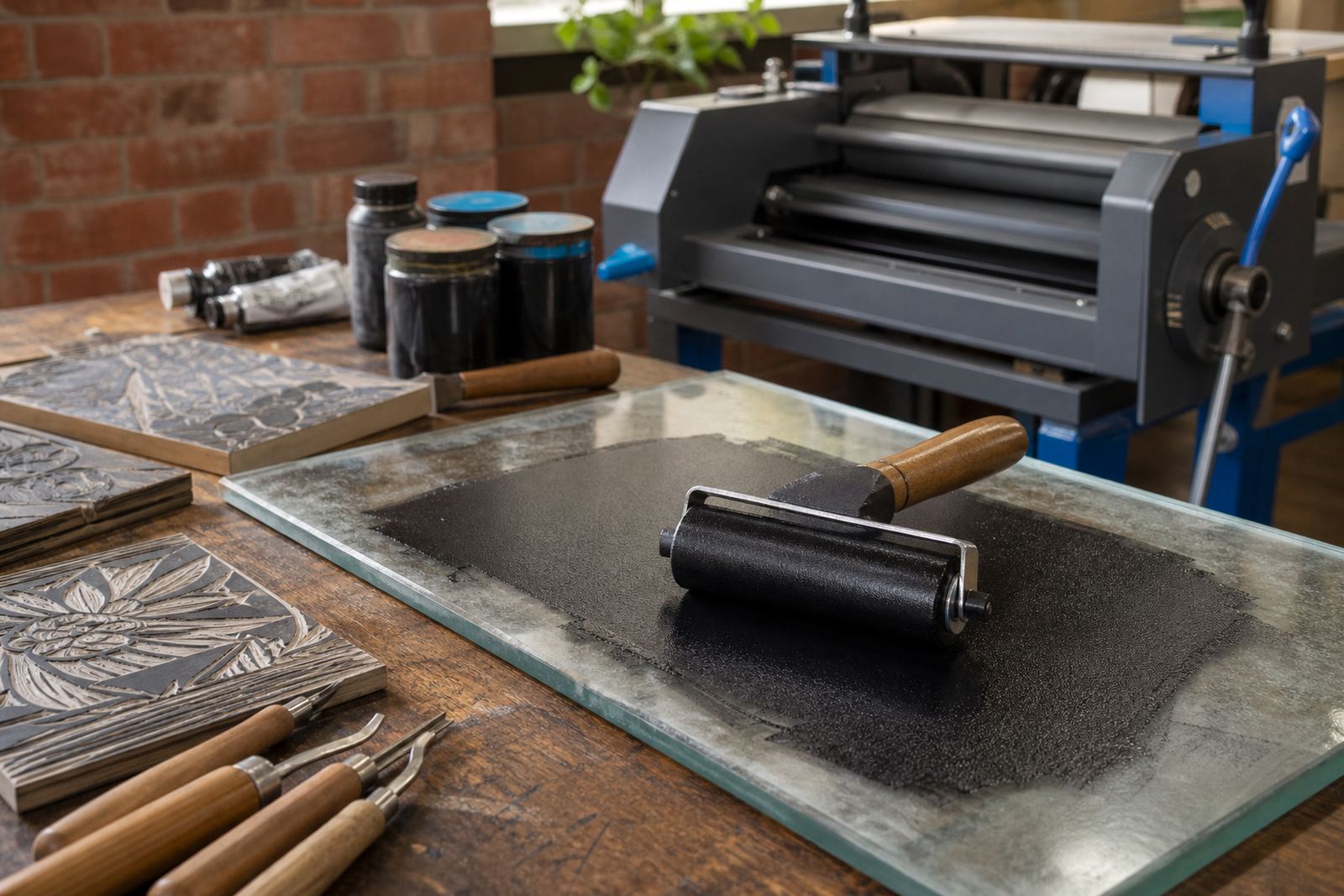
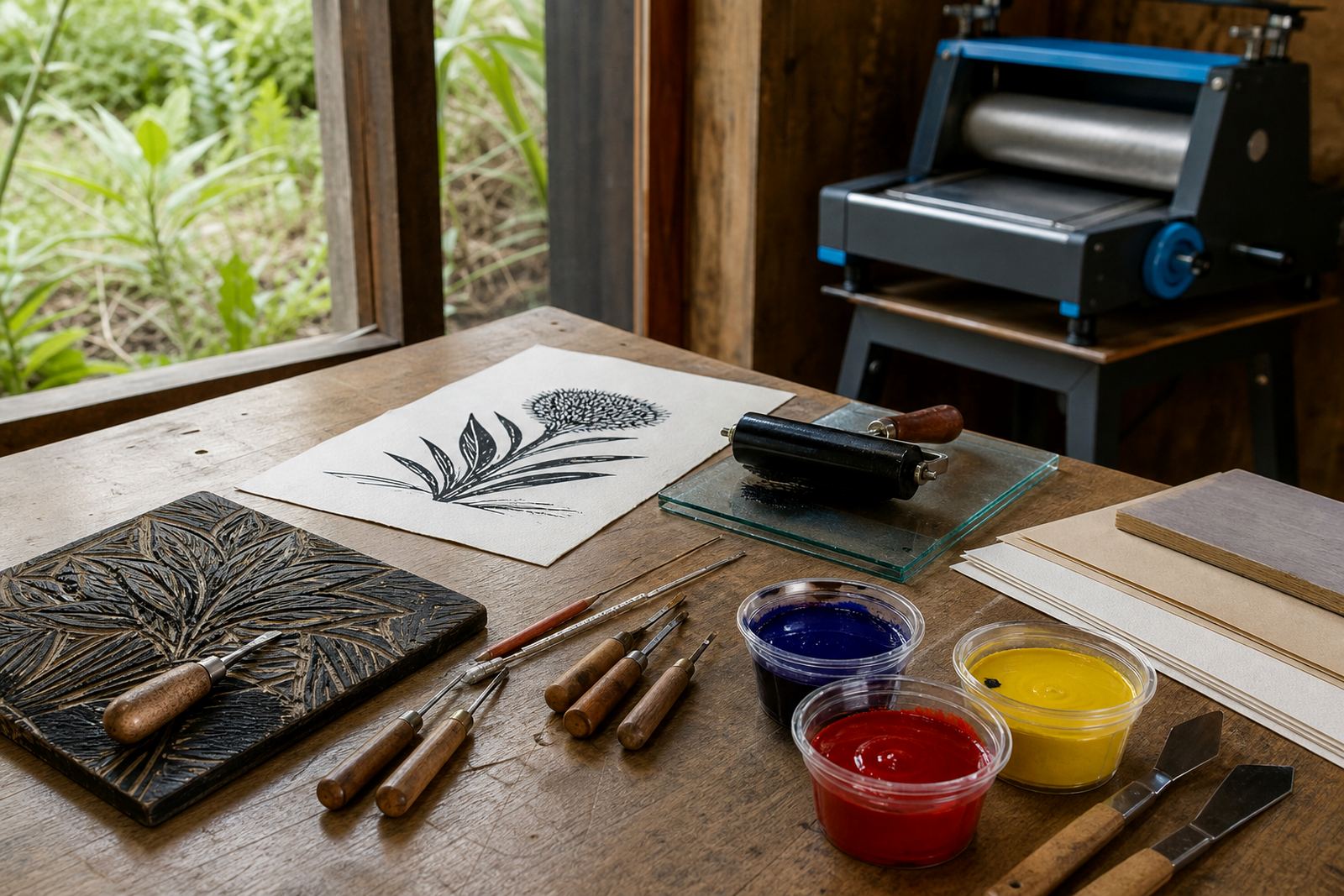
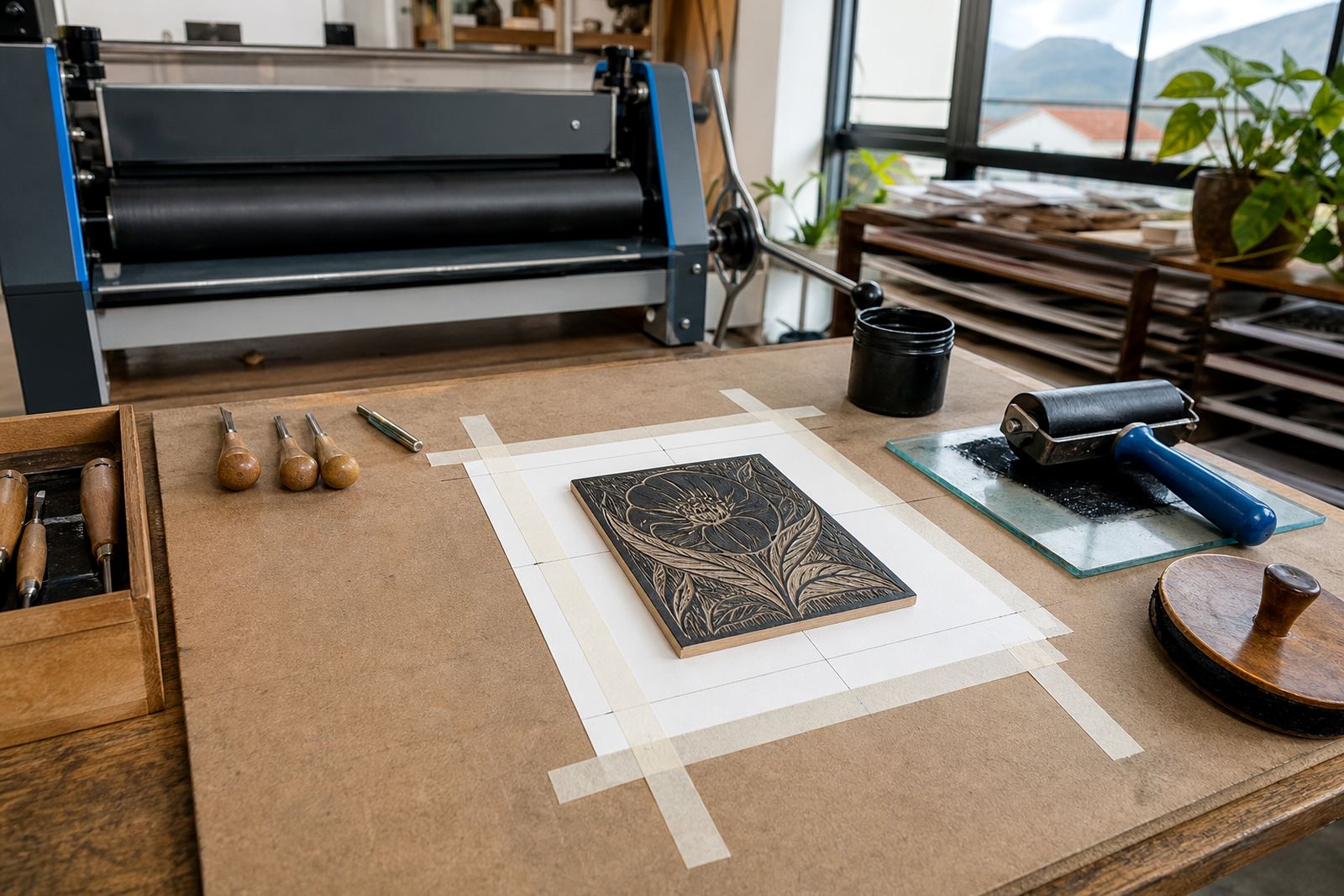
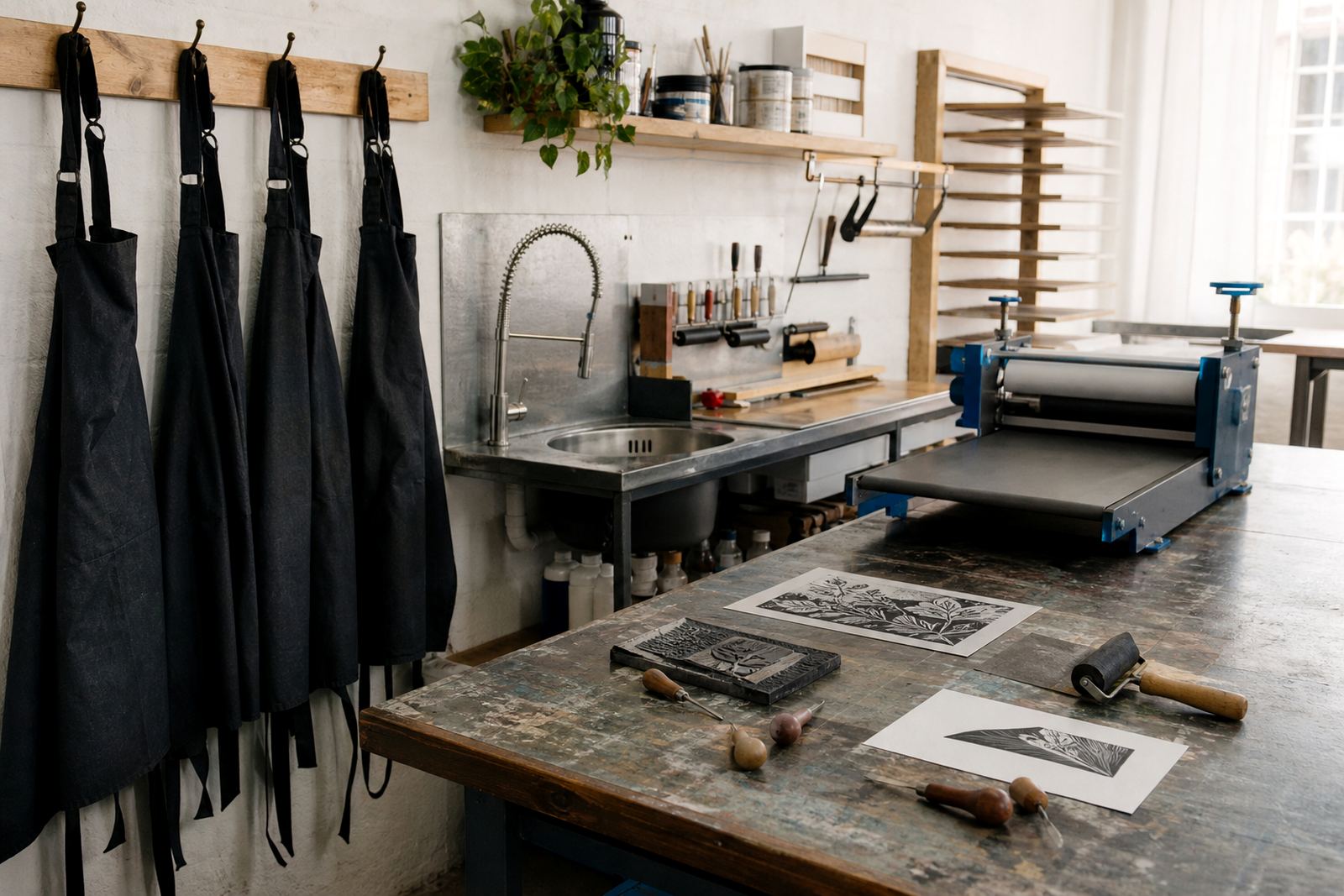
An apron pack for printmaking needs to handle oil ink, solvent and wet paper. In a lino or soft-cut workshop there is carving dust, damp papers, brayers loaded with water-based ink, oil-based block ink on some sessions, and hands moving from the block to the press table and back again. The apron keeps the front of the body covered while people work seated or standing, especially when the group leans over a bench or baren press setup.
We specify aprons that sit well over ordinary clothing and give enough overlap across the chest and lap. In a classroom or pop-up venue, that extra coverage matters when tables are close together and people share tools, proofing sheets and drying racks. For younger groups, the cut needs to be neat enough that the apron stays in place but still lets arms move freely for safe carving and printing.
- Suitable for linocut, soft-cut and block-print sessions
- Works with brayers, ink trays, barens and small presses
- Useful for studio, school and venue-based workshops
- Helps keep clothes cleaner during inking, wiping and pressing
Sizes and apron pack options for different groups
Apron packs can be set up for adults, students and mixed family groups, with sizes that cover a broad range of body shapes. A standard adult apron usually suits most studio guests, while a shorter or smaller cut is better for school learners and younger makers. Neck strap length, waist tie length and front coverage all matter, because a print workshop has people bending, reaching and turning to check registration marks or lift a fresh sheet from the press bed.
Pack formats depend on the use. Some groups need a matching set for a full workshop table, while others only need a smaller reserve pack for visiting sessions and clean-up work. Where a workshop is shared across different age groups, it helps to separate larger aprons from smaller ones so the fitting is quick at the start of the session and everyone can get into the work without fuss.
- Adult sizes for studio and team sessions
- Smaller sizes for students and younger printmakers
- Adjustable neck and waist ties
- Plain fronts for easy washing and repeat use
- Optional mixed-size packs for shared groups
Best fit for studio sessions and pop-up printing days
The apron pack suits a print room where participants move through carving, inking and edition pulling in stages. It is also a practical match for school pop-up workshops, family print sessions, teacher training and team building groups where tables, inks and drying spaces are set up in borrowed rooms or multi-use halls. In those settings, garments can pick up ink from edges of blocks, proof sheets and handles, so a proper apron becomes part of the working kit rather than an extra.
For venue-based events, aprons also help with movement between stations. One table may hold gouges and V-tools for carving, another may be set for rolling ink onto lino blocks, and another may carry papers for pressing and drying. A good apron lets the wearer step from one station to the next without worrying about splashes on shirts or skirts. It is especially handy where groups are taking turns at the press and waiting beside the table with damp prints in hand.
- Private studio workshops
- School pop-up workshops and outreach visits
- Team building sessions and family print days
- Student classes and teacher skills workshops
- Venue setup work where tables are shared
Fabrics that cope with repeated washing
Most apron packs work best in a hard-wearing cotton drill or a cotton-rich cloth that takes repeated washing and still sits properly on the body. A smooth weave helps when ink spots need to be wiped off before they set, and it also dries neatly after a workshop day. Light to mid-weight cloth is usually the sweet spot for printmaking because it protects clothing without feeling stiff while people carve blocks or reach across a press table.
For block-print work, washable fabric matters because even careful makers pick up pigment at the edges of the block, on the brayer handle or on the heel of the hand. Water-based inks wash out more easily, while oil-based inks can need a stronger clean and a bit more care around cuffs and hems. If the aprons are to be used at schools or in a shared studio, a darker colour often makes practical sense, since it keeps the pack looking orderly between washes.
- Cotton drill or cotton-rich cloth
- Mid-weight fabric for comfortable wear
- Machine washable for repeated workshop use
- Dark or neutral colours for a cleaner look
- Strong stitching at straps and tie points
Fitting notes for print tables, aprons and movement
Apron fitting is straightforward, but it still helps to check the details before the pack is ordered. If the aprons are for a mixed group, the strap length and front drop should be long enough for taller adults and short enough not to get in the way of seated carving. If the pack will travel to schools or venues, a waist tie that knots securely and a neck strap that adjusts easily will save time on the day.
What matters is fit, size mix and how the aprons sit when someone leans over a lino block or reaches across a table for paper, ink or a drying rack. For group use, it also helps to know whether the aprons will be worn over school uniforms, studio clothes or thicker winter layers, because that changes the room needed through the body and ties.
- Chest coverage and front drop length
- Neck strap style and adjustment range
- Waist tie length for the wearer mix
- Quantity needed for each workshop group
- Colour preference for studio or school use
Care after ink, paper dust and repeated sessions
After a print workshop, aprons should be shaken out, checked for paper dust and washed before the next session. Fresh water-based ink usually lifts well if it is dealt with promptly, while oil-based block ink may need a stronger pre-treat on the marked area. It is best to avoid harsh scrubbing on printed or branded trims if those are part of the garment, because that can wear the cloth unevenly over time.
Hang the aprons to dry fully before stacking them for storage, especially in coastal areas such as Cape Town and Durban where the air can carry extra moisture. If aprons are stored damp, they can hold a smell that is hard to clear before the next class. Keep them folded with clean towels or in a lidded tub if the studio is moving between school visits and venue sessions during the week.
- Shake out paper dust before washing
- Pre-treat visible ink marks where needed
- Dry fully before packing away
- Store folded in a clean, dry place
- Separate heavily marked aprons from fresh stock
Details we must sort out before we cut the pack
When ordering an apron pack, it helps to confirm the group mix, the type of workshop and the kind of use the aprons will see. A school print day needs different sizing from a studio open session, and a team event may need a larger batch with a consistent look. If the pack is for repeated travel between Woodstock, Stellenbosch, Johannesburg, Pretoria or Durban, ask for a cloth and trim colour that is easy to sort after washing.
It is also worth checking whether the aprons need pockets, long ties, extra length for seated work or a cleaner front for formal sessions and teacher workshops. A pack built for hands-on carving and edition printing should be practical first, with enough room for movement and enough cloth to protect shirts from the edges of block ink and press-side handling.
- Number of users per session
- Adult, student or mixed-size split
- Session type: carving, inking or printing
- Need for pockets, longer ties or extra drop
- Preferred colour and wash routine
Key facts
| Product | Apron Pack |
|---|---|
| Use | Protective wear for lino and block-print workshops |
| Fabric | Cotton drill or cotton-rich cloth |
| Sizes | Adult and smaller workshop sizes |
| Closure | Neck strap and waist ties |
| Care | Machine washable, air dry fully before storage |