
A drying rack built for hand-printed sheets
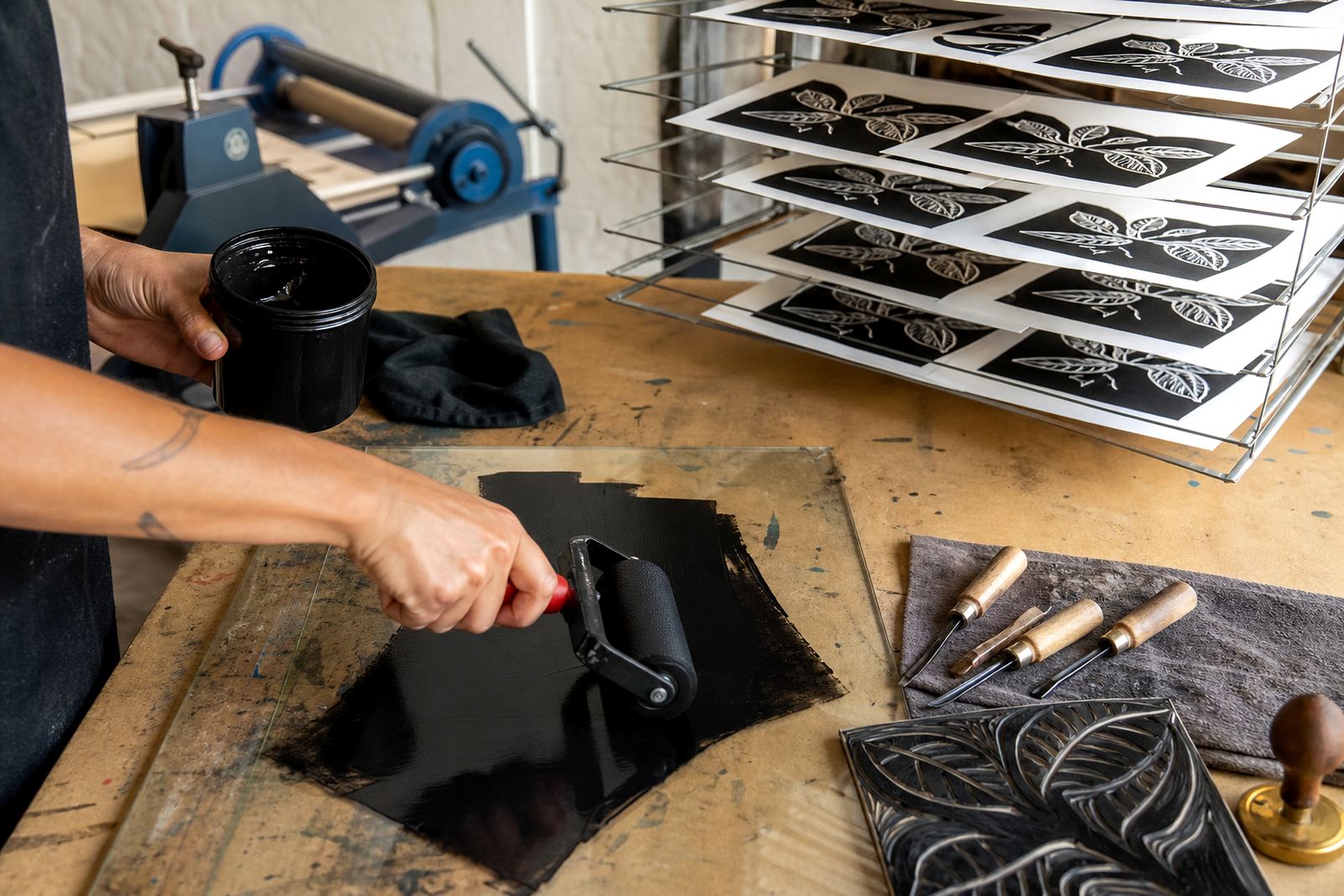
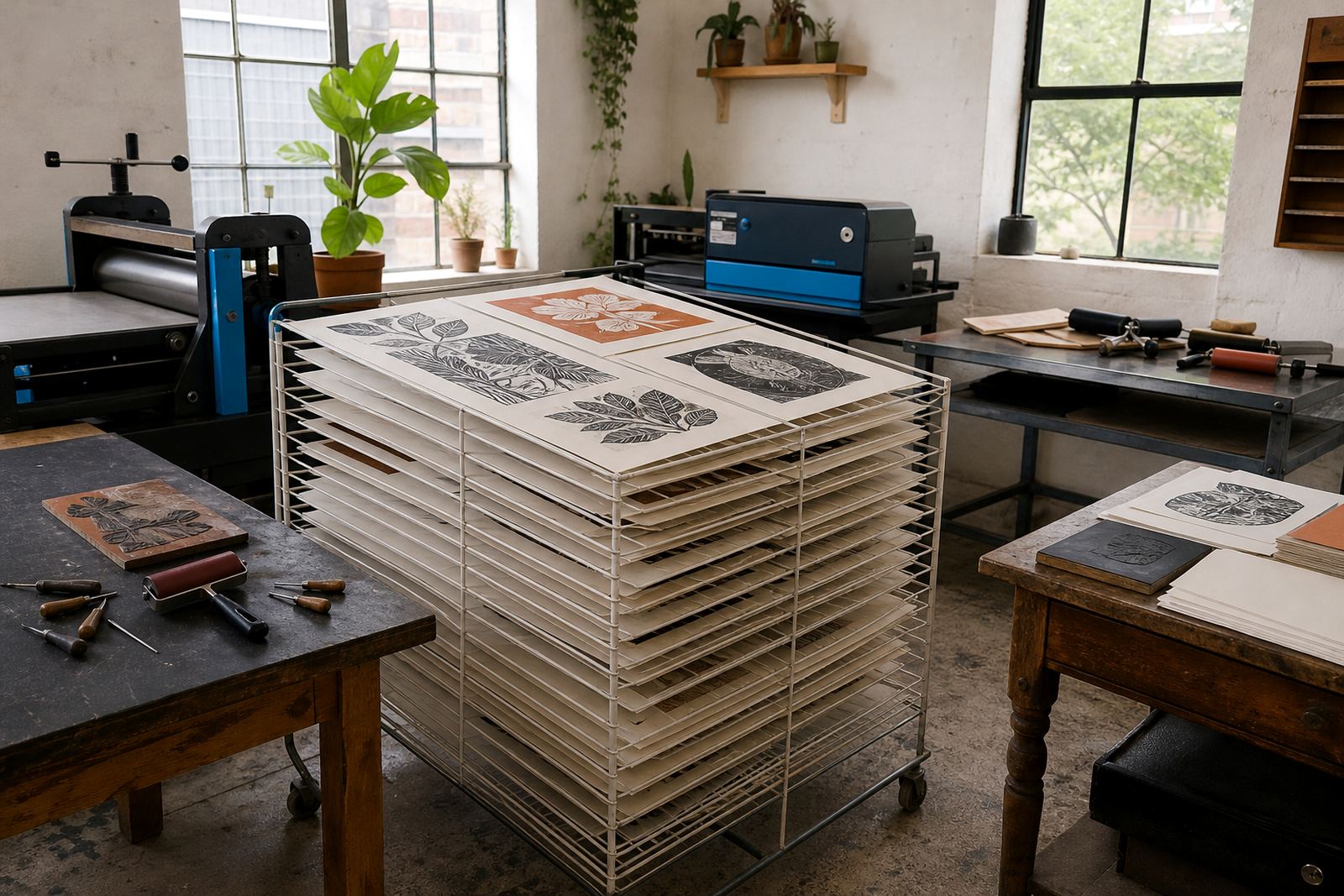
Our drying rack hire is used for holding fresh prints in order while a class is still moving through carving, inking and pulling editions. The frames are set up to keep sheets flat and apart, which helps protect wet imagery, soft paper edges and the marked corners that appear when work is stacked too soon.
The hire is useful in a studio, school hall, venue room or pop-up print space where several people are working at once. It gives each print a resting place after the baren, press or hand burnish has done its work. In a linocut session that means less handling of damp paper and fewer smudges near the margins.
- For fresh lino, soft-cut and relief prints
- Keeps editions sorted by student, group or paper size
- Useful while ink settles before inspection, signing or trimming
Rack sizes and layout choices
Drying racks are hired in sizes that fit smaller teaching groups as well as larger workshop days. We match the rack length and shelf spacing to the paper size being used, whether that is A5, A4, A3 or larger workshop sheets. Wider shelves help when prints are moved directly from a press bed, while tighter spacing works well for light studio runs and family sessions.
When a group is printing on heavier paper, or working with damp sheets in humid coastal weather, the extra air gap between layers matters. A taller rack can carry more work without crowding the sheets together. For school sessions and team bookings, it also gives each table a clear place to stage drying work before packing up.
- Small rack options for limited floor space
- Medium racks for mixed-size editions and class sets
- Large session racks for busy workshop days and pop-ups
Where the rack fits into a print session
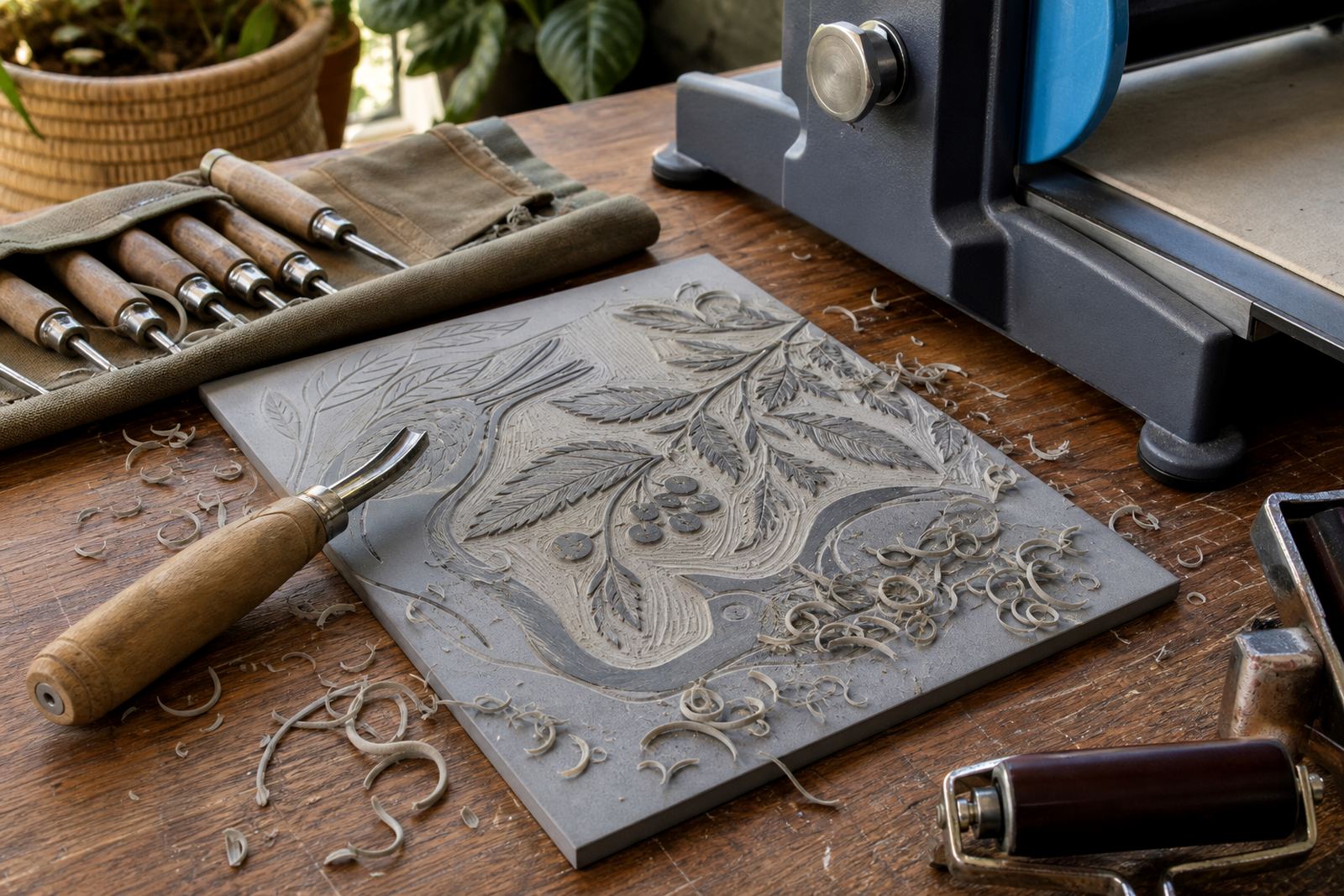
This hire suits any session where the printing pace is faster than the drying pace. In a beginner carving class, people often print a first proof, check the cut marks and then print the next sheet while the earlier one rests. A rack keeps that process tidy. In school workshops, it helps teachers and facilitators keep prints grouped by class or table without laying sheets across counters, windowsills or the floor.
It also works well for edition print sessions where matching sheets need to dry in the same order they were printed. If the run includes water-based block inks, the rack helps with airy spacing and calm handling. For oil-based inks or heavier applications, the sheets can sit flat and separated until they are ready for the next stage.
The rack is just as useful after press printing as it is after hand burnishing. It gives the room a proper drying zone, which keeps work off crowded tables and away from accidental touches. In a venue setup, that matters because the print area often has to share space with carving stations, ink trays and paper stacks.
Fitting, setup and space on site
Drying rack hire is set up as part of the workshop layout, with placement chosen to suit the room and the number of prints expected. The rack needs a level patch of floor and enough clearance for safe loading from one side or both sides, depending on the model. In tighter venues, we place it close to the printing tables so sheets move in one clean path from press to rack.
For outdoor or pop-up sessions, a covered area is better than an exposed stoep or windy courtyard, because a sudden breeze can shift a loose sheet before it settles. In a studio or classroom, the rack is usually placed away from foot traffic, water bowls and cutting stations. No fixed installation is needed, but good positioning matters because the prints should slide in and out without bending the corners.
- Requires flat ground and open access for loading
- Best kept away from footpaths, loose chairs and active carving tables
- Can be placed close to printing stations for smoother handover of sheets
Care, handling and daily use during workshops
The rack is handled with the same care as the prints it carries. Sheets should be lifted by the edges. If a print still feels wet, it must go in straight and flat, with enough space so the surface does not touch the sheet above or below it. That is especially important with soft papers that take ink heavily or show pressure marks easily.
After use, the shelves are checked for ink spots, paper fibres and damp residue. A clean cloth is enough for most wipe-downs, and stubborn block ink can be removed carefully so the next session starts with a tidy surface. When a workshop uses darker inks, the rack can pick up visible marks quickly, so regular cleaning keeps the unit presentable for schools, family groups and private sessions alike.
Where paper is still very damp, the rack should not be overloaded. Spacing the sheets properly allows air to move between them and reduces the risk of prints sticking together. For longer print days, it helps to work with a clear stacking order so first pulls, proofs and final editions do not get mixed.
Confirm these details before you hire
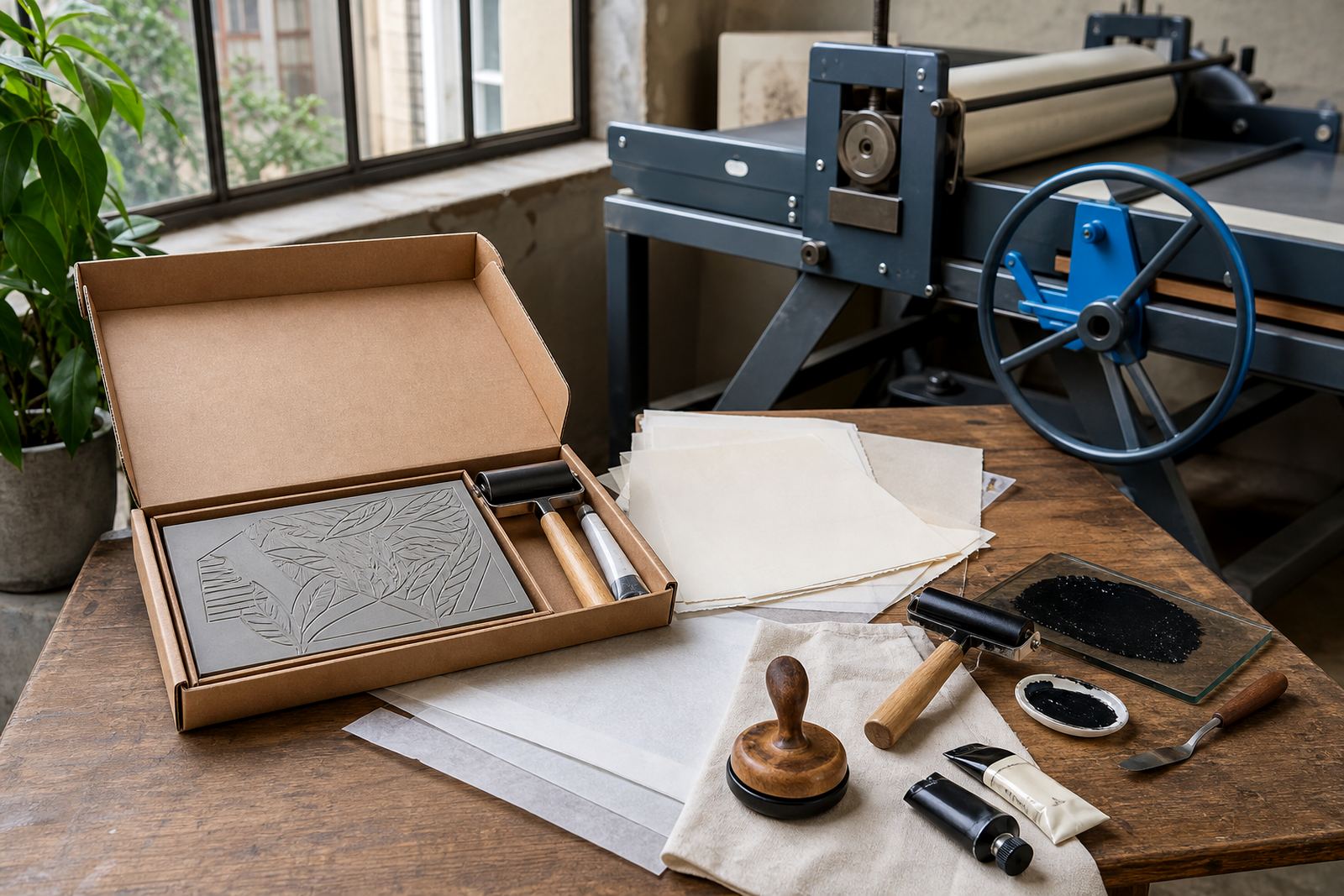
To match the rack to your workshop, confirm the paper size, the number of prints expected, and whether the session will use hand printing, baren work or press printing. It also helps to note whether the prints are a single edition, mixed class work or a larger school run where sheets will be added over several tables.
We also need to know the venue type, floor space, and whether the rack has to move between rooms during the session. If the class is at a school in Cape Town, Stellenbosch, Johannesburg, Pretoria or Durban, the layout may need to suit a hall, art room or temporary setup rather than a fixed studio. Small details like paper weight, drying order and whether the work will be trimmed later all help shape the right hire.
- Paper size and sheet count
- Workshop type and print method used
- Venue layout, access path and floor space
- Need for a smaller, medium or large rack
Key facts
| Product type | Temporary drying rack hire for print workshops |
|---|---|
| Typical use | Holding fresh relief prints flat and separated during sessions |
| Compatible work | Linocut, soft-cut, block-print and press printed sheets |
| Common sheet sizes | A5, A4, A3 and larger workshop sheets |
| Use settings | Studio sessions, school pop-ups, family days and team bookings |
| Handling notes | Level surface, clear access, careful edge loading, routine wipe-down |