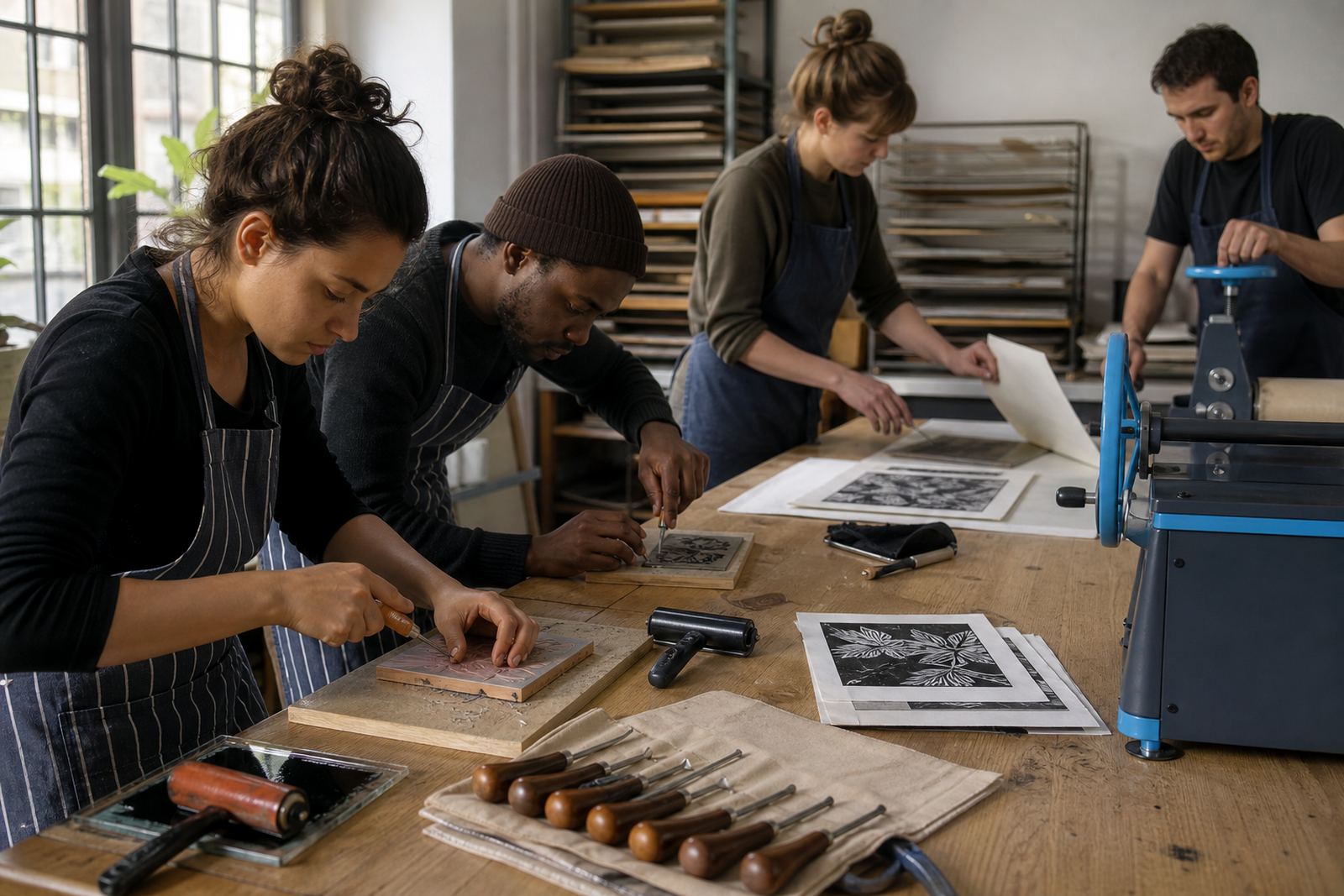
Space that suits carving, inking and pressing
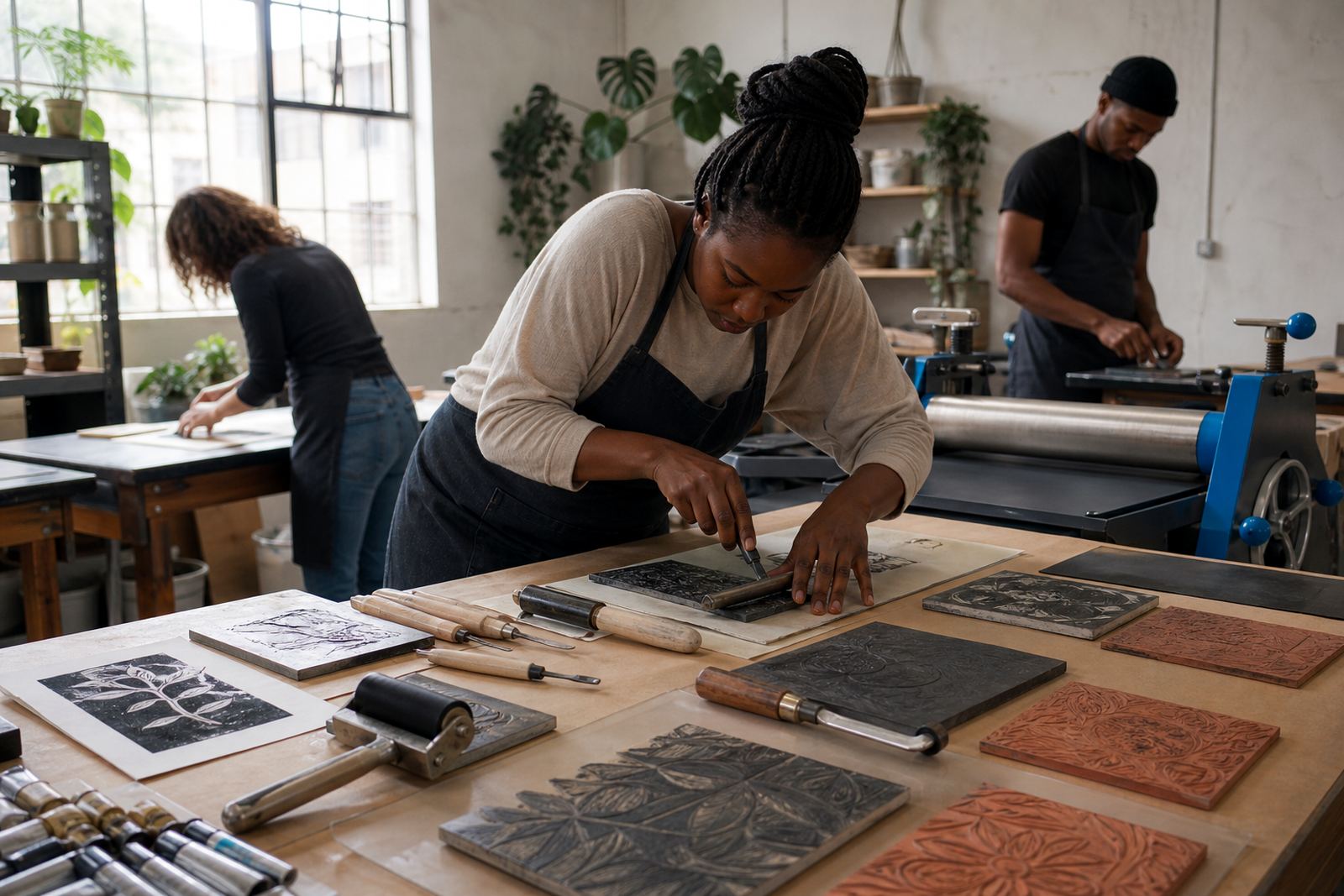
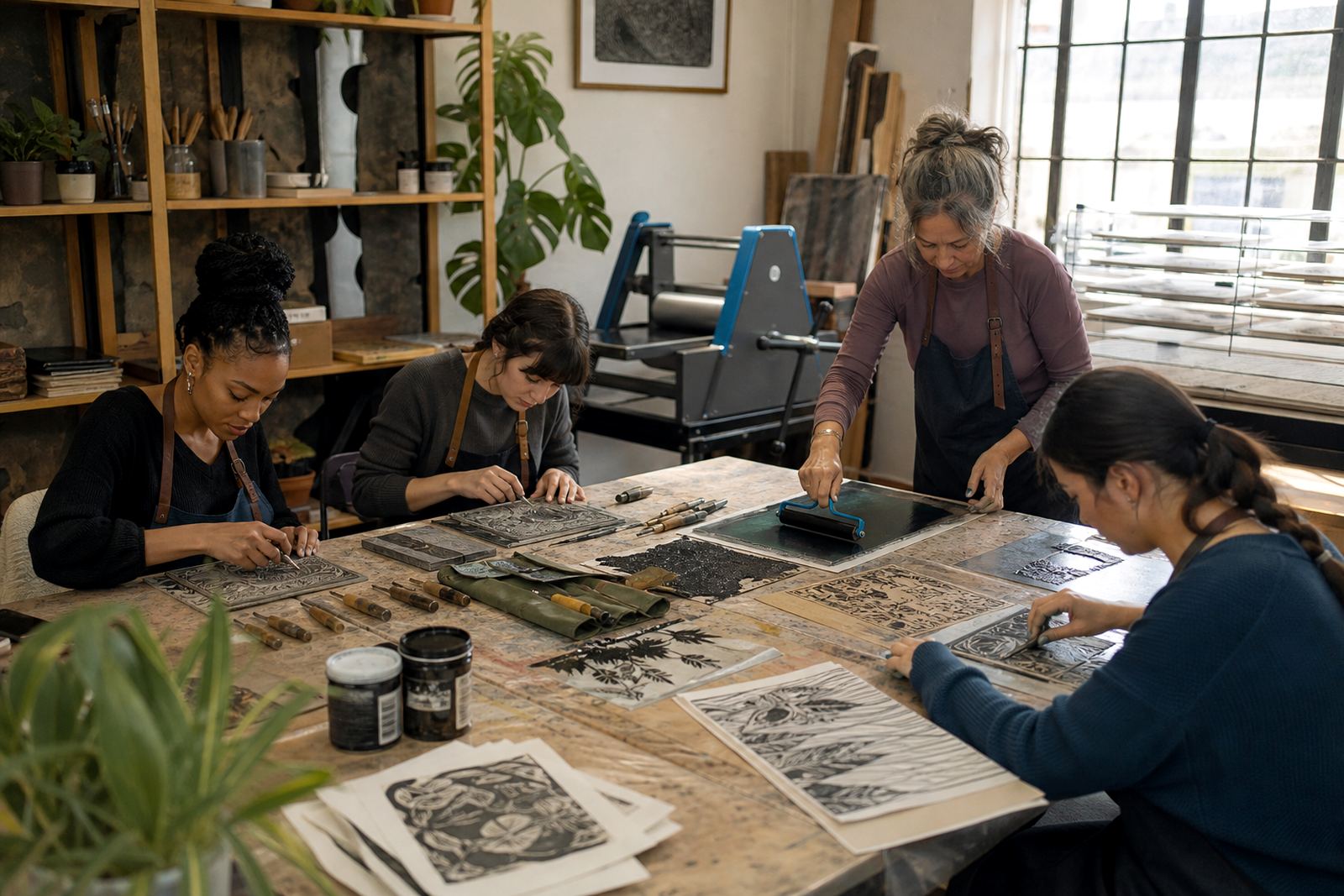
Our pop-up sessions work best in a room with flat tables, clear walkways and enough space for people to move between carving, inking and printing without crowding each other. A classroom, hall, library room or studio floor can all work if the tables do not wobble and the surface is not too shiny.
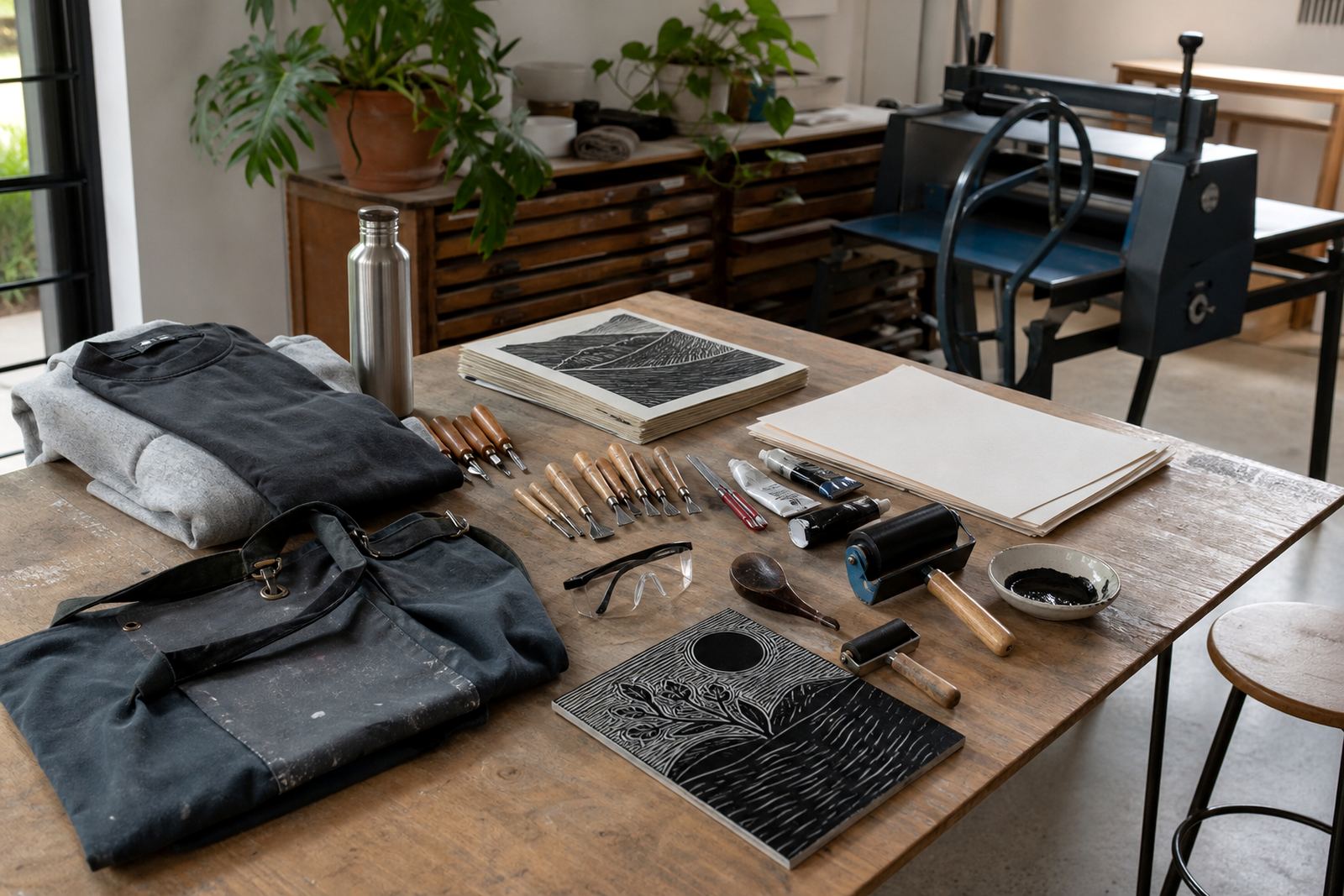
For lino and soft-cut carving, each person needs a seat with a solid table edge and enough elbow room for hands, blocks and tools. We use gouges and V-tools with care, so the table should not force people to work too close together. If the venue has a few different table types, the steadiest ones should go to the carving area.
- Level tables with firm legs
- Enough chairs for every participant
- A clear entry path for carrying materials
- Room for drying prints without traffic through the area
What the floor and tables should handle
Block printing brings ink, damp paper and a bit of movement, so the venue should be easy to clean and not precious about light splashes. A tiled floor, sealed concrete or similar surface is easier to manage than loose carpet. If the room has carpet, we need more care around inking and paper handling.
Tables should take a brayer rolling across the block, a baren or press sheet, and the pressure of hands working a print. We often lay down protective covering so the surface stays clean and the ink stays where it belongs. Water-based inks are easier to tidy, though some sessions use oil-based block inks, which need a little more patience with clean-up.
- Easy-to-clean floor surface
- Power point access only if a press is being used
- Nearby handwashing area or basin
- Rubbish bin for offcuts, test sheets and wipes
Lighting, ventilation and comfort for long sessions
Good light matters when people are tracing a design, checking carved lines or aligning paper for registration. Even light across the room works better than one bright side and one dim corner. If the venue relies on overhead lighting, make sure the room is evenly and brightly lit.
Ventilation should be decent, especially where more than one ink type is in use. A room with windows that open, doors that can stay open safely, or a fan that does not blow papers everywhere is usually enough. In humid coastal areas, paper handling can take a little more care because sheets may curl or feel soft.
- Even lighting across the working area
- Fresh air without strong draughts
- A place to set paper flat before printing
- Comfortable temperature for adults and children
Water, clean-up and the mess around printmaking
Every print session needs a clear clean-up plan. We bring materials for the workshop, but the venue should have access to water and a practical spot for washing hands, wiping tools and sorting paper scraps. A sink near the room is helpful, though a basin area works too if it is close enough and not shared by too many people at once.
Some sessions use rollers, ink trays, rags and proof sheets, so a small clean-up station makes the room easier to reset after the class. It also helps if the venue can provide a few cloths or paper towels. That keeps carved blocks, brayers and printing surfaces in good order while the workshop moves through the edition.
- Water access within the venue
- Place for wet wipes or cloths
- Bin liners or refuse bags
- Table space for drying test prints and final sheets
Safety notes for schools and family sessions
When children, students or mixed age groups are involved, the venue should support safe carving and calm supervision. We work with simple steps, clear tool handling and close guidance, but the room still needs enough space for the lead instructor to move between tables and check each block. Sharp tools stay in use during lino work, so clutter on the table is best kept low.
It helps to keep younger participants on the same table layout and to avoid squeeze points around corners, doors or storage cupboards. If the session includes press printing or a heavy hand press, that part of the room should stay clear and stable. Family sessions work well when parents or guardians can sit close by and take part properly.
- Clear supervision sightlines
- Safe storage for extra tools and spare paper
- Enough room between seats for shared movement
- No loose cables or trip hazards near the print area
Registration, editions and drying space
A print workshop often ends with several sheets lined up for drying, checking and signing. The venue should have a separate surface or side table where printed papers can rest without being touched too soon. If the space is tight, we adjust the flow, but a little extra room makes the edition easier to manage.
Registration marks, proof sheets and final pulls all need a clean sequence. A straight table edge, flat wall space or spare board can help with alignment and stacking. For venues hosting a press session, the floor and tables should remain steady while the press is in use, because even small shifts show up in the print.
When the room is ready for this part of the process, the session feels orderly and the edition is easier to keep together from first proof to final sheet.
What the venue booking needs
Send the venue size, the type of group, the age range and whether tables, chairs and water are already on site. It also helps to note the suburb, parking access, lift access if there is one, and any room rules that affect ink, tape or floor protection. Schools and halls often have one or two small restrictions that matter more than they first seem.
If the session is in Woodstock, Stellenbosch, Johannesburg, Pretoria, Durban, Bellville or Somerset West, the room details help us plan the materials and table layout properly. The right venue note saves a lot of rearranging on the day of the workshop and keeps the printing flow sensible from carving to final pull.
- Venue name and suburb
- Room size and table count
- Parking and access notes
- Any school or hall rules on art materials