Wear clothes that can take a bit of ink
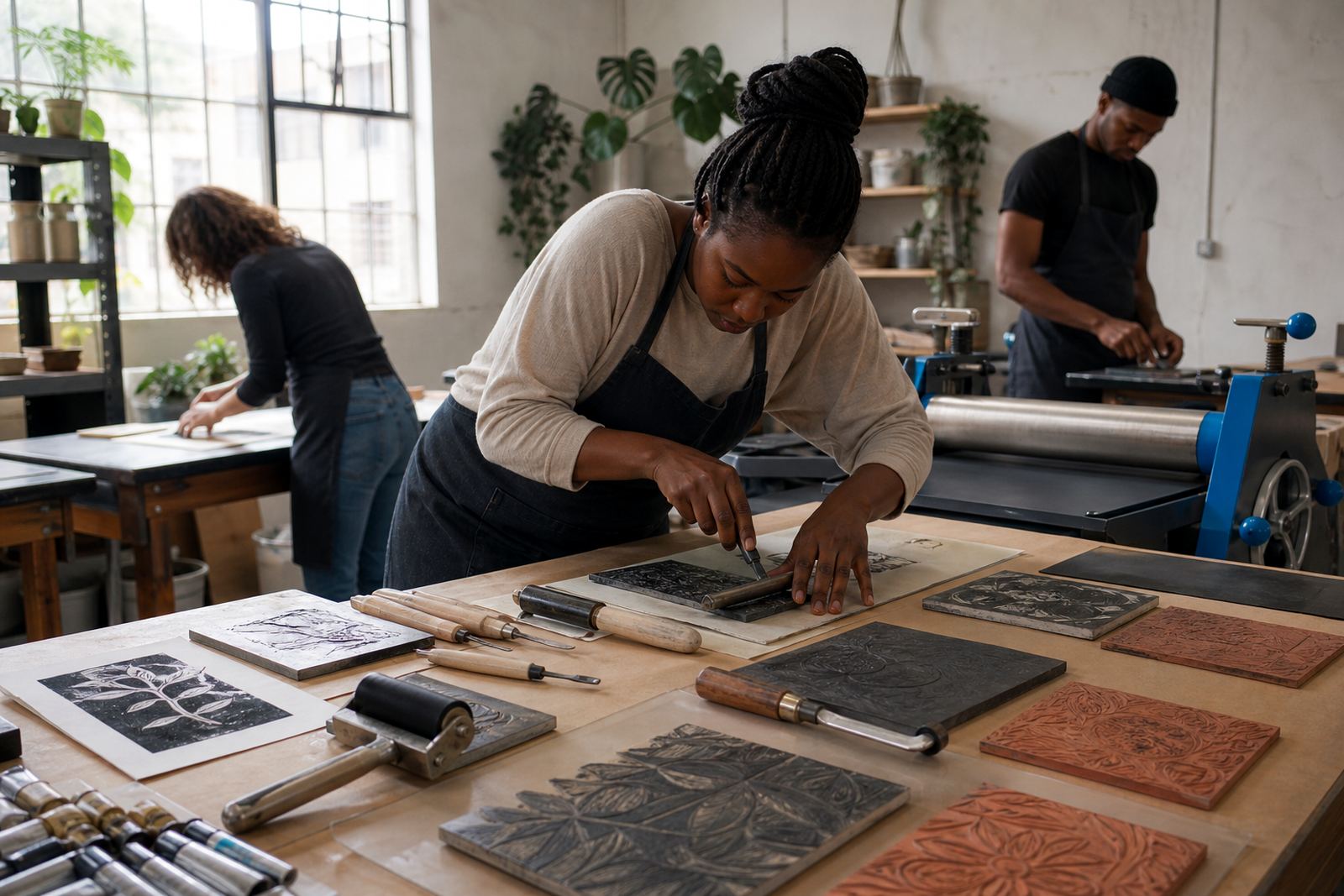
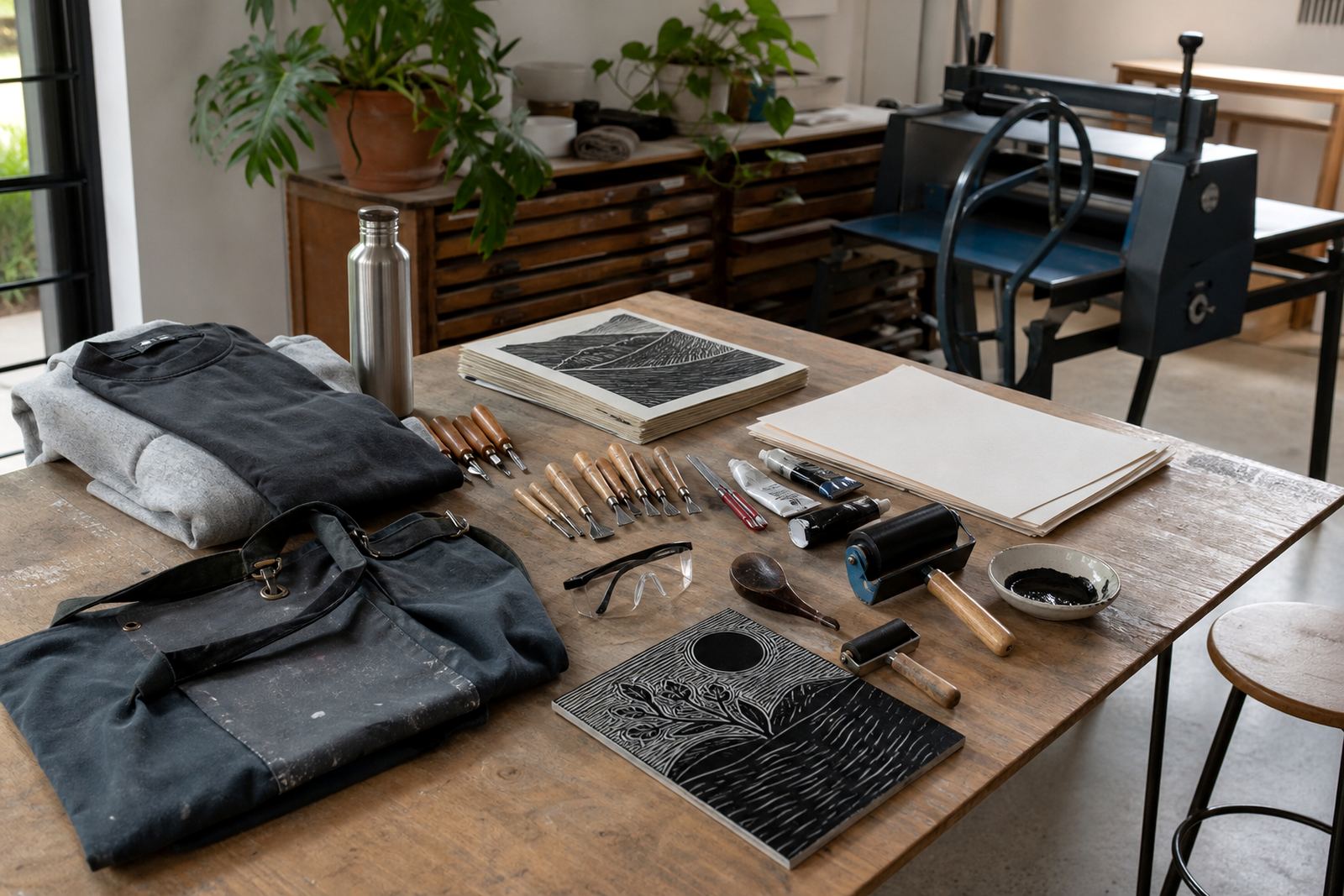
Come in clothes that you do not mind marking. Block ink can travel farther than people expect, especially when hands brush sleeves or a printed sheet catches on a cuff. Closed shoes are best, because the room has carving tools, wet paper and moving trays, so sandals are not a great idea.
Short sleeves or sleeves that roll up cleanly work well. A thin apron helps, though a spare shirt is useful too if you are the type who leans right over the brayer. If the workshop is in winter or near the coast, bring a light layer. Studios in Cape Town can feel cool in the morning, then warm up once everyone starts printing.
What to pack in your bag
A small kit is enough for a first class. Most people bring only a few practical items and leave the rest to the studio. Keep your bag light so you can move between carving, inking and drying spaces without juggling too much.
- A water bottle
- Bring a small towel or cloth to wipe your hands
- Reading glasses if you use them for close work
- A notebook for image ideas or registration notes
- Any sketch, photo reference or line drawing you want to use
If you have your own carving gouges, brayer or apron, you may bring them along, although the studio usually has the tools needed for guided work. Please keep sharp tools in a pouch or wrap so they do not knock around in transit.
How the block and tools are usually handled
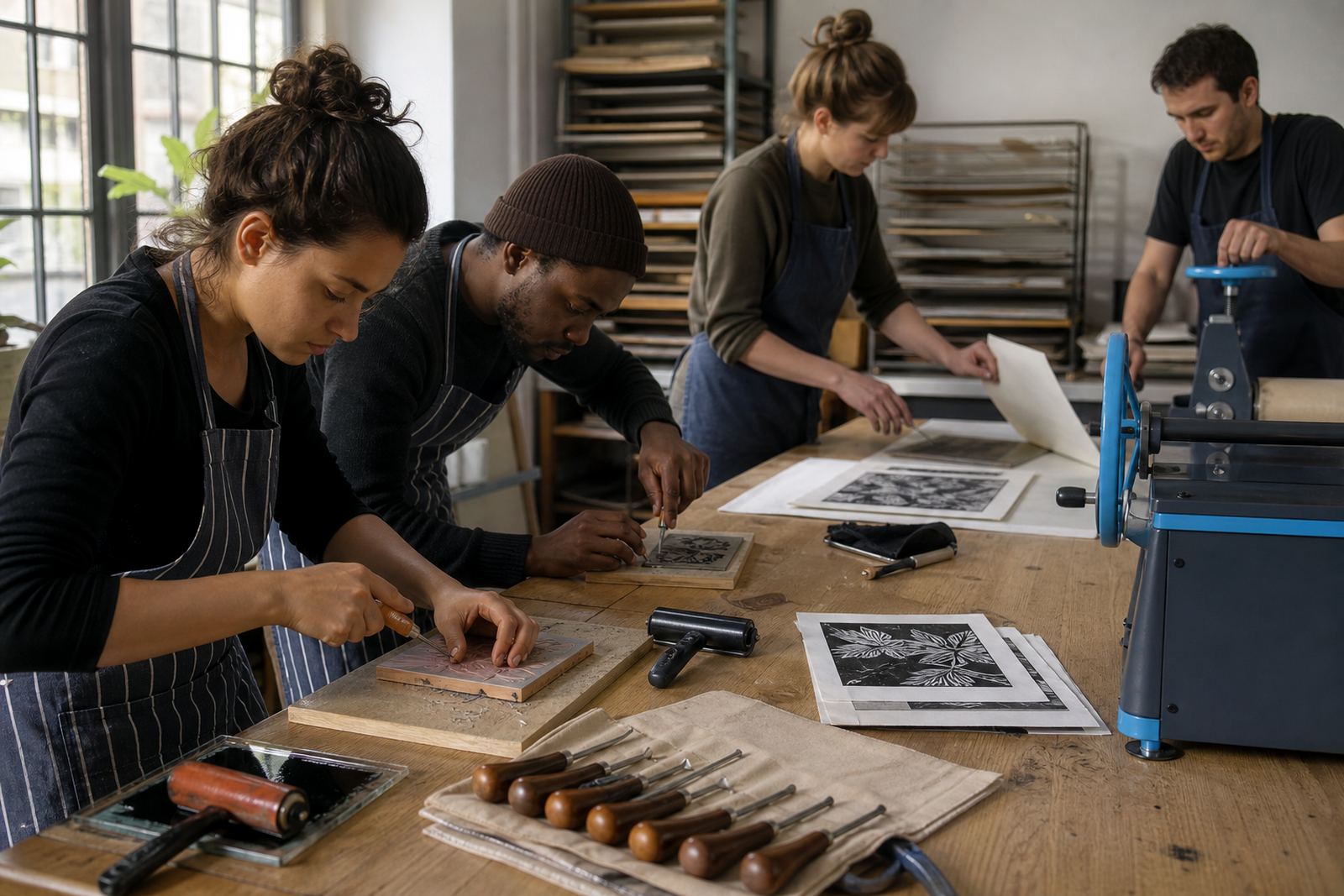
Most beginners start with lino or soft-cut blocks, because both give enough resistance to learn the hand movement without making the process feel harsh. A V-tool cuts fine lines, while U-gouges open broader channels. The main habit is to carve away from your hand and keep your fingers clear of the blade path. That sounds obvious, but once the block starts turning under the palm people forget fast.
Ink is rolled out with a brayer until it has an even, tacky feel. Water-based inks are easy to clean up and suit teaching sessions well, while oil-based inks can give a richer print surface and need more careful handling. Some workshops use a baren, others use a press, and both methods work well when the paper is placed neatly and pressure stays even. Registration marks matter when more than one colour is involved, because a small shift can throw the whole image off.
What the printing stage feels like
Once the block is carved, the real rhythm begins. You test the ink, place the paper, and make a first pull or press print. Many people are surprised by how different the same block can look from one impression to the next. Too much ink fills the lines, too little leaves patchy areas, and a clean print sits somewhere in the middle.
Paper choice also changes the result. Softer sheets can take an impression more easily, while heavier papers hold detail in a stronger way. In a group session there may be a drying area, a table for editions and a place to compare test prints before the final run. Small gaps and small smudges are part of the learning, and that is normal.
If you are coming with children, students or a team
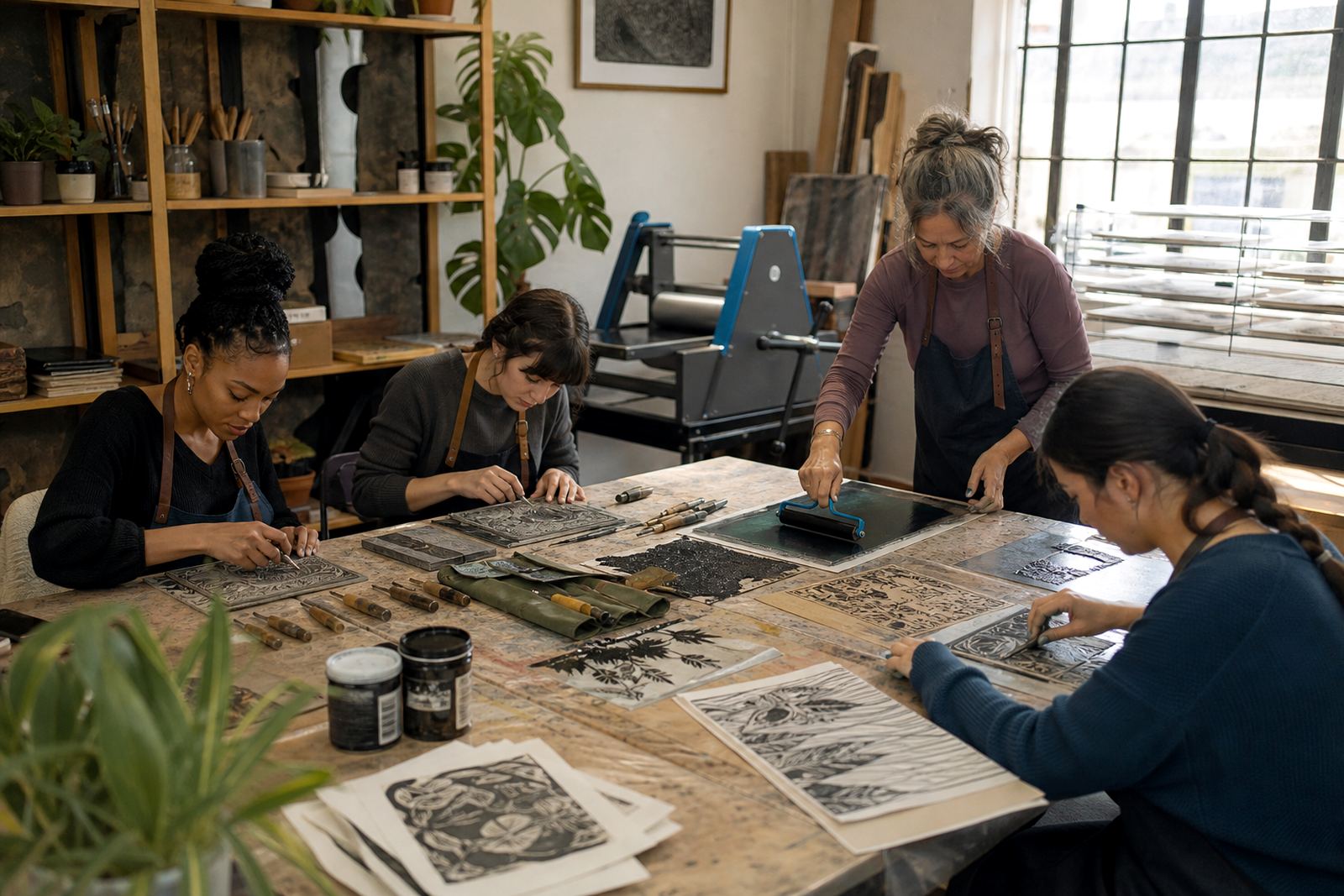
Families, school groups and office teams usually do best when everyone knows the pace before they arrive. Younger children may use simpler cutting methods or pre-drawn shapes, while older students can handle more detail and a longer edition. Team sessions often work better when the group keeps to one image theme, because that makes sharing tools and tables easier.
- Keep long hair tied back
- Remove loose jewellery that can snag on paper
- Bring any permission notes or school paperwork if asked for
- Arrive with clear shoes off if the studio asks for it
- Let the coordinator know about hand pain, vision issues or mobility limits
That kind of notice helps the session run in a calmer way. It also lets the tutor decide how much carving, printing and cleanup each person should take on.
After the last pull, what to expect next
At the end of class, prints usually need time to dry flat before they are stacked or carried home. Fresh ink can transfer onto another sheet, so it helps to keep work separate and not press it under a heavy book straight away. If the workshop includes edition printmaking, you may number the sheets later once the ink has settled.
Take your block home only if the session says it is ready, and store it flat so the carved face does not warp. Wash tools, hands and any borrowed equipment while the ink is still fresh. A clean brayer lasts longer, and a carved block keeps its lines better when it is not left with dried residue on the surface.
When in doubt, travel light and ask early
If you are unsure what to bring, bring a little. A notebook, water bottle, glasses and old clothes will cover most of the day. The studio supplies the rest for the workshop flow, including the papers, inks and carving setup needed for the exercise.
For private studio workshops, school pop-ups, family print sessions and team bookings across Woodstock, Cape Town, Stellenbosch, Johannesburg, Pretoria, Durban, Bellville and Somerset West, our contact form is the best place to send the details of the group. Tell us the age range, number of people and any access needs so we can plan the session properly.