The block does the drawing after the carving
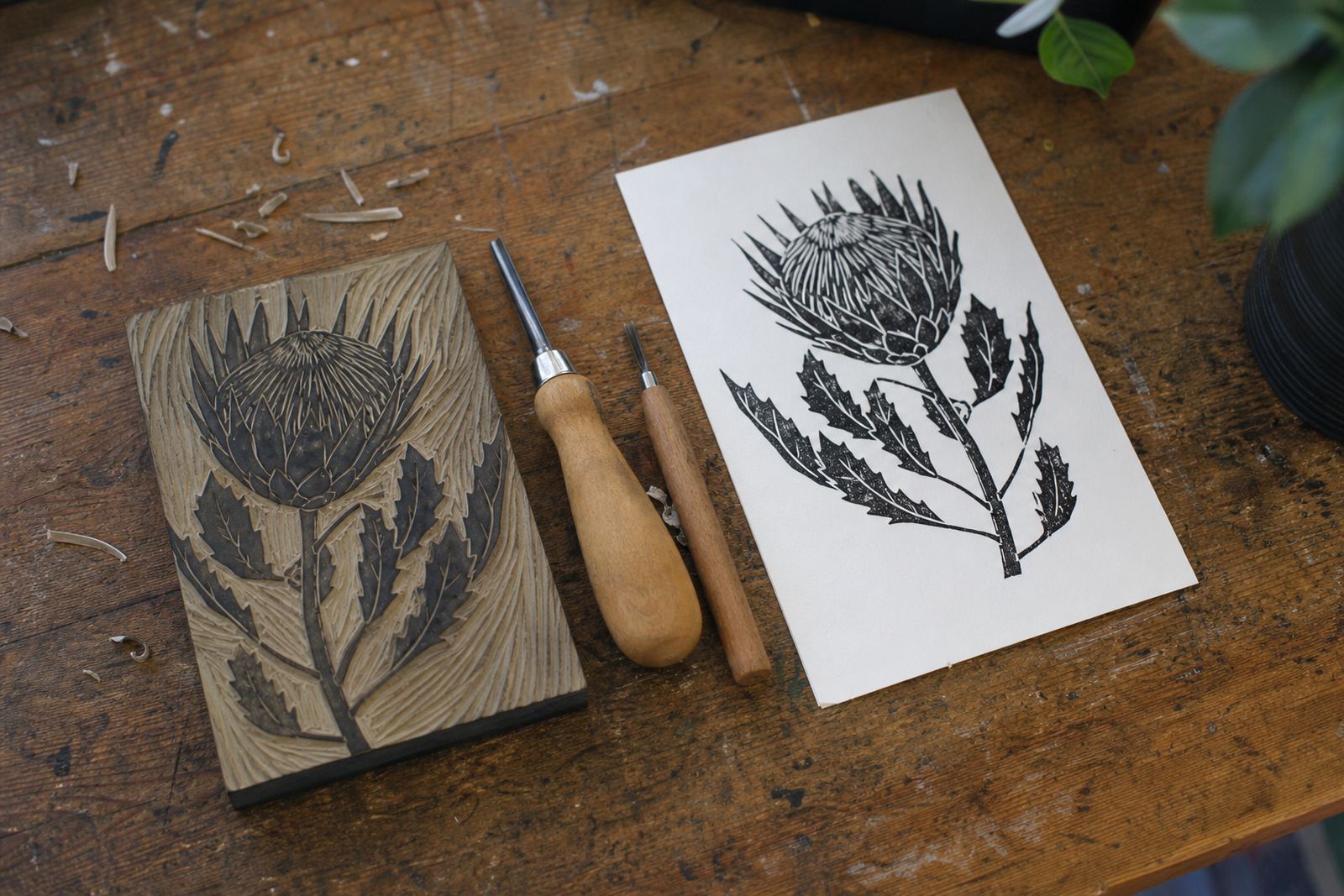
Linocut is a relief printmaking method. You carve into lino or soft-cut material, roll ink onto the raised surface with a brayer, then press paper against it so the image transfers by hand. The cut marks stay light, while the untouched areas print dark. That is the basic logic, and it is what makes the process so direct.
The first lesson for most people is that the final print reads in reverse. Text, arrows and anything directional have to be planned before the gouge touches the block. It sounds small, but it changes how the image is built and how the carved lines sit on the paper.
In a Woodstock session, that planning stage matters because people often arrive with a sketch that was drawn for painting or screen use. In linocut, every mark has to earn its place. A good block can carry a face, a street scene, a leaf pattern, or a simple graphic shape with the same calm strength.
Tools that let the hand stay in control
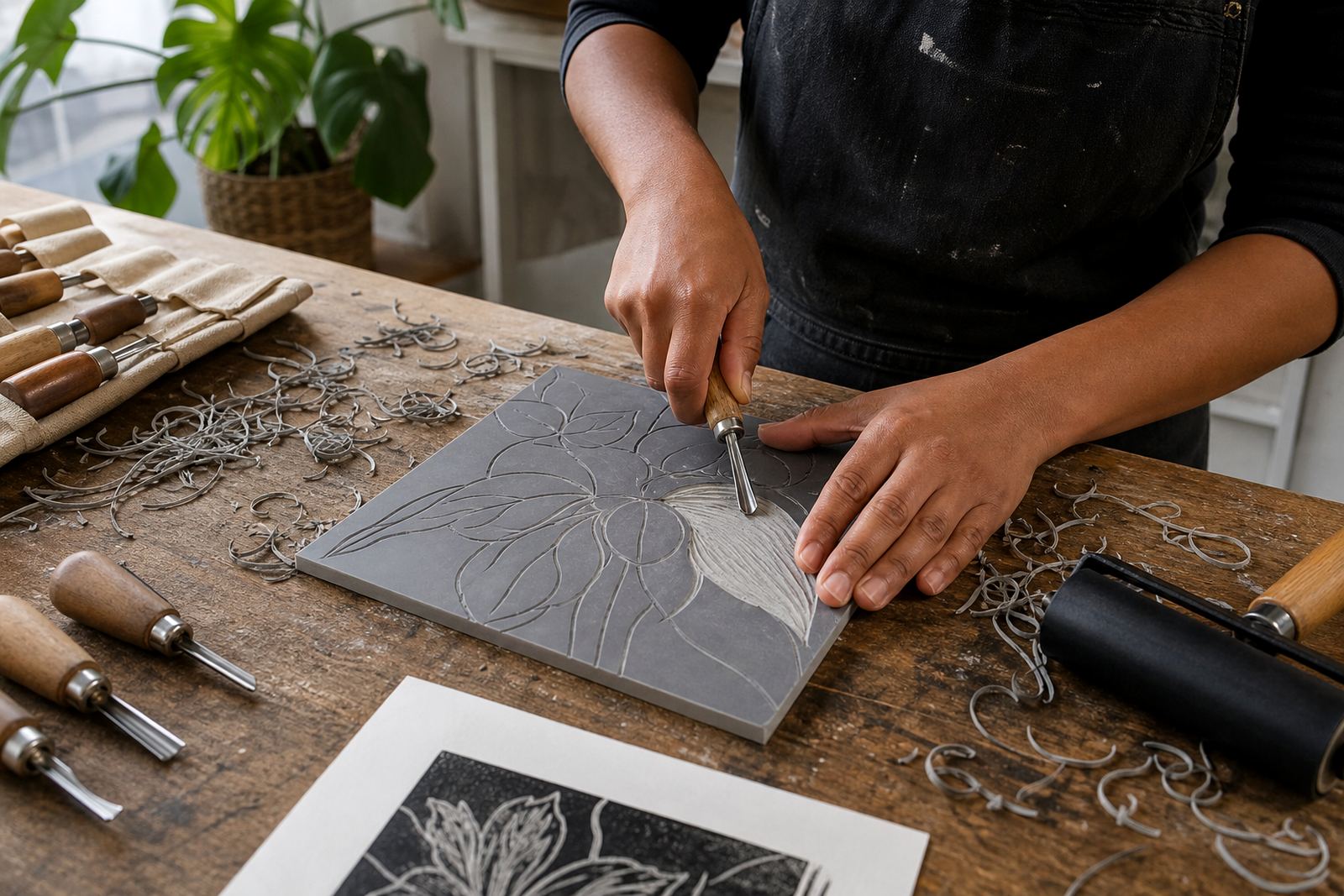
Most workshops use a small set of tools that are easy to understand but need respect. Gouges and V-tools remove material in different ways. Wider cutters clear larger spaces, while finer V-tools are useful for hairline texture, crosshatching and lettering. Soft-cut blocks trim more easily, while traditional lino gives a firmer feel under the tool.
- Gouges help clear broad fields and simple shapes.
- V-tools draw narrow lines and sharper edges.
- Brayers roll ink evenly across the raised surface.
- Barens and presses apply pressure to the back of the paper.
- Water-based inks suit quick clean-up, while oil-based inks often stay open longer on the slab.
We teach safe carving in the first ten minutes of every linocut session. A block should be clamped or held in a steady position, the cutting direction should move away from the body, and the hand that guides the block should stay clear of the blade path. That discipline keeps the session calm, especially in mixed groups with students, families and first-timers.
Ink, paper and pressure decide the result
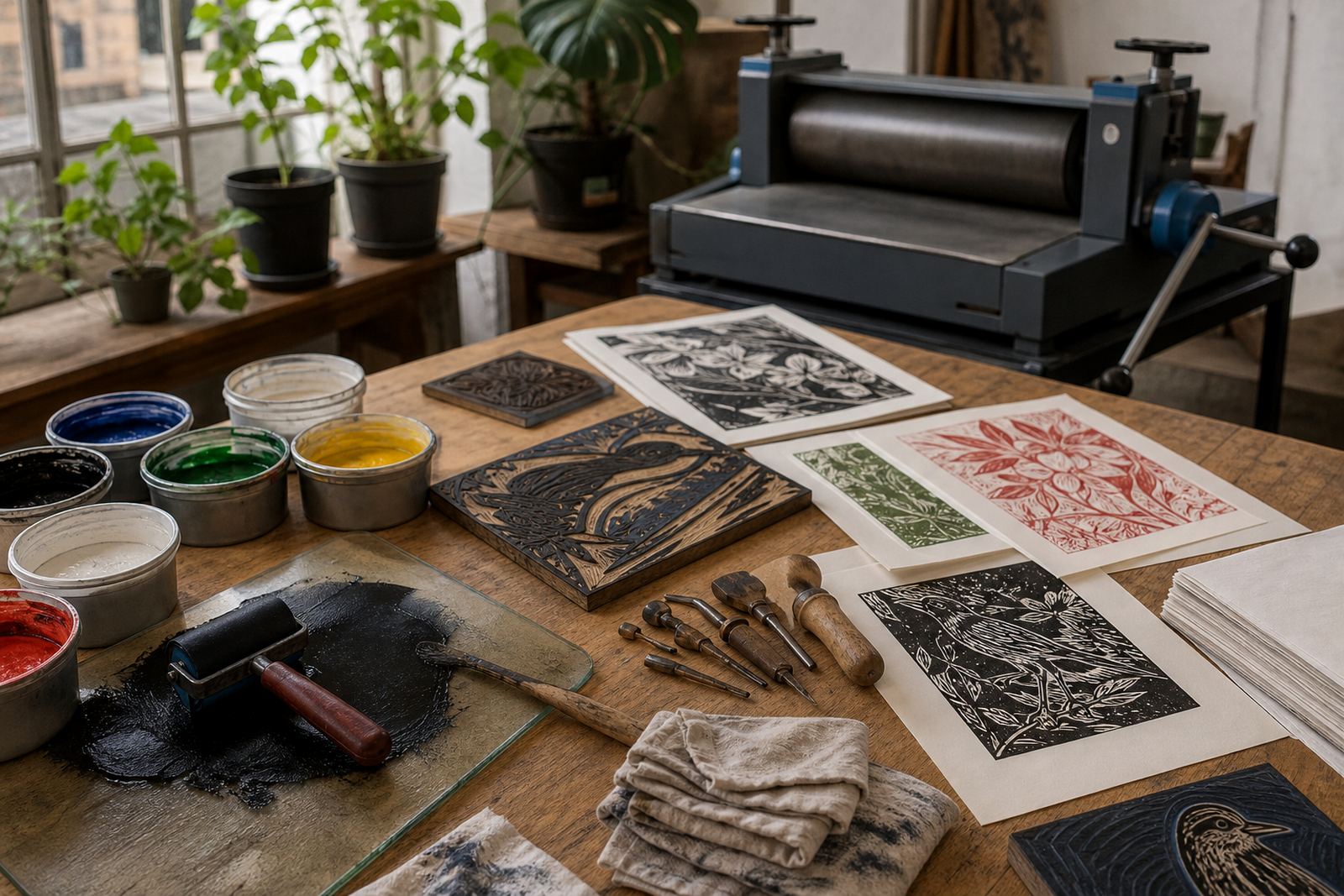
People often think the carved image is the main event, but the print lives or dies on the inking. Too much ink fills the fine cuts and blurs detail. Too little leaves the surface patchy. The right balance gives a crisp, even layer that holds the linework without flooding the block.
Paper choice changes the final look as well. Smooth sheets can give a very clean finish, while slightly textured papers take ink with a softer edge. In a press printing demo, the pressure is even and repeatable. With a baren, the printer works by hand and feels every pass, which can give a more tactile result.
Registration matters when a print uses more than one colour or more than one block. Small guides keep the paper seated in the same place for each pull. Without that, the image drifts and the layers miss each other. It is one of the quiet skills that separates a tidy edition from a messy stack of prints.
What happens in a real workshop session
A beginner class usually starts with a simple drawing, then moves into cutting, test inking and a first pull. Once the block is ready, participants can print an edition by hand and compare the small changes from one impression to the next. Those variations are part of the appeal. A hand-pulled print carries pressure, texture and tiny shifts that make each sheet feel alive.
- Private studio sessions work well for focused learning.
- Family print sessions keep the image simple and open.
- Team building groups often split into design and printing stages.
- Student classes can cover carving, proofing and editioning in one visit.
- School pop-up workshops suit tables, easels and a tighter schedule.
We also see different rhythm depending on the setting. A school hall in Stellenbosch needs a practical layout, while a studio group in Cape Town can spend longer on finer cuts and a second colour layer. The method stays the same, but the pace and paper handling change with the room.
Editioning gives the print its discipline
An edition is a matched group of prints pulled from the same block or block set. A linocut series holds together when the image stays consistent, and the marks of hand printing still show through on each sheet.
Printmakers usually check the first proof, adjust the block if needed, then continue with the edition once the image reads properly. Margins are trimmed with care, paper is stacked cleanly, and the printed sheets are left to dry in a flat, dust-free space. Oil-based inks can take longer to settle than water-based inks, so plan the drying time.
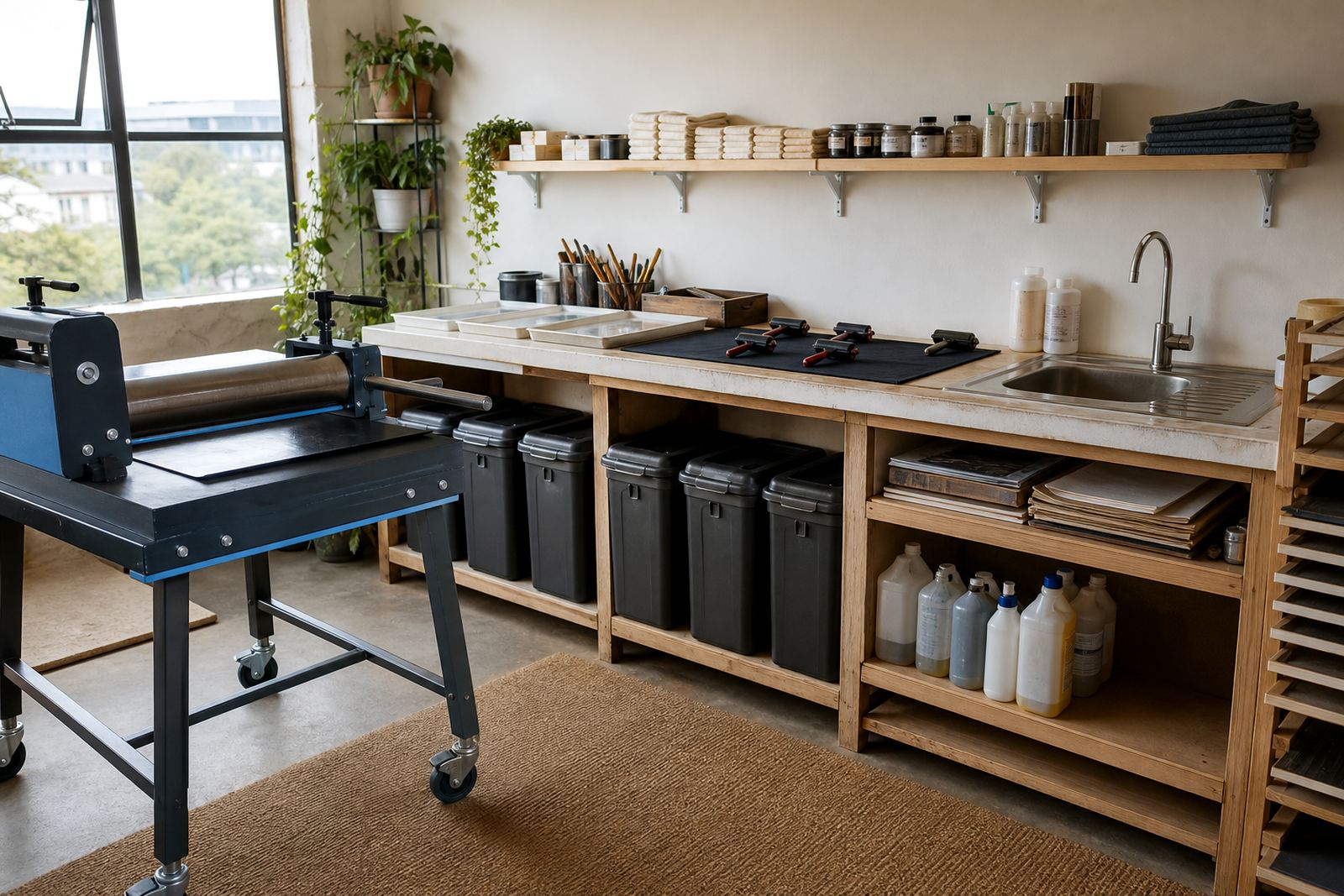
In South Africa, linocut works well for workshops because the setup is compact and the process travels easily to schools, venues and community spaces. A table, a safe cutting area, inks, paper and a press or baren are enough to teach the main ideas without making the room feel crowded.
Why the method still feels current in Cape Town
Linocut stays useful because it is both graphic and human. The image can be bold enough for posters or loose enough for expressive art, yet the process remains understandable to adults, children and groups with mixed experience. People learn quickly that the block rewards patience.
For a local example, picture a workshop in Woodstock with a view of Table Mountain light coming through the window. One person carves a patterned protea, another builds a simple house shape from Bellville or Somerset West, and a third prints a dark, even edition with a baren. The room fills with paper, ink and small corrections, and the finished sheets carry the mark of the hand that made them.
That is the strength of linocut. It turns a carved block and a sheet of paper into an image with weight, texture and a visible making process.