When water-based ink is the better classroom call
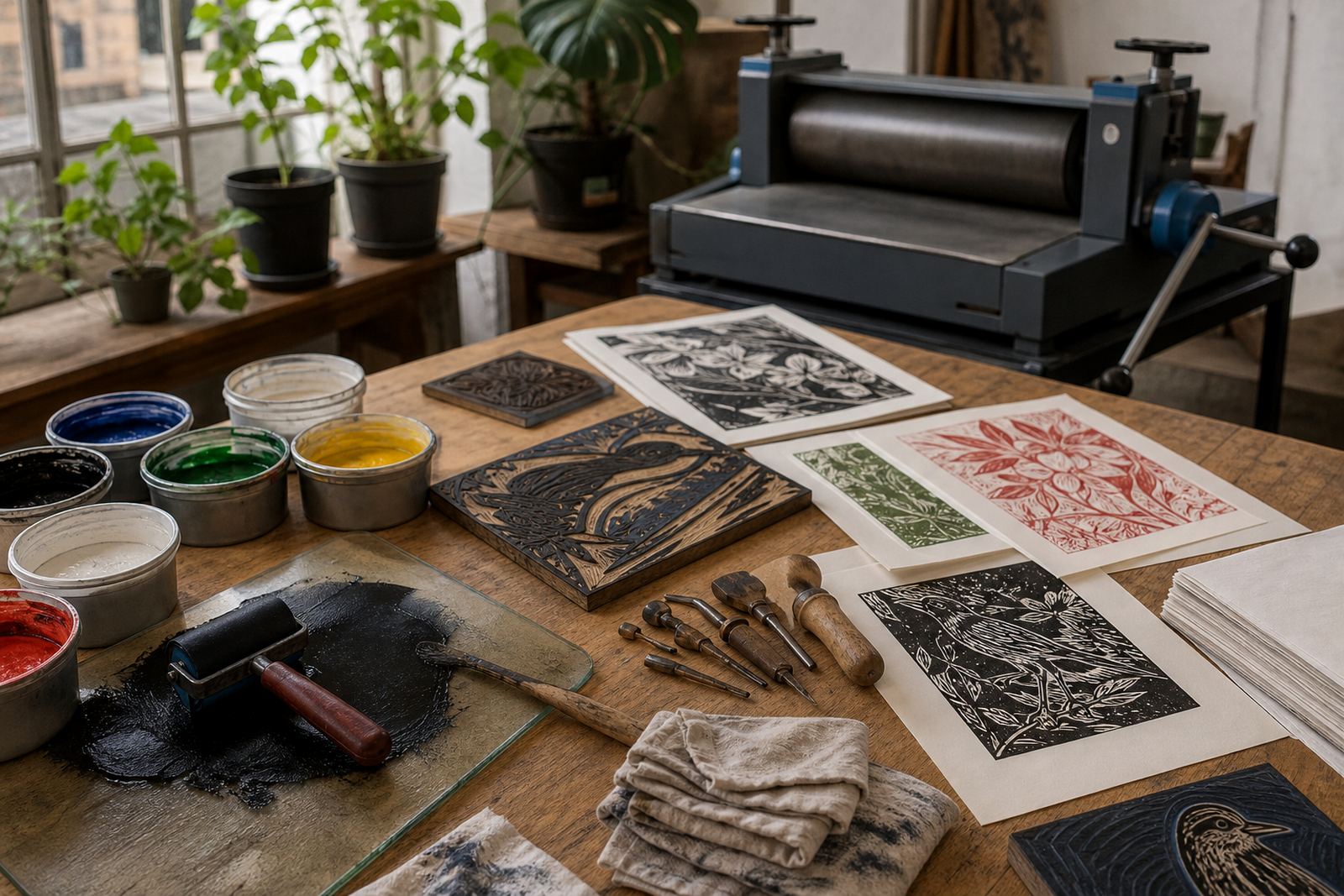
Water-based block ink works well when a room has to move from carving to printing, then back to tables, without much fuss. In a teaching space, that matters. You can roll out colour with a brayer, print by hand with a baren or use a press, then wash tools and hands with far less residue than an oil-based system leaves behind.
For beginners, the ink is easier to handle because it opens a wider window for learning pressure, coverage and registration. A lino block or soft-cut block needs only a thin, even film of ink. That gives students clearer results when they are working through a first edition and learning how a carved line behaves on paper.
It is also useful in shared studios, school halls and pop-up sessions where the tables must be ready for the next group. In Woodstock, where workshop days often run in compact spaces, that makes a practical difference.
What the ink changes in the carving process
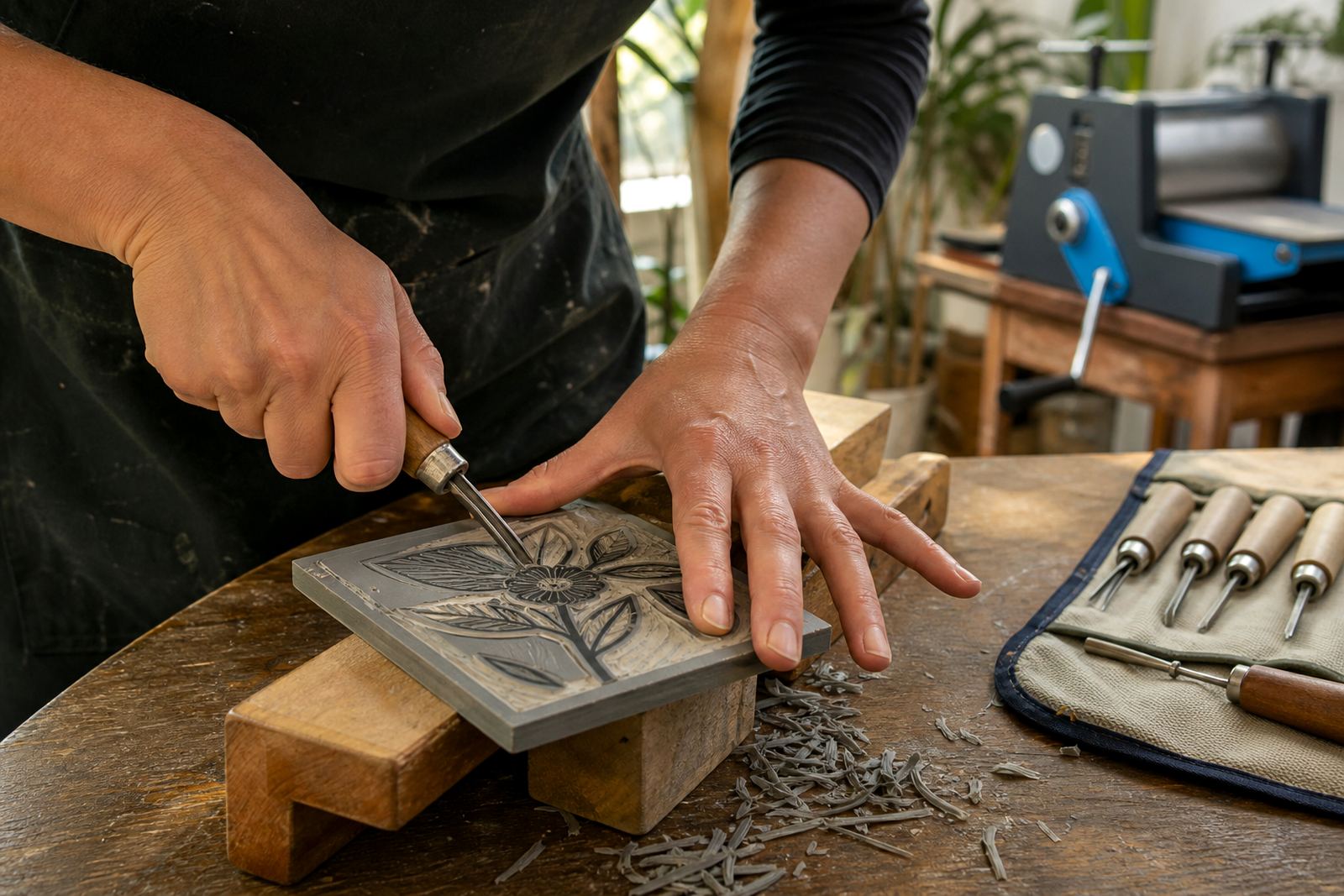
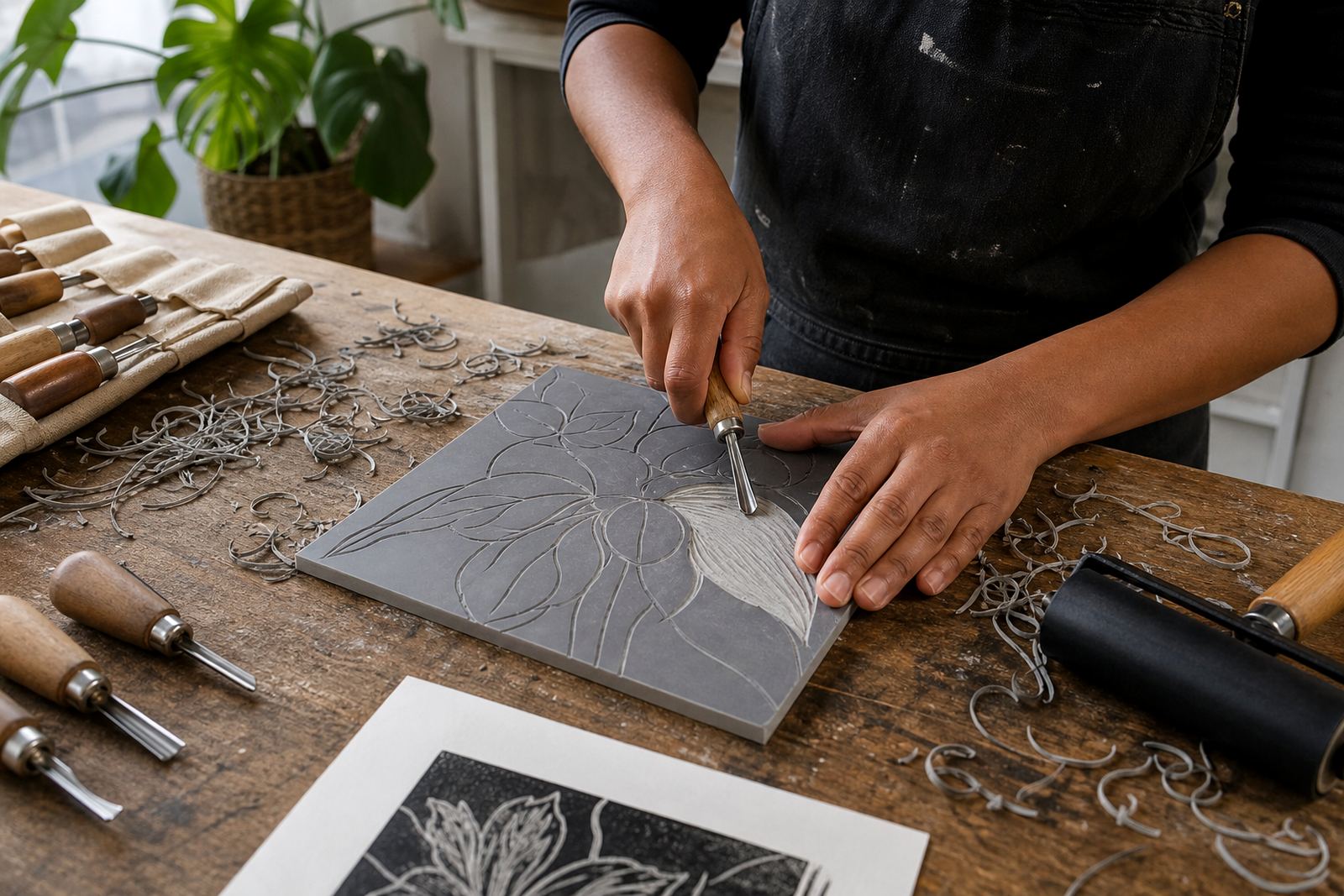
Water-based ink changes the rhythm of the session. Students can spend more time on the block and less on cleanup between colour changes. With gouges and V-tools, the detail still needs to be clean, because a soft burr or a rough ridge will show up once ink reaches the raised areas.
For lino, the surface takes fine cuts well and can carry sharp edges in the final print. Soft-cut blocks are gentler under the tool and often suit younger learners or first-timers. In both cases, the ink reveals whether the carving is high enough, whether the negative spaces are clear and whether the block has been rolled evenly.
That makes water-based systems helpful in teaching. The block can be inked, printed and inspected, then adjusted for the next impression without a long reset. It is a useful way to show how a block print is built edition by edition.
Papers, pressure and the hand feel of the print
Water-based block inks behave differently on different papers. Heavier papers usually take the ink cleanly, while lighter sheets can show more of the brayer marks and pressure marks from the baren. That belongs to the way the print reads. A good workshop uses paper choice to teach the difference between a crisp edition and a more textured proof.
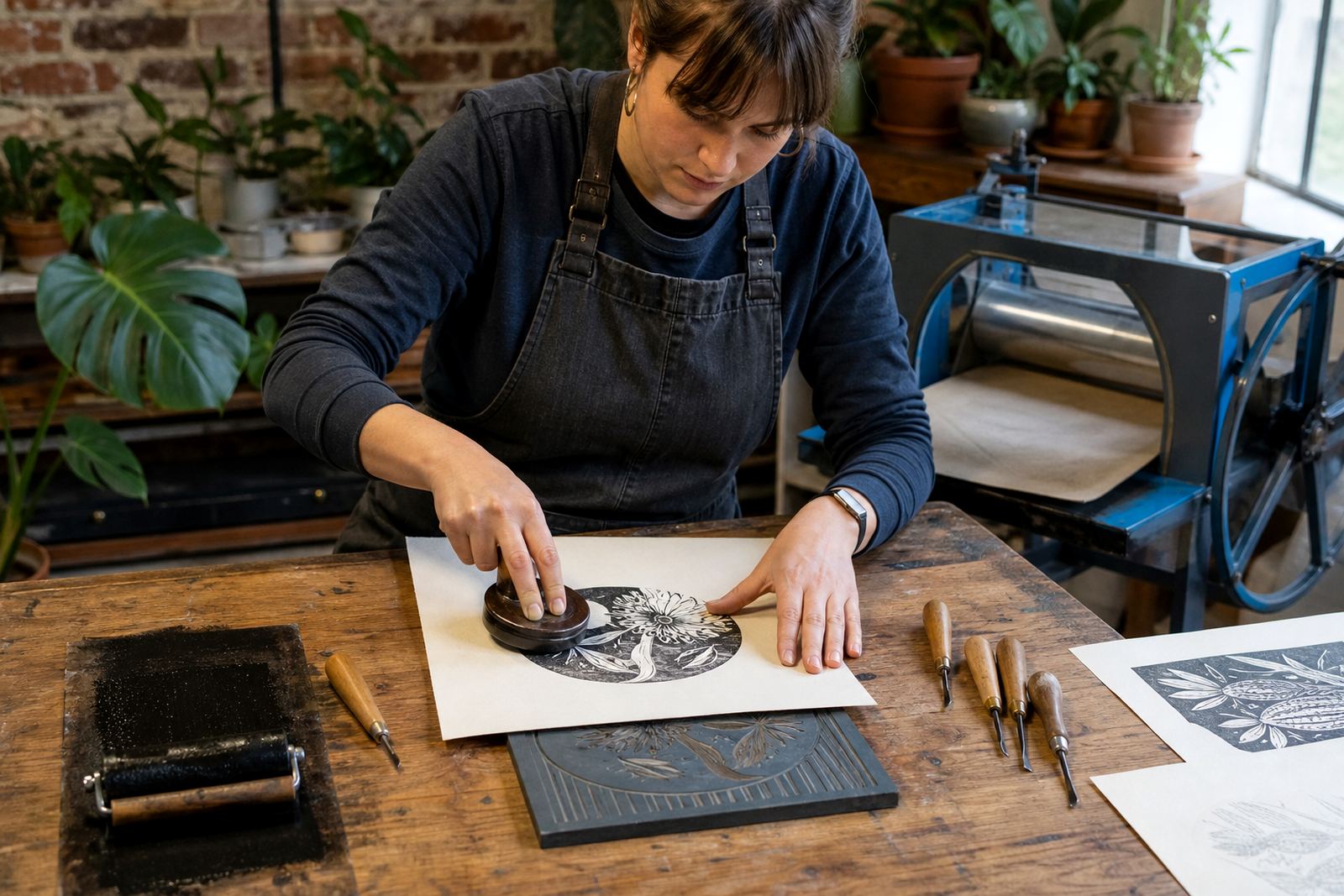
Where the pressure comes from matters too. A press gives a more even result across a class set, while hand burnishing creates a more tactile surface and helps people feel the transfer of ink from block to paper. In a family session or student class, both methods can sit in the same day so learners understand why a print may change slightly from one impression to the next.
- Choose smoother paper for fine line work and crisp text.
- Use slightly heavier sheets when a block carries broad areas of ink.
- Keep a stack of test sheets nearby for quick checks.
- Label proof, trial and final sheets so the edition stays clear.
Why teachers use water-based ink for group sessions
Schools and community groups often need a print process that is safe to set up and simple to clear away. Water-based ink helps there because brushes, rollers and trays can be managed with ordinary washing water and basic studio routines. The group still learns proper block-print handling, and the space stays more manageable.
For teacher workshops, the practical value is in repeatability. A teacher can show registration marks, explain how to place the paper, and let students run an edition in small batches. If a class is printing in Cape Town, then packing up for transport to another venue, the lighter cleanup helps the session finish without leaving a complicated mess behind.
It also suits pop-up workshops in places like Stellenbosch or Pretoria where tables, storage and wash areas may differ from one venue to the next. Water-based ink gives the instructor more room to adapt the day to the space at hand.
- Good for mixed-age groups learning first prints.
- Useful where sinks and wash areas are limited.
- Helps with quick changes between colour layers.
- Works well for teacher demos and short school sessions.
What still needs attention, even with easier cleanup
Easy cleanup still comes with careful printing. Water-based ink can dry faster on the slab, so the team has to keep an eye on the roll-out time and the amount loaded onto the brayer. Too little ink gives weak coverage. Too much can fill the carved lines and flatten the image. A workshop lead needs to watch the first pull, then adjust before the edition moves forward.
Registration still needs care. If the paper shifts even a few millimetres, the linework can blur where layers overlap. That matters in two-colour blocks and in any print that uses a second pass for detail or tone. A steady hand, clear corner marks and a dry, flat work surface all help the print hold together.
Some learners also expect water-based inks to behave exactly like oil-based ones. They do not. The working time is shorter, the finish can be a little lighter, and the final print may have a softer surface. That difference is useful to show, especially when the class is learning how materials shape the final image.
A Woodstock studio example with travelling sessions
In our Woodstock studio, a water-based ink session can move from carving to printing in a single workshop without the room becoming crowded with cleanup steps. That suits adults learning linocut for the first time, students testing editioning, and family groups who need a practical process with clear stages. The same set-up also travels well for school pop-ups and venue workshops across South Africa.
A typical local session might begin with a small lino block, a simple image and one colour. From there, learners mark the block, carve the positive and negative areas, roll out ink, then print a few proofs before pulling a final edition. The studio team can show how the print changes when pressure, paper or ink load changes, which is often the moment people understand the material properly.
For groups in Bellville, Somerset West, Johannesburg, Durban or Pretoria, the advantage is straightforward. Water-based ink keeps the workshop portable, readable and easier to reset between demonstrations. It lets the print stay the focus.