
Look over the borrowed room first
Venue cleanup works best when it begins with the room layout. A school hall in Woodstock needs a different plan from a conference room in Pretoria or a studio space in Durban, because tables, floors and basins vary so much. We map where carving happens, where inking happens and where drying boards will sit, then we decide what needs covering and what can stay open.
For linocut and block-print sessions, ink, paper offcuts and damp wipes collect in small bursts. If those stations are not separated from the start, the end of the session becomes messy fast. The best plan keeps clean paper away from carving chips and keeps wet prints off the route people use to leave the room.
Set out a clean-down path before the first cut
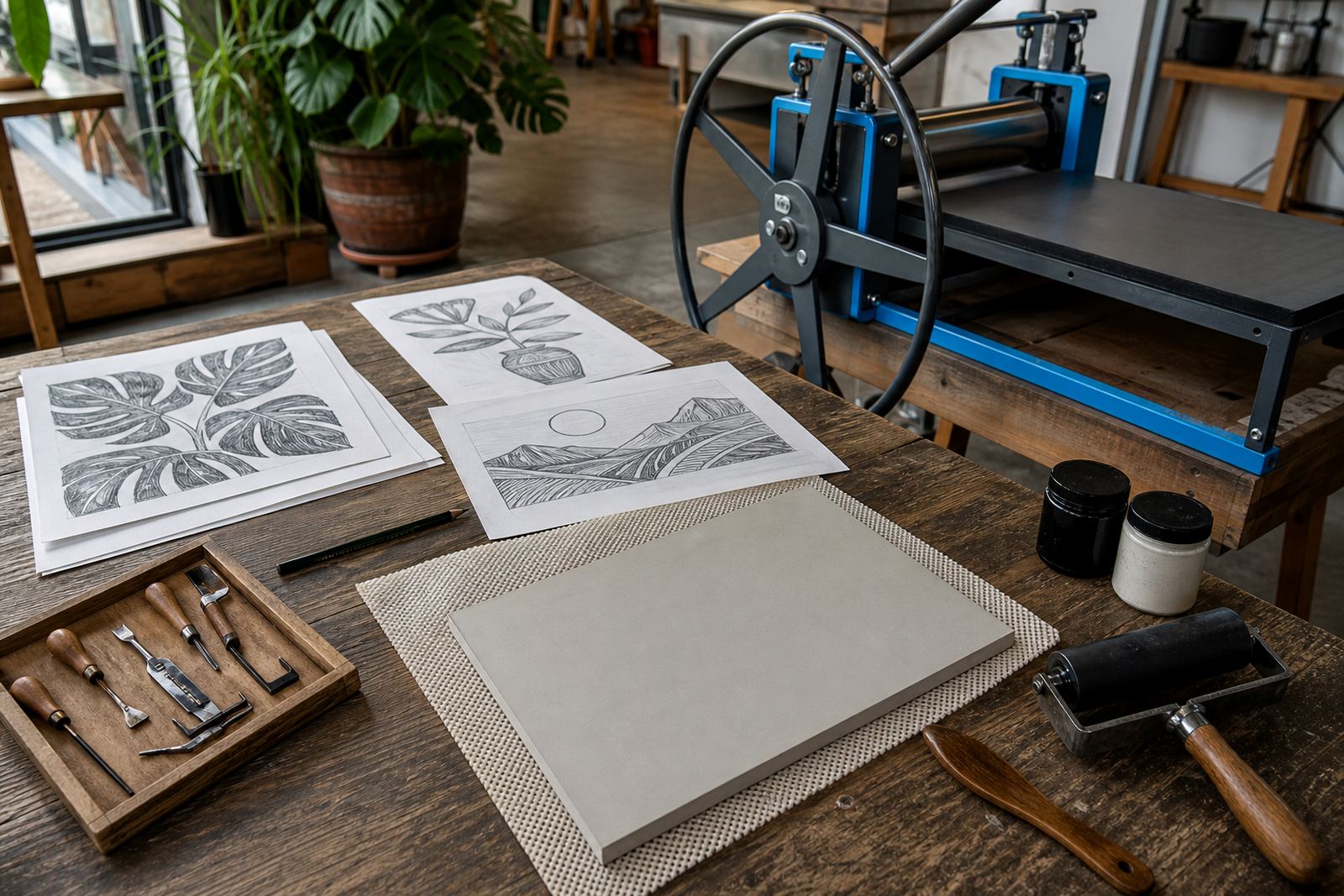
Cleanup runs smoother when the room has a clear path from work tables to waste bins and wash-up points. A simple setup can include a carving table, an inking table, a drying area and one place for finished editions. That way, brayers, gouges, V-tools, barens and papers all have a home while the class runs.
- Cover tables with paper or reusable sheets before ink comes out.
- Place one dry zone for papers, blocks and edition stacks.
- Keep one bin for paper scraps and one for inked wipes.
- Set out cloths for wiping hands, tools and table edges.
- Leave a small tray for loose screws, clips and marking pencils.
When those points are fixed early, pack-down becomes a sequence instead of a scramble. The venue staff can see where the load is, and the workshop team knows what belongs where.
Match the cleanup to the print method
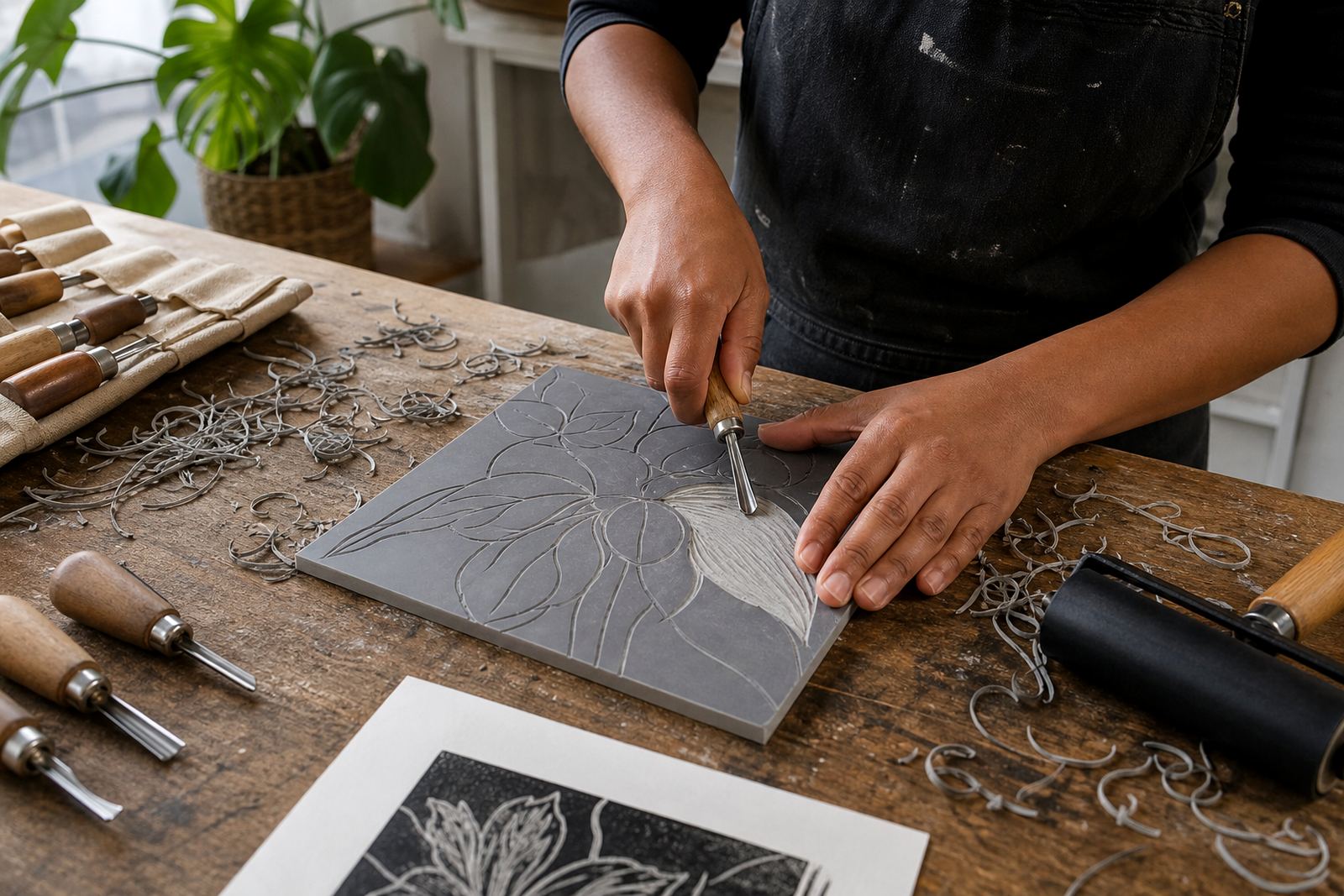
Different print methods leave different traces. Soft-cut blocks shed fine shavings and need careful brushing before they are stored. Lino blocks leave firmer chips and can take a more solid wipe-down. Water-based inks rinse more easily, while oil-based block inks need more attention on cloths, trays and rollers. That means the cleanup kit should fit the medium.
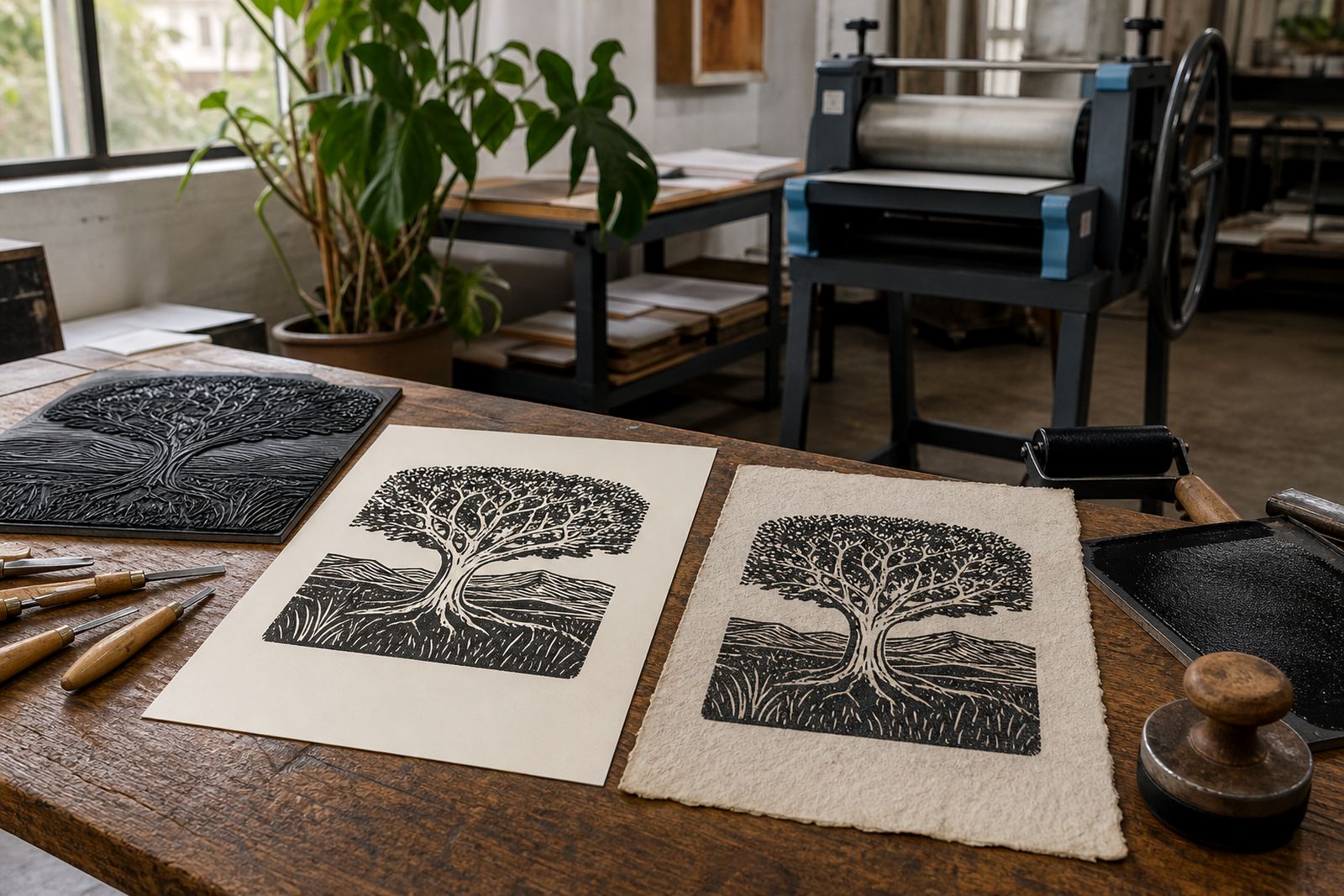
Registration marks, proof sheets and trimmed edges also need sorting. If the class is printing editions, the team should keep finished sheets flat and separate from trial pulls. A drying rack, brown paper or clean boards help keep work from smudging while the venue is being packed down.
In a Bellville school hall, for example, a teacher workshop may finish with wet proofs, student notes and a few test blocks still on the tables. If those items are grouped by task, the final clear-up is far easier than if everything sits in one pile near the door.
Plan for floors, sinks and shared surfaces
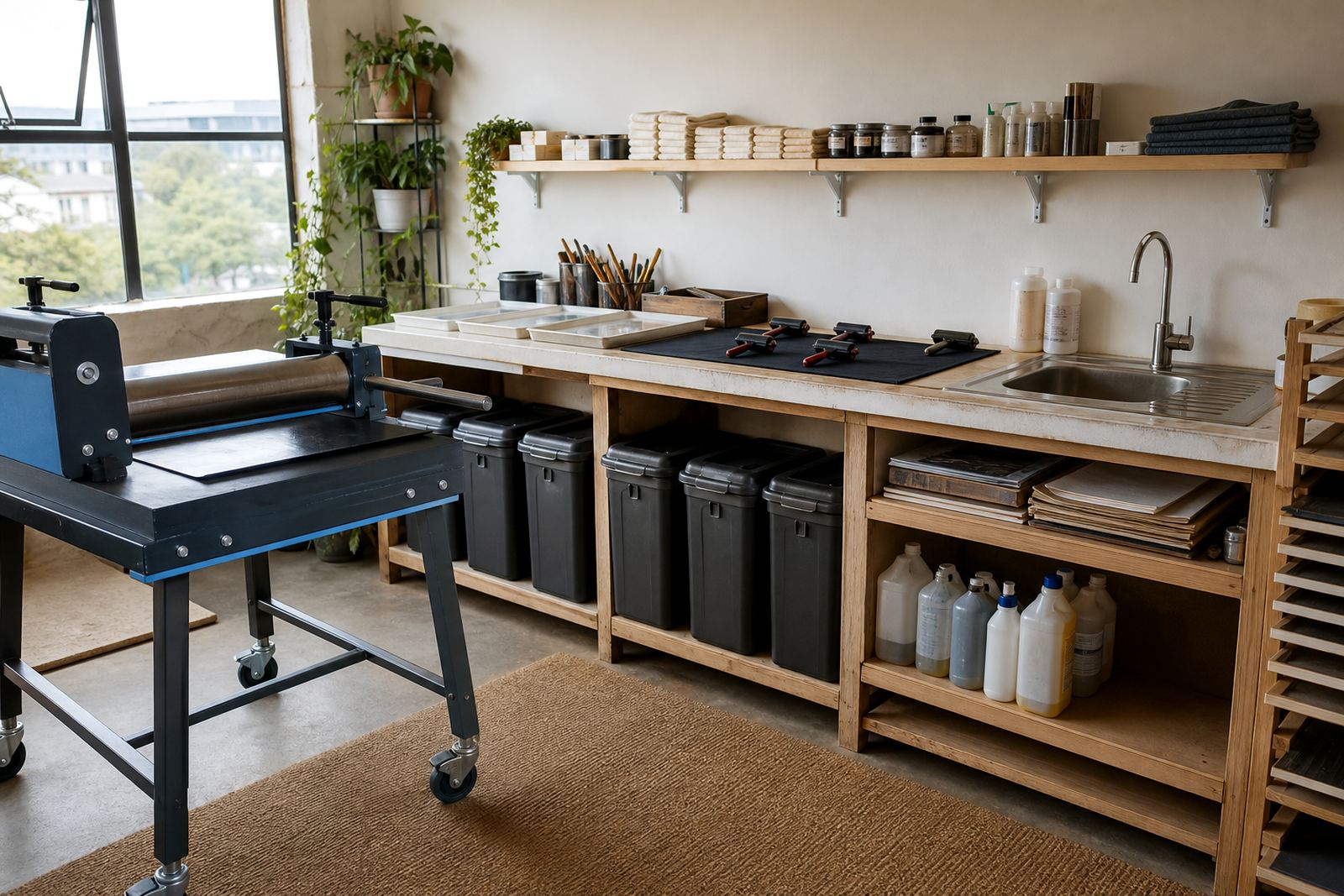
Hired venues usually care most about floors and shared surfaces, and for good reason. Ink drips on polished tiles, splashes near sinks and paper fibres on window ledges all leave a poor impression if they are ignored. A sensible plan includes floor covering near the inking table, spare cloths for spot-cleaning and a quick look at chair legs, skirting and basin rims before the room is handed back.
Where a venue has limited water access, cleanup needs to be even more controlled. Wet cloths, a bucket for rinse water and a separate bag for used paper can prevent unnecessary trips through the building. In Cape Town coastal spaces, humidity can slow drying a little, so prints and cloths should be lifted clear of the floor rather than left in a stack on a damp table edge.
- Check for ink at table corners and under stools.
- Wipe brayers, trays and barens before they are packed away.
- Fold floor covers inward so loose debris stays contained.
- Inspect sink areas for grey water marks and paper pulp.
- Leave the room with doors, windows and storage areas as found.
Who clears what at pack-down time
Cleanup works better when each person has one clear task. In a family print session, adults often handle the table wipe-down while children gather finished sheets and recycled paper. In a student class, one person can sort tools, another can stack blocks and another can check the drying area. In a team building session, the group can split into paper, tools and room-care tasks.
For larger pop-up classes, it helps to name one person as the final room check lead. That person walks the room once the tables are mostly clear, checking for tape, blade covers, spare paper and any block left under a chair. The idea is order that makes sense to the venue manager.
HandPrinter Art often works in temporary rooms where the setup changes from venue to venue, so the cleanup plan has to stay practical. A school gym in Johannesburg, a church hall in Somerset West and a corporate room in Pretoria all need the same principle, though the details shift with the space.
End the session with a clean handover
A proper handover includes putting the tables back and checking the room. It means checking the floor, returning borrowed equipment, removing tape from walls or tabletops and making sure ink containers are sealed. If the workshop used a press, the platen, rollers and bed should be wiped and checked before loading. Papers and editions should be counted and packed flat so they do not curl on the way out.
Where a venue has strict rules, cleanup notes should be part of the booking discussion before the workshop day. That includes bin access, water use, storage space and the condition the room must be left in. A clear finish protects the relationship with the venue and keeps future bookings easier to arrange.
In schools, halls and conference rooms across Cape Town, Stellenbosch, Johannesburg, Pretoria and Durban, we plan the cleanup with the session so prints, room and people all leave in good shape.