What a baren does when the block meets paper
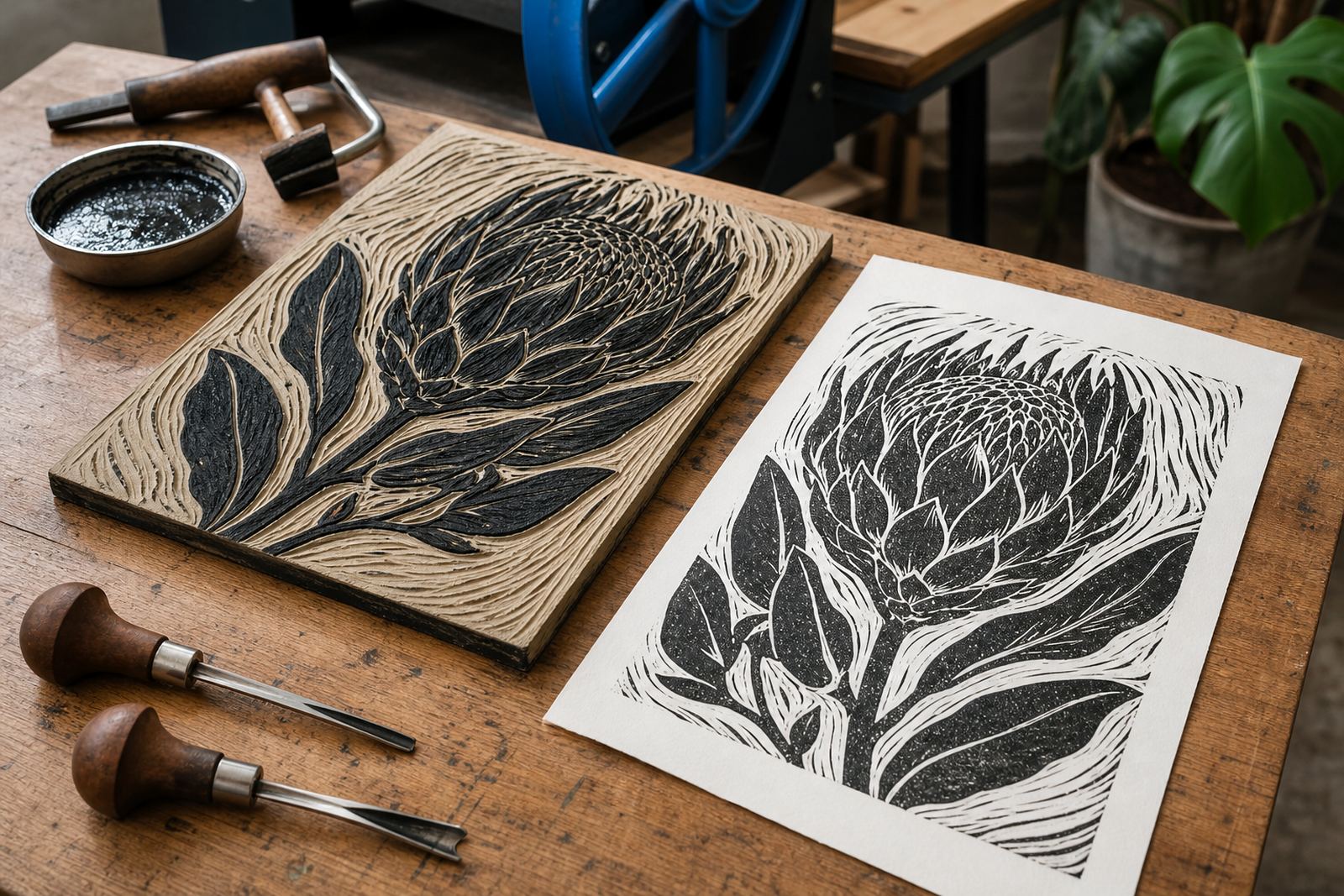
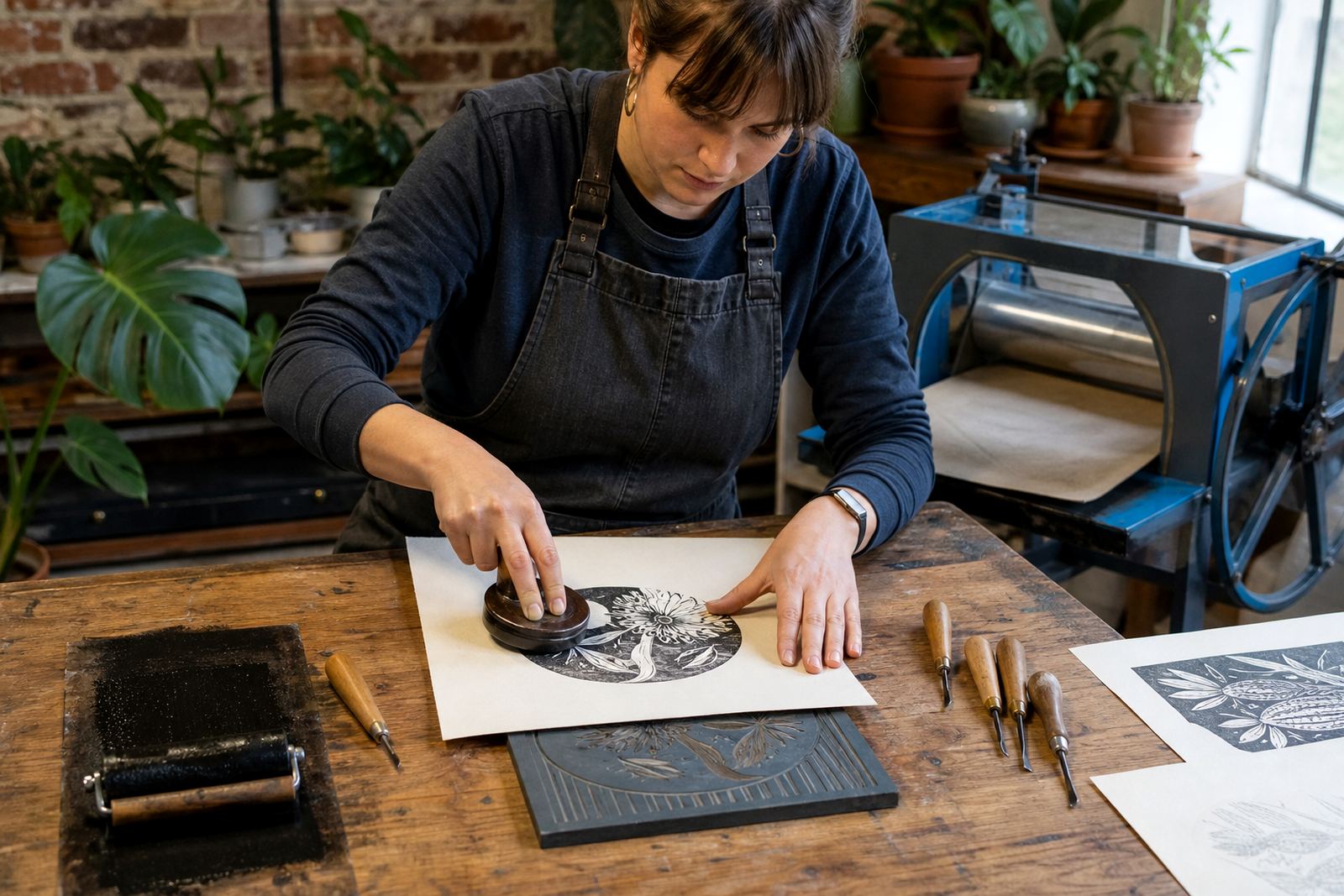
A baren is used to rub pressure across the back of the paper after ink has been rolled onto a carved lino or soft-cut block. The tool helps transfer the image without dragging the paper across the block, which matters when the design includes fine lines, small islands of colour, or a dry edge that must stay crisp.
In a studio session, the baren sits between the brayered block and the finished print. It works well for water-based inks and for many oil-based block inks too, provided the surface is ready and the paper is suited to hand printing. Spread the pressure evenly from edge to edge of the block.
- Use a clean, dry back sheet under the paper if the paper is thin.
- Work from the centre outward, then return to corners and edges.
- Keep the wrist relaxed so the pressure stays even.
- Lift the paper carefully before checking the impression.
Setting up the block before the first pass
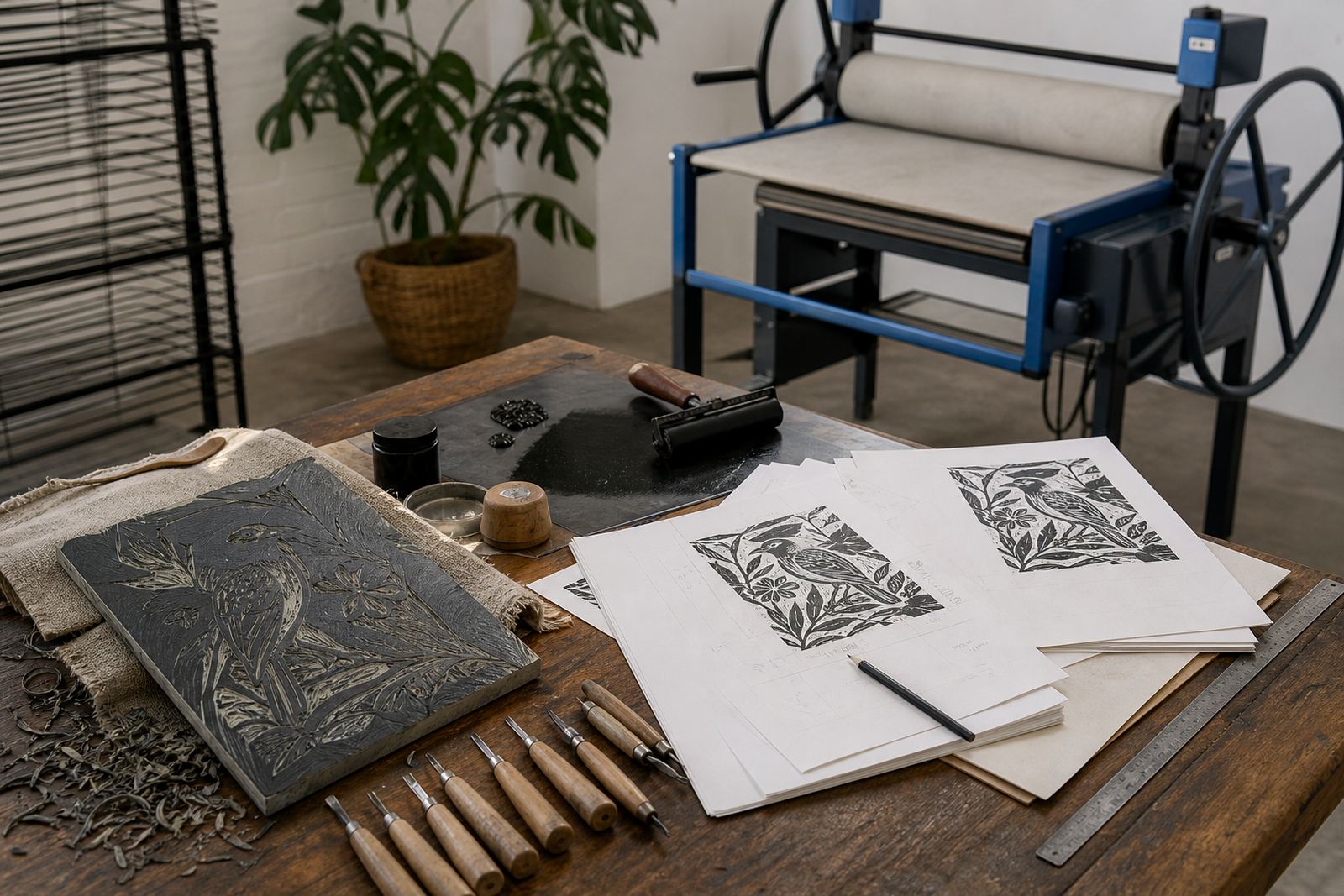
Good baren printing starts before the baren ever touches the sheet. A carved block should be free of loose crumbs from the gouges and V-tools, with the cut areas cleared so they do not catch on the paper. If the block is in lino, the surface often takes a smoother inking line. Soft-cut blocks can feel gentler under the tools, though they still need careful handling at the edges.
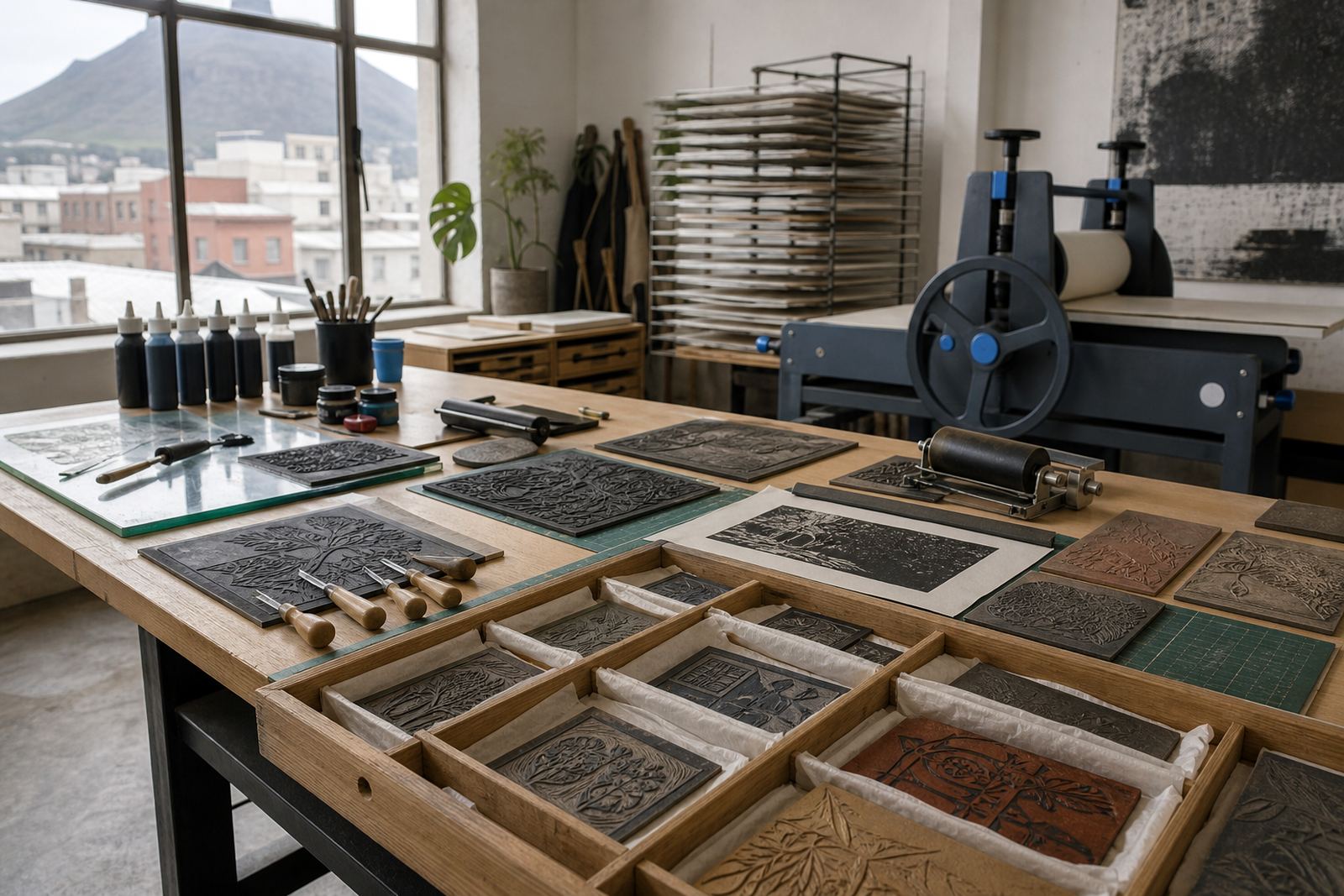
Registration matters when a print has more than one colour or when the same image must be pulled as an edition. Light pencil marks, corner guides, or a simple jig help keep each sheet in the same position. On a busy workshop table in Woodstock, Cape Town, that step saves time and avoids a run of prints that sit a few millimetres off centre.
- Check the block face before inking.
- Keep the paper stack flat and dry.
- Mark the sheet edges lightly if registration is needed.
- Pull one sheet on newsprint before you reach for the good paper.
Pressure, movement and the feel of a clean pull
Baren printing runs on rhythm. A printmaker usually works in overlapping circles, then short sweeps, so the pressure travels across the image rather than digging into one patch. The hand should feel the resistance of the paper, the ink and the carved block beneath it. If the motion becomes rushed, the print often shows pale patches where the transfer was not complete.
Paper choice changes the feel as well. Softer papers may pick up detail with less effort, while heavier sheets can take more pressure and a slower pass. A clean pull often shows a sharp edge, full black in the raised areas and no unwanted smudge from the heel of the hand. That balance comes with practice.
- Begin with light passes, then add pressure where needed.
- Use the flat part of the baren.
- Listen for dry dragging, which can signal too little ink.
- Let the paper rest a moment before lifting it.
Inks, papers and the marks they leave behind
Water-based block inks dry faster and can suit teaching sessions where students need to print, inspect and continue working without a long wait. Oil-based block inks stay open longer and can give a richer print surface, though they need more care with clean-up and with the paper choice. Either way, the baren must match the ink film on the block.
Different papers behave differently under hand pressure. Smooth papers can show fine carved detail, while textured sheets may soften the edges and give the edition a more tactile surface. In Cape Town, where coastal humidity can affect drying and paper handling, studios often keep paper flat and sorted by weight so the edition stays consistent from the first sheet to the last.
- Keep ink layers thin enough to transfer cleanly.
- Choose paper that suits the block and the image detail.
- Store paper away from moisture and dust.
- Print test sheets before starting an edition.
Printing by hand versus using a press
A baren gives the printer direct control over every movement, which suits small editions, classroom work and prints that need a personal touch. A press can produce strong even pressure too, especially for larger sheets or when a block has deep cuts and broad areas of ink. Both methods have a place, but the hand-made feel of a baren is part of the appeal for many students and families.
During a workshop, we choose according to the lesson. A press demo helps explain pressure and registration at a glance, while baren printing slows the process enough for each person to understand the transfer from block to paper. That slower pace is useful when the group includes first-time printers, school learners or adults who want to see how the image builds from one pull to the next.
- Use a baren for smaller editions and close control.
- Use a press when sheet size or image size demands it.
- Test both methods on the same carved block.
- Compare results so students can read the difference.
A Cape Town workshop example from first cut to final edition
A beginner group in Woodstock might start with a simple soft-cut block, a single V-tool line and a small area of flat colour. The teacher shows how to hold the block safely, how to clear the cut marks, and how to roll ink with a brayer until the surface shines but does not flood. From there, each person sets the paper, checks the edges and prints with a baren in short, even passes.
By the end of the session, the room has a set of prints that share the same image but still show individual hand pressure. One sheet may carry a slightly firmer corner, another a softer centre, and both can sit comfortably in the same edition. That mix is part of hand printing, especially in a city where studios, schools and venue setups often move between Cape Town, Stellenbosch, Johannesburg, Pretoria and Durban.
- Keep the image simple for a first edition.
- Leave space around the block for clean handling.
- Pencil an edition number under each print when the ink has set.
- Lay finished prints between sheets of newsprint in a drawer once they are dry.
The habits that keep baren printing steady
Clean hands, a dry workspace and a patient pace make more difference than expensive tools. A baren works best when the printer pays attention to the block, the ink and the paper all at once. If the print starts to look patchy, it usually means the pressure, the ink load or the registration needs a small adjustment rather than a full restart.
For studio workshops, school visits and team sessions, that is the useful lesson. Baren printing is a repeatable hand skill built on even movement, careful setup and a close look at the paper as it comes off the block.
- Check the block after each pull.
- Adjust pressure before the next sheet.
- Keep the edition sequence in order.
- Respect the paper, it shows everything.