Paper grain changes the whole first impression
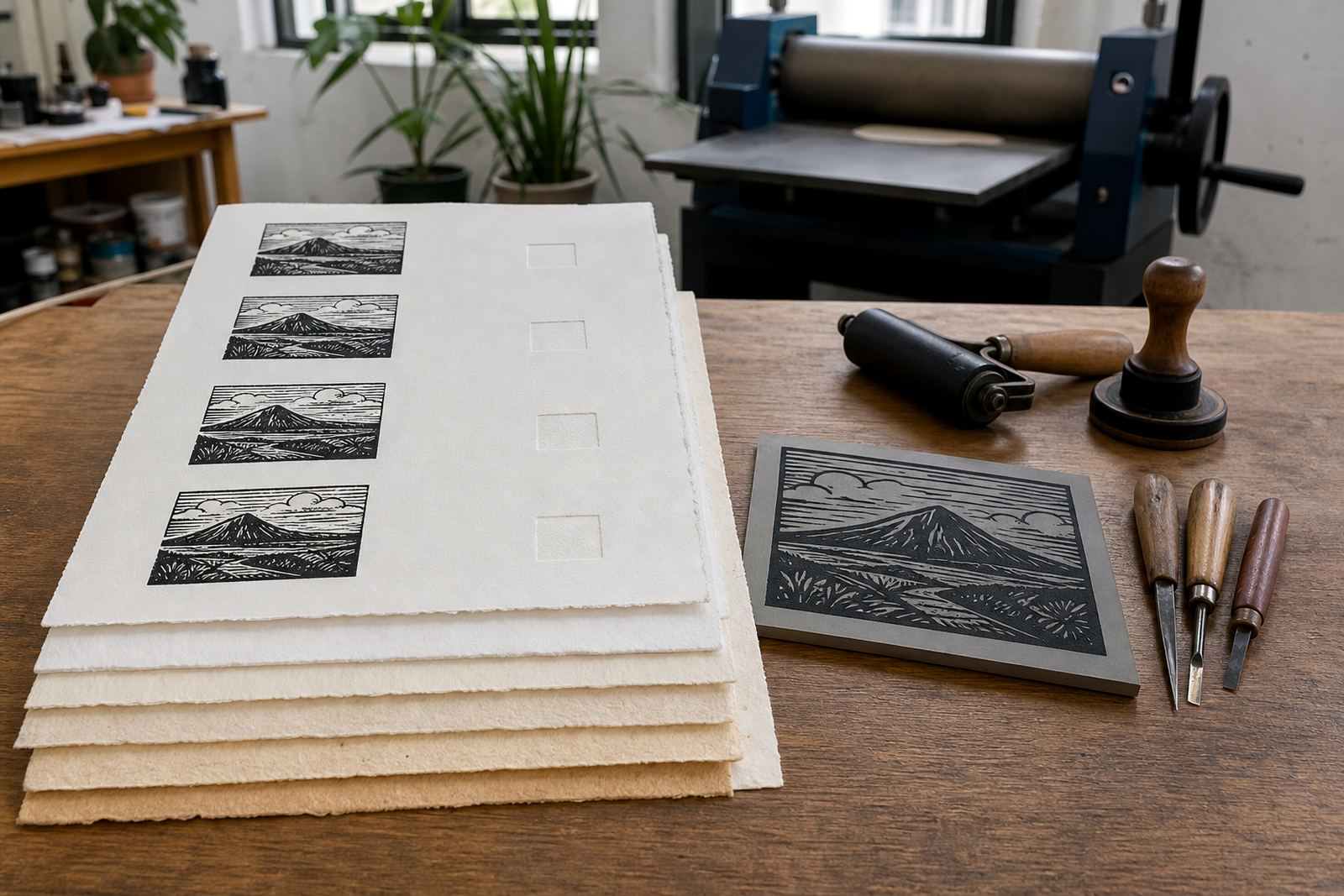
In relief printmaking, the paper catches ink from the raised surface of the block. Smooth paper gives a flatter landing, so fine lines, tiny cuts and tight lettering stay cleaner. Textured paper has more tooth, so the ink touches the high points first and can leave pale skips through the grain.
That difference matters from the first carve. A lino block with small V-tool lines and clean registration can look very precise on smooth cotton paper. The same block on a rough sheet may feel softer, with the paper itself adding a handmade look. Neither is wrong, but the choice changes how the image reads.
- Smooth paper favours sharp detail and thin line work.
- Textured paper can mellow hard edges and soften large ink areas.
- Heavy paper usually takes more pressure from a baren or press.
When fine carving needs a cleaner sheet
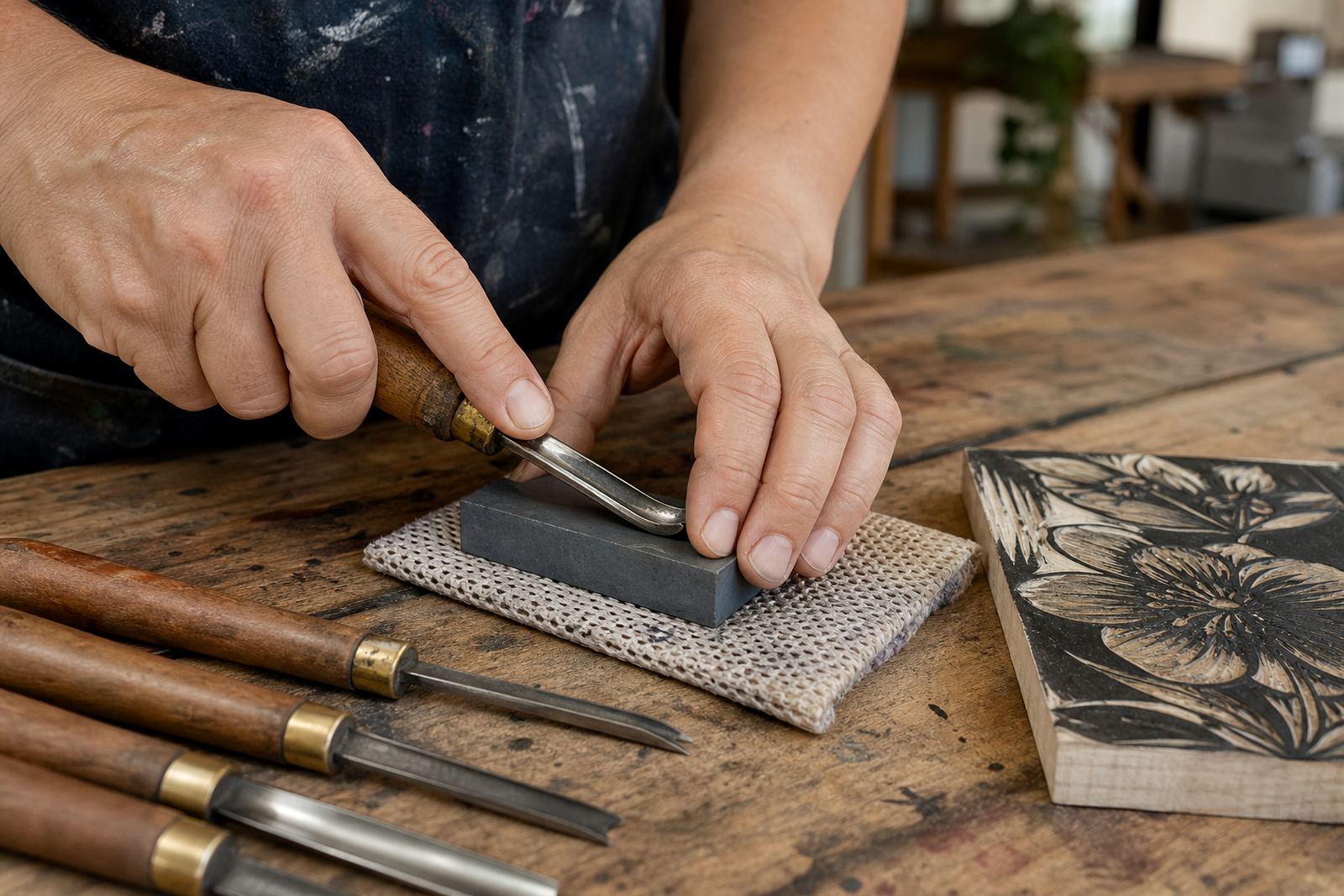
For first-time carvers, the block often carries a mix of bold shapes and cautious marks. Smooth paper is forgiving for that kind of edition, because it shows the intended line more clearly. It is also useful for printmakers working with small repeats, where each pull needs to match the one before it.
In a Woodstock studio session, a student making a simple leaf print may use soft-cut blocks, water-based ink and a smooth sheet to keep the edges readable. The paper helps the cut show through, especially when the ink layer is thin and the block has narrow lines. If the paper is too rough, those details can disappear into the surface.
- Use smooth paper for lettering, line art and tighter patterns.
- Keep the ink film even, so the sheet does not grab blotches.
- Check registration marks before the first strong pull.
Where texture earns its place in the edition
Textured paper works well when the block is meant to feel handmade and a little looser. A broad carved shape, a simple portrait, or a floral image with open spaces can sit beautifully on a sheet with visible grain. The paper adds depth without needing more ink or more carving.
Oil-based block inks often hold up well on textured sheets because they stay open a little longer and can transfer cleanly with pressure from a press. A baren can also work, but the maker needs to move with steady, overlapping pressure so the surface gets an even pull. On a rougher paper, that rhythm does the work.
- Textured sheets suit broader shapes and expressive marks.
- They can hide small unevenness in a hand-printed edition.
- They add a visible paper character that some artists want to keep.
Ink choice and paper surface need to match
Water-based ink and oil-based ink behave differently on paper, and the surface can help or hinder each one. Smooth paper usually gives a more exact transfer with water-based ink, especially for small workshop editions where the printmaker wants clear control. Textured paper can still work, but the ink may miss shallow grain pockets if the block is lightly inked.
Oil-based ink sits with a little more body, so it can bridge light texture and still hold a strong image. That said, too much ink on either type of paper can fill small cuts and blur a clean line. The balance is in the block, the inking and the sheet all working together.
- Light inking suits detailed work on smooth sheets.
- Oil-based ink can carry well over moderate texture.
- Too much pressure can flatten delicate paper fibres.
A local workshop example from Cape Town
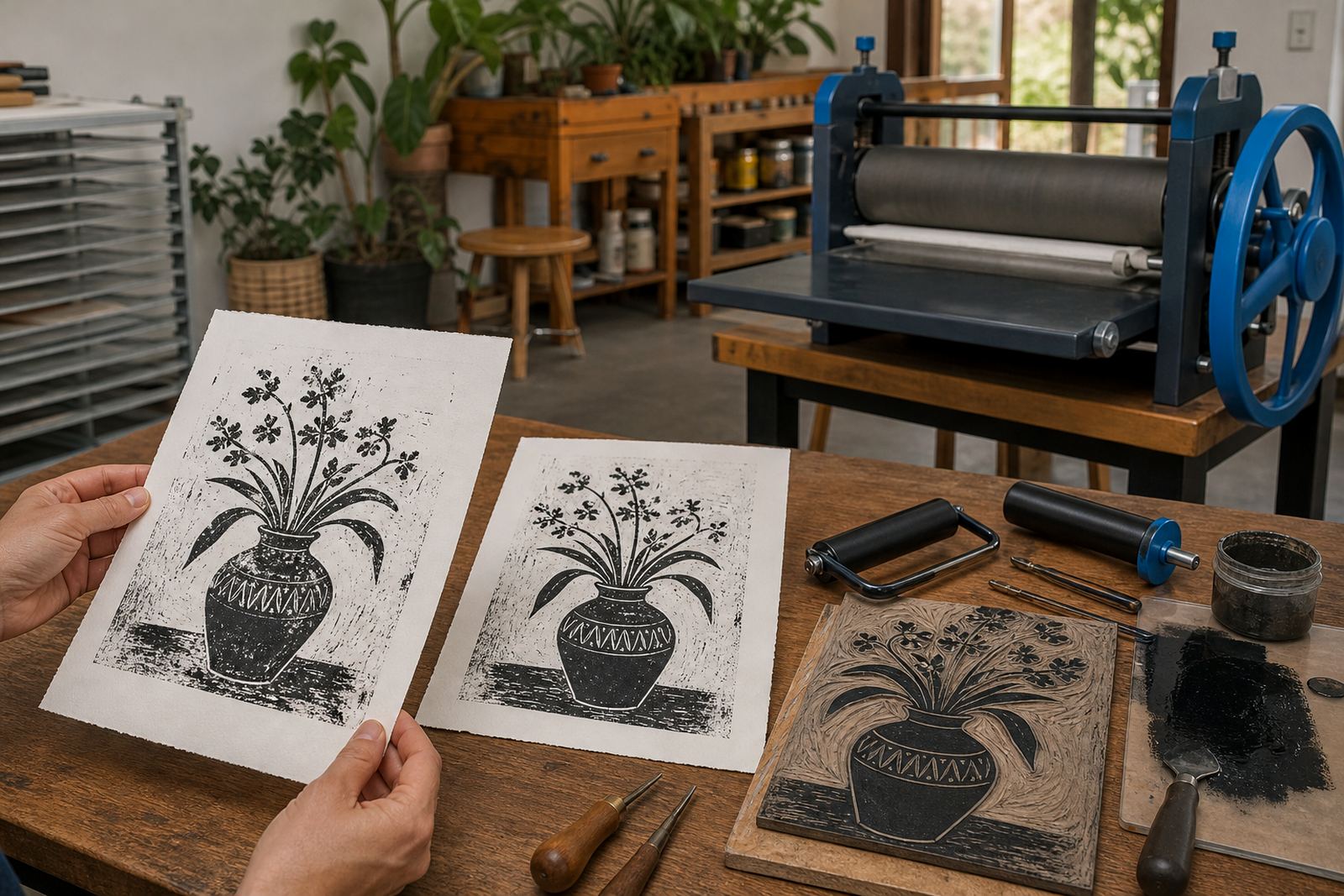
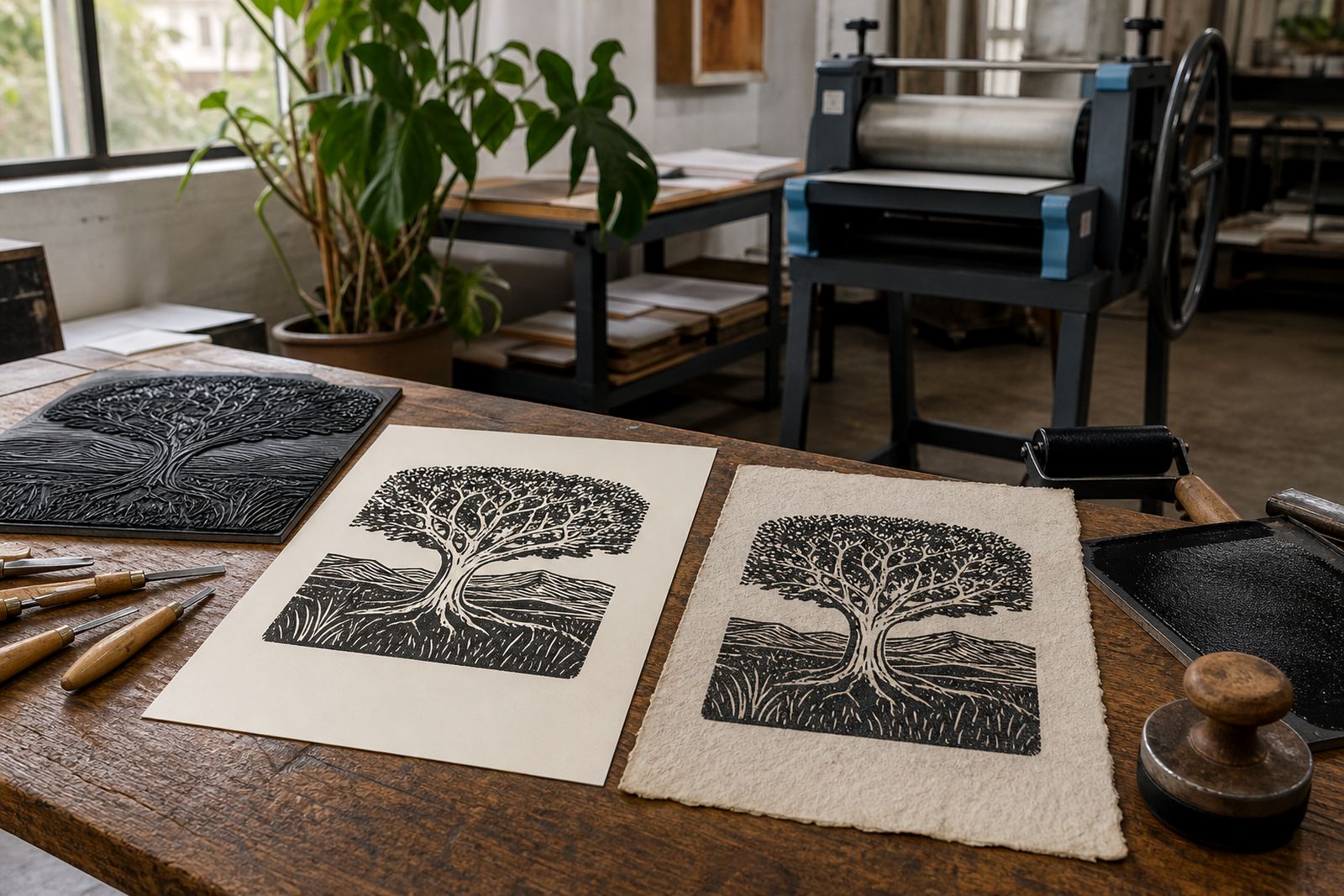
In a Cape Town class, a family group might print the same lino block on two papers side by side. On the smooth sheet, the carved stars in the block look crisp and evenly filled. On the textured sheet, the same stars feel softer at the edges, with tiny gaps that make the print look more lived in.
That kind of comparison helps people see what the paper is doing. It also teaches beginners to notice how a press print differs from a hand burnish with a baren. The image is the same design, but the paper gives each pull a different voice.
For school groups and team sessions, this is often the clearest lesson of the day. Students see how the paper changes the edition, the mood and the amount of detail the print can carry.
Choosing paper for your subject and your edition
For block printing, pick paper that fits your block, ink and desired finish. If the design depends on clean edges, fine hatch marks or close registration, smooth paper usually makes the job easier. If the design is bold, open and meant to show the hand-made process, a textured sheet can give it more character.
At the studio, that choice is often made after looking at the block itself. A beginner carving session, a student print class or a teacher skills workshop may each call for a different sheet weight and surface. Once the first print is pulled, the paper tells you whether the image needs more pressure, less ink or a different stock altogether.
- Choose smooth paper for detail, small text and precise editions.
- Choose textured paper for broader marks and a softer finish.
- Match paper weight to the method, whether baren or press printing.
Paper testing is part of the printmaking habit
Printmakers rarely settle the paper question on paper alone. They test a few sheets, pull a proof, then compare how the ink sits in the fibres and how much detail survives the transfer. That habit saves time later, especially when an edition needs to look consistent across several pulls.
For hand-printed linocut and block-print work, that small test gives a clear answer. A smooth sheet may be the right answer for one block and the wrong one for another. A textured sheet may lift a plain shape beautifully but weaken a delicate line. The paper decides much of the look, and the best editions respect that from the start.