Start with one print brief, not a pile of options
A team session runs more smoothly when the group starts with one shared image direction, one paper size and one printing method. Linocut and soft-cut block work both suit group sessions, but the carving plan changes with the image. A simple design with strong shapes, clear edges and a manageable number of colour layers keeps the room moving.
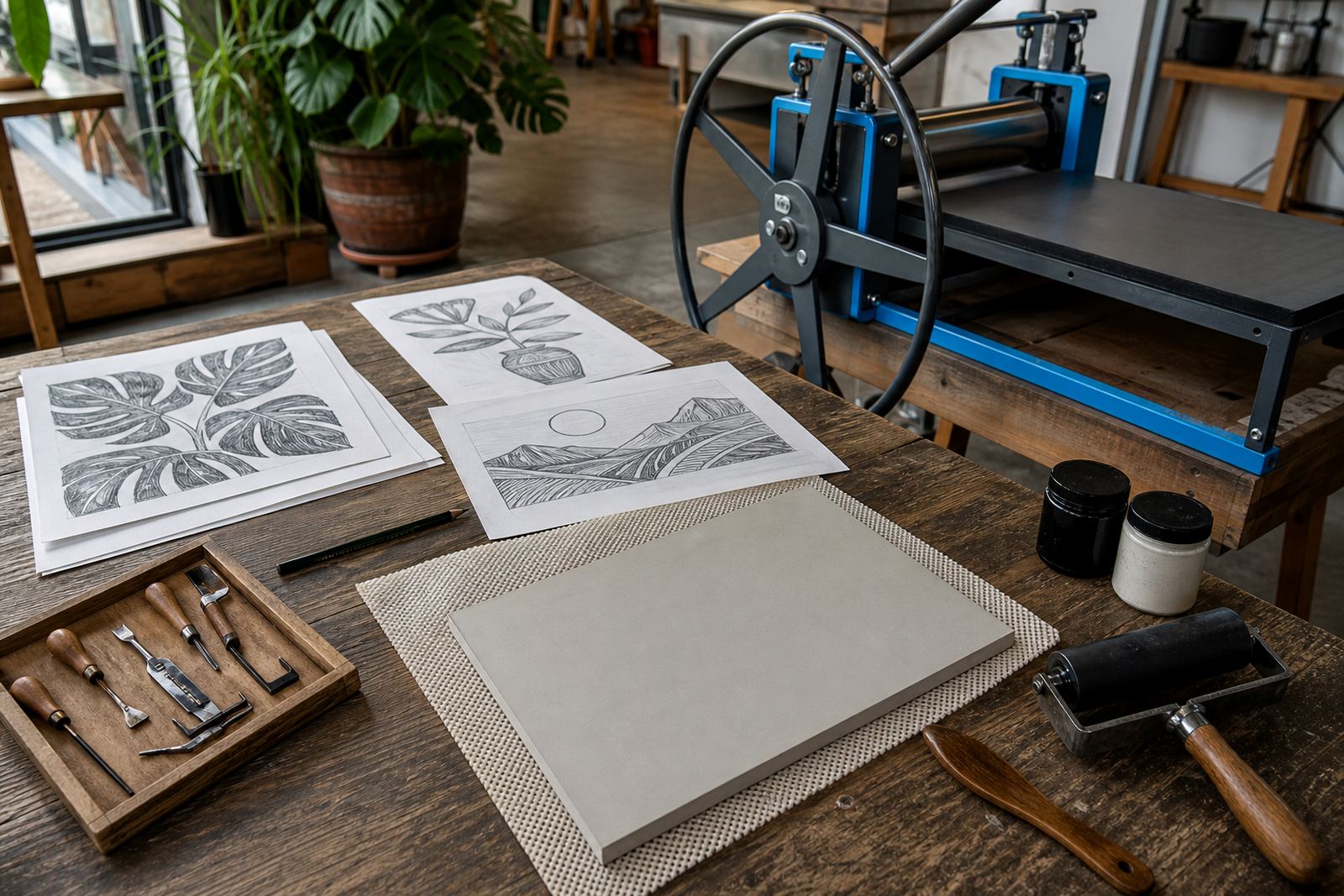
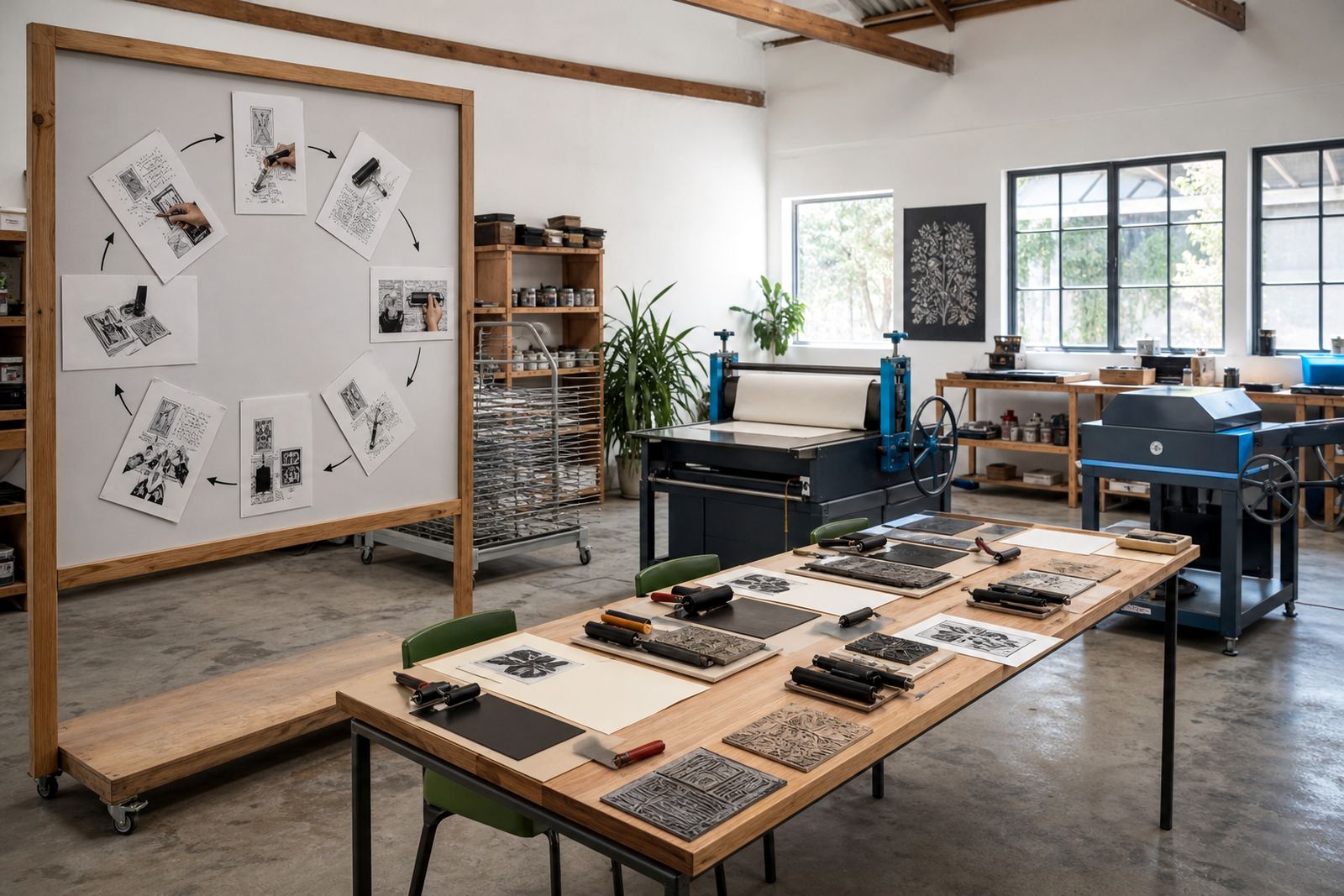
In a mixed group, it helps to split the room into smaller tables early. One table can focus on drawing and transferring the image, while another starts safe carving on lino or soft-cut blocks using gouges and V-tools. That way nobody stands around waiting for the same tool, and the work keeps its pace without anyone feeling rushed.
- One image direction keeps the edition consistent.
- Soft-cut is useful for beginners and fast sketch-based designs.
- Lino handles finer detail and cleaner edges for confident cutters.
- Shared size and paper choice keep the printing line orderly.
Carving stations need breathing room
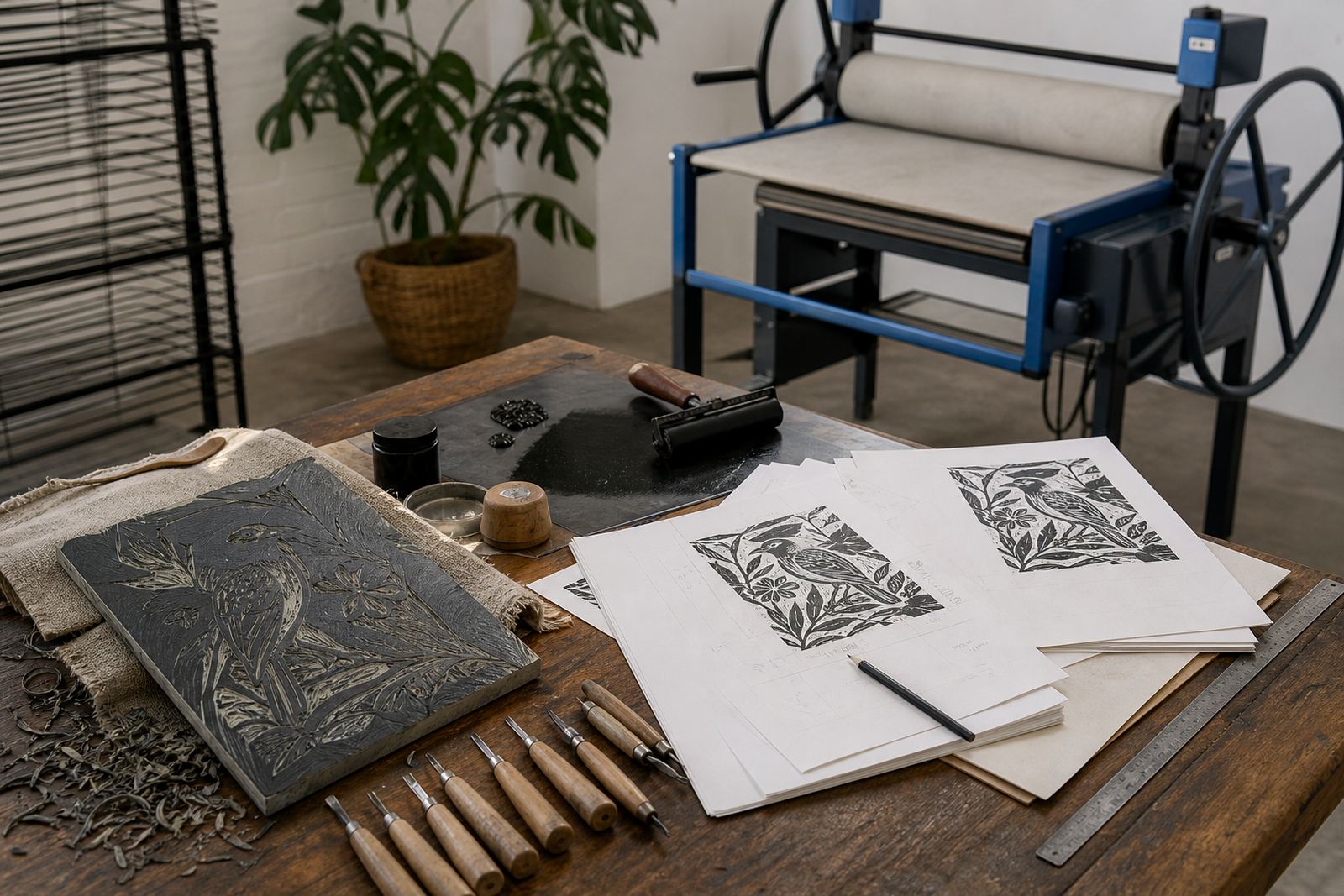
Carving is where bottlenecks usually begin. Good spacing between cutters matters, because the block wants to stay flat, steady and easy to turn. Each person needs a cutting mat, a block, the right gouges and time to test the angle of the tool before they commit to a mark. Safety is part of the rhythm too, with hands kept behind the cutting line and tools returned to one place after use.
For bigger groups, a short demo at the start saves a lot of confusion later. It is easier to show how to shave a clean line, lift a corner without tearing the block and keep the blade moving away from the palm. Once the room understands those habits, the pace lifts and the prints improve. People work better when they can see that the process is deliberate and not hurried.
Ink tables work best when every item has a fixed home
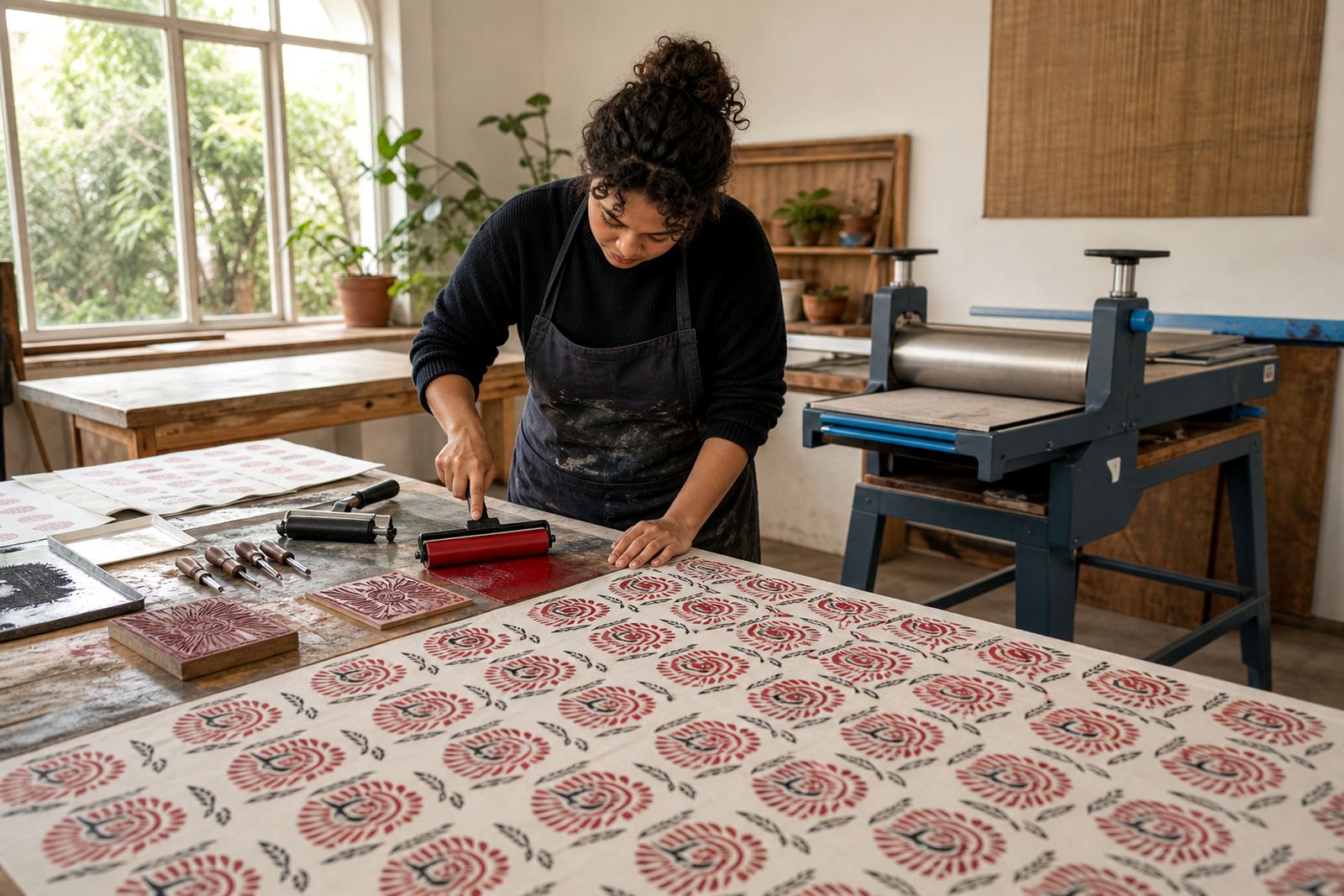
Ink preparation can slow a group down if rollers, trays and paper all end up in one pile. In a print session, brayers should have a clean resting spot, ink knives should stay near the mixing area, and paper should be stacked so the top sheet is always easy to reach. Water-based block inks are useful for quick shifts between colours and easier clean-up, while oil-based block inks are chosen when a longer open time and a denser printed mark are needed.
Registration also begins here. When the paper meets the block in the same position every time, the edition looks disciplined rather than patchy. Even a simple one-colour print benefits from a marked corner guide or a taped edge. For two-colour or layered work, the extra alignment check is worth the time because it prevents blurred edges and wasted sheets.
- Keep one ink station for mixing and one for rolling out.
- Mark the print area clearly on each table.
- Separate fresh prints from drying sheets at once.
- Use a clean cloth and water pot near every station.
Printing by hand changes the tempo of the room
Once the carved blocks are ready, the print stage should feel calm and methodical. A baren is useful for hand pressure on smaller sheets and for workshops where people need to feel the image transfer directly under the palm. A press is better when the edition is larger, the paper is heavier or the group is moving through repeated pulls and wants even pressure from sheet to sheet.
Our workshop is about control. Hand printing gives people a direct read on how much pressure the block needs. Press printing helps when the workshop needs a steadier output and the same image repeated across several prints. In both cases, the key is to keep the drying stack separate and the next sheet ready before the current print leaves the table.
A good edition grows in passes, not all at once
Large groups often work better when the edition is built in stages. The first pass is the proof, which shows whether the carving is clean enough and whether the ink load is even. After that comes the correction pass, where small gaps, rough edges or weak marks are fixed before the main run begins. If the session includes more than one colour, the registration check should happen before anyone starts the final set.
This is where a session coordinator earns their keep. Someone needs to keep the paper count, set aside drying prints and keep an eye on who is ready for the next step. Without that, people drift between tables, blocks get mixed and the final stack loses order. A well-run edition needs a steady hand on the sequence.
Woodstock to Durban, the same method still needs local adjustment
A school pop-up in Woodstock does not run in exactly the same way as a venue session in Durban or Pretoria. Coastal humidity can change how quickly paper settles and how long ink stays open, while a room in Johannesburg may need a different drying setup because the air is drier. In Cape Town, especially around venues with narrow work areas, plan the table layout before the artwork.
For a local example, a team group in Somerset West can work comfortably with one carving table, one inking table and one print table if the room is arranged in sequence. That same session in Bellville may need a wider laydown area so the paper does not crowd the walking line. The process stays the same, but the room shape decides how the print flow moves.
- Check table depth before you set the group size.
- Allow room for drying sheets and finished editions.
- Keep carving tools away from the print stack.
- Match the paper handling to the room size.
What a smooth finish looks like at the end of the session
A well managed team workshop closes with prints that are dry enough to handle carefully, blocks that are labelled clearly and tools that return to the right tray. That final part matters because the next session starts cleaner when the studio does not have to untangle mixed blocks, used paper and stray brayers. The finishing stage also gives space for a short review of what the group made, which images pulled best and where the registration held tightest.
When the flow is right, larger groups leave with a complete edition and a clear sense of how the process worked from first cut to final print. Divide the work well, keep the handovers visible and let each station do its job.