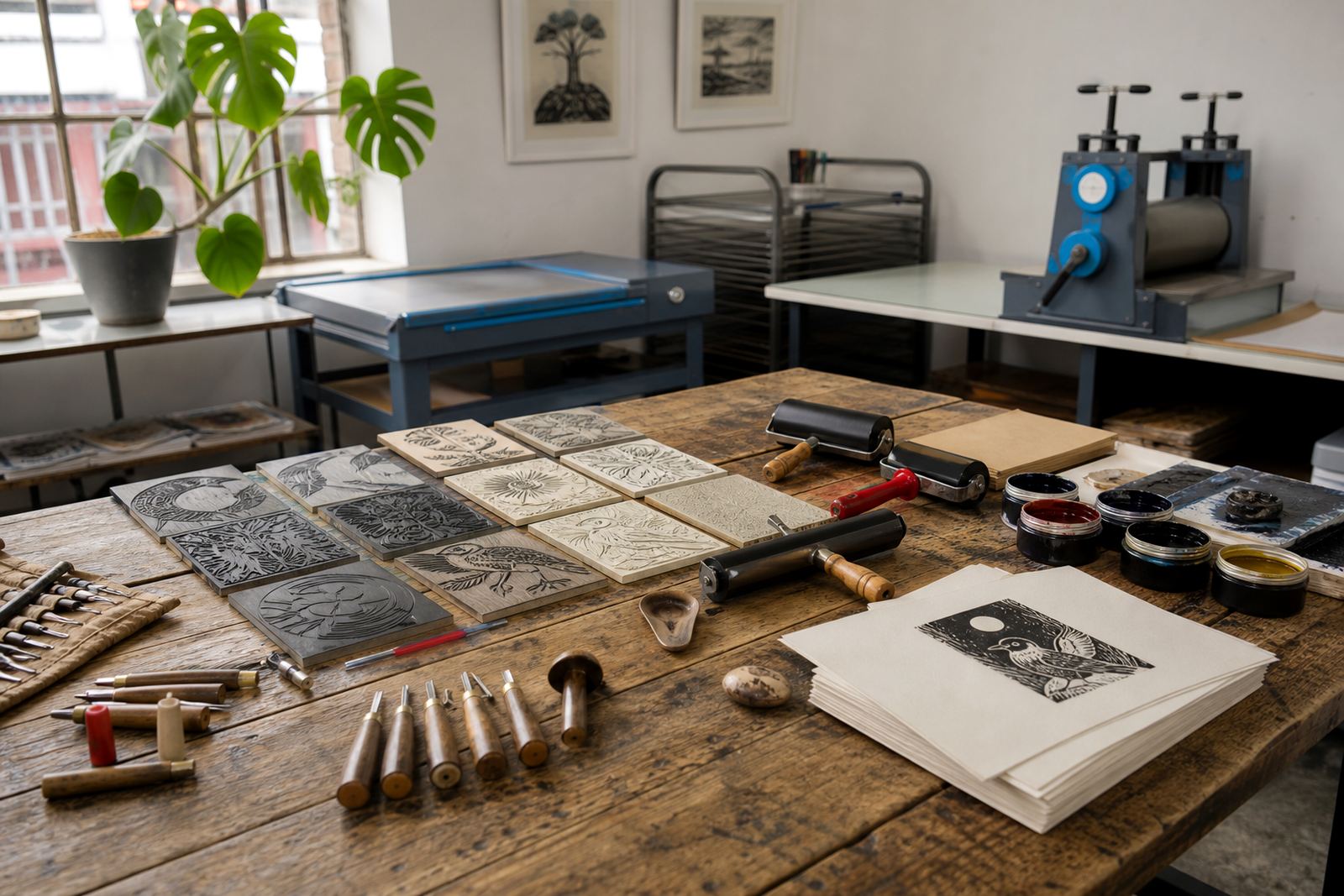
Two blocks, two very different carving moods
Soft-cut blocks give under the tool a little more, so the first cuts feel gentler for beginners, students and family groups. Traditional lino is firmer and asks for more pressure, which many printmakers like once their hand knows the path of the gouge.
That difference changes the whole session. On soft-cut, a V-tool can glide through curves and lettering with less resistance. On lino, the same tool gives a cleaner shoulder to the cut, which helps when the image needs crisp white lines against a dark field.
- Soft-cut suits first-time carvers, younger hands and quicker image planning.
- Lino suits sharper edges, tighter marks and an image that needs a more disciplined carve.
- Both need controlled tool angle, steady wrist movement and careful pressure.
Where fine detail lives and where it slips
If the artwork depends on hairline marks, tight cross-hatching or small type, traditional lino usually carries the detail better. The surface stays firm under repeated passes, so the line stays where the artist set it. Soft-cut can still print beautifully, but very thin bridges and tiny islands need more caution or they can crumble during carving or printing.
For bold shapes, floral repeats, simple portraits and blocky patterns, soft-cut often gives the faster path to a clean result. In a group workshop, that matters. A class in Cape Town can move from sketch to block to first proof without spending the whole session fighting the material.
- Use lino for sharper registration marks and more exact linework.
- Use soft-cut for bold imagery, simple colour areas and a looser hand.
- Proof early, because small cut changes alter the print more than people expect.
Tools, safety and the carving habit
Both materials call for the same respect. Gouges and V-tools should be held so the blade cuts away from the body, with the free hand kept clear of the travel line. A bench hook, sandbag or non-slip mat helps steady the block, and the first pass should always be shallow before deeper removal begins.
We use brayers, barens and presses in different workshop formats, but the block itself begins at the same point: a clean sketch, then a tested line, then a measured carve. Water-based block inks suit quick studio work and easier clean-up. Oil-based inks give a longer open time and a different ink body, which some artists prefer for slower printing.
- Keep fingers behind the tool path, not beside it.
- Check the block edges before inking so scraps do not mark the paper.
- Test one proof before committing to an edition.
Printing pressure changes the final image
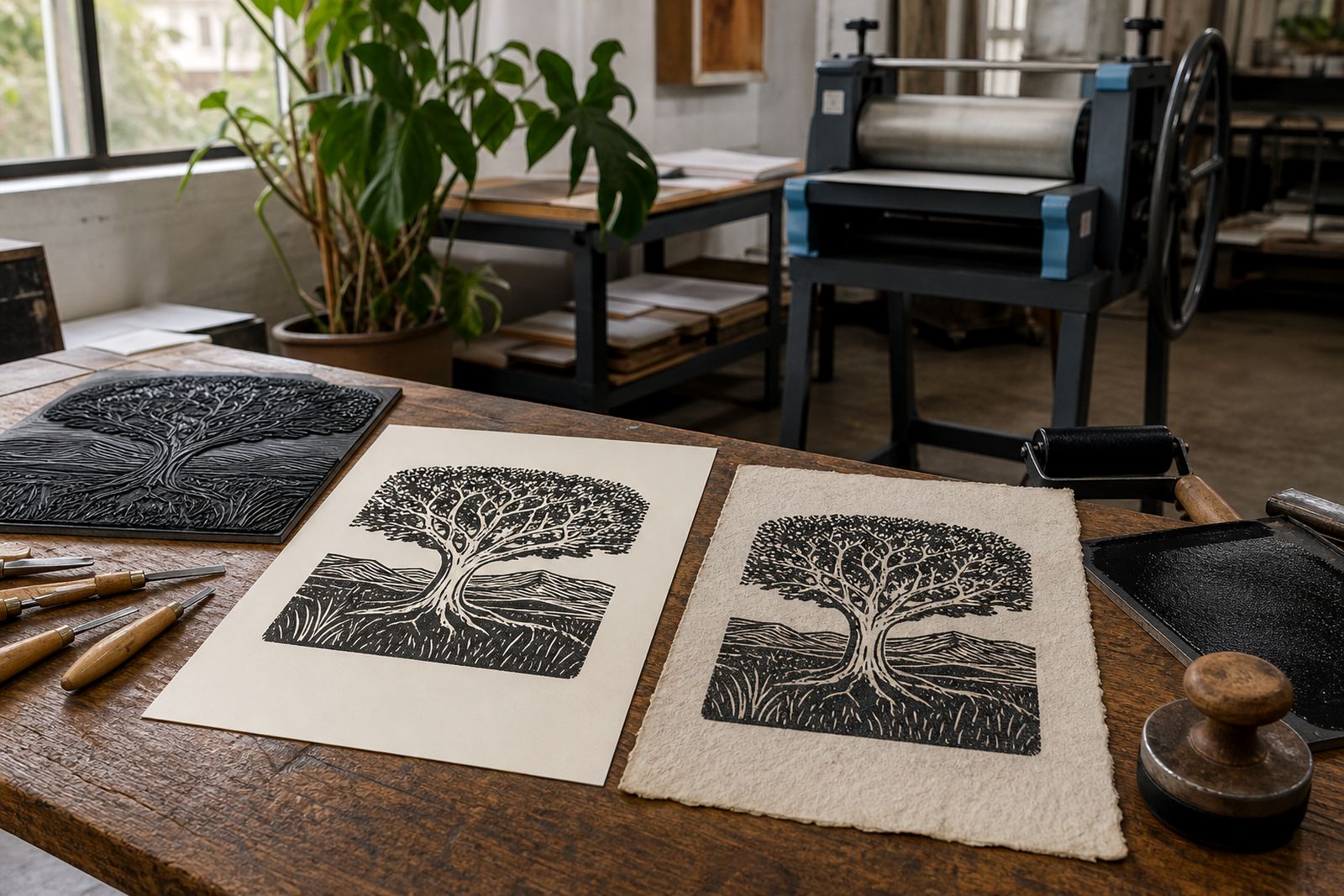
Soft-cut and lino both print well by hand, and each asks for its own pressure. A baren gives a good tactile pull for small runs and teaches students how the image transfers from block to paper. A press brings even pressure across a larger edition and helps when the paper is heavier or the block has broad flat areas.
Paper choice matters too. Smooth papers show crisp line and sharp registration. More textured sheets hold ink in a softer way and can make a hand-printed image feel warmer, especially when the edition has open areas and visible tool marks. In humid coastal weather, paper storage and ink handling need a bit more care so the sheets stay flat and clean.
- Baren printing suits short editions and hands-on learning.
- Press printing suits repeatable pressure and more controlled alignment.
- Paper grain, absorbency and weight change the final look.
Edition work needs a block that behaves the same way twice
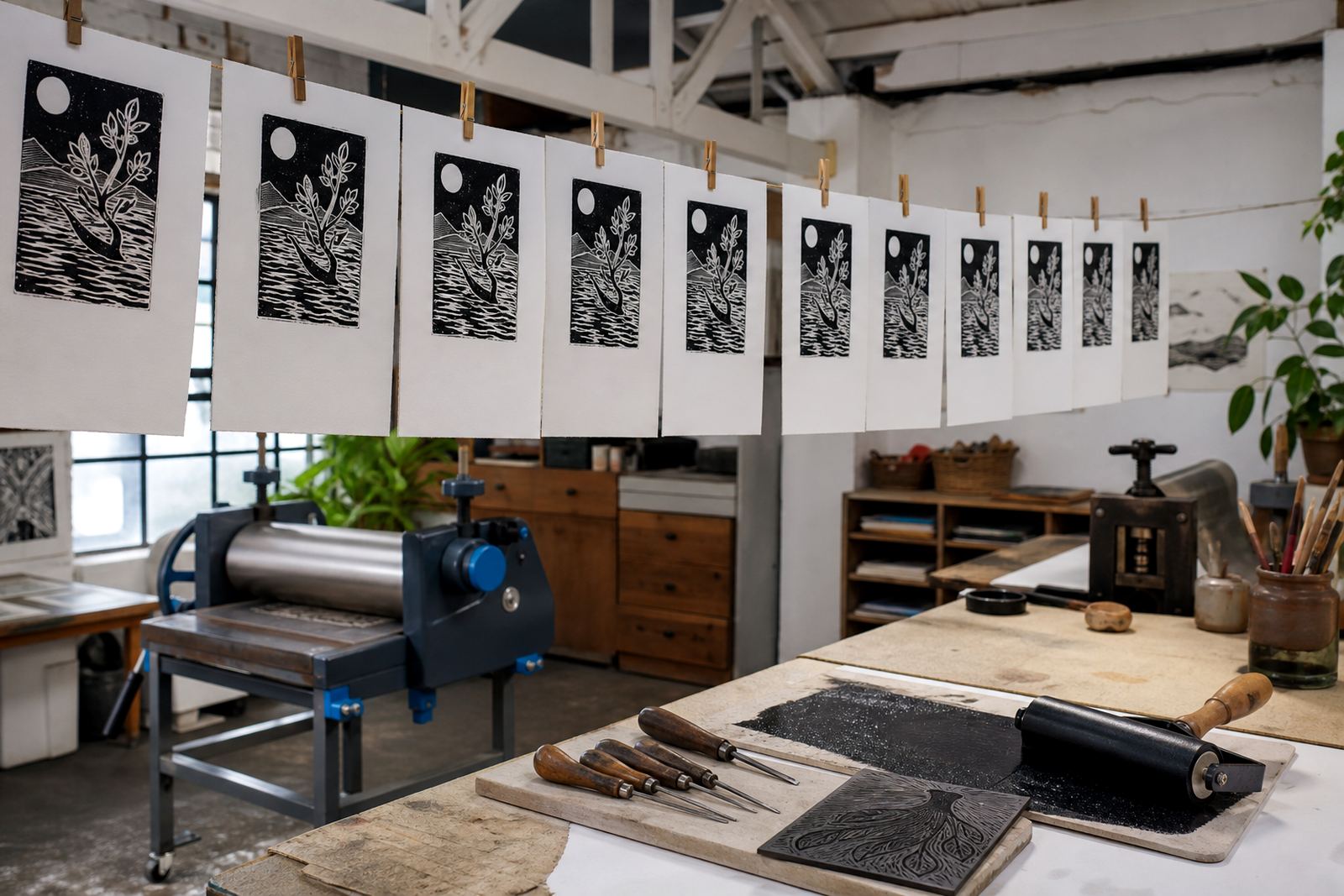
Once an artist starts edition printing, repeatability matters. Lino usually keeps a steadier edge through a longer run, which helps when the edition must match closely from first print to last print. Soft-cut can still support editioning, but the surface may mark more easily, so the block needs gentler handling and a clear plan for what the edition can bear.
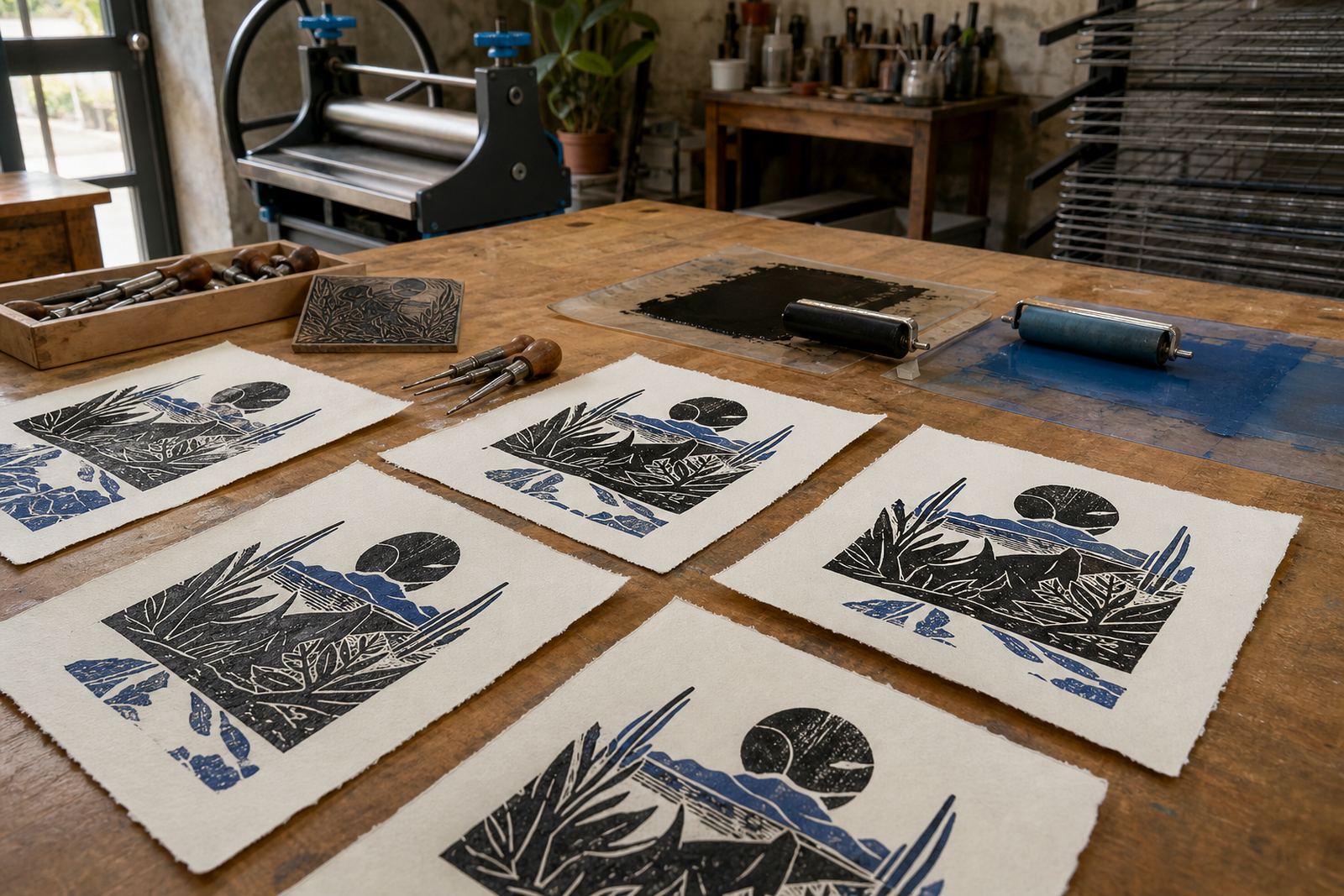
Registration marks, consistent inking and a fixed paper placement system keep the print set aligned. That matters in school workshops in Stellenbosch or a team session in Johannesburg, where people may be learning the process for the first time and need a clear method they can repeat without guesswork.
- Keep the same paper corner marks for every pull.
- Roll ink evenly across the block face.
- Label proofs and final sheets so the edition stays organised.
Which block fits the hands in front of you
For a beginner carving session, soft-cut usually opens the door faster. Children in a family workshop or adults returning to making after a long break often relax once they feel how easily the tool enters the block. For students who want sharper graphic control, lino gives a stronger training ground and a better lesson in patience, line weight and clean negative space.
A local example: in a Woodstock studio session, a small mixed group may start with soft-cut for quick image confidence, then move to lino for a second plate once the carving hand settles. The first block teaches shape and pressure. The second block asks for better planning and gives a more exact printed edge.
That is usually the real decision. Soft-cut rewards immediacy. Lino rewards control. Both can produce work worth framing, but they lead the hand in different ways, and the right choice depends on the image, the group and the finish you want.