What an edition actually is at the press
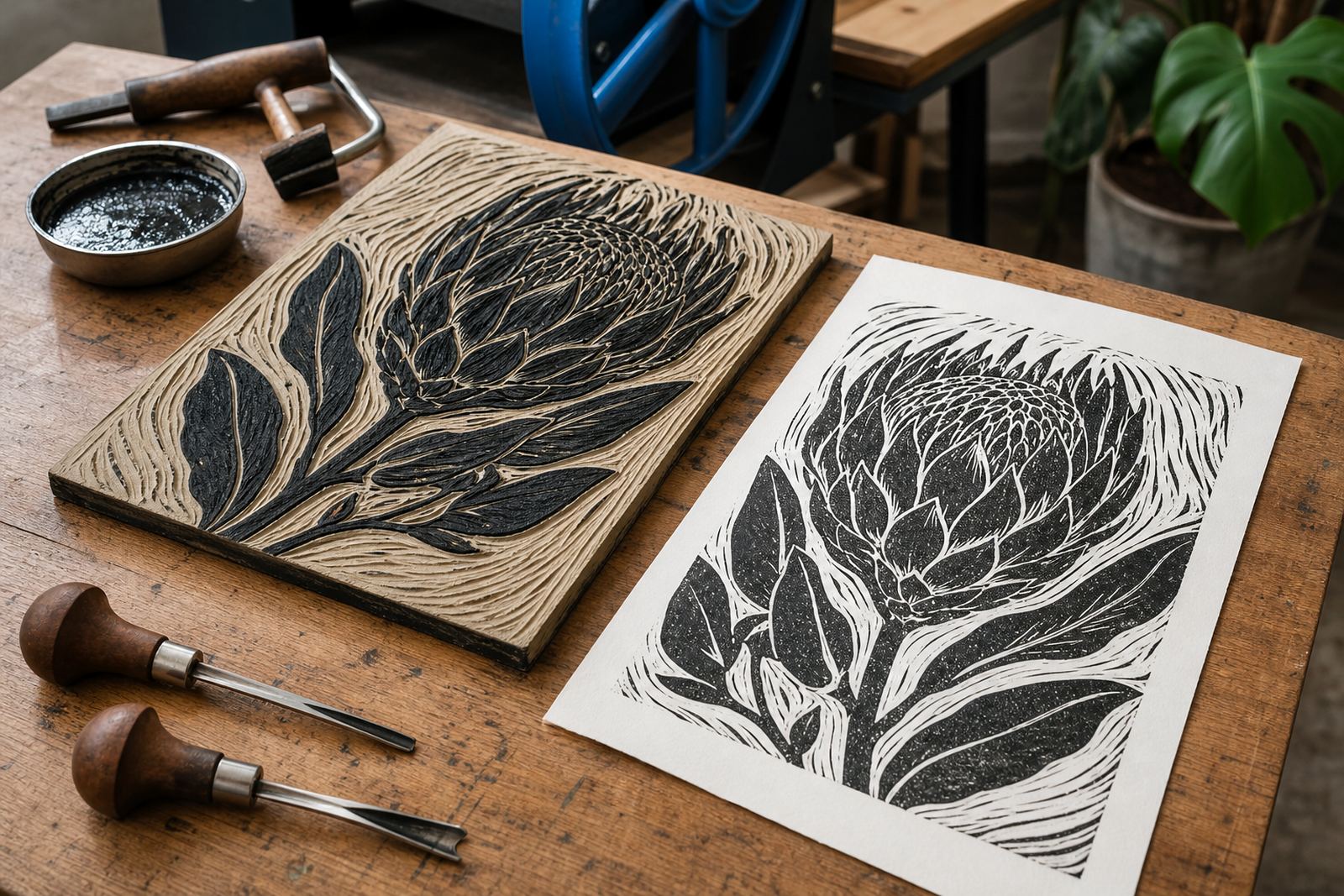
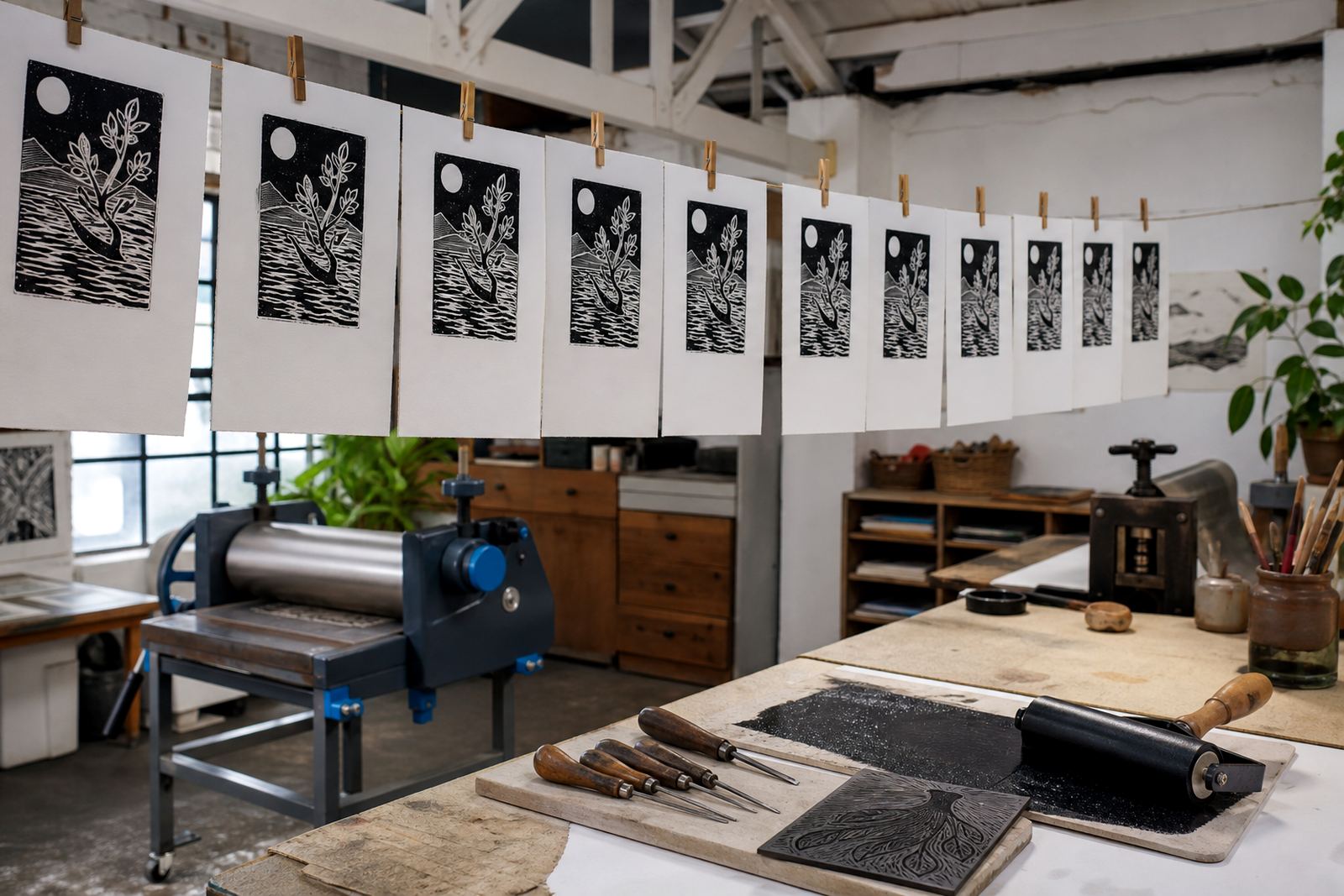
An edition is a planned group of prints pulled from the same carved block or plate. In linocut and soft-cut block printing, that block carries the image, and every sheet in the edition should hold the same lines, shapes and tonal balance as far as hand printing allows.
A short edition repeats the image with control, while each sheet stays a little different. The lines need to stay crisp, the blacks need to stay solid, and the paper needs to sit in the same place every time. That takes a steady block, a careful inking rhythm and a clear system for laying each sheet.
Carving for repeat prints
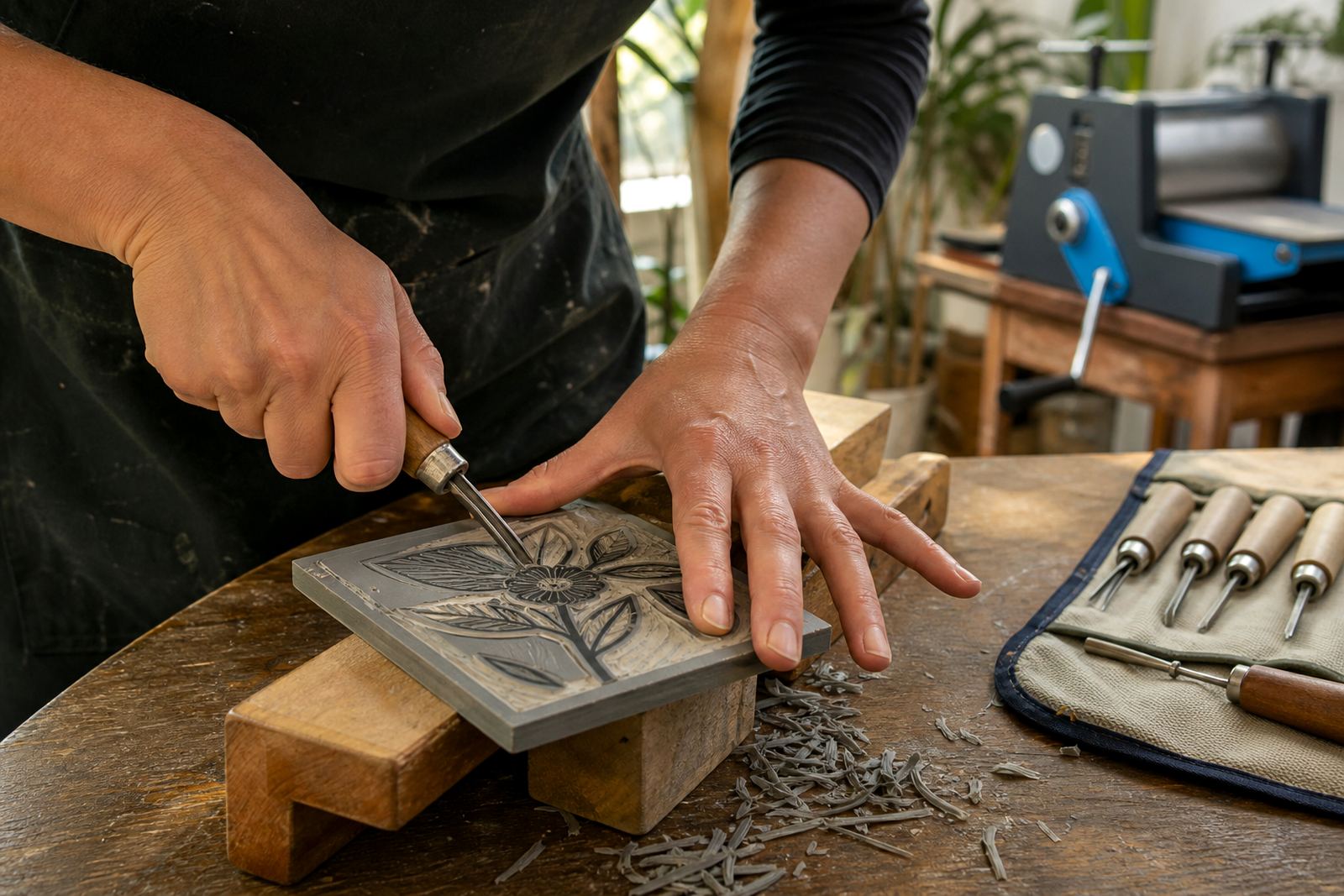
Good edition printing starts before the first sheet goes near the block. A carving that works for one proof can fall apart over a longer run if the raised areas are too fragile or the line work is too shallow. Gouges and V-tools need to cut cleanly, and the surface around the image must stay level enough to carry ink evenly.
- Keep important lines deep enough to print cleanly across the full run.
- Remove stray marks that would appear as unwanted shadows.
- Test the block with a proof before committing to the edition.
- Check that soft-cut material has not compressed in areas that matter.
In a workshop setting, we show people how a block can hold up over several pulls. That matters when the edition is meant for framing, teaching packs or a group project where every print must sit comfortably beside the others.
Ink handling changes everything on the sheet
Edition consistency depends on the ink film as much as the carving. Water-based inks behave differently from oil-based block inks, but both need even rolling on the brayer. Too much ink and the image fills in. Too little and the print looks dry or patchy.
Pressure changes, even a little, can alter the print. The trick is to keep the brayer passes even, roll in several directions and stop before the block looks overloaded. For a short edition, that control matters from the first sheet to the last one. A tired inking hand shows up fast.
- Roll the ink until it feels smooth.
- Cover the raised areas without flooding the cuts.
- Watch the edges of the block, where build-up can hide.
- Keep a scrap sheet nearby for checking pressure.
Registration holds the edition together
When the image includes more than one colour, registration becomes the main discipline. Each layer has to land in the same place, or the print starts to drift. Even a small shift can blur a line, leave a halo at the edge of a shape or throw off the balance of the whole piece.
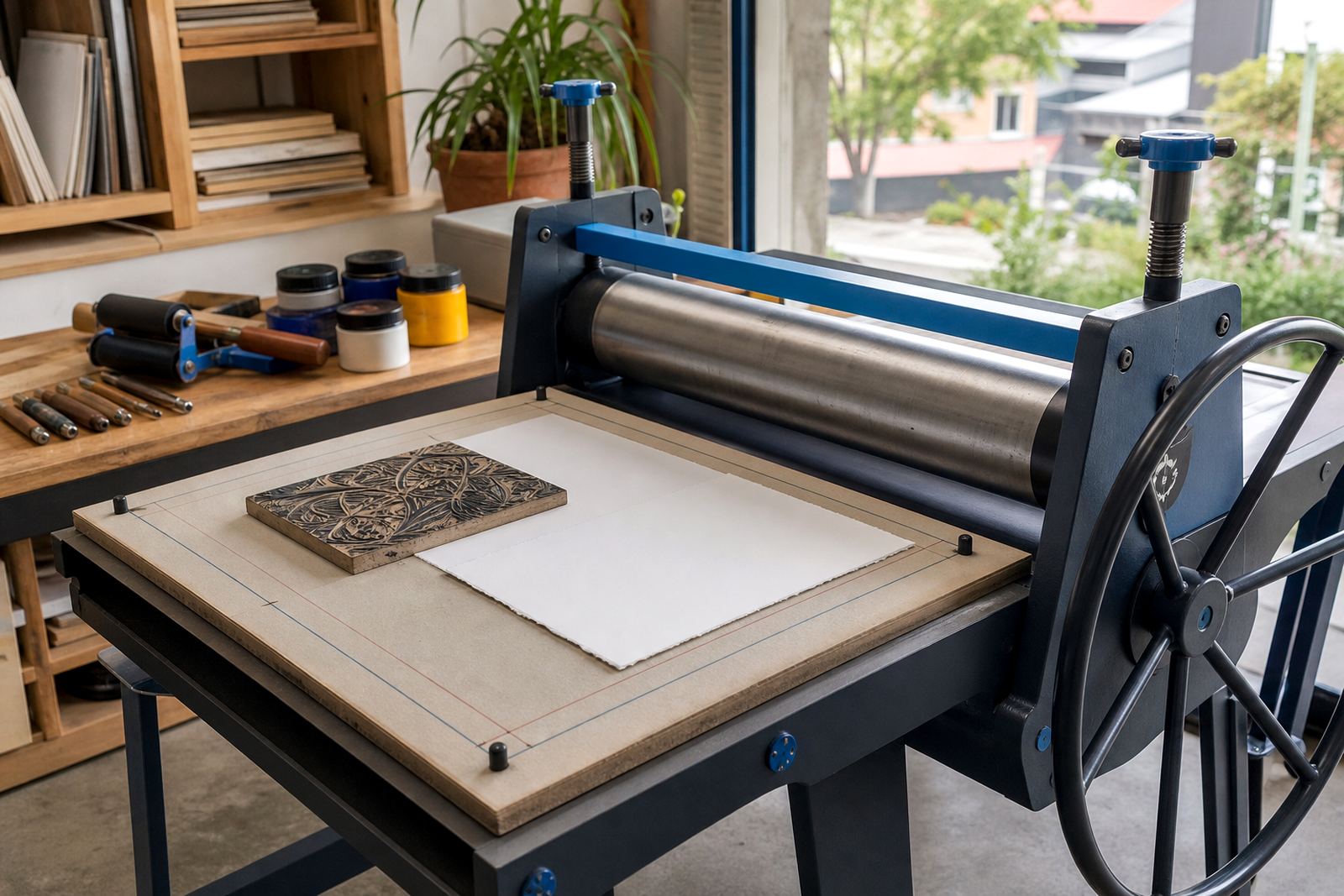
We use simple registration methods that suit studio printing and workshop tables. A fixed corner, a taped guide or a marked bed can keep the paper square. The paper itself matters too. Heavier sheets may sit more steadily under a baren or press, while lighter papers can move more easily if they are not handled with care.
In Cape Town, with the coastal humidity that changes how paper behaves, a sheet may feel different from one day to the next. That is one reason printmakers keep their paper stack tidy and their registration marks clear. A stable setup saves time and reduces waste.
Proofs, variations and the judgement call
A short edition usually begins with proofs. These early pulls show whether the block is holding detail, whether the ink is sitting correctly and whether the paper is taking the impression in a clean way. Some artists stop after a few proof adjustments, while others refine the block before they print the full run.
Not every print in an edition will be identical, and that is part of the craft. A slightly heavier burnish from a baren, a lighter press impression or a small fibre mark in the paper can give each print its own life. Small differences between sheets are fine as long as they come from the hand and not from carelessness.
- Check the first proof under good light.
- Compare later sheets against the approved proof.
- Set aside any print that falls outside the intended range.
- Label the edition clearly so the run stays organised.
How we handle a workshop edition in Woodstock
In our Woodstock studio, edition printing often becomes the moment when students and family groups see the whole process settle into place. A first block may be rough and full of energy, but once the registration is set and the inking rhythm settles, the edition starts to look deliberate. That is where the learning deepens.
For a local example, a group from Stellenbosch might arrive with separate carved blocks but a shared theme. One printmaker focuses on a tree line, another on figures or pattern, and each person pulls a short edition of their own image. The work changes as it travels from carving station to press table, and people quickly see how paper choice, pressure and drying space all shape the final set.
By the end, the edition records each careful decision, one print at a time, with enough variation to show the hand and enough control to hold the set together.