What the press does to a carved block
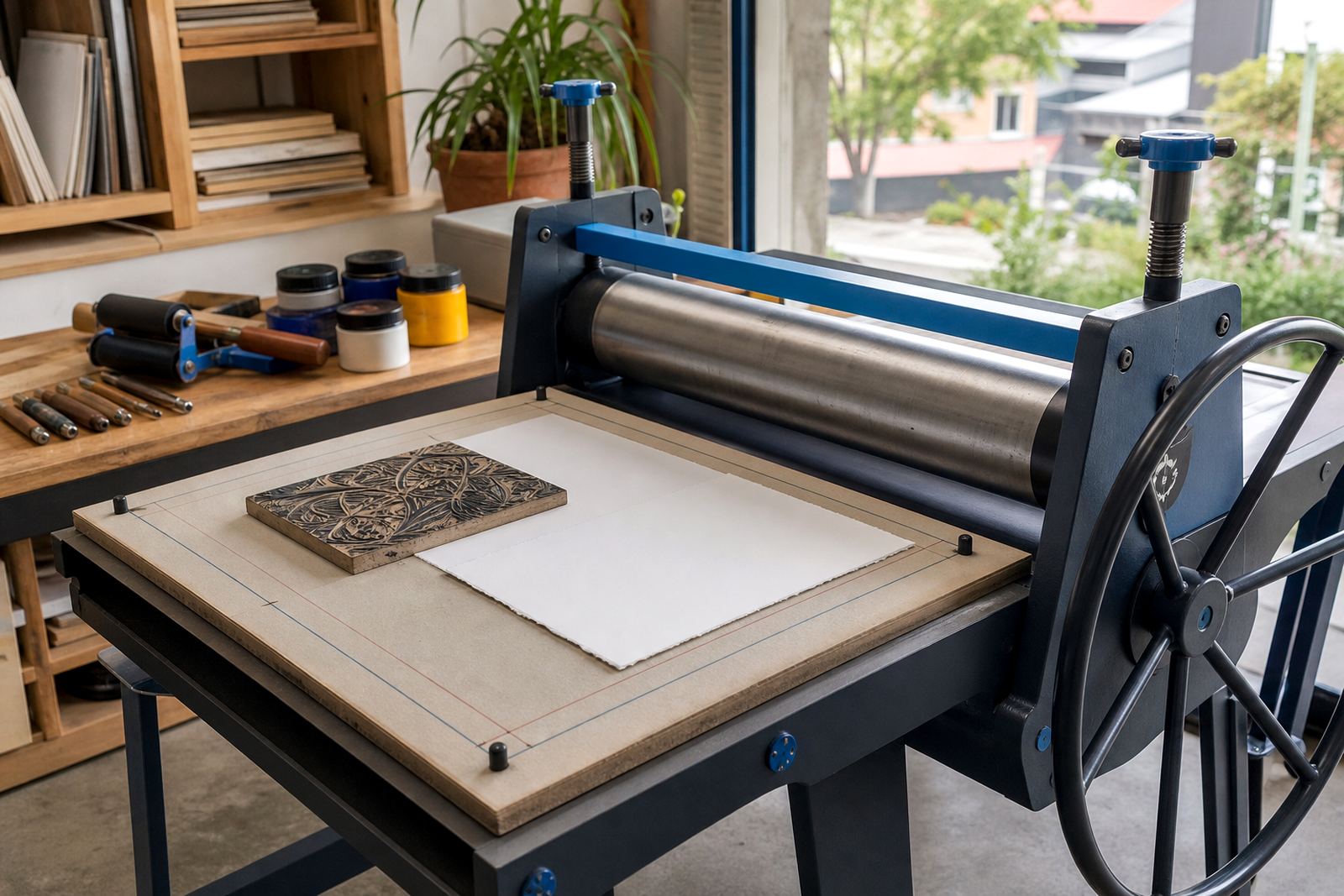
A relief press pushes paper into the inked surface with steady pressure. That changes the print from a hand rubbed impression into something cleaner at the edges, with more even ink transfer across fine lines and solid shapes.
In a lino or soft-cut block, the carved areas stay white and the raised areas carry the ink. A press helps those raised areas meet the sheet evenly, so the print can hold detail in a way that is harder to manage by hand alone. It is especially useful when the block has open fields, tight lettering, or a mix of thin gouge marks and broader cut spaces.
- Even pressure helps a full image print more consistently.
- Sharp carved marks show better when the paper meets the block cleanly.
- Large sheets are easier to print when pressure stays steady across the surface.
Press printing versus hand burnishing
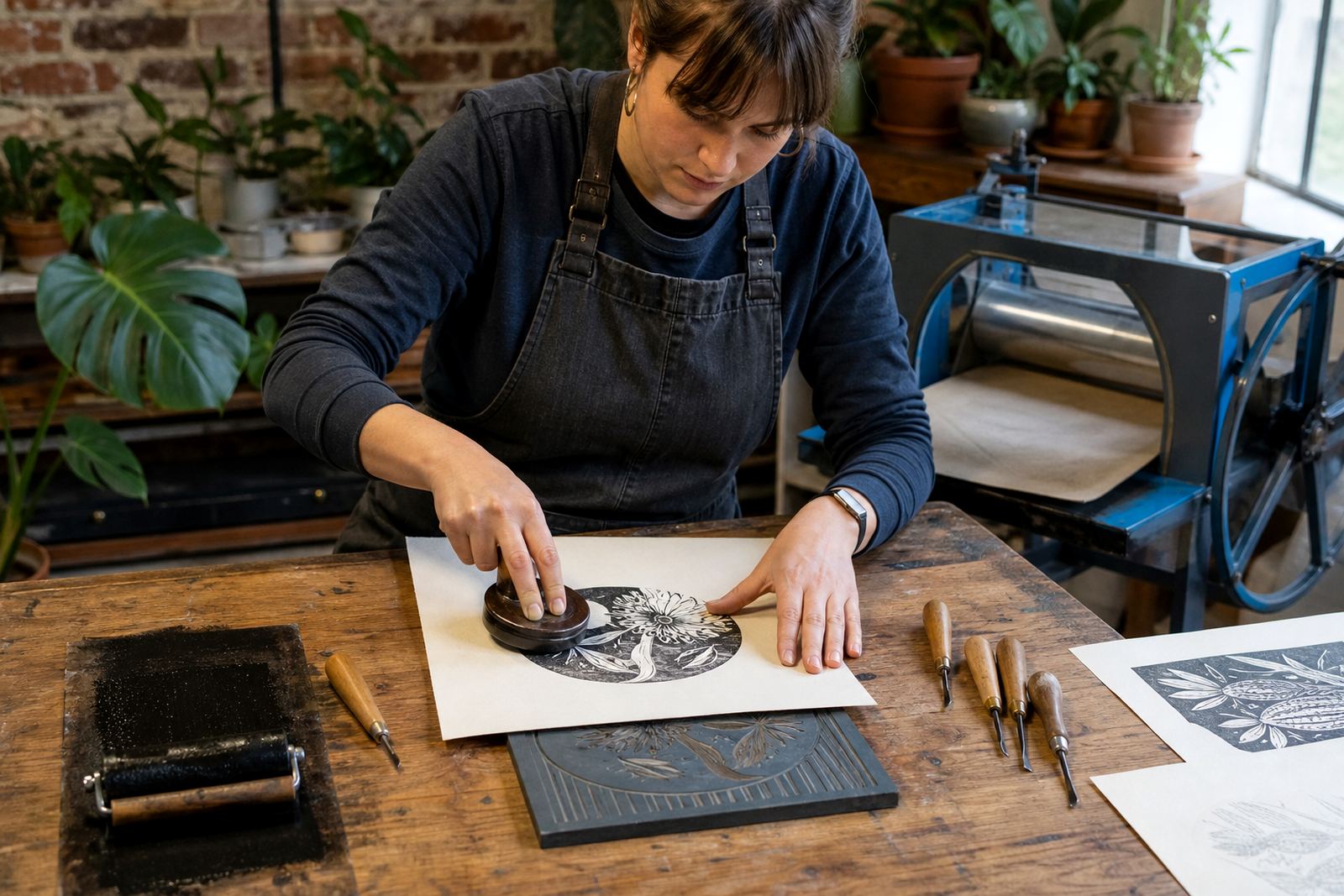
Hand burnishing uses a baren, spoon or similar tool to rub the back of the paper. It works well for small blocks, light papers and quick proofs. Press printing changes the rhythm, because the machine carries the pressure instead of the wrist and shoulder doing all the work.
That difference matters once an edition grows. A hand-rubbed print can shift from sheet to sheet if the pressure changes. A press gives a more repeatable result, which is useful when students are learning registration or when a group wants several good pulls from the same block. The image still carries the hand-made character, just with a firmer finish.
- Burnishing suits short sessions and small image sizes.
- Press printing suits editions, layered colour and larger paper.
- The block still needs careful inking before it goes through the press.
Ink, paper and pressure all work together
Water-based block inks and oil-based block inks behave differently under a press. Water-based ink can dry faster on the block, so timing matters. Oil-based ink tends to stay open longer and can give a richer surface on heavier papers. The press reveals what is already on the block.
Paper choice matters just as much. Softer printmaking paper will take the impression more readily, while firmer papers may need stronger pressure or a second pass. Too much pressure can bruise the paper or flatten the detail. Too little leaves pale patches in the solids. The sweet spot sits between those two, and it changes with each paper and each block.
- Heavier papers often suit deeper relief pressure.
- Light papers can show detail but need gentle handling.
- Ink thickness should sit evenly on the raised surface before printing.
Registration keeps colour layers lined up
Once a print adds a second colour, registration becomes the part that decides whether the image feels tidy or restless. A press helps, but only if the block, paper and guides are lined up well. Even a small drift can show as a halo around the second colour or a line that misses the first shape.
In a workshop setting, students learn to mark the paper, tape the guides, and test the first pull before running an edition. It may seem simple, but it cuts down on paper waste. A local example is a school class in Cape Town printing two-colour sea birds. The first layer carried the body shape, then the second layer added the wing and beak. The press made the repeat pulls cleaner, and the registration marks kept them aligned.
- Mark the sheet edges before the first print run.
- Check the block position after every colour change.
- Keep the paper stack in one place so sheets stay matched.
What changes in a workshop when the press is in play
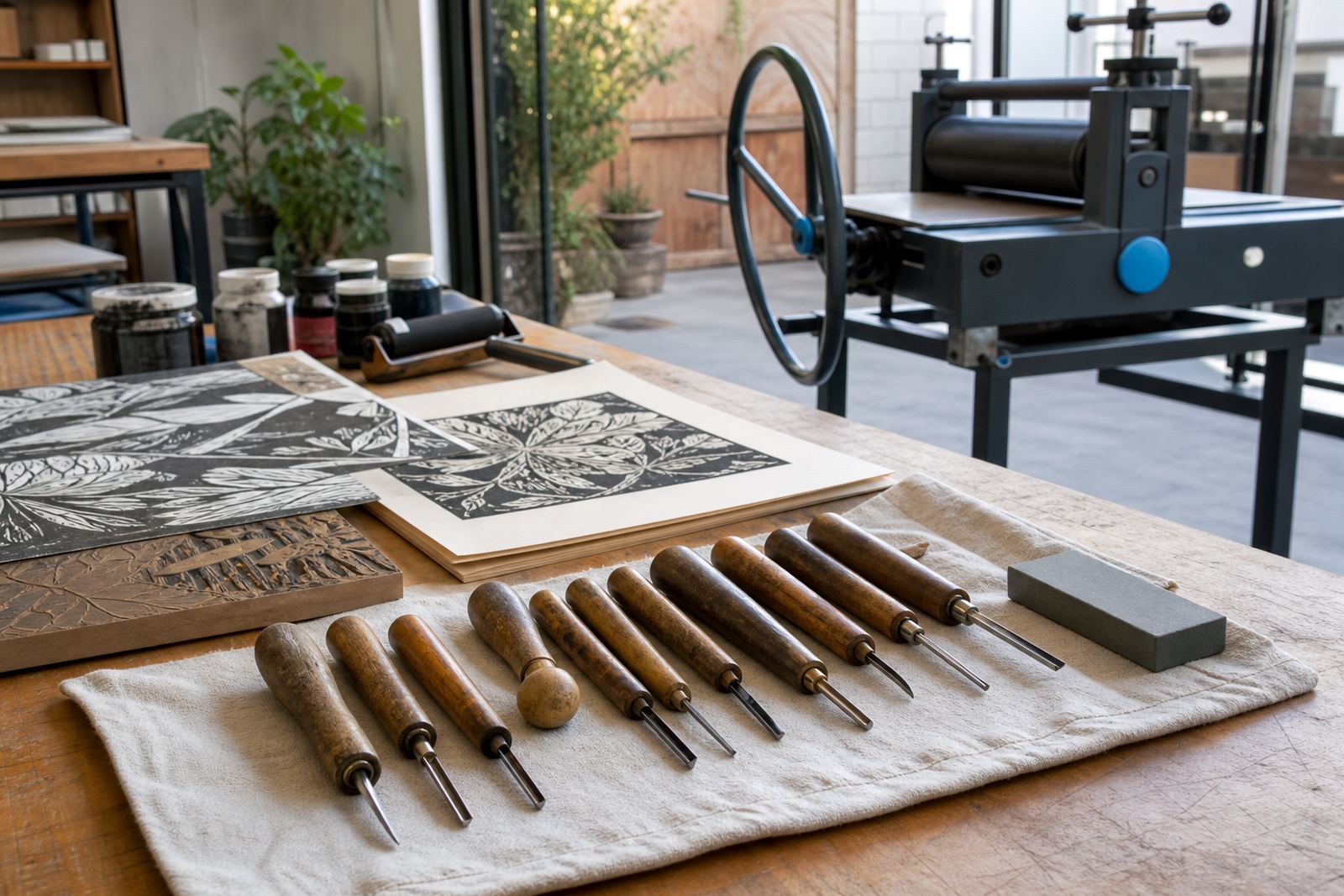
In a studio session, the press shifts the pace of the class. People spend longer on block prep, inking and paper placement, then less effort on the actual impression. That gives more room for discussing gouges, V-tools, safe carving, the height of a line, and what the paper is doing under pressure.
For adults, the press often opens the door to more ambitious editions. For students, it helps them see how a small cut can become a clear printed mark. Families often notice the same thing in a simpler way, because the press makes the image appear with a crispness that feels a bit different from rubbing by hand. The result still carries the maker's touch, but the machine changes the finish.
- Carving can be lighter when the press does more of the transfer.
- Proofs become easier to compare sheet by sheet.
- Edition printing becomes practical for longer workshop runs.
Press work in our Woodstock studio
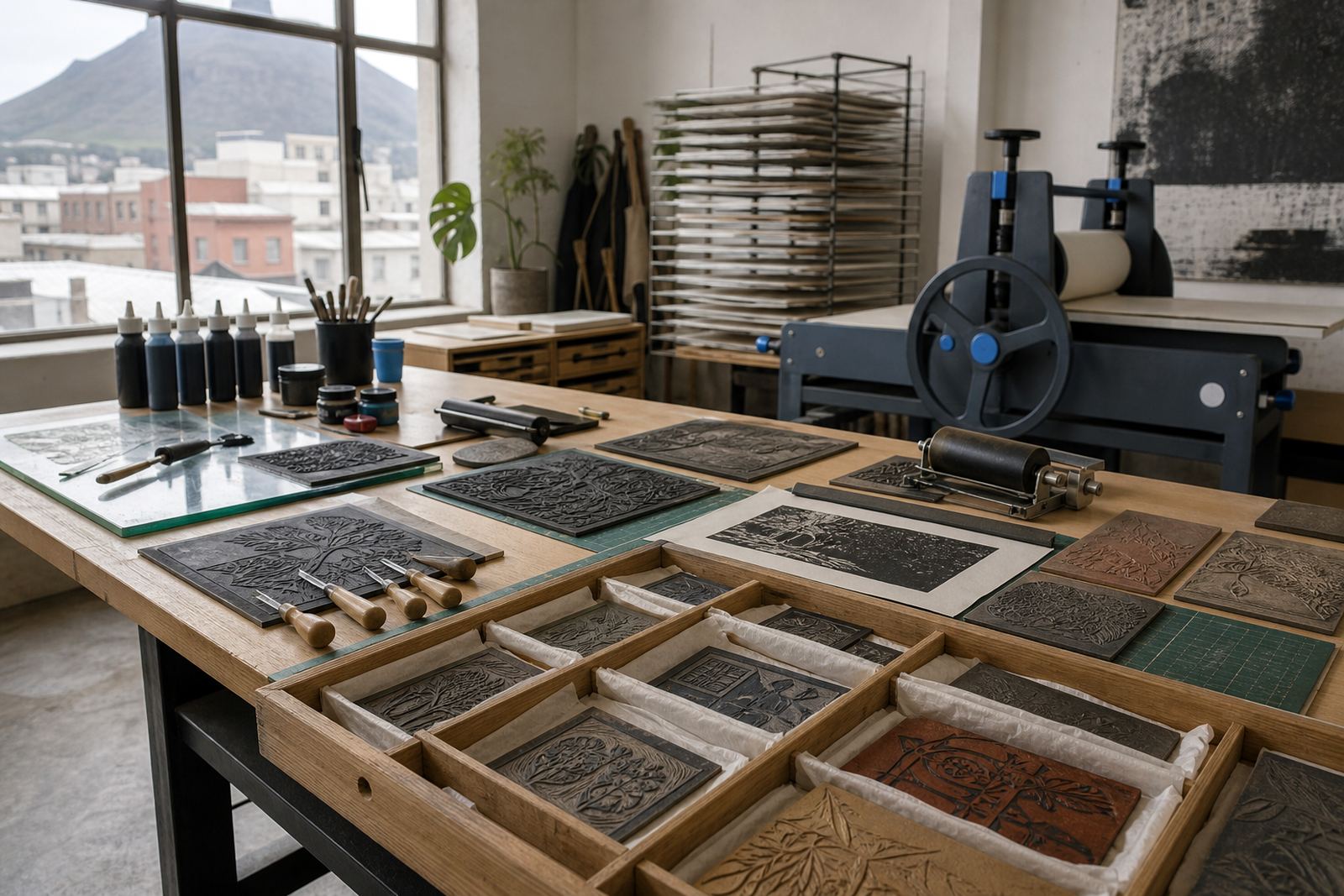
In Woodstock, where paper stores, studios and school groups often move through tight schedules, press printing gives a useful middle ground between quick demonstrations and more serious edition work. A class can start with a simple soft-cut block, test one colour by hand, then shift to press printing for the final sheets. That sequence helps people feel the difference without turning the session into a machine lesson.
When a group travels in from Stellenbosch, Durban or Pretoria for a workshop day, the same press principles still apply. The block has to be cleaned, the ink has to sit evenly, and the paper has to meet the surface in the right place. The printmaker still sets the result. It simply gives the printmaker a steadier way to finish the job.