Wipe the block dust off before it settles in
After a carving session, clear the lino dust, soft-cut crumbs and ink film from blade and handle before any sharpening. A soft dry cloth does most of the work, then a little warm water with mild soap if the tool has picked up water-based ink. Oil-based ink needs a proper wipe with a suitable cleaner, but the metal should not be left soaking. That habit matters in Woodstock where studio air can pick up damp on cooler days and leave tools feeling tacky by morning.
Keep the wipe-down part of the closing routine. If a gouge is packed away with residue on the edge, the next carve starts rough and the hand pushes harder than it should. That extra pressure is what turns a neat cut into a slip.
- Wipe the blade, ferrule and handle after use.
- Dry every part before storage.
- Remove ink from grooves and corners with a soft brush.
- Do not leave tools in a sink or in standing water.
Store cutters so the edge is not knocking against anything
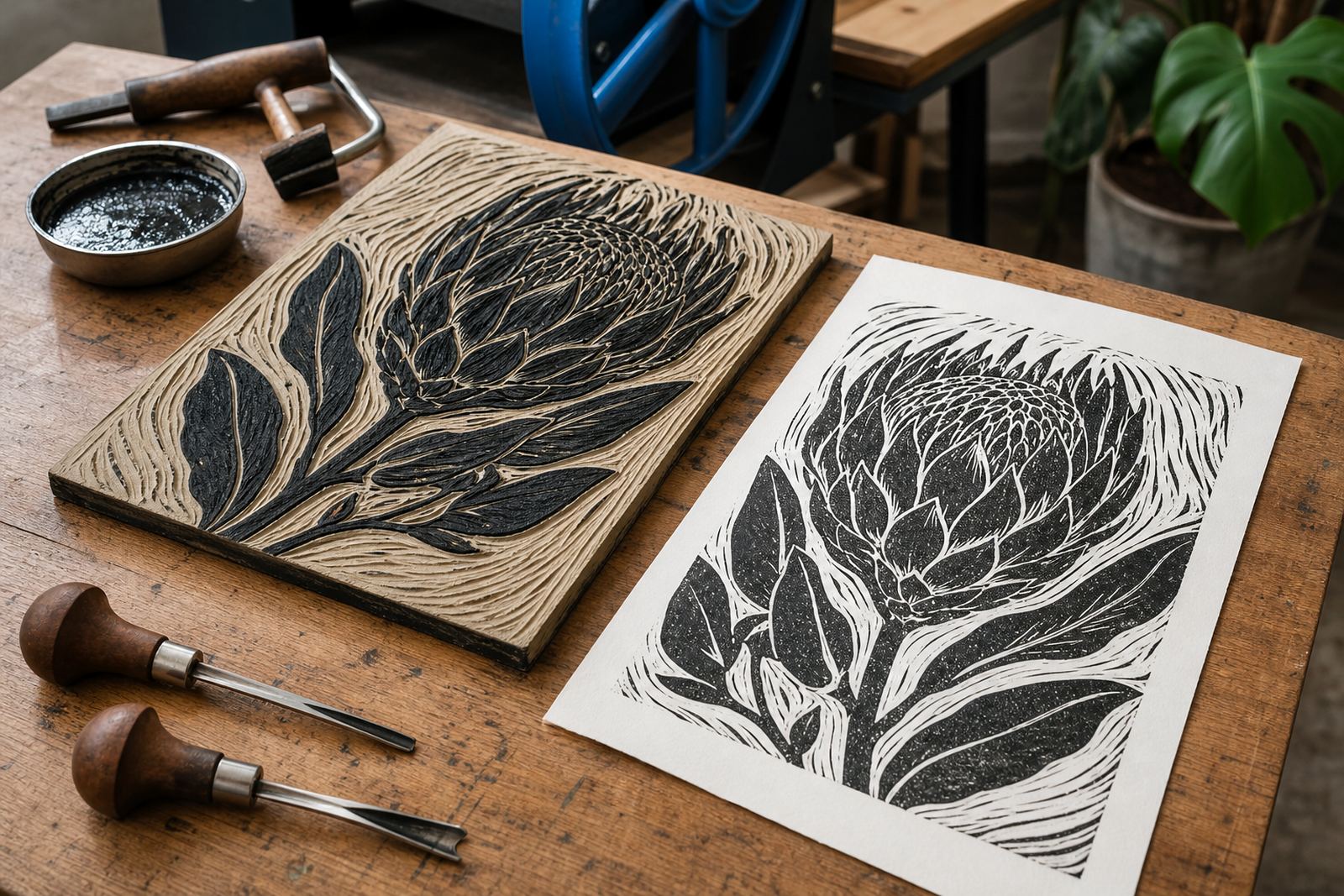
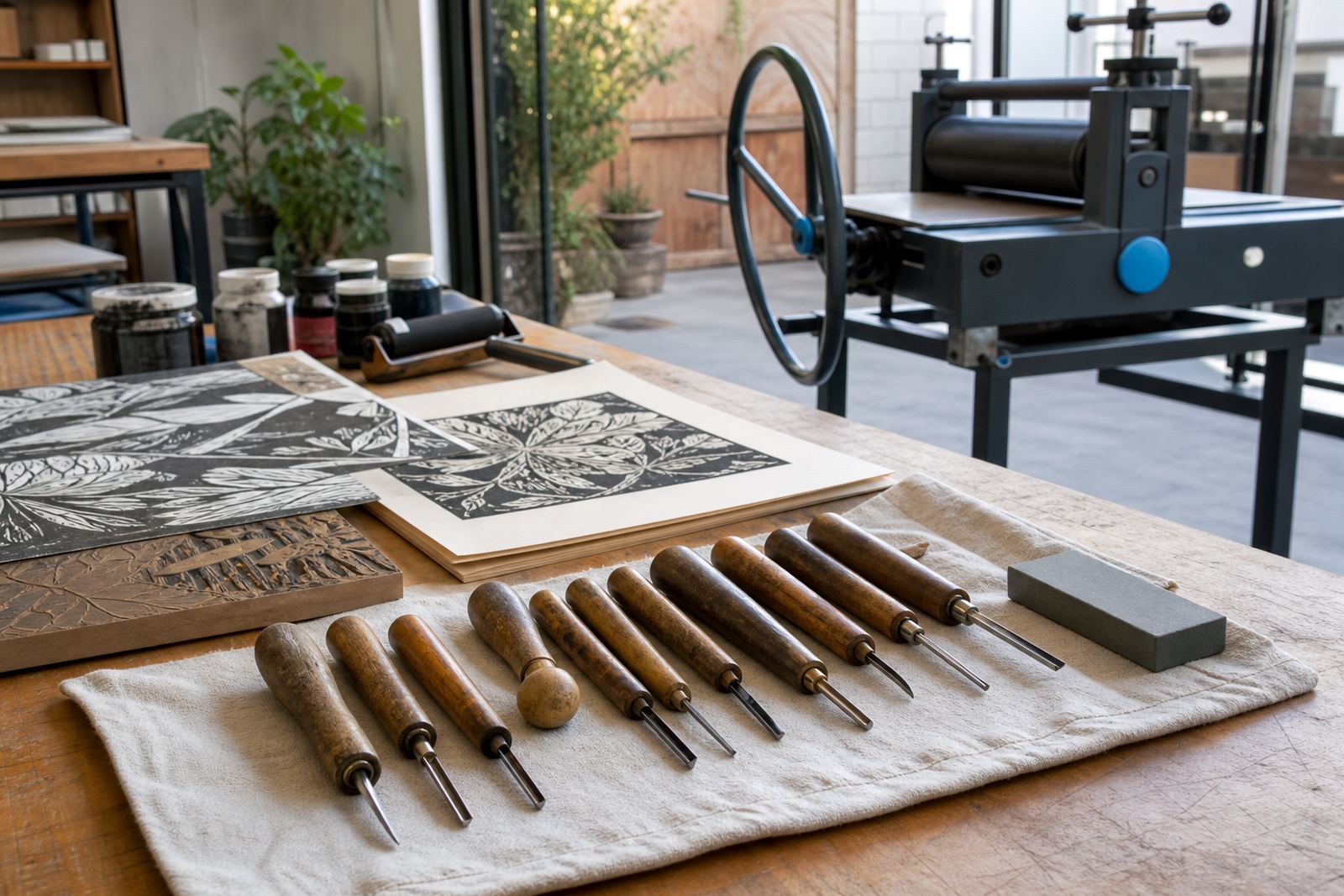
Good storage is about keeping edges apart. Loose cutters in a drawer rub against each other, and the fine edge on a V-tool can pick up tiny chips before you notice. A roll-up case, a lined tray or a simple slot board keeps each blade in its own place. The handle should be easy to grab, but the cutting end must stay covered or separated.
At a school pop-up in Cape Town or a family print session in Somerset West, tools often move between tables, so a labelled set helps the team check what is missing. Clean, dry tools are simply part of working safely in the workshop. When a gouge lands tip-first on a hard floor, the damage is usually small but the edge is never quite the same.
- Keep each cutter in its own pocket or slot.
- Cover exposed blades when the set is being moved.
- Do not drop metal tools loosely into a shared tin.
- Separate student tools from sharper studio sets.
Read the blade before you force it back into the lino
A tool needs regular checking. If the cut starts to chatter, or the gouge leaves fuzzy edges instead of a clean ribbon, the edge may be dull or nicked. Beginners often lean harder when the line misbehaves. That is the moment to stop and inspect the blade.
For lino and soft-cut blocks, a clean edge is what gives the print a crisp line and a steady relief surface. A nicked blade can drag the block surface too, which means more sanding, more repair and less control at the inking stage. In a busy Johannesburg workshop this kind of check saves time later, especially when the same tools are shared across a group.
- Look for nicks along the cutting edge.
- Check whether the tool feels like it skates instead of slices.
- Test on scrap block before starting the main design.
- Retire damaged tools from group use if the edge has gone uneven.
Keep the pressure steady when carving by hand
Clean tools last longer when the hand works with them. A gouge should move with controlled pressure and a stable wrist, especially on the first pass into a fresh block. If the block is too hard for the tool being used, the edge meets too much resistance and wears faster. Soft-cut stock takes less effort, while traditional lino usually asks for firmer guidance and a clearer angle.
Safety is part of care here. A safer grip keeps the blade moving away from the body, with the non-cutting hand placed well clear of the path. When students learn this in Pretoria or Durban, the same rule keeps showing up: a calm setup produces better marks and fewer mistakes. The workshop team can spot when a carving stroke is too steep, or when a cutter is being twisted to force a turn that should have been made in stages.
Use the right tool for the line. A narrow V-tool handles fine detail, while broader U-gouges clear larger areas more comfortably. If the tool choice is wrong, the edge works harder than it needs to and the cut looks ragged.
Ink, press and brayer care all feed back into the tools
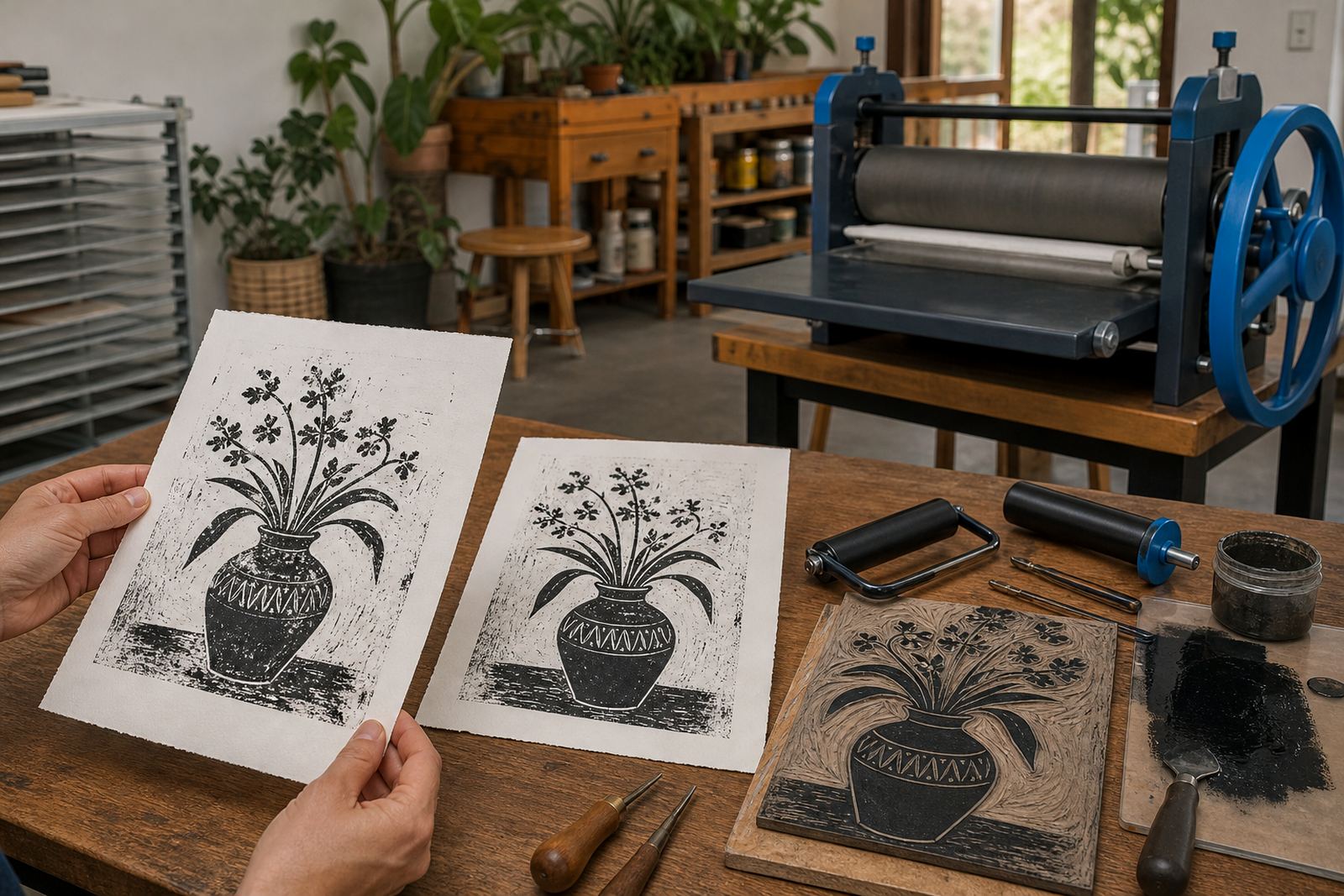
Tool care also covers brayers and the inking slab. A brayer loaded with gritty dried ink can drag dirt across the block and pick it up on the cutter during cleanup. Water-based inks rinse more easily, while oil-based inks need slower, more careful cleaning so residue does not sit on the blade overnight. A press bed, baren or inking slab should also stay tidy, because stray bits of dried pigment end up where hands and edges meet.
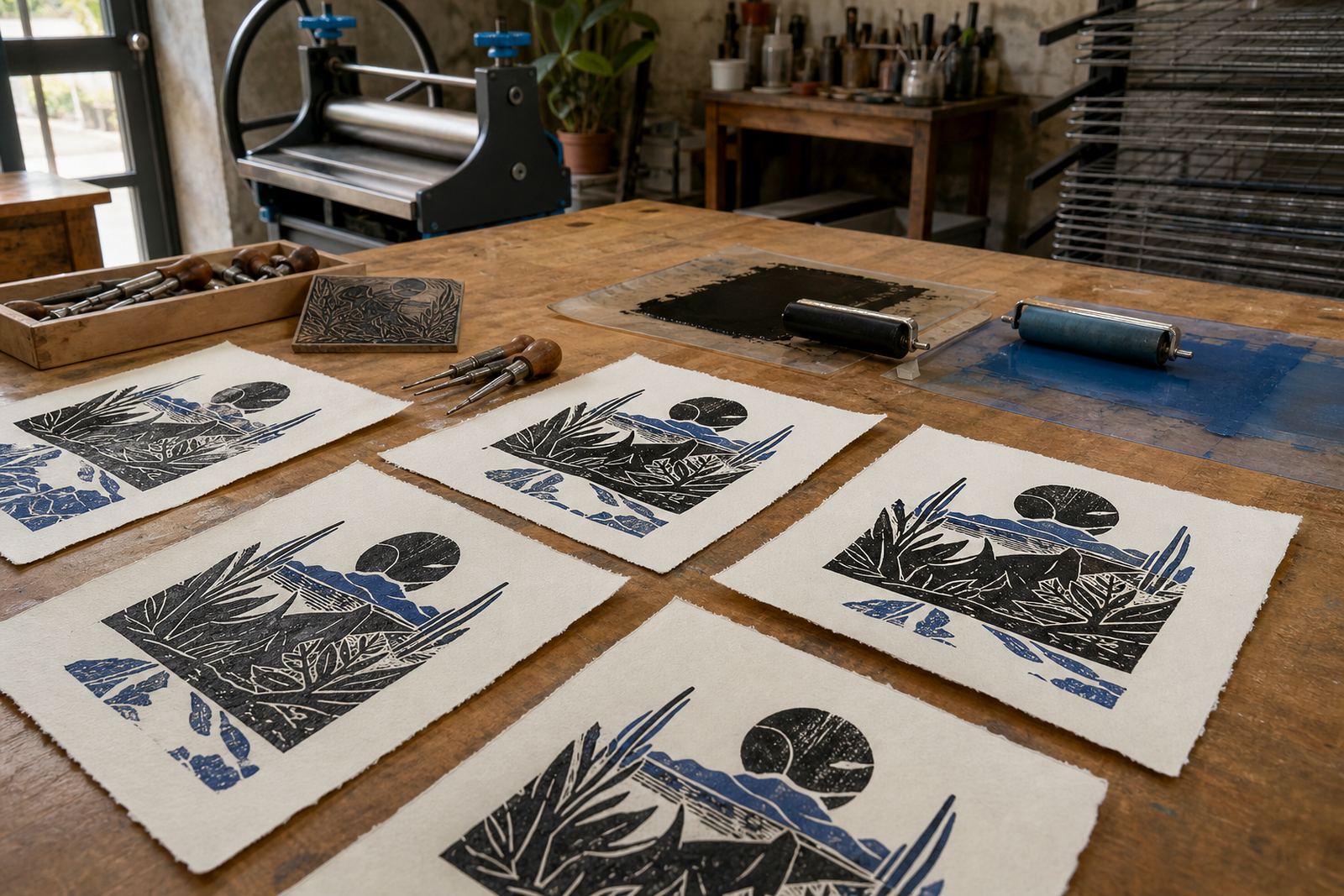
Registration marks and edition stacks deserve a mention too. If the block surface is scraped with a damaged tool, the print will show it in every pull. Even a neat edition on good paper can look tired if the carved lines have rough shoulders. A clean tool gives a cleaner print, and the printer notices that straight away.
- Clean the brayer before ink hardens on the roller.
- Wipe the block before the cutter is put away.
- Keep barens and press blankets free of loose debris.
- Check registration marks without leaning the blade onto the paper.
A Woodstock habit that saves a whole set
In a coastal studio like Woodstock, humidity can settle into handles, paper stacks and storage drawers if the room is left closed up after a workshop. A simple end-of-day routine helps: tools are wiped, dried, counted and put away in the same order every time. That habit is boring in the best possible way. It keeps the edges cleaner, the handles drier and the next session easier to start.
For a mixed group session, the studio might have beginner cutters, teaching gouges and a few sharper tools for demonstration. When each one is checked in the same sequence, it is clear what needs attention and what can go straight back into use. That is how a small studio keeps moving without losing track of the sharp ends.
Printmaking tools reward steady care. A blade that is cleaned, dried and stored well stays more predictable in the hand, and a predictable tool is safer for the person using it.