
Paper curls with moisture, pressure and storage
Paper moves with moisture, pressure and the way it was stored. A stack left near a damp wall in Woodstock will behave differently from sheets kept under a board in a dry room, and even good print paper can take on a memory from the roll, the pack or the press blanket. In linocut and block printing, that curl matters because the sheet needs to sit square on the block, then stay steady while you lower it, rub it with a baren, or run it through a press.
Most curling shows up at the corners first. Some sheets bow across the middle, some twist slightly, and some lift only after ink has touched them. The trick is to notice the shape before you start, then settle the paper in a way that suits the paper weight and the session ahead.
Before printing, let the sheet relax rather than forcing it flat
If the paper has a light curl, leave it under a clean board or between two sheets of blotting paper for a while. A modest weight is usually enough. Heavy objects can bruise softer papers, so use flat boards, a clean stack of books, or a portfolio board instead of anything with a sharp edge.
- Store loose sheets flat.
- Keep paper away from damp floors and open windows that pull in sea air.
- Place a sheet of clean paper above and below the print paper when stacking.
- Trim only after the paper has settled, not before it has had time to relax.
For a school pop-up in Stellenbosch, we often see students working with paper that has travelled in tubes or sat in a bag for days. Unrolling it gently and weighting it overnight can make the first proof much easier to register.
Tiny amounts of moisture can help, but overdoing it causes trouble
Some printmakers use a light humidity method for stubborn sheets. That can mean placing the paper in a clean closed container with a barely damp cloth nearby, or between blotters that hold a small amount of moisture without touching the surface directly. The aim is to ease the fibres with light damp. Too much water makes the sheet cockle, swell at the edges and lose crisp contact with the block.
Water-based inks and oil-based block inks both behave better on paper that is calm and evenly conditioned. If the top edge curls more than the rest, focus on that side only. A quick mist is rarely the answer for a full stack, and it is safer to work slowly than to rescue a soggy edition later.
- Use clean blotting paper.
- Test one sheet first before treating an entire batch.
- Keep treated sheets separate from dry stock.
- Never place damp paper directly on a carved block.
During the print, registration is the real test
Curled paper becomes a registration problem once the block, the guides and the sheet no longer agree. A sheet that lifts on one side can shift by a few millimetres, and that is enough to throw off a two-colour print. For edition work, the edges should sit in the same place each time, especially when a second block follows the first.
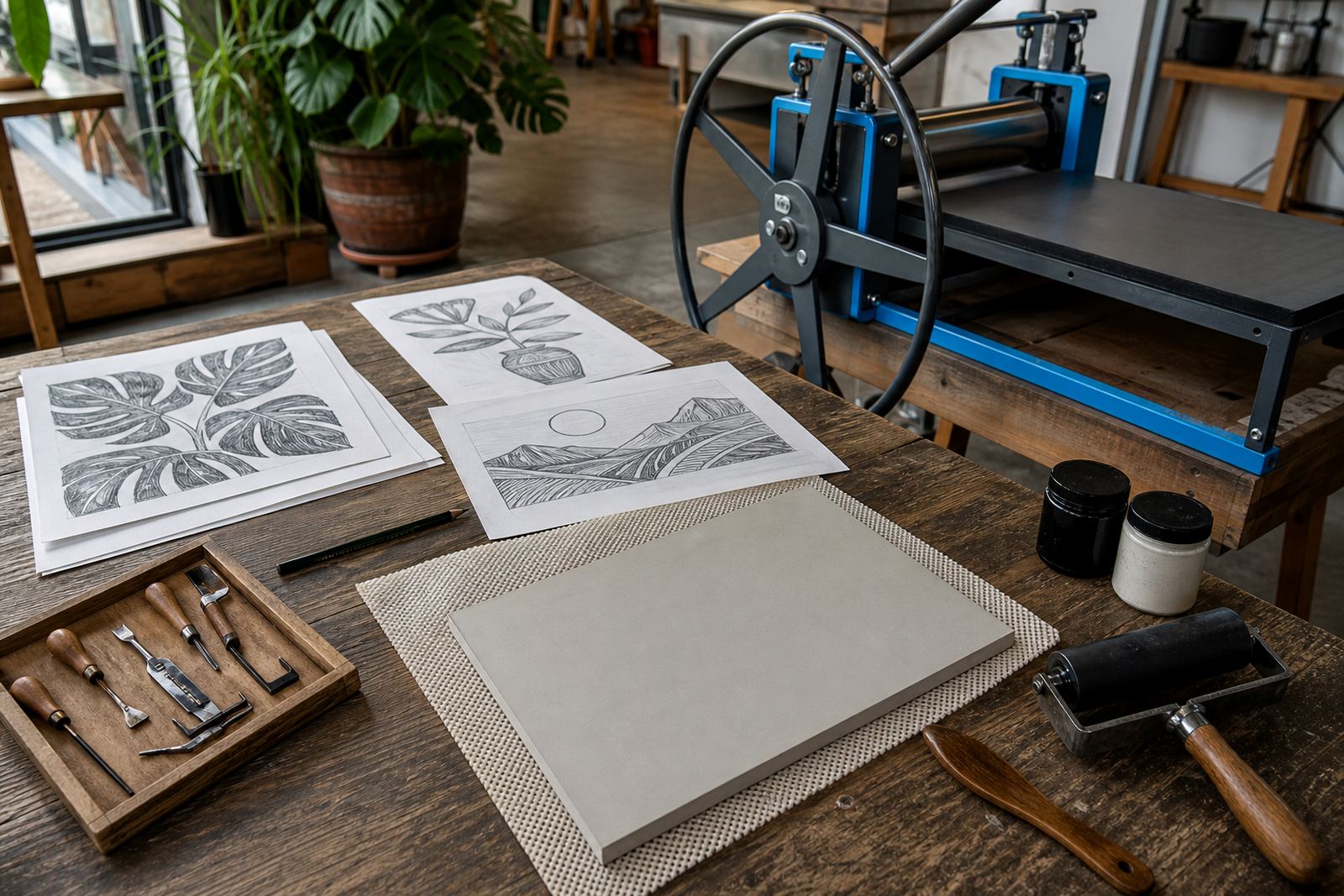
Press printing can flatten the sheet as it passes through, but the paper still needs to be aligned before it enters. With hand burnishing, hold the page down from the centre and work outward in steady circles with the baren. That helps the sheet settle into the cut areas without chasing the curl from one corner to another.
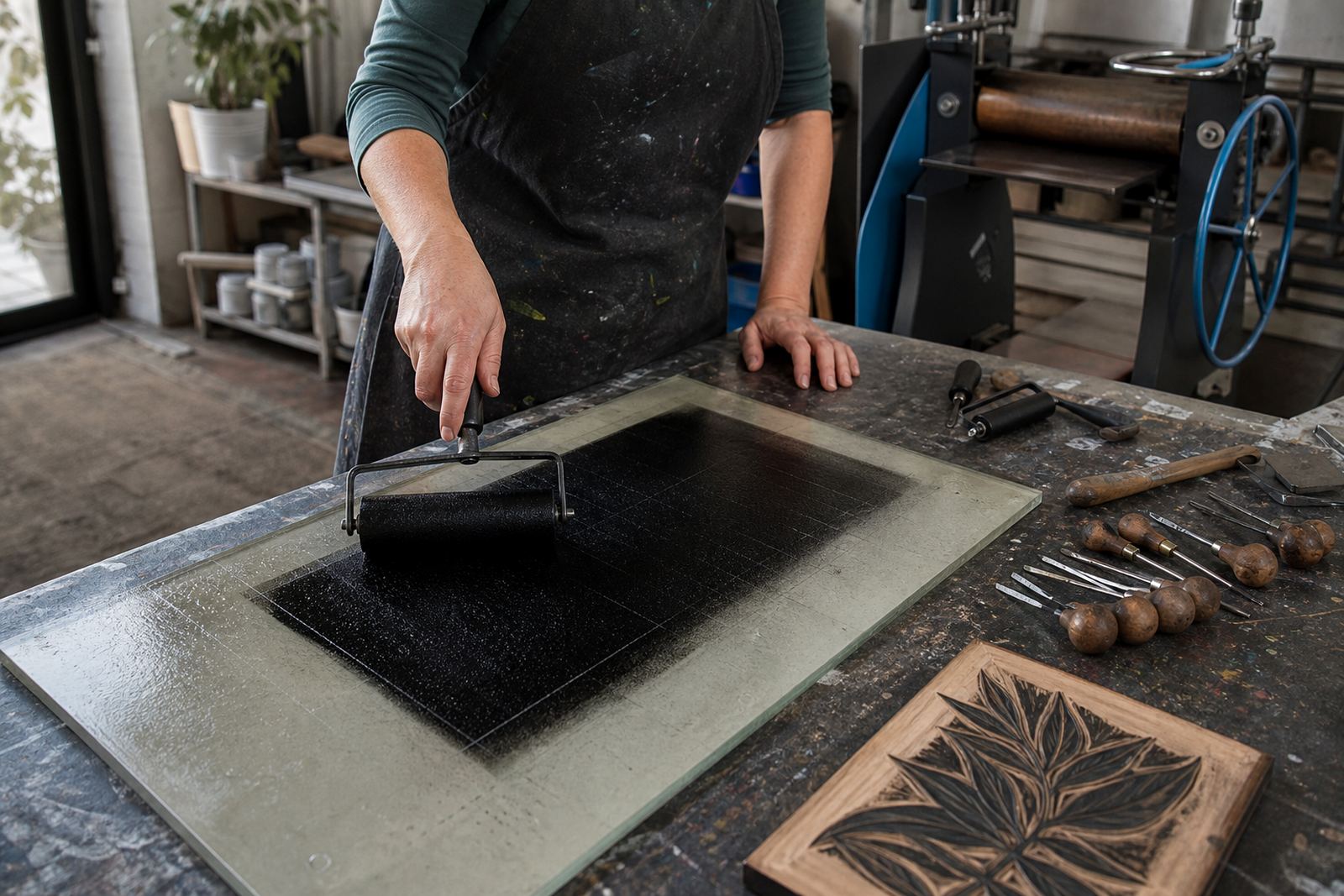
At a Durban family session, a child’s paper may curl more after the first inked pass because the sheet has taken on the dampness of the ink. That is normal. Pause, let the print rest, and then decide whether the next sheet needs a little more conditioning or a firmer board under it.
After printing, dry the sheet under control
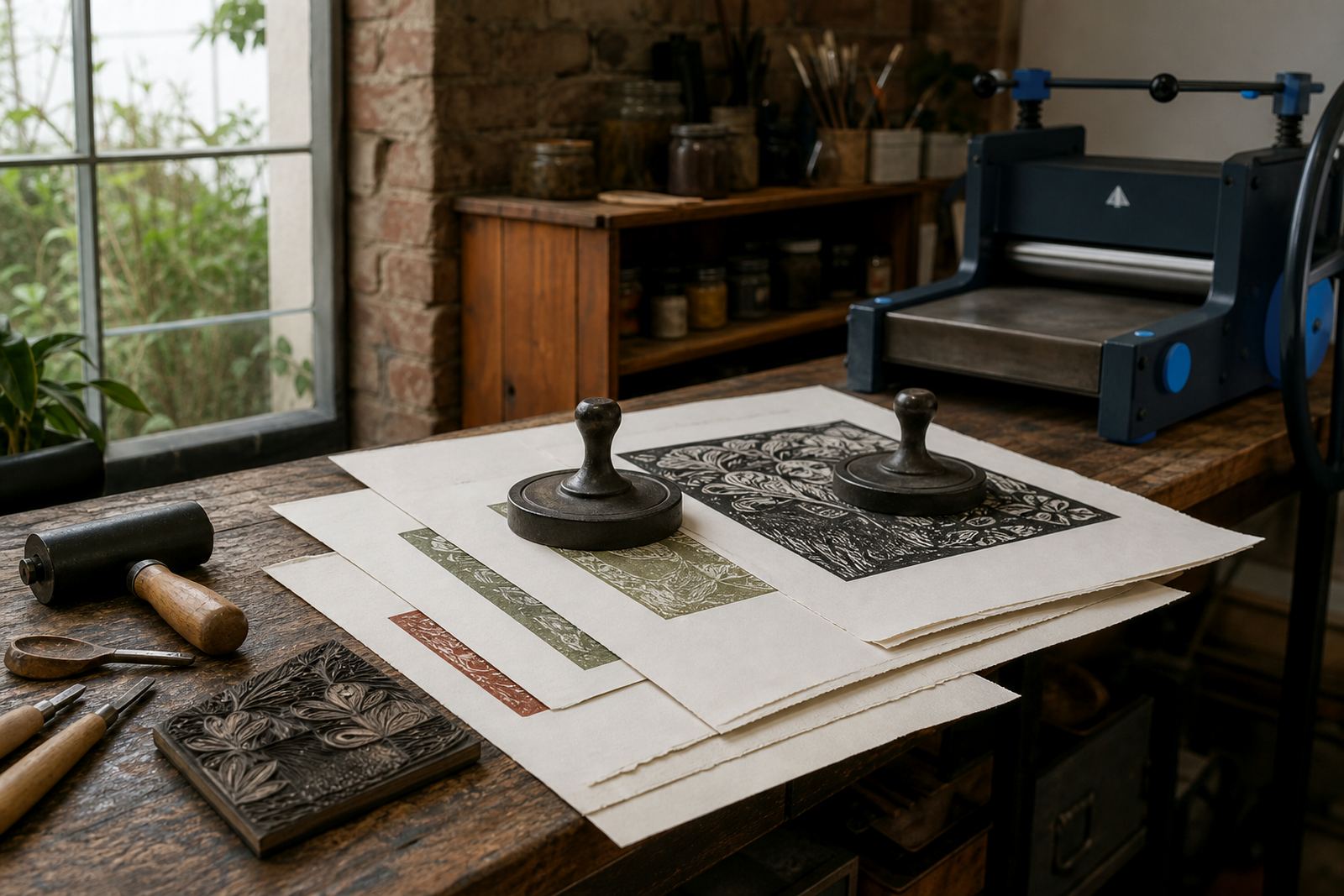
A fresh print can curl while drying, especially if one side carries more ink or the sheet has been burnished hard. Lay the print on a clean surface and let air move around it evenly. Once the surface is touch-dry, place it between sheets of clean paper and under a flat board. If the stack is too tight, the print may mark; if it is too loose, the curl returns.
For edition prints, keep each sheet in the same drying setup so the results stay consistent. Works on heavier paper usually flatten more easily than thin sheets, while soft-cut prints on lighter stock may need longer under weight. A press print may look flat at first, then lift a little as it dries, so do not rush to frame it before the sheet has settled.
A studio routine that keeps the paper flat and clean
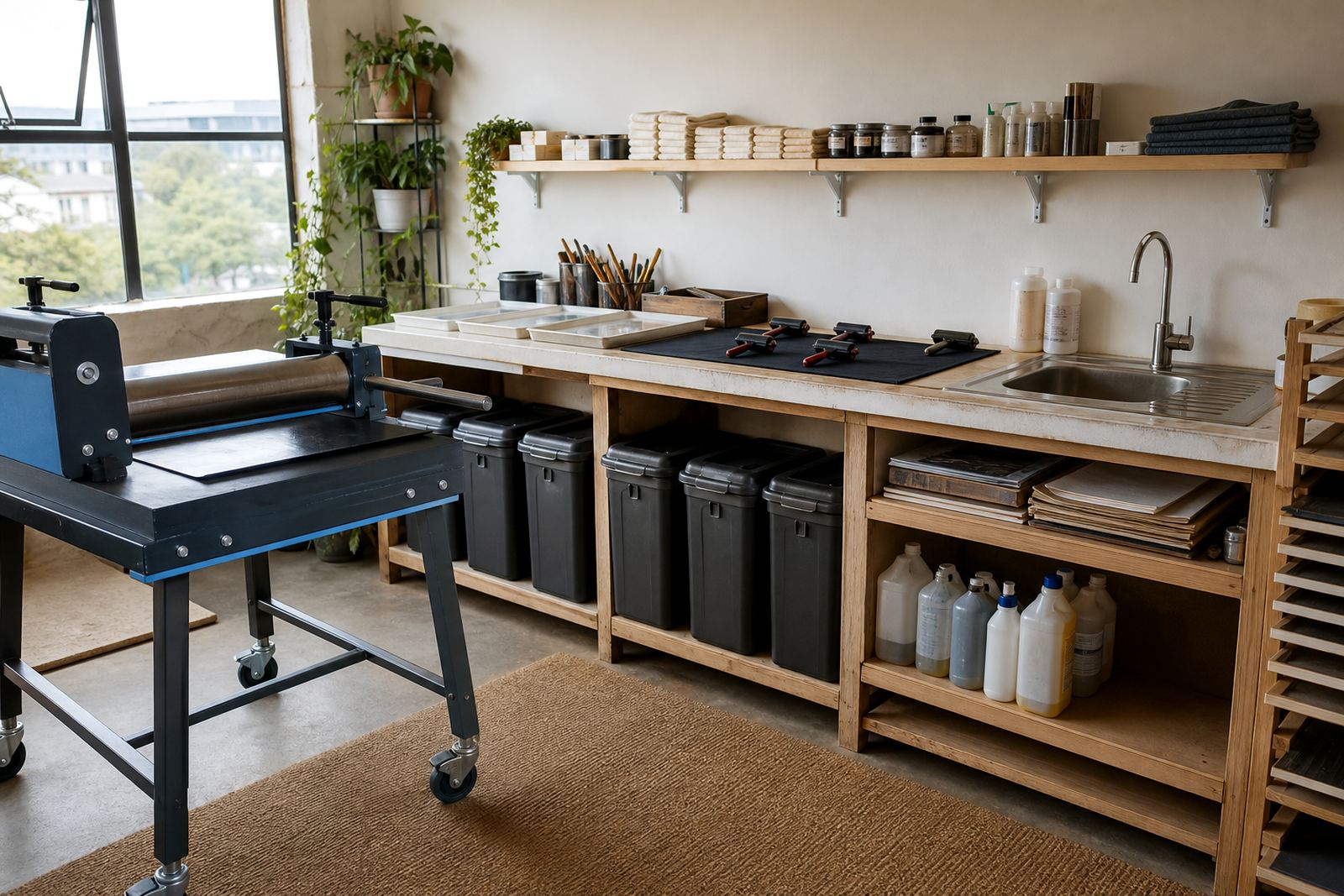
Good paper handling comes from a routine. In our Woodstock studio, we sort paper by weight, keep it flat, and check the curl before carving starts. That saves time later and helps students understand how the paper behaves.
- Choose paper that suits the ink, block and edition size.
- Let sheets rest before carving begins and again before printing.
- Keep a clean pressing board for finished prints.
- Mark the back of the sheet if the grain direction matters.
- Separate proof paper from final edition paper.
For team groups and school workshops, this matters because many hands touch the same stack. A clear setup prevents bent corners, greasy marks and unnecessary reprints. When the paper stays flatter, the cut reads cleaner and the print shows the block properly.