A team brief with room for everyone to print
The group wanted a shared afternoon activity for colleagues in Randburg, with enough structure for mixed experience levels and enough movement to keep the room lively. The brief called for a collaborative print theme, tidy station rotation, and finished sheets each person could take home without the pace feeling rushed.
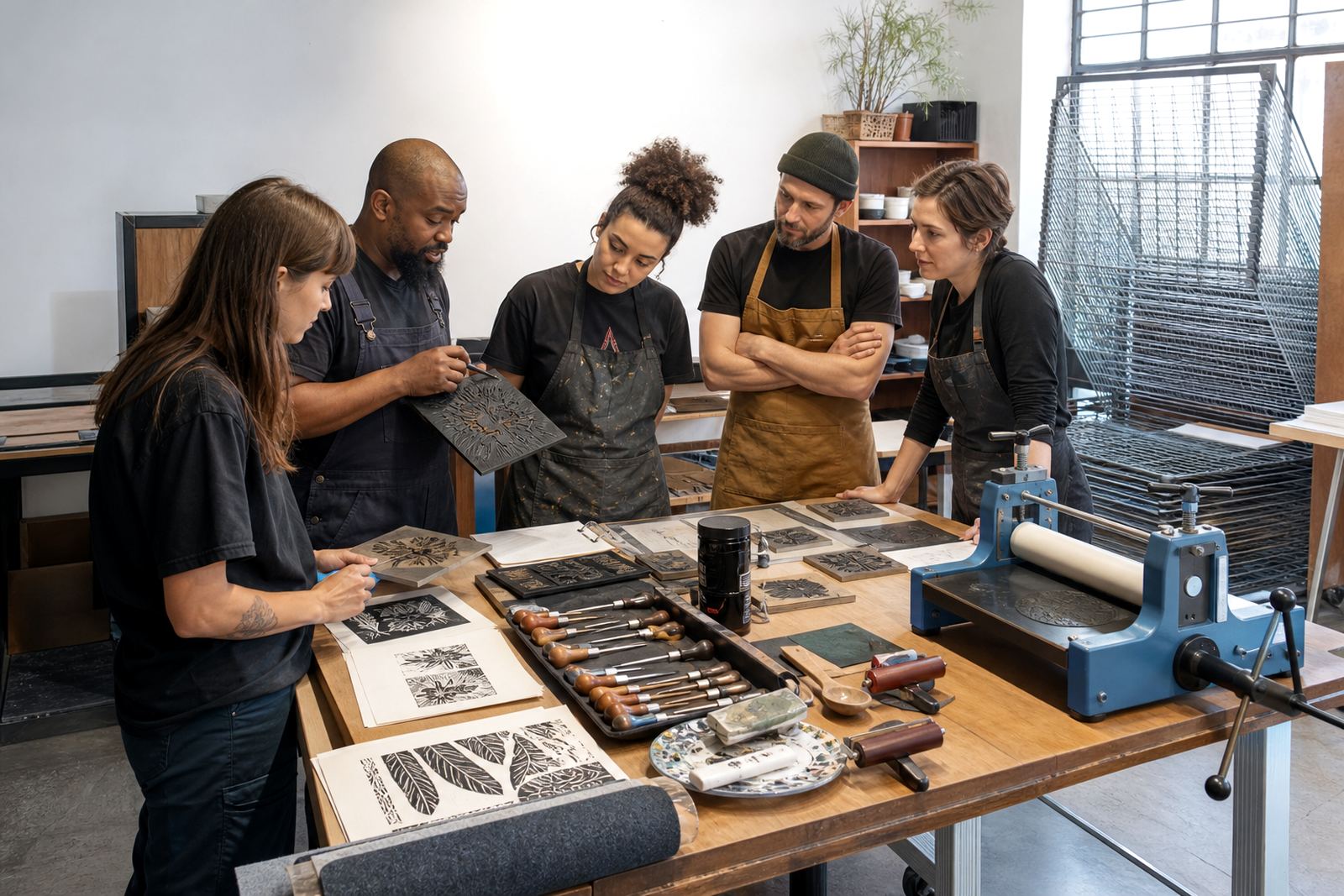
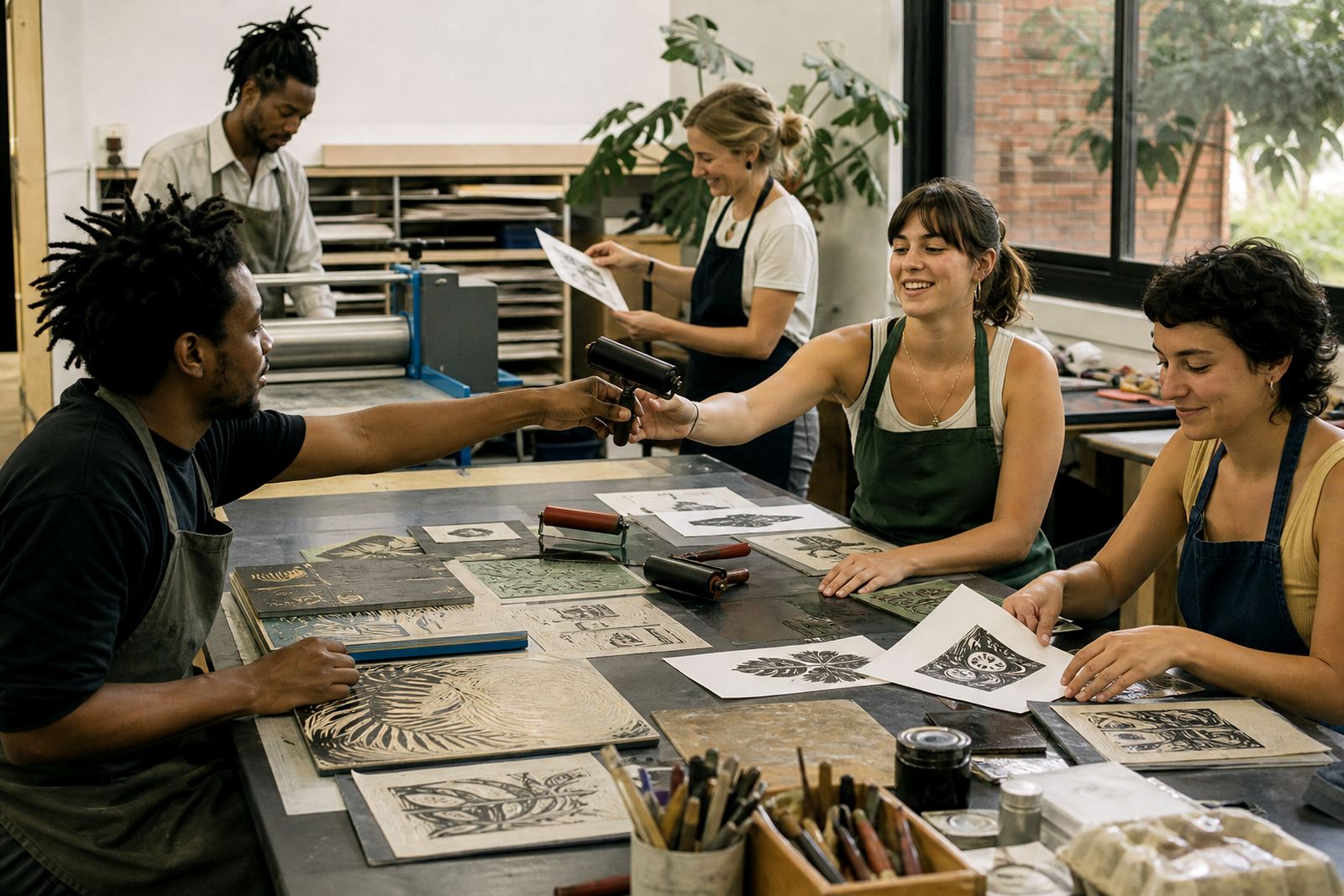
We planned the session around lino and soft-cut blocks, so first-time carvers could handle the material comfortably while still getting a proper printmaking experience. The team worked in small groups, then rotated through sketching, carving, inking and pressing. That kept the table clear and gave each person a turn with the tools and the press.
- Client type: corporate team afternoon
- Town: Randburg
- Format: guided group print workshop
- Material focus: linocut and block print methods
Station flow that kept the table tidy
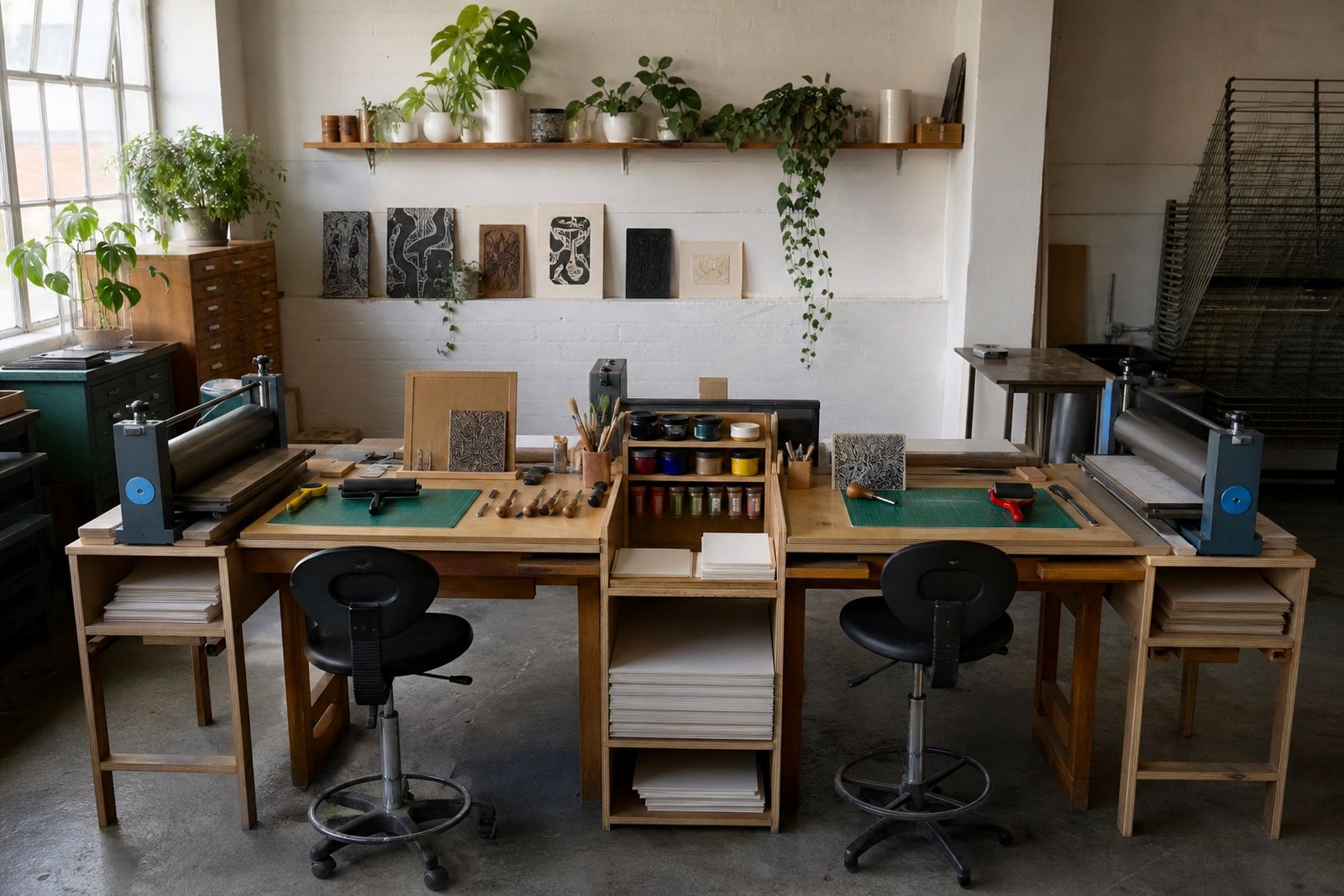
The room layout had to support movement without clutter building up on every surface. We marked out carving, inking and printing points so brayers, gouges, V-tools, barens and papers stayed where they were needed. That made it easier to keep the work moving and helped avoid wet prints from crossing into carving space.
Because the group included both careful beginners and a few confident makers, we used short demonstrations before each stage and then repeated the steps where needed. The carving section covered safe hand positions, shallow cuts and how to work around a chosen motif without tearing the block. For printing, we used registration marks and a repeatable layout so the final sheets lined up neatly.
- Tools used: gouges, V-tools, brayers and barens
- Ink handling: water-based and oil-based block inks
- Printing method: hand burnishing and press printing
- Paper handling: dry staging, stacking and careful lift-off
What the group made on the day
The theme was built around simple shapes that could sit together as one group composition, then stand on their own as individual prints. That let the team create a set of linked pieces without every block looking identical. Some people carved bold lettering, others worked with texture, leaves, repeated borders or small graphic marks that printed well on the first pull.
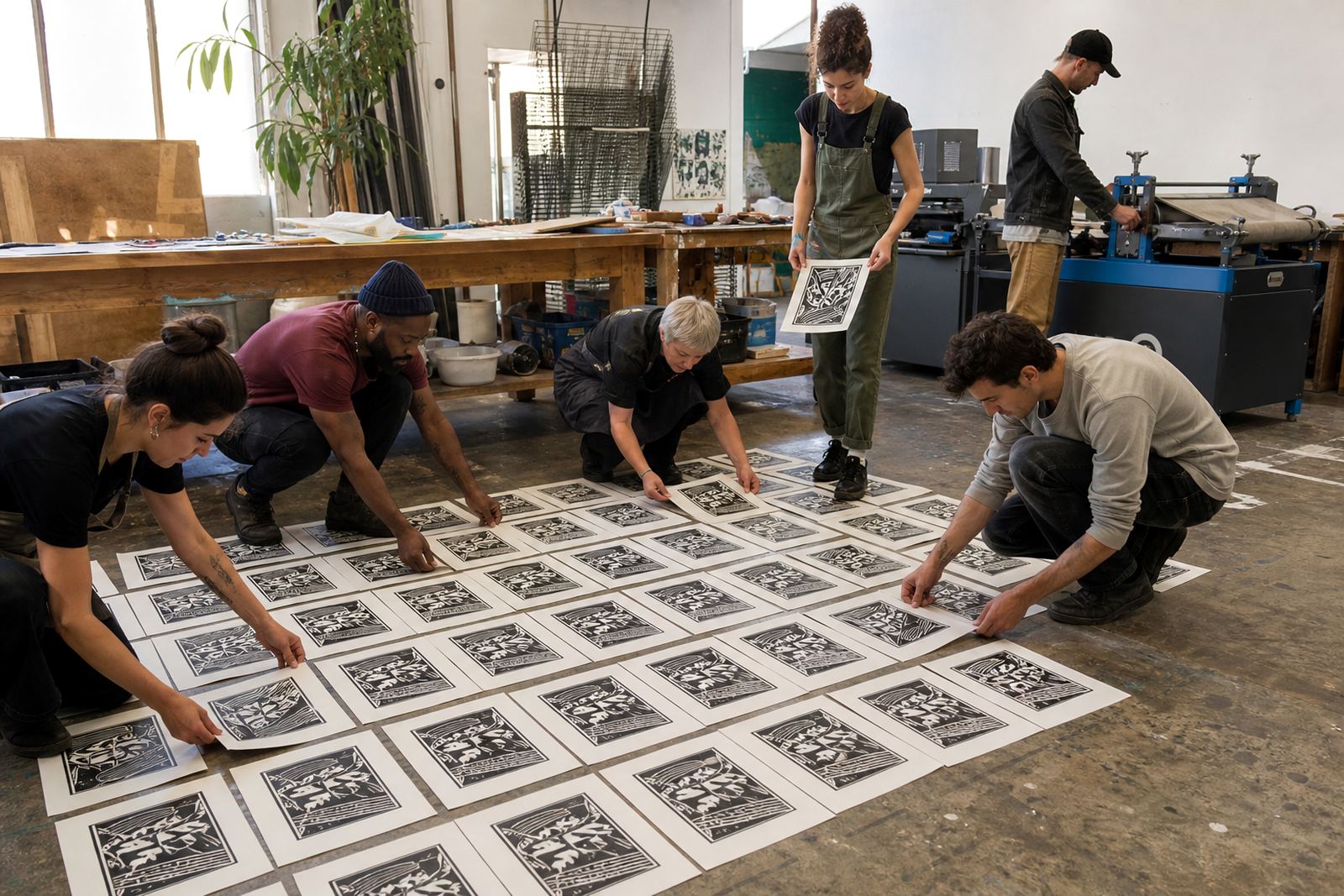
We printed test sheets first, then moved into the edition run once the ink coverage was even and the registration held true. A few blocks needed lighter pressure at the edges, and a few needed a touch more ink on the solid areas, which is normal with relief printing. The final sets had that slight variation that hand printing carries, while still reading as a coordinated batch.
- Style: collaborative relief print series
- Edition approach: small hand-pulled sets
- Finish: layered blacks, blues and muted tones
Timing and room handling over two weeks
Two weeks passed between our first call with the Randburg team and their print afternoon. The first stretch covered theme development, station planning and material prep, including cutting blocks to size and checking that the papers matched the chosen inks. The second stretch covered the workshop itself, with set-up, guided making and packing down after the final prints had been lifted and sorted.
Because the venue in Randburg had a tight circulation route, we kept the tables narrow and the tools grouped by stage. That reduced cross-traffic and made it easier for the host to keep the room comfortable for the full group. The format also suited the time window, since each person could complete more than one print without waiting around too long.
- Project span: 2 weeks
- Workshop style: structured afternoon session
- Venue need: clear table rotation and compact set-up
Materials that held up to the pace
The Randburg team used soft-cut for speed and lino for the people who wanted finer detail. We used lino and soft-cut blocks for the carving stage, since both give a clean cut and respond well to firm pressure. The inks were chosen for strong colour and reliable transfer on paper, while the paper stock had enough body to accept hand burnishing without cockling too badly.
The press was used where it made sense and the baren filled the gaps where a hand print gave a better result or where the group wanted to feel each pass of the image. That blend let the team see the difference between press pressure and hand pressure, and it gave the final prints a more varied surface. A couple of sheets had small registration shifts, but that is part of the process and it helped the group see how alignment affects the image.
- Block types: lino and soft-cut
- Ink types: water-based and oil-based block inks
- Output: mixed hand print and press print sheets
What held together by the close
By the end of the afternoon, the group had a clean set of editioned prints and a clearer sense of how relief printing depends on sequence, pressure and patience. People moved through the stages with less hesitation after the first round, and the rotation system kept the pace steady without crowding the tables. The printed work had enough consistency to read as one project, while still showing the hand-made marks that make linocut worth doing in the first place.
If we were repeating the session for another Randburg team, we would keep the same station order and preserve the short demo points before each stage. That part worked well because it gave the group enough guidance without slowing the making down. We would also keep the block sizes modest, since smaller formats are easier to ink, register and store during a shared afternoon.
- Result: finished editions with a unified look
- Group rhythm: steady, tidy and easy to manage
- Best fit: compact motifs and shared print themes
Key facts
| Project | Randburg Team Afternoon |
|---|---|
| Town | Randburg |
| Session type | Team building print workshop |
| Method | Linocut and block printing |
| Materials | Lino, soft-cut blocks, brayers, gouges, V-tools, barens, press |
| Timeline | 2 weeks |
| Outcome | Collaborative hand-pulled edition prints |