A firmer block for line work and controlled cuts
Traditional lino sheets are the hard-working side of relief printing. The surface gives enough resistance for gouges and V-tools to bite cleanly, so outlines hold better and raised areas stay more predictable while you carve. That matters when you are planning a first block, a classroom exercise or a small edition where each impression must sit close to the last one.
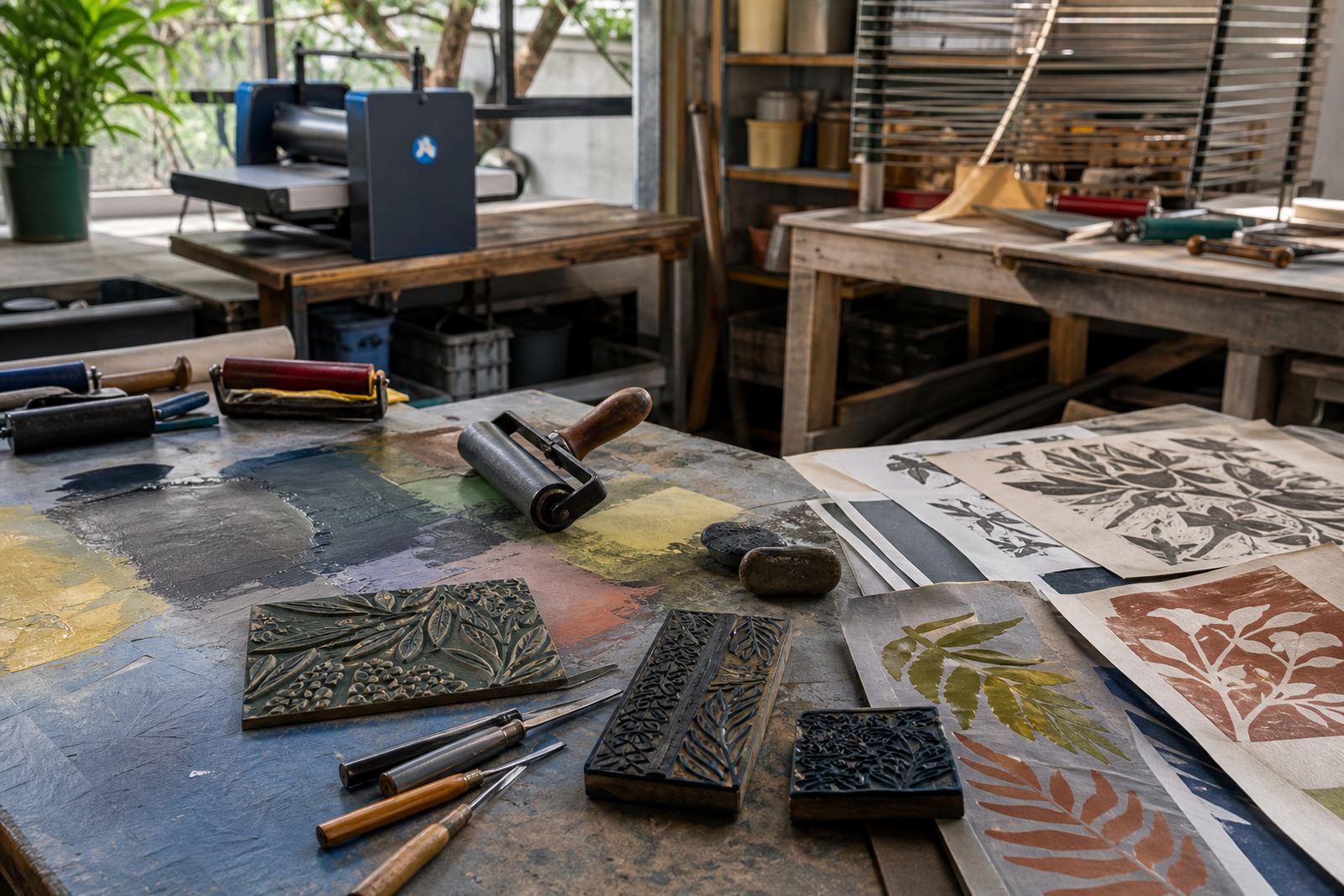
Compared with softer carving stock, a traditional lino sheet feels steadier under the hand. It helps when you need crisp edges for text, pattern repeats, botanical shapes, figures or simple geometry. The block can be inked with water-based or oil-based relief ink, then printed by hand with a baren or through a press, depending on the finish you want.
Our workshops in Woodstock and our pop-up sessions in Cape Town, Stellenbosch, Johannesburg, Pretoria and Durban often use this block when the group needs a sturdy surface for practical carving and printmaking exercises.
Sizes, thicknesses and the cut that suits the job
We supply traditional lino sheets in practical workshop sizes, from small formats for study sketches to larger sheets for edition work and classroom tables. The right size depends on your drawing, the number of impressions you want to pull and how much border you plan to leave around the image. Some printers prefer a compact sheet for quick study blocks, while others want enough area for registration marks, text or layered colour work.
Thickness also matters. A firmer sheet gives better control when you are cutting long lines or removing larger fields. It also sits well on a table when you transfer a design and start carving. In a school setting, students often work with smaller cuts so the block can be handled safely and the edges remain easier to manage. For team sessions and family print sessions, a manageable size helps the group move from drawing to carving without crowding the table.
- Small sheets suit initials, motifs and test blocks.
- Medium sheets work well for classroom projects and hand-pulled editions.
- Larger sheets give room for layered imagery, borders and repeat patterns.
- Cut size should match the press bed or hand-printing area you plan to use.
Where traditional lino performs well
This material is a strong match for printmakers who want controlled carving and a cleaner printed line. It is commonly used in student print classes, beginner carving sessions, edition print sessions and teacher skills workshops. The block accepts a clear drawing transfer, then responds well when you work slowly with the grain and keep the tool angle steady.
It also suits studios where a group is printing on paper with different weights. A firmer block helps when you need a strong image on cotton rag, cartridge paper or heavier printmaking paper. If the design includes tight marks, hatch lines or repeated motifs, the surface keeps those marks readable through the ink film. In school pop-up workshops, it is often chosen because the carving stage is easier to explain and the printed result is consistent enough for a whole class to compare layers and line quality.
- Good for first-time carving practice and instructor-led demos.
- Useful for edition work where repeat impressions need consistency.
- Suitable for hand printing, baren work and press printing.
- Works for single-colour prints or layered colour blocks.
Carving setup and safe handling in the studio
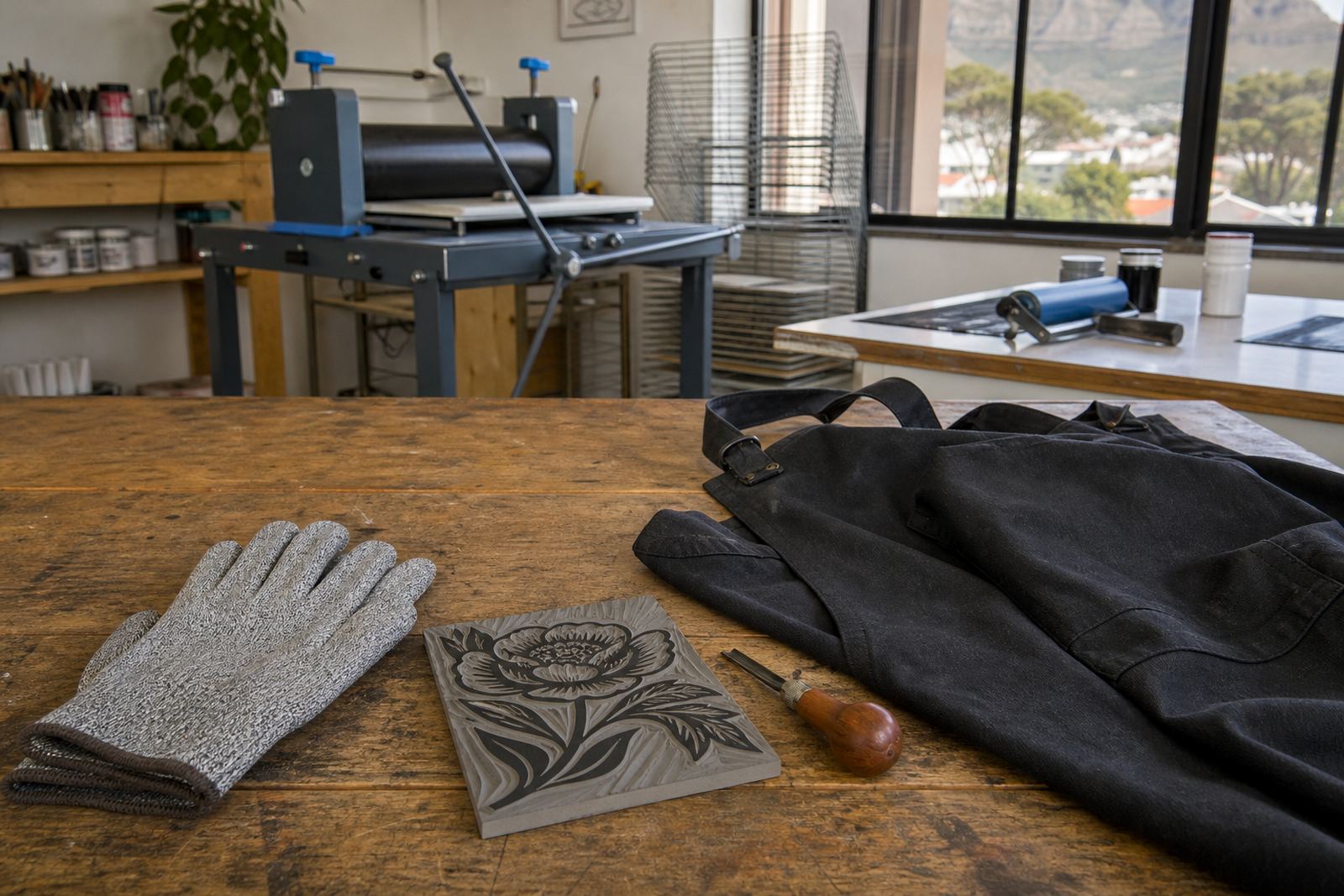
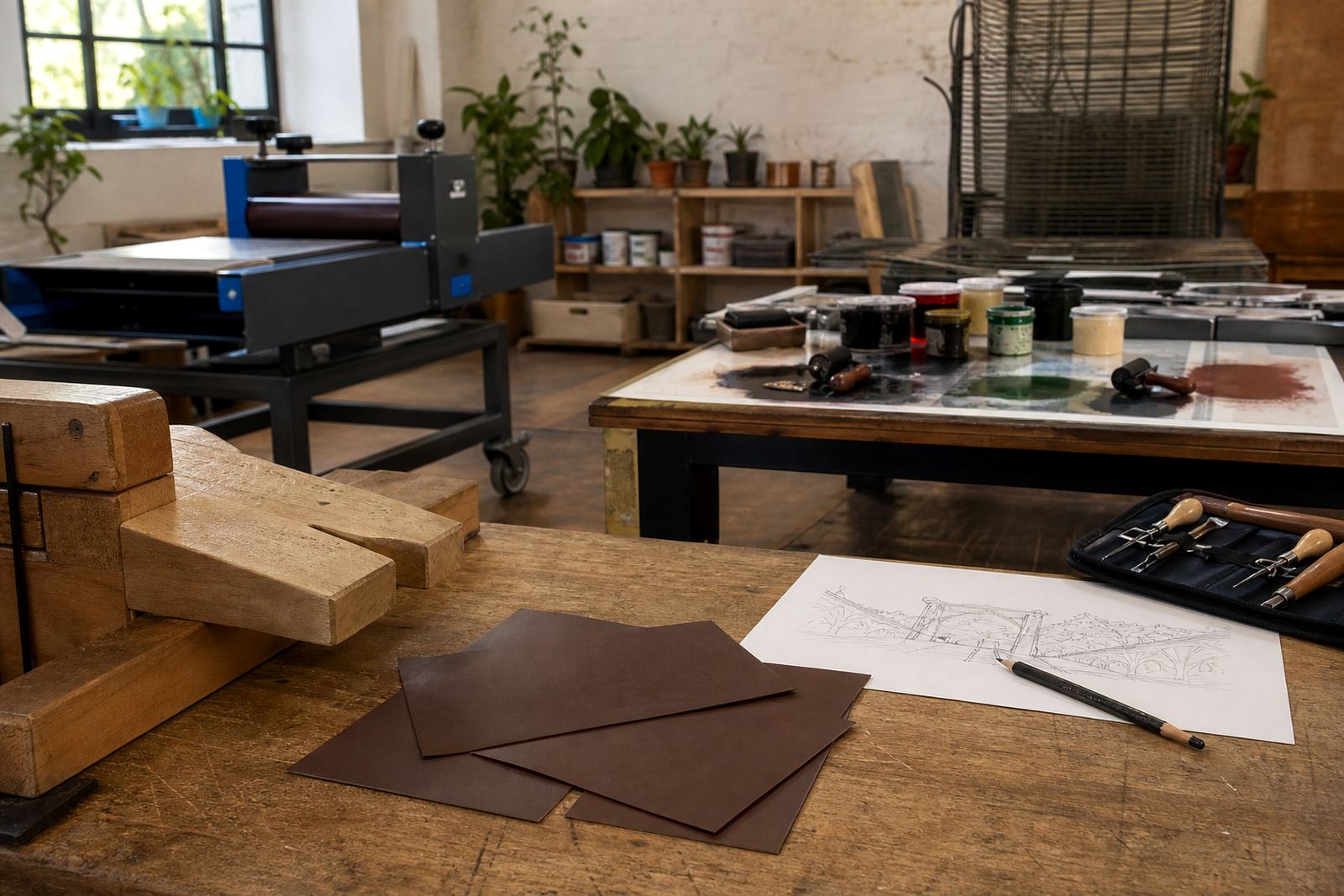
Traditional lino sheets are best handled on a flat surface with a clear cutting layout. A stable board, a clean bench and a shallow pile of paper nearby make the process easier. Start with a transferred drawing, then clear your non-printing areas gradually so the raised parts stay intact. Gouges and V-tools should be sharp, because the firmer block rewards clean pressure.
For workshops, we keep the carving sequence practical: mark the image, check the direction of the line, then cut away the spaces that should not print. A small amount of trial cutting on the offcut helps learners understand how the block behaves before they work on the main image. When the sheet is ready for ink, the surface can be rolled with a brayer and printed by hand or run through a press with even pressure.
Safety matters in a busy room. Keep fingers clear of the blade path, work away from the body and store tools with their edges covered when the session ends.
Printing, registration and edition consistency
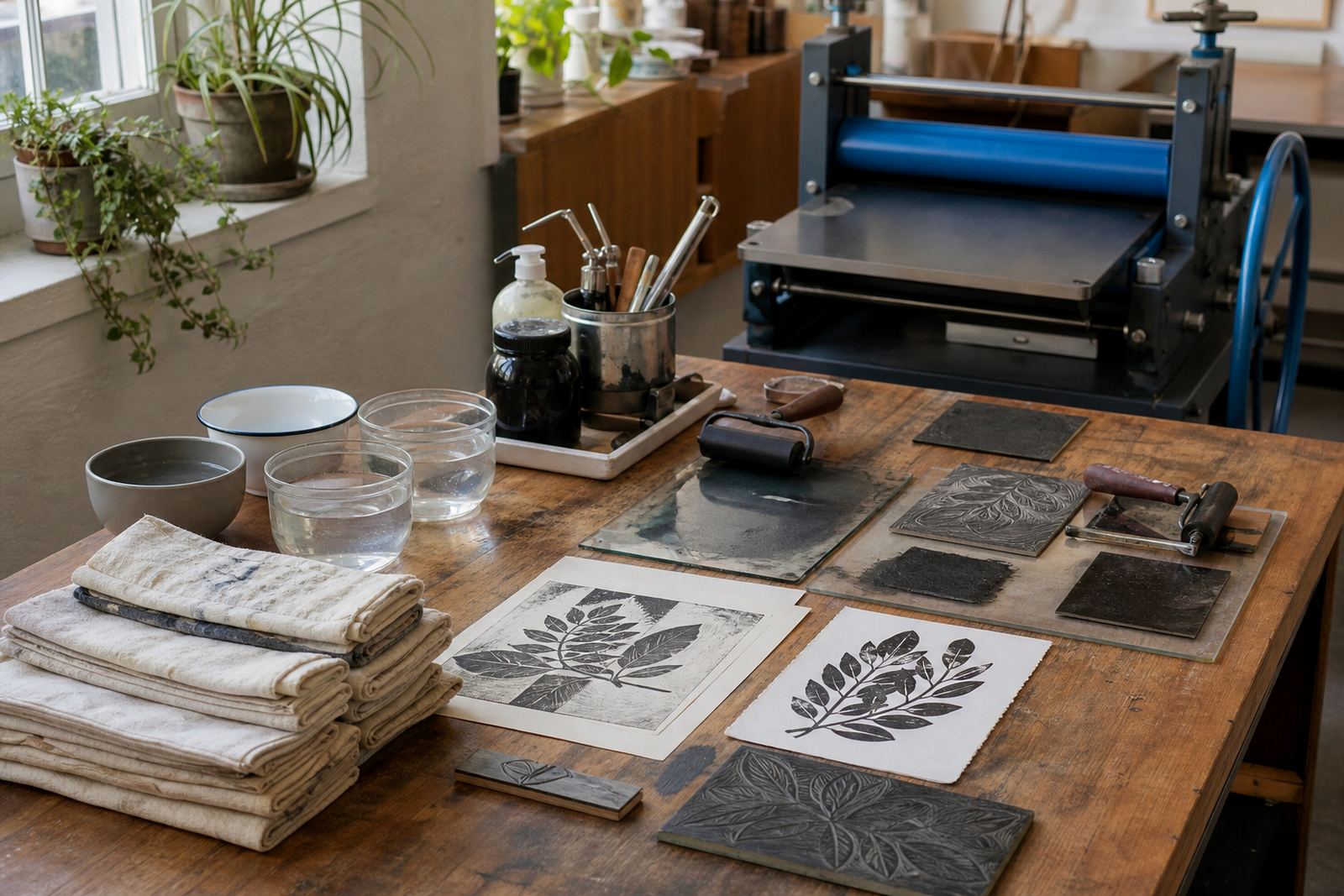
Once the block is carved, the print shows how well it was cut. Traditional lino sheets take ink cleanly if the roller carries an even film across the raised surface. Too much ink fills the detail, too little leaves the print patchy. For single blocks, the pressure of a baren can be enough. For larger sheets or more even pressure, a press gives a steadier impression across the paper.
Registration becomes important when you print a second colour or a layered image. Light registration marks, careful placement and repeated checking help the image sit where it should. That is useful in edition printing, where every sheet needs to feel part of the same family even if the hand pressure varies slightly. Paper choice also matters. Smooth papers show fine line work well, while textured papers soften the edges and can suit more expressive marks.
- Use consistent inking for edition sets.
- Check the paper grain and sheet size before printing.
- Test pressure on proof sheets before a full run.
- Keep the block face clean between impressions.
Keeping lino sheets flat and warm
Traditional lino sheets last better when they are kept flat, dry and out of direct heat. A clean stack stops dust from settling on the surface before carving. If the sheets are stored in a damp room, the edges can shift or curl a little, which makes the block less pleasant to work on. In coastal areas such as Woodstock and Durban, a dry shelf or sealed carton helps keep the material steady between sessions.
Before placing an order, confirm the sheet size, thickness, colour if relevant, and whether you need individual pieces or a set for a class. It also helps to note whether the block will be carved by hand only, or used for press printing and repeated editions. If you are planning a school workshop, team booking or studio session, tell us the number of participants and the type of image you want to print. Pop the sheet size and number of learners into the form on our contact page.
For mixed groups, we also look at cutting ease, paper size and how much margin you need for trimming after printing. That keeps the material matched to the work instead of forcing the image to fit a block that is too small or too soft.
Key facts
| Product type | Traditional lino sheets for relief printing |
|---|---|
| Surface feel | Firm, steady carving surface with clean line control |
| Common use | Linocut, block print, edition work and teaching sessions |
| Tools used | Gouges, V-tools, brayers, baren and relief press |
| Ink compatibility | Water-based and oil-based block inks |
| Typical formats | Small study sheets, medium workshop sheets and larger edition sheets |