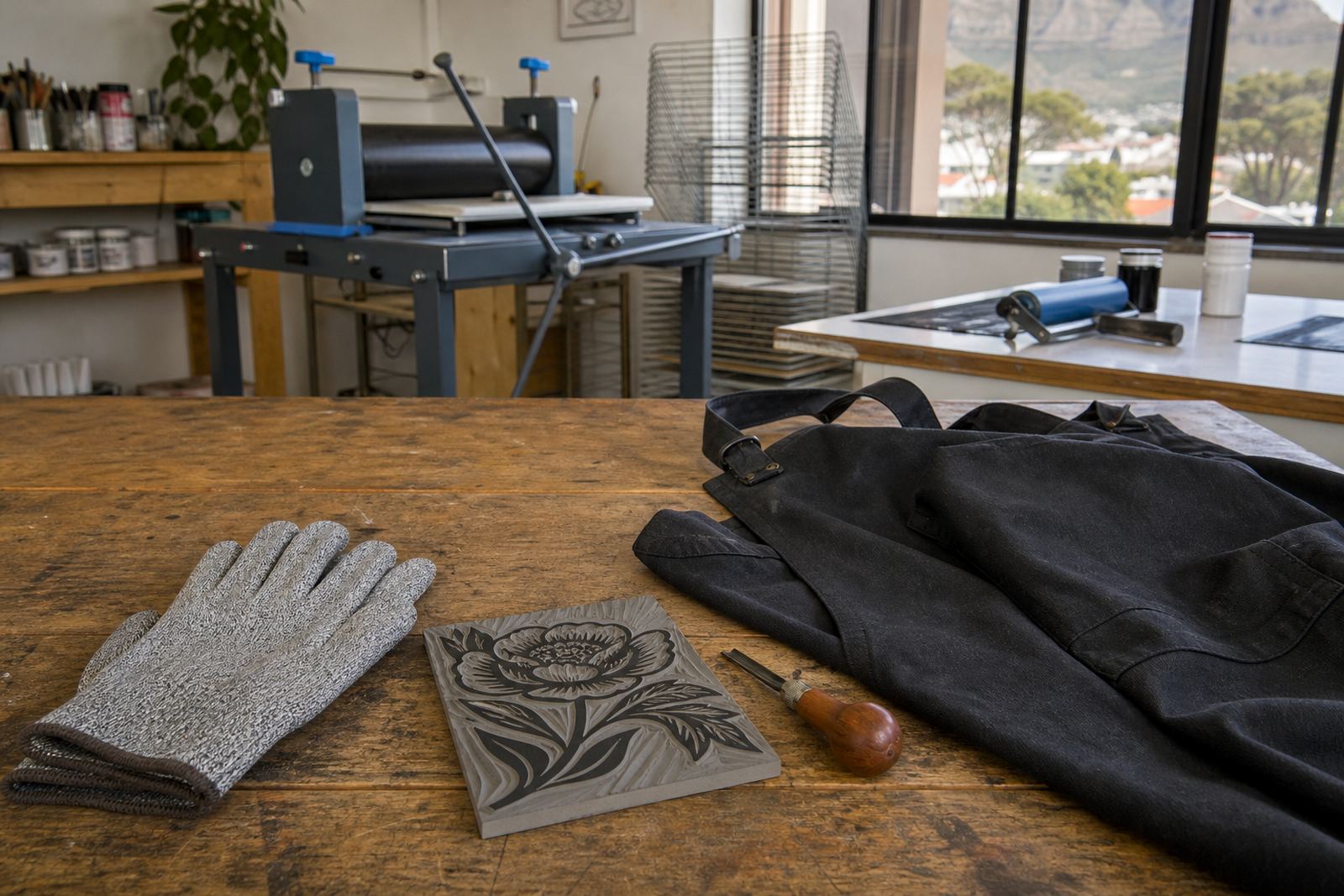
Support-hand coverage for block carving
A carving glove is worn on the hand that holds the block while the other hand guides the gouge or V-tool. In linocut and soft-cut work, that support hand often sits just behind the cutting line, so the glove is there to give a measured layer between skin and blade. It suits first-time carvers, students learning pressure control, and group sessions where the table is busy and the pace shifts from one person to the next.
In our workshops, the glove is most useful when learners are moving from tracing to actual cutting. The block may be small, the design may be tight, and the hand that steadies the material can drift closer than intended. A good glove lets the learner concentrate on clean cuts, steady angles and safe hand placement while they shape a first image in lino or soft-cut block.
- Worn on the non-cutting hand
- Useful for lino, soft-cut and similar relief blocks
- Best for beginners learning blade control
- Helps during trimming, detail cuts and corner work
What the glove is made to do at the bench
The glove is designed for workshop use rather than heavy industrial wear. It should sit close enough to keep the hand nimble, yet leave enough room to grip the block, turn a corner and feel the surface. That matters when learners use gouges, V-tools and safe carving methods that rely on touch as much as sight. Too much bulk gets in the way of accurate cuts, especially on finer marks and smaller editions.
Most studio gloves for carving are made in a cut-resistant style with a grippy palm or textured surface, so the block does not slip when fingers are damp with ink or when the paper stack starts moving around the bench. Some are ambidextrous, while others are shaped for a left or right hand. For session work, the important point is fit, grip and enough finger movement to keep the block steady without clenching hard.
- Close fit for handling blocks and tools
- Grip surface for steady hold on lino or soft-cut
- Flexible enough for trimming and detail work
- Available in ambidextrous or hand-specific styles
Sizing for adults, students and younger learners
Fit affects both safety and comfort. A glove that is too loose can shift while carving, while one that is too tight can make the fingers stiff and slow the hand down. For adult workshops and mixed groups, it helps to know the palm width, finger length and whether the wearer prefers a snug or relaxed feel. That is especially useful in family sessions and student classes where one size will not suit everyone.
When ordering for group use, it helps to separate gloves by size rather than guessing from age alone. A tall student with narrow hands may need a different fit from a shorter adult with broader palms. For school pop-up workshops and venue sessions, a few sizes on hand makes the table safer and keeps the carving rhythm steady.
- Gloves come in four sizes for mixed groups
- Some styles use left and right hand sizing
- Palm width and finger length matter most
- Snug fit is better than a loose, slipping glove
Where it works in a print workshop
This glove suits beginner carving sessions, private studio classes, student print classes and teacher skills workshops where the carving stage is hands-on and closely supervised. It is also useful in school pop-up workshops and team sessions, where learners move between tracing, carving, inking and printing on the same tables. In those settings, the glove is part of the practical kit that keeps the support hand safer while the block is being cut.
The glove also helps when the class shifts from carving to proofing and then to the final edition. Once the design is ready, the same hands may move to brayers, water-based or oil-based block inks, registration marks and paper handling. A steady support hand at the carving stage makes the rest of the process easier to manage, especially where different learners are sharing tools and space.
- Beginner carving sessions
- Student print classes and family sessions
- School pop-up workshops and team groups
- Proofing, edition work and press demos
Care after ink, dust and repeated handling
After use, a carving glove should be checked for blade nicks, stretched stitching and ink marks along the fingertips and palm. If it has been used with water-based block ink, a gentle wash usually keeps the fibres from hardening. If it has picked up oil-based ink, it should be cleaned carefully so residue does not transfer to the next session. Drying flat is better than leaving it folded and damp in a kit bag.
In a studio with regular carving sessions, gloves also need to be stored away from loose gouges and blades so they do not catch on sharp edges. A clean glove gives a better grip, and a dry glove is more comfortable in Cape Town humidity or in a packed workshop room where hands warm up quickly. When a glove starts to thin at the fingers, it should be set aside for lighter use.
- Check seams, fingertips and palm wear
- Wash out water-based ink before storage
- Remove oil-based residue with care
- Dry flat and keep away from blades
What to check before ordering a glove
For workshop use, it helps to confirm the hand size, preferred fit, and whether the glove will be used for lino, soft-cut or both. If the glove is for school or group kits, the count of left and right hands matters, along with the age range and the level of carving support required. Some groups need only one glove per learner, while others keep a few spare sizes for mixed hands and changing class numbers.
It also helps to match the glove to the rest of the carving kit. If your setup uses barens, press printing or studio proofing with papers that crease easily, a steady carving glove can reduce slips before the edition is printed. For orders tied to beginner kits or venue sessions, our contact form can be used to share the size mix, session type and any preference for ambidextrous or hand-specific gloves.
- Glove sizes for the group
- Left hand, right hand or ambidextrous style
- Single gloves or group kit quantities
- Use with lino, soft-cut, school kits or studio sessions
Key facts
| Product type | Protective carving glove for support-hand use |
|---|---|
| Primary use | Beginner linocut and block-print carving |
| Compatible materials | Lino, soft-cut block and similar relief blocks |
| Fit options | Small to extra large, with some ambidextrous styles |
| Grip | Textured or grippy palm for steady block control |
| Care | Clean after ink, dry flat and inspect for wear |