A group print setup that keeps hands moving
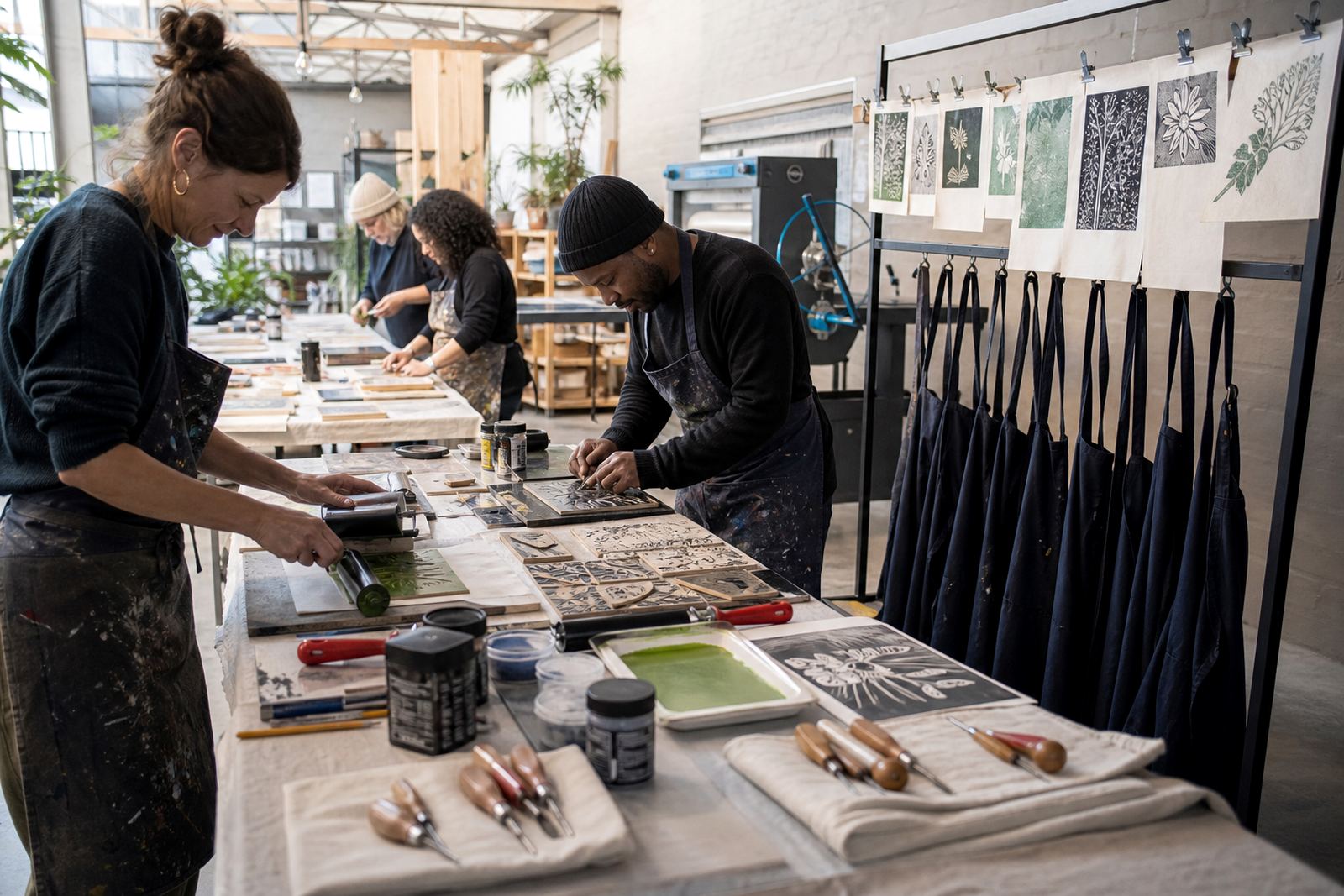
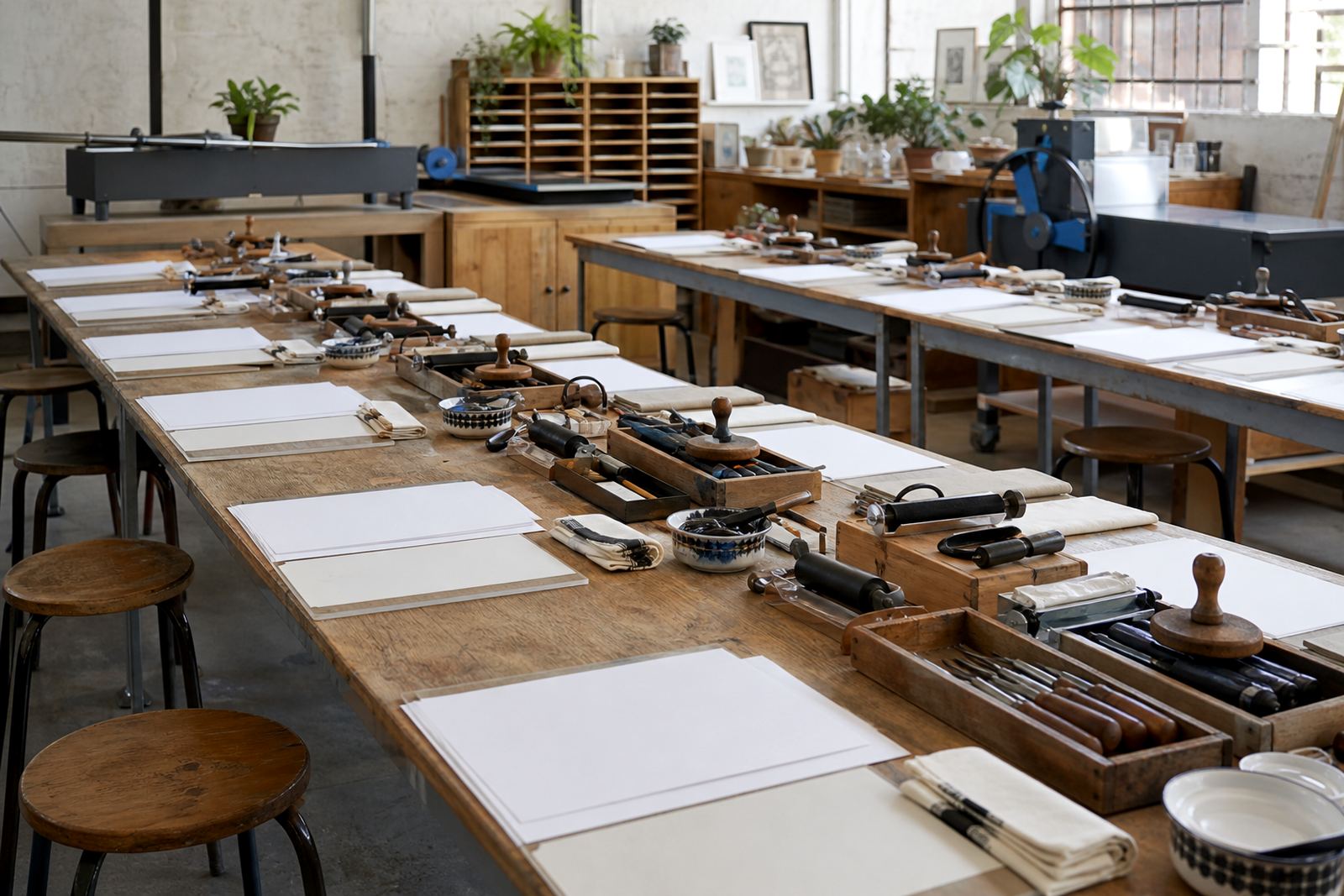
This pack is arranged for groups that need a clear workshop rhythm, with carving at one table, proofing at another and printing space that can handle a steady flow of participants. It is suitable for adults, students, families and mixed-age group bookings where people may be working on different stages at the same time.
The format works with lino blocks and soft-cut blocks, using safe carving methods, V-tools, U-gouges and bench hooks where needed. Brayers, ink slabs, registration guides and drying space are planned into the flow so each person can move from drawing to carving, then to inking and pulling an edition without crowding the table. The layout suits groups that mix first-time printmakers with people who already know the basics.
- Carving benches set for six
- Brayers, inks and registration points for edition work
- Space for proof pulls, final prints and drying racks
- Suitable for 8, 12, 20 or larger group formats
Sizes and pack options for different groups
Team bookings usually work best when the pack is matched to the headcount and the venue. Smaller groups can work with a compact station plan, while larger school or corporate groups need more carving sets, more brayers and a stronger drying flow. We set the pack out to suit the room, whether that is a studio in Woodstock, a classroom in Bellville, a hall in Pretoria or a venue in Durban with table access and wash-up space.
The pack can be set up as a full print session, a carving-led session, or a split format where one group carves while another prints. We also plan for paper choice. Lightweight sheets work well for proofing and quick editions, while heavier printmaking papers suit a final piece with cleaner emboss and better ink hold. For team groups, it often helps to prepare one block per person or one shared image with group roles divided across carving, inking and pressing.
- Compact format for smaller team groups
- Medium format for class-sized bookings
- Large format for schools, staff days and venue events
- Paper options for proofing, final editions and display sheets
Where the workshop pack fits best
This setup suits a wide range of spaces because it is built around table layout, drying flow and clear print stages. It works well for school pop-up workshops, team building sessions, family print sessions, student classes and private studio bookings. Venue coordinators often like it because the stations can be mapped to the room before the group arrives, which keeps the process orderly and practical.
It is also a strong fit for pop-up work at schools and community venues across Cape Town, Stellenbosch, Johannesburg, Pretoria and Durban. In coastal areas such as Woodstock, Somerset West and Durban, paper storage and drying need a dry, clean corner out of damp air. In larger inland venues, the key detail is usually table length and a surface that can take ink, cutting marks and light water cleanup. The pack suits places where people want hands-on learning.
- School halls and classrooms
- Studio events and private group sessions
- Corporate team days and staff programmes
- Community venues, libraries and cultural spaces
Tools, inks and press choices inside the pack
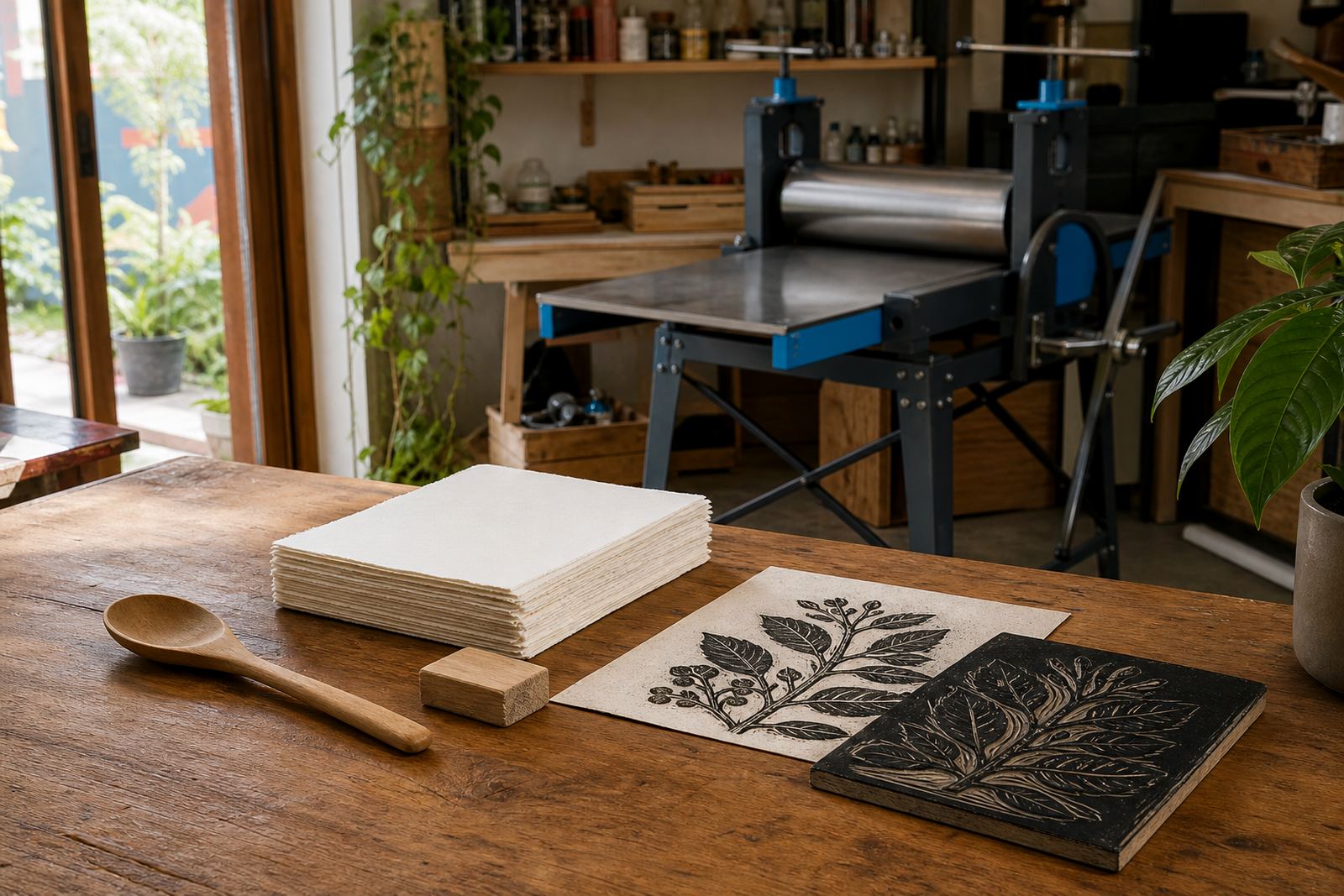
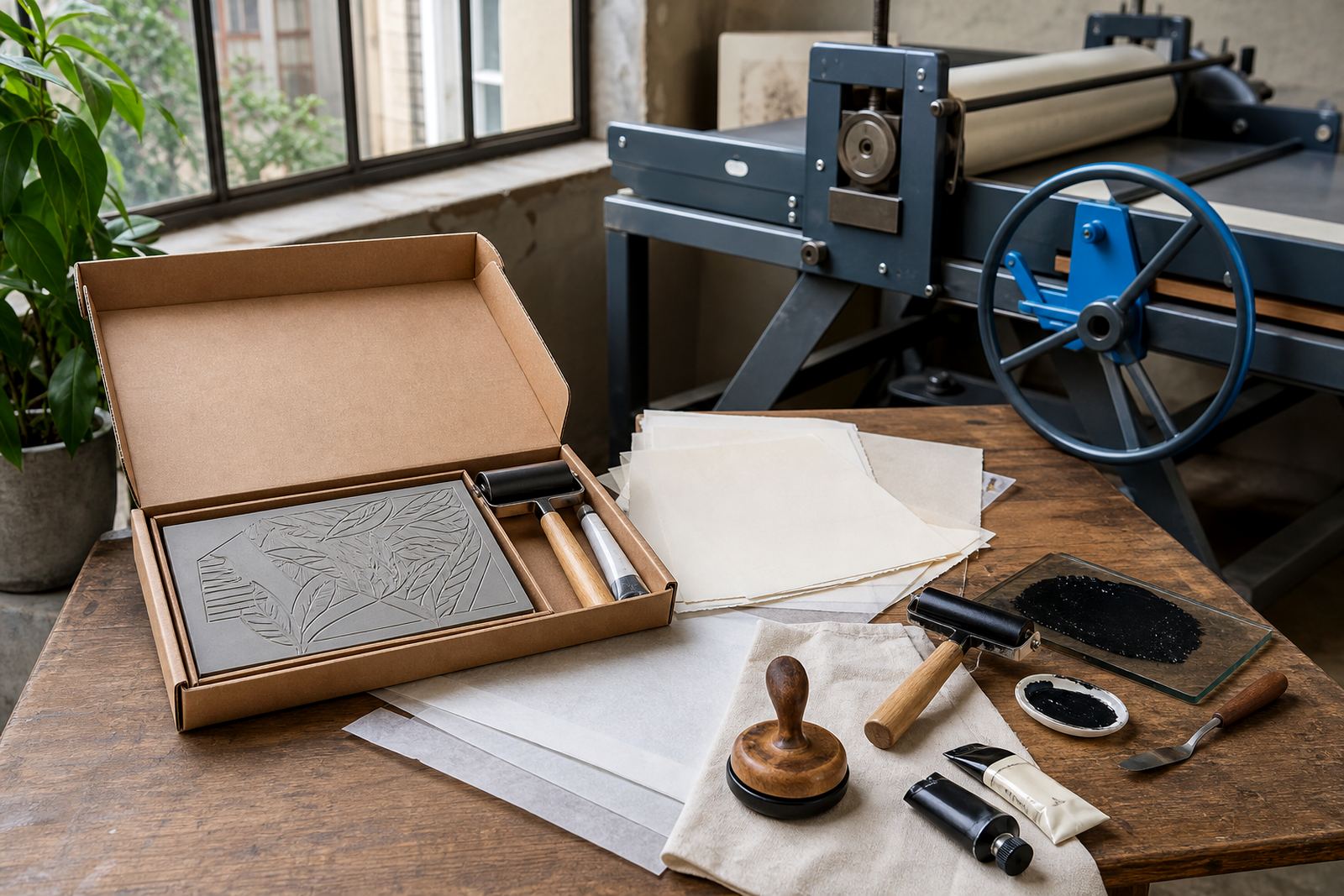
The workshop pack uses the same trade tools found in serious block-print sessions, scaled for groups. Carving usually includes lino or soft-cut blocks, sketch transfer sheets, safe cutting mats and a selection of gouges with different blade profiles. Printing uses brayers, ink trays and block inks that can be water-based or oil-based depending on the paper, drying time and finish needed for the edition.
For hand printing, a baren gives firm, even pressure across the block, while a press can be used where the venue allows and the edition calls for a tighter impression. Registration is handled with corner guides, taped stops or simple alignment marks so repeated pulls land in the same place. That matters when a group is making matching prints, layered colour passes or a small edition with consistent placement. Clean-up materials and protective coverings are included in the planning as well, because print ink behaves differently from ordinary paint.
- Lino blocks and soft-cut blocks
- Gouges, V-tools and safe cutting supports
- Brayers, ink slabs and water-based or oil-based inks
- Baren printing or press printing, depending on the session
What the installation needs in a real venue
The pack is fitted to the room rather than forcing the room to fit the session. A long table run helps with carving and proofing, while a separate clean area is useful for paper stacking and drying. For press printing, the venue needs stable floor space and a surface that can take the weight and pressure of the equipment. Where a school or company venue is very compact, we usually plan the session around hand printing and split the group into rotations.
Water access nearby makes cleanup easier, and covered surfaces help when inks are being mixed or rolled out. If the event is in a venue with strict floor rules, we plan protective sheets and a contained setup so the print area stays manageable. The pack can also be matched to a pop-up class format with transportable tools, meaning the workflow stays the same whether the group is in a Cape Town studio or a hired room in Johannesburg. Details like table count, chair count and paper-drying space are worth confirming before the booking is set.
- Stable tables for carving, inking and edition work
- Drying area for wet prints and stacked paper
- Protective floor and table coverings where needed
- Access for transport, unpacking and set-down of equipment
After the prints are pulled
Care for the workshop pack comes down to ink handling, tool cleaning and paper protection. Blocks should be wiped down once the session is done, with gouges and brayers cleaned according to the ink type used. Water-based inks clear more easily during the session, while oil-based inks need a more deliberate clean-up and safe storage of cloths and solvents if they are part of the setup. Printed sheets should be kept flat until dry, then stacked with clean paper between editions so the prints do not mark each other.
For repeated bookings, it helps to keep the block edges intact and the carving surface free from grit. A worn lino block can still print, but fine detail softens and the cut lines lose sharpness. Soft-cut material is easier for first sessions, while harder lino holds a cleaner line for longer edition runs. We also keep an eye on registration marks and paper size so the next session can be set up without guesswork.
- Wipe and dry blocks before storage
- Clean brayers, slabs and tools after use
- Store finished prints flat and dry
- Keep blocks away from heat, grit and bending
Pack setup details to confirm
When ordering a Team Workshop Pack, the useful details are the number of people, the age mix, the room size and whether the group will be carving, printing or doing both. It also helps to know if the session is for beginners, students with some print experience, or a mixed team that needs a slower demonstration at the start. Paper size, block size and whether the final print will be a single colour or layered colour edition should be settled early so the materials match the session plan.
If the workshop is being held at a school or outside a studio, the venue notes matter too. We need to know about table layout, water access, floor protection and whether the group will use hand printing only or a press as part of the edition. For family bookings, smaller tools and simpler block shapes may suit the group better. For team bookings with a formal outcome, a shared image with individual variation can work well, especially when the prints are meant for display or internal use.
- Group size and age mix
- Session type and skill level
- Paper size, block size and edition count
- Venue layout, tables, water access and print method
Key facts
| Product type | Group lino and block-print workshop pack |
|---|---|
| Block formats | Lino and soft-cut blocks |
| Printing methods | Hand printing with baren, press printing where suitable |
| Ink options | Water-based or oil-based block inks |
| Typical group use | Team bookings, school pop-ups, studio sessions and venue events |
| Venue fit | Indoor tables, drying space and a clean setup area |