
A cleaner table under the carving and printing work
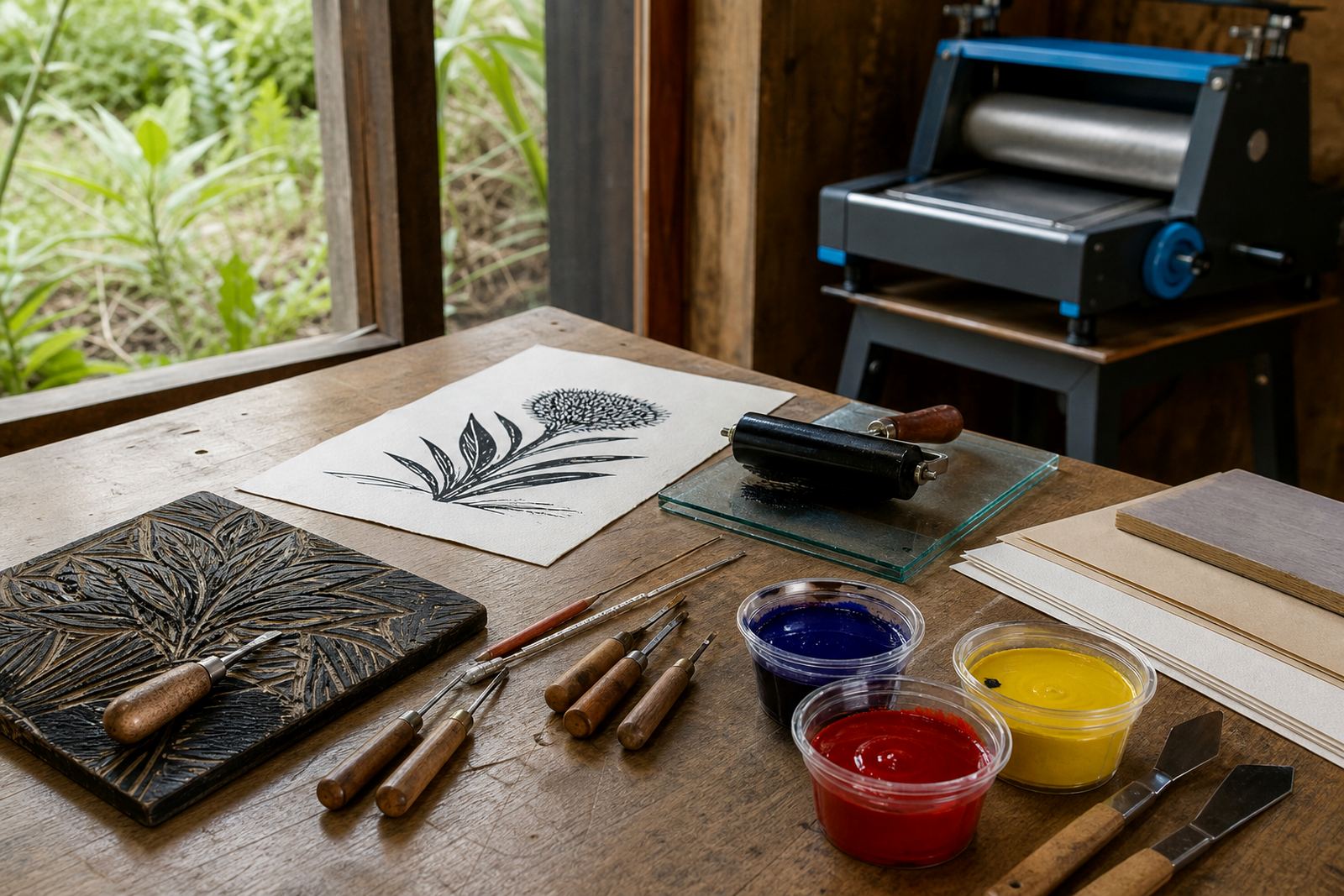
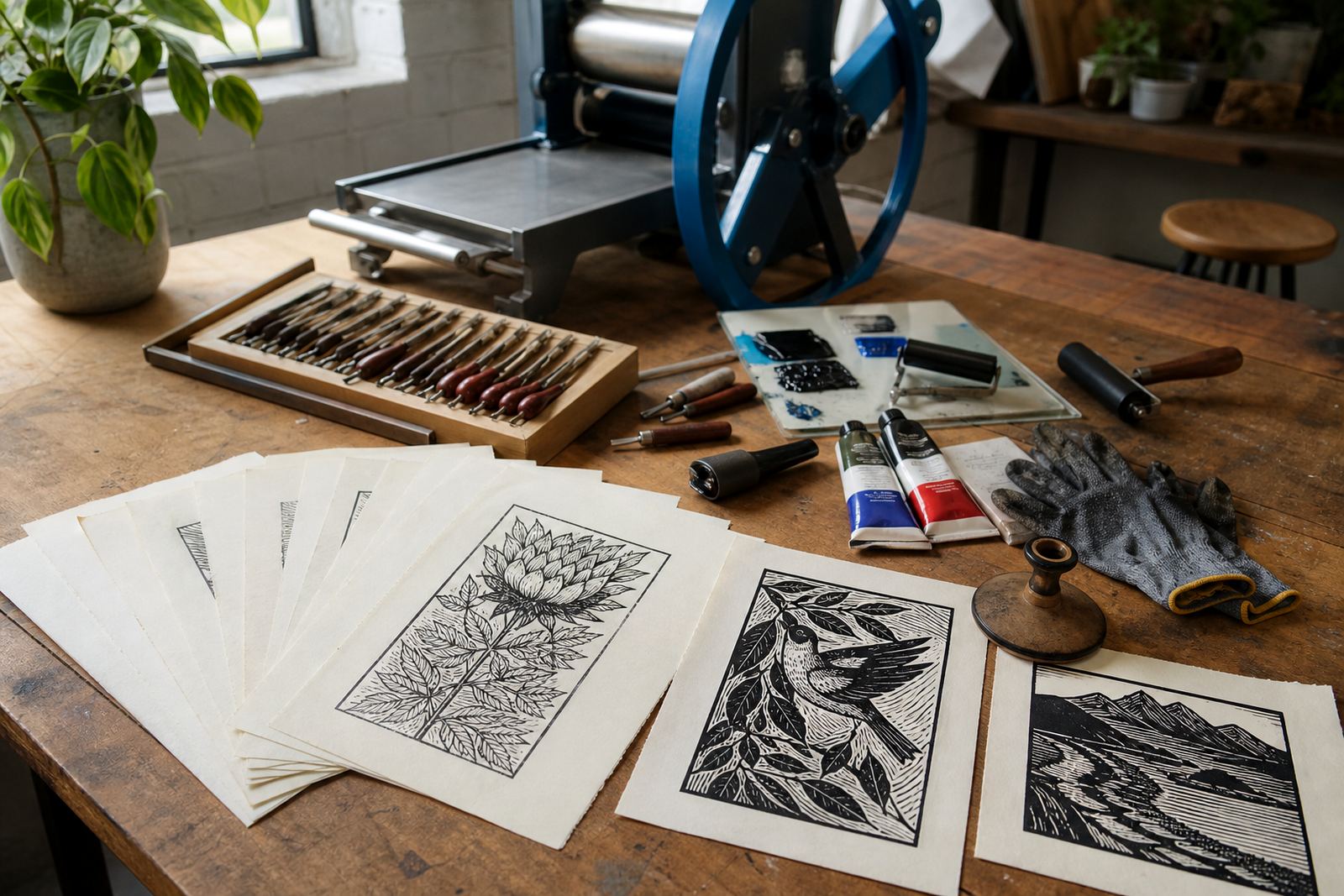
The Table Cover Pack is made for the practical side of printmaking. It gives a protected working surface for carving lino and soft-cut blocks, rolling out water-based or oil-based block inks, and moving damp or freshly printed sheets without marking the table beneath. In a busy session the cover takes the scuffs from brayers, palette knives, rulers and paper edges, so the table itself stays in better shape for the next group.
In workshops, surfaces need to cope with cut marks, spilt ink, paper dust and the pressure of registration. A proper cover also helps keep the table visually tidy, which matters in classrooms, studios and hired venues where the same room may be used for teaching, eating or meetings later in the day. The pack is useful for flat tables, trestles and long communal surfaces, and it works well on sealed timber, laminate and most painted tops.
What’s in the pack and how we make it
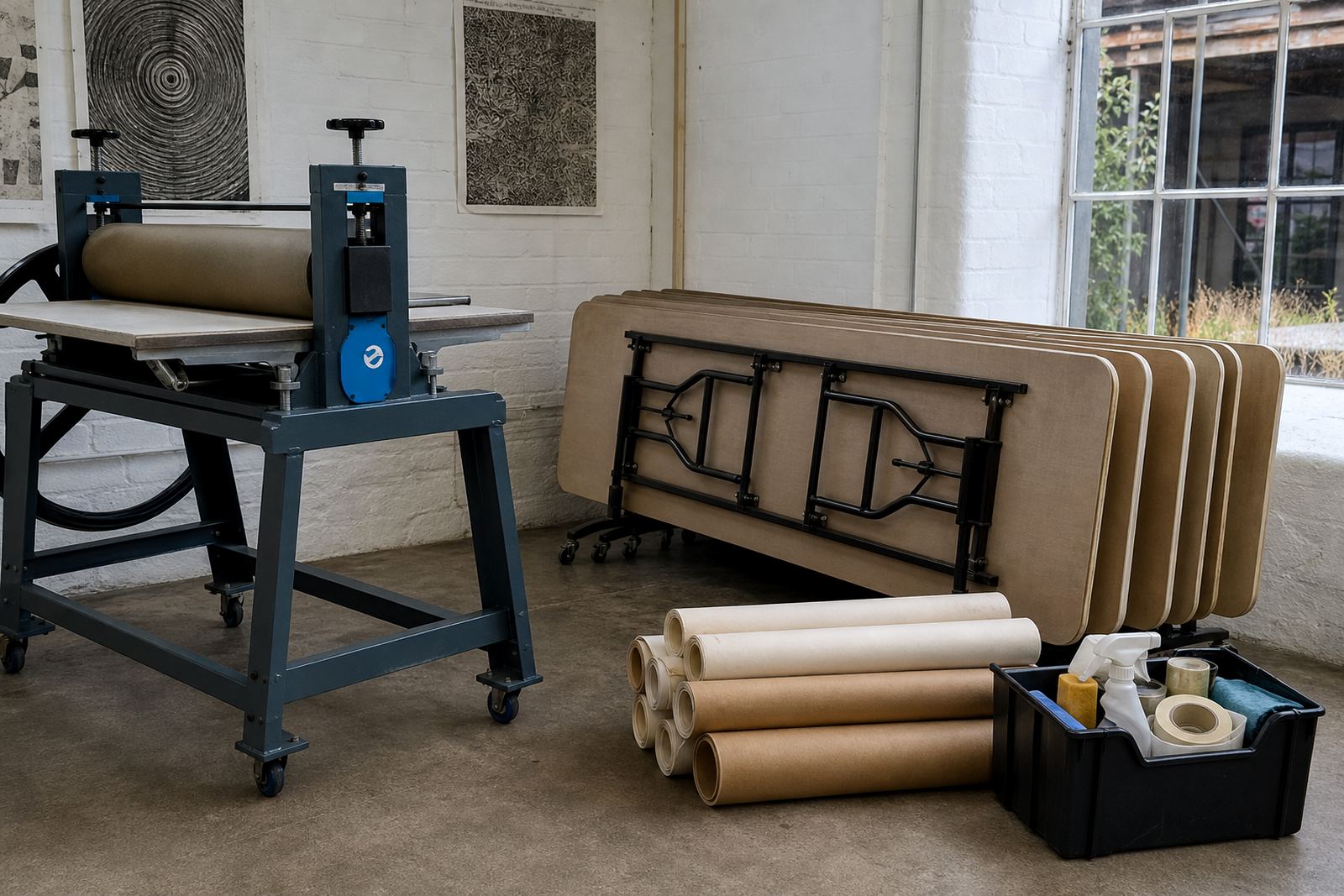
Each cover is selected for printroom use rather than general catering or event dressing. The material is wipeable, hard-wearing and easy to lay flat, with enough grip to stay in place while blocks are being carved or inked. Depending on the table size, the pack can include single sheets, joined lengths or repeated covers for multiple stations. Edges can be supplied with a neat overhang for quick removal and cleaning between groups.
Sizes are normally matched to the working layout. For example, a carving station needs room for block, tools and waste paper, while an edition printing table needs a wider spread for ink, baren work and drying stacks. Where a venue has mixed table sizes, the pack can be set up as a combination of standard panels, corners and longer runs so the surface layout stays practical.
- Working widths can suit narrow classroom counters, trestle tables and larger shared print tables.
- Lengths can be combined for rows, islands or U-shaped teaching layouts.
- Surface finish can be chosen for easy wipe-downs after ink handling.
- Pack formats can be planned for one-off events or repeated studio use.
Where the cover earns its place
This product suits places where printmaking is taught or demonstrated in public view. School art rooms often need quick table protection before a lino lesson starts, while home workshops need a surface that keeps kitchen tables or spare-room tables from becoming permanent ink stations. In hired halls and venues, a cover helps the room reset after the session without stubborn marks left behind.
It also suits pop-up workshops where equipment is unpacked, used and packed away again the same day. If your group is pulling a small edition by hand, showing pressure with a baren, or using a press at one end of the table, the cover helps keep the working area consistent. For team sessions and family print days it gives everyone a defined space for cutting, rolling and printing, which makes the layout easier to manage.
- Schools needing table protection for supervised carving and inking.
- Homes hosting a small print class or family activity.
- Venues with hire tables that need ink protection and a tidy finish.
- Workshops using multiple stations for carving, inking and drying.
Laying it out for carving, inking and press work
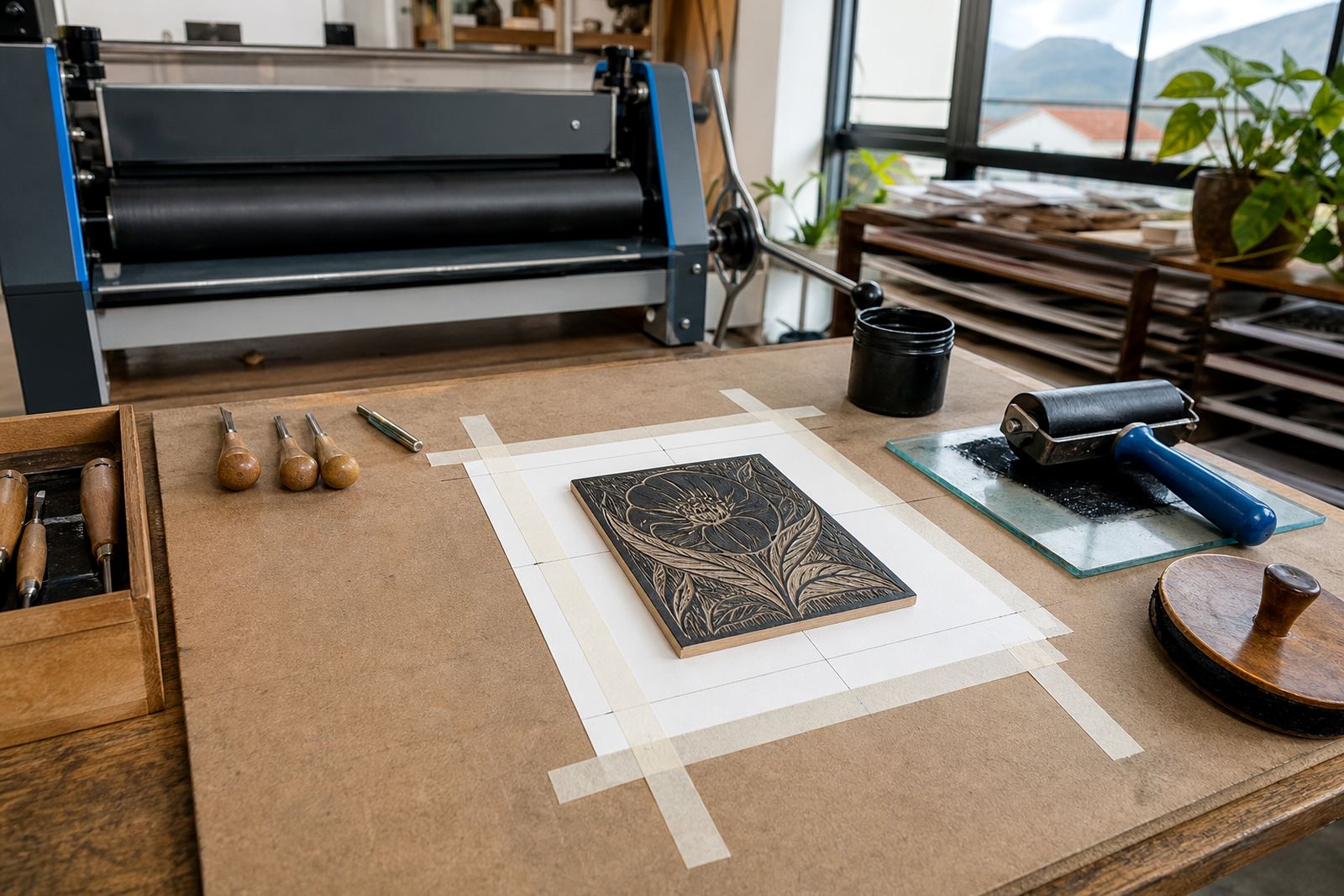
The cover is fitted before the tools come out, with the table cleared of grit and loose paper so the surface sits flat. On longer tables, the joins or overlaps should be aligned away from the main carving zone where possible. If the workshop uses a press, the cover needs to sit level under the inking area and around the staging space, while the press bed itself stays on the correct maker surface or support.
For safe carving sessions, the table cover should not bunch under the block or the non-slip mat. A flat surface matters when students are guiding gouges and V-tools through lino, because wobble can spoil a cut and make the work harder to control. If the session uses water-based inks, the cover can be wiped during the class. With oil-based inks, a little more care is needed around cloths, cleaners and drying corners so the surface stays manageable through the whole session.
We also look at registration space when planning the layout. Edition printing needs room for paper, proofs and finished sheets, so the cover should extend beyond the immediate block area. That extra margin helps when sheets are being set down, aligned and lifted without dragging ink across the table edge.
Washing and reusing the covers
A good print table cover should clean up without drama after a full day of hands-on work. Water-based ink usually wipes off with a damp cloth and mild cleaner, while oil-based ink may need a proper workshop wipe and a second pass where the colour has settled into texture. Dried scraps of paper, trimming offcuts and tape residue should be removed before the next session so the surface stays even.
When folded or rolled away, the cover should be kept dry and away from sharp tools, wet ink sheets and heavy weight that can crease the material. In coastal areas such as Cape Town or Durban, extra care with storage helps reduce sticky surfaces and trapped moisture. If the cover is used in a school or shared venue, it is worth assigning a cleaning cloth, a drying cloth and a storage bag so the pack stays in service for more than one programme.
- Wipe down after each class, especially around inking stations.
- Remove paper dust and tape before folding or rolling the cover.
- Store dry, flat or loosely rolled, away from cutters and blades.
- Check joins, corners and worn edges before the next workshop.
Sizes for your tables
To match the Table Cover Pack to the actual room, a few practical details matter. We need the table length and width, the number of stations, and whether the cover will sit on one long shared table or several smaller ones. It also helps to know if the workshop uses lino, soft-cut, press printing or mainly hand burnishing, because the working layout changes with each method.
Please also confirm whether the session is in a school, home, studio or hired venue, and whether the surface must be cleaned off quickly after the class. If the tables have rounded corners, folding legs or a raised edge, mention that too. For group bookings, it helps to know if the cover must leave space for drying racks, paper stacks, ink trays or a press setup nearby. That way the pack is sized to the real room.
For workshops in Woodstock, Stellenbosch, Johannesburg, Pretoria, Durban, Bellville or Somerset West, table dimensions can vary a lot between venues. The cleaner the measurements, the better the fit for carving, inking and edition work.
Key facts
| Product type | Workshop table protection pack for printmaking sessions |
|---|---|
| Main use | Surface protection for carving, inking, printing and paper handling |
| Typical materials | Wipeable workshop-grade cover sheets and joined table panels |
| Suitable spaces | Schools, homes, studios, hired venues and pop-up workshops |
| Compatible processes | Lino cutting, soft-cut carving, hand printing and press printing areas |
| Care | Wipe clean, dry fully and store flat or loosely rolled |