Press session basics from block to paper
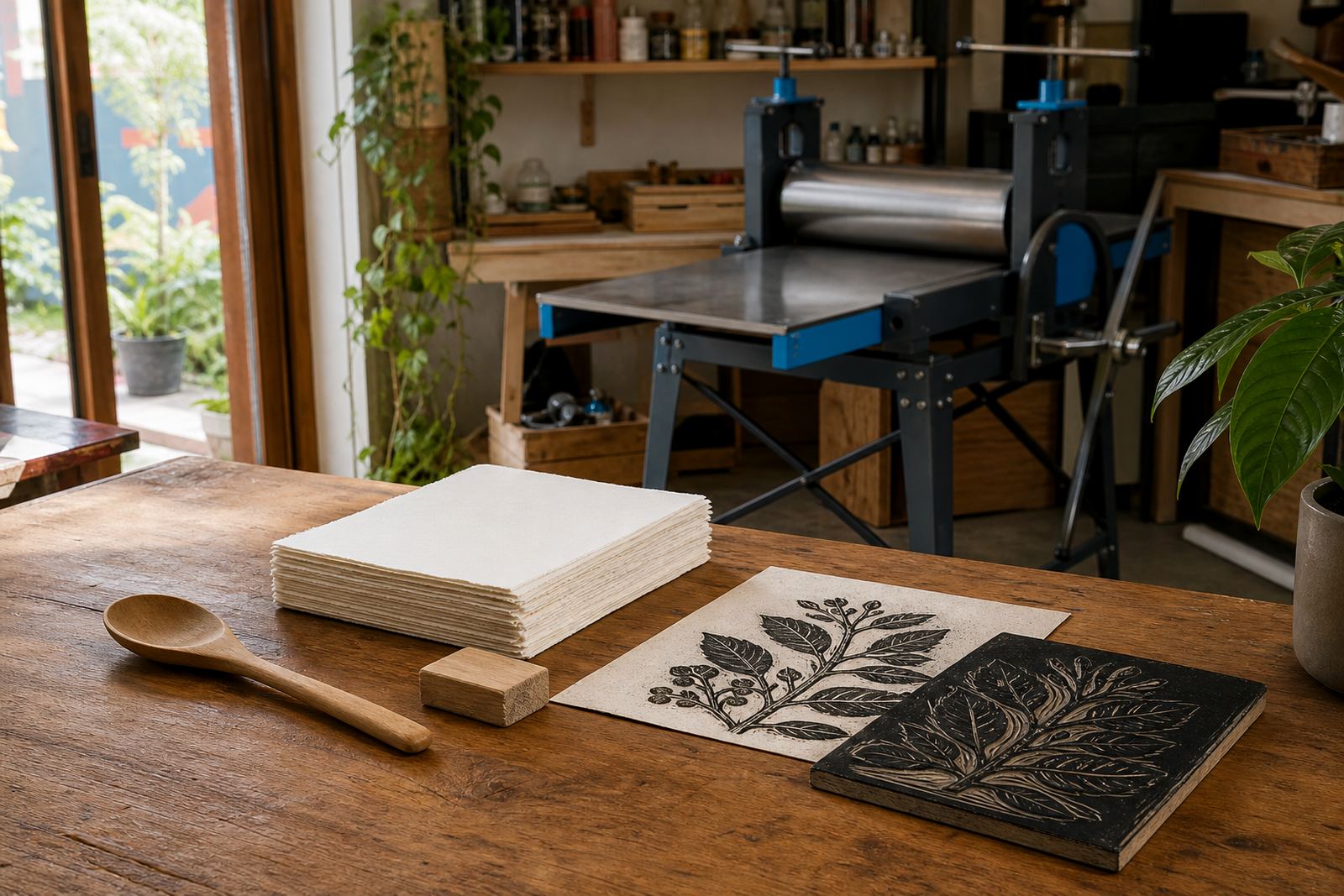
This workshop format focuses on relief printing on a press, where the raised image on a carved block transfers ink under steady pressure. Participants work through the full sequence, from preparing a simple image to carving, inking, registering and pulling a print by hand or on a press. The session is useful for people who want to understand how a lino block or soft-cut block behaves once it meets paper and pressure.
The work covers the practical parts that make a clean print possible. That includes safe carving with gouges and V-tools, checking the block face, rolling on ink with brayers, and setting the paper so the impression lands squarely. Water-based block inks and oil-based block inks can both be used, depending on the paper, the lesson plan and the finish needed.
Session sizes, group formats and print outcomes
Relief Press Session bookings are usually shaped around the group and the venue. A private studio class in Woodstock feels different from a school pop-up in Bellville or a team session in Pretoria, so the format is set to suit the group size, age range and the amount of printing time available. Small groups can spend longer on carving and edition work, while larger groups often move through shorter demos with guided print pulls.
- Private studio workshop for focused printing instruction
- School pop-up format for classroom or hall settings
- Team building session for mixed experience groups
- Family print session with simpler blocks and shorter carving time
- Student print class with clear process steps and edition work
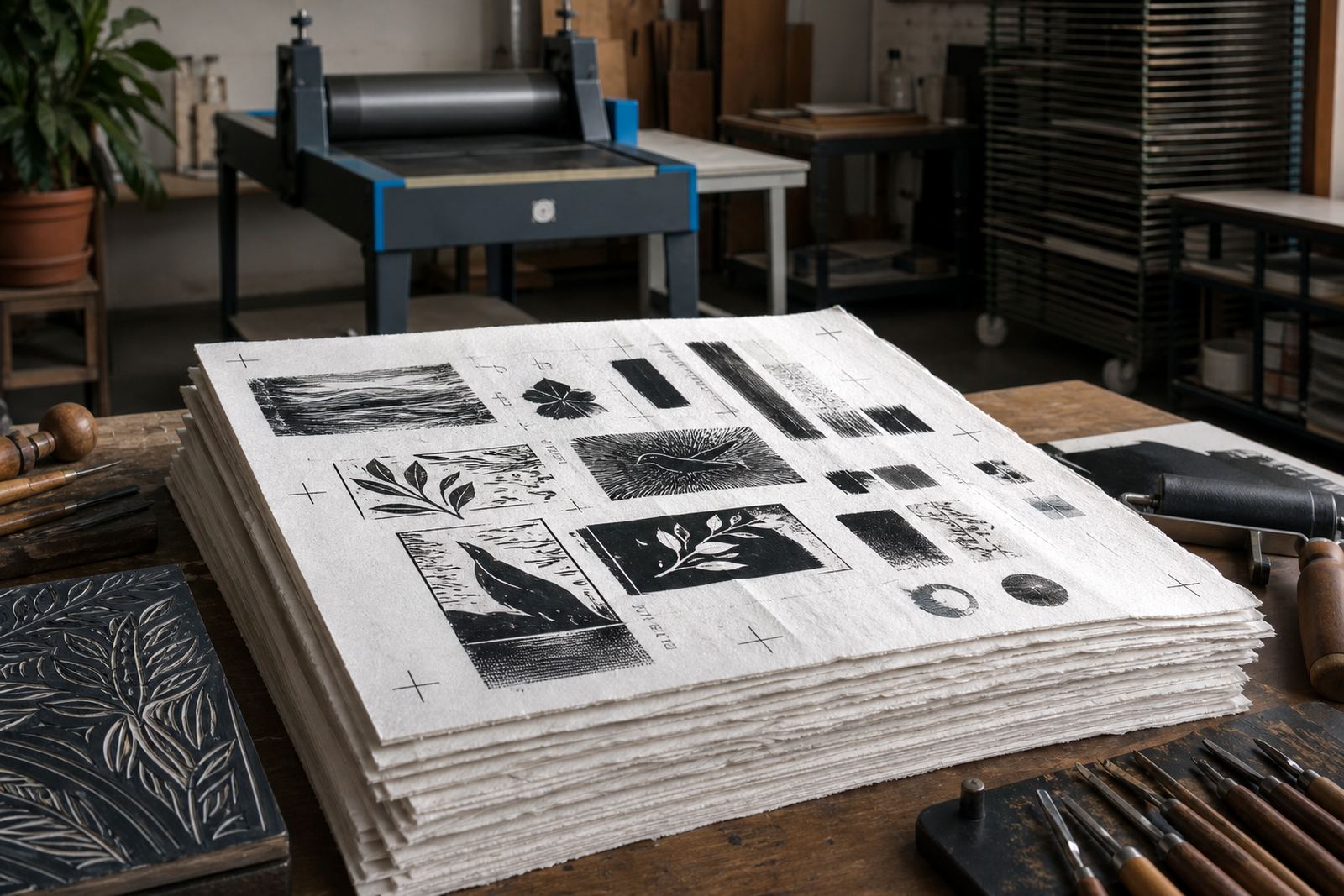
Options can include single-colour prints, layered colour prints, or a small edition where the same image is repeated with even pressure and consistent ink coverage. The edition may be numbered and signed where the brief calls for it, especially when the group wants a neat print portfolio or a teaching sample to keep.
What the press handles in a real workshop
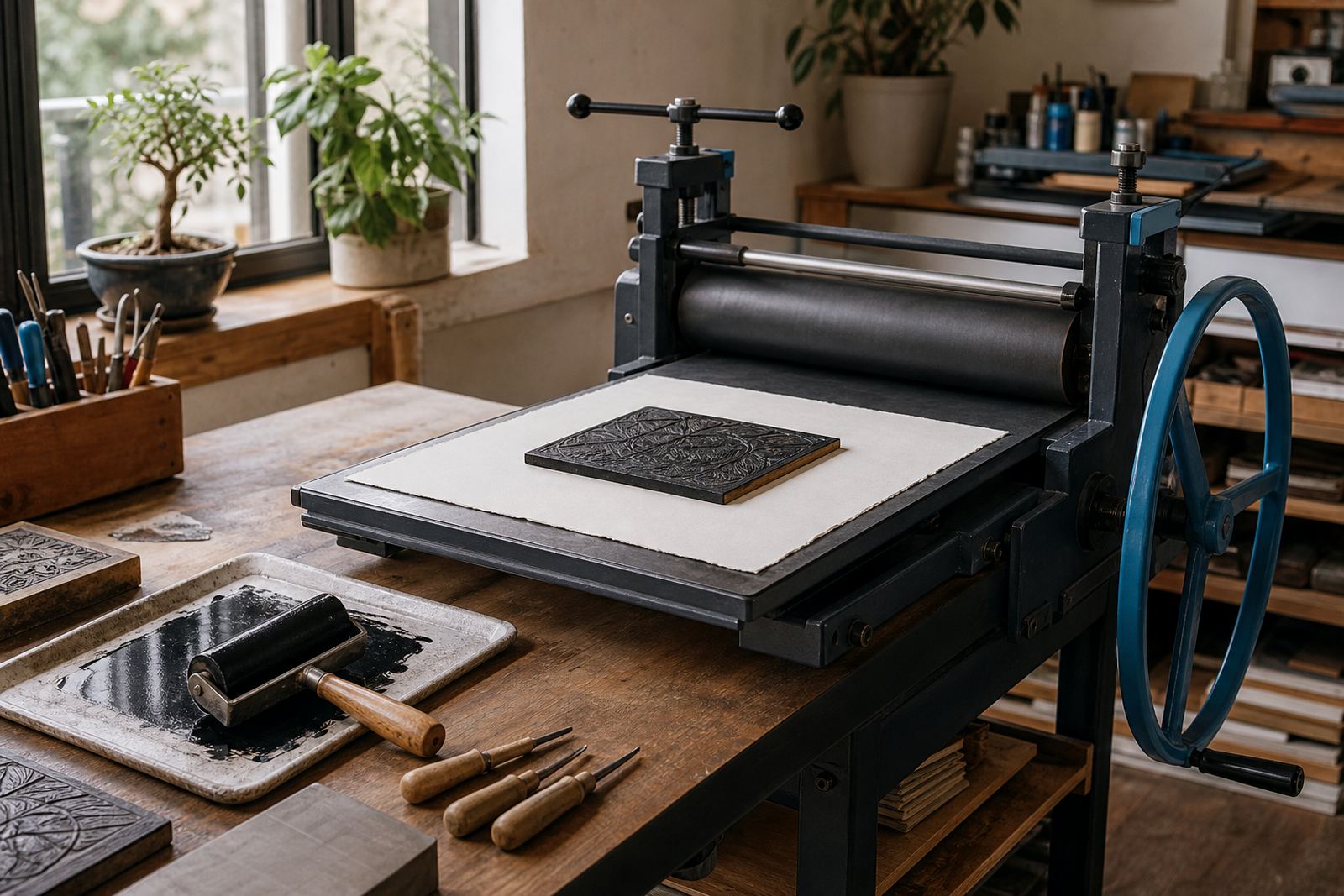
The press stage is where the printmaker checks registration, pressure and paper placement. A small proof may be used first, then the pressure is adjusted so the image reads cleanly without crushing the paper fibre. For paper, the workshop can work with smooth printmaking papers, lightly textured sheets, or stronger stock where a deeper impression is wanted. Not every paper suits every block, so the choice matters.
The session can also include baren printing where a hand tool is used to burnish the paper over the inked block, or press printing where the platen applies force across the image area. Both approaches teach the same principle in different ways. Learners see how the same block can print with a softer touch or a firmer impression, and how a small shift in pressure changes the final mark.
- Registration marks for accurate multi-pass printing
- Proofing before the full edition begins
- Pressure control for thin lines and solid areas
- Clean paper handling to avoid smudges and shifted edges
- Inks suited to either hand burnishing or press use
Where this format works well across Cape Town and other cities
This workshop suits schools, studios, community arts spaces and event venues where a practical print activity is needed. In Woodstock and the wider Cape Town area, it fits neatly into studio programmes, while mobile sessions can be set up in Stellenbosch, Johannesburg, Pretoria and Durban for classes, staff activities or public art days. The format also works for family events where the process should stay clear and manageable.
It is a strong fit when the group needs something tactile and process-led. Printmaking gives people a clear sequence to follow, and the press adds a satisfying technical step that many first-time learners enjoy. The session can be adjusted for mixed ages, though the carving tools and ink handling are always matched to the group and the level of supervision in place.
Studio setup, press space and fitting notes
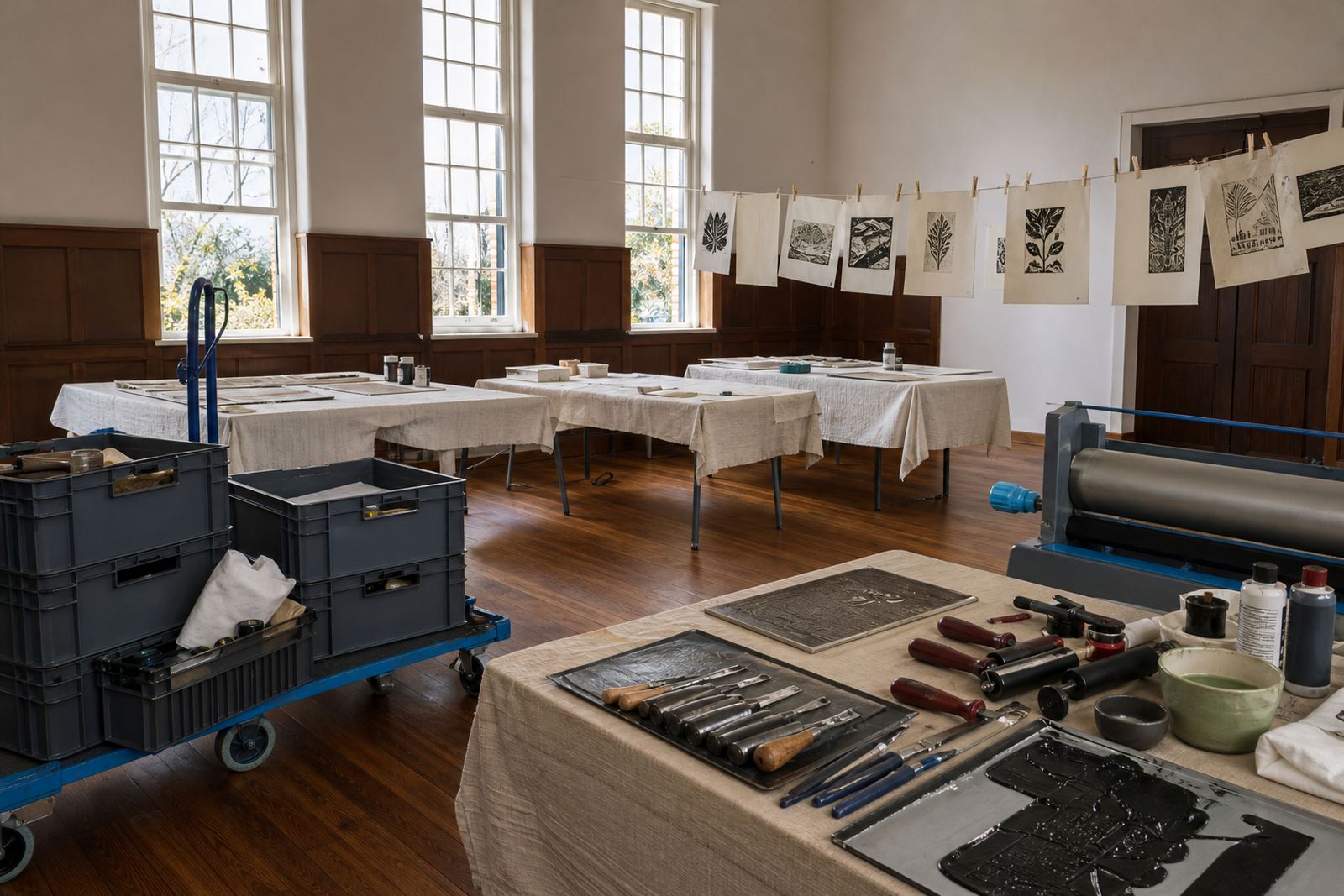
A relief press session needs a level working area, a clean table for inking and a stable surface for the press itself. The studio or venue should allow enough room for carving stations, drying space and safe movement around the equipment. If the session is happening off-site, the layout is planned so the press, ink, papers and drying racks can be placed without crowding the room.
For larger groups, it helps to know the door width, lift access if any, and whether the press must move through stairs, a narrow passage or a courtyard. The workshop team may also need a plain water source for clean-up, plus enough ventilation for the chosen inks and cleaning materials. Where a venue has strict access rules, those details should be shared before the session is set up.
- Level floor space for the press and print tables
- Access path for moving equipment into the room
- Drying area for fresh prints and edition sheets
- Table height that suits carving and inking work
- Water access for washing rollers, trays and hands
Care for blocks, rollers and finished prints
After the workshop, blocks should be cleaned with care so the carved areas stay crisp and the surface does not pick up grit. Brayers and inking trays need wiping down before ink dries hard, while paper prints should be flattened and kept away from damp air. In Cape Town coastal conditions, that extra attention helps prevent cockling in the paper and keeps finished sheets from curling at the edges.
Carved lino and soft-cut blocks last better when they are stored flat and out of direct sun. Gouges and V-tools should be kept dry and protected, because blunt or rusty tools make the next carving session harder than it needs to be. If a print edition is being kept for teaching or display, sleeves or interleaving sheets help protect the surface from scuff marks and loose dust.
Booking a press session
When booking a Relief Press Session, the useful details are the group size, age range and whether the class is for beginners or mixed ability. It also helps to know if the session should include carving only, inking and printing only, or the full sequence from block prep to final proof. If the group wants a particular look, mention whether the prints should be bold and graphic, finely lined, or suitable for a small edition.
- Group size and the number of people printing
- Age range and experience level
- Studio, school, venue or corporate setting
- Preferred block type, such as lino or soft-cut
- Ink preference, paper preference and edition size
- Any access details for the room or loading point
Book a press session through our contact form, with the group size and preferred day. That gives the team the space to match the press session to the venue, the materials and the kind of finished prints the group wants to make.
Key facts
| Workshop type | Relief press printing session |
|---|---|
| Block options | Linocut and soft-cut blocks |
| Tools used | Gouges, V-tools, brayers and carving aids |
| Print methods | Baren printing and press printing |
| Ink options | Water-based block inks and oil-based block inks |
| Typical formats | Private studio, school pop-up, team, family and student sessions |