What sits inside the Family Print Box
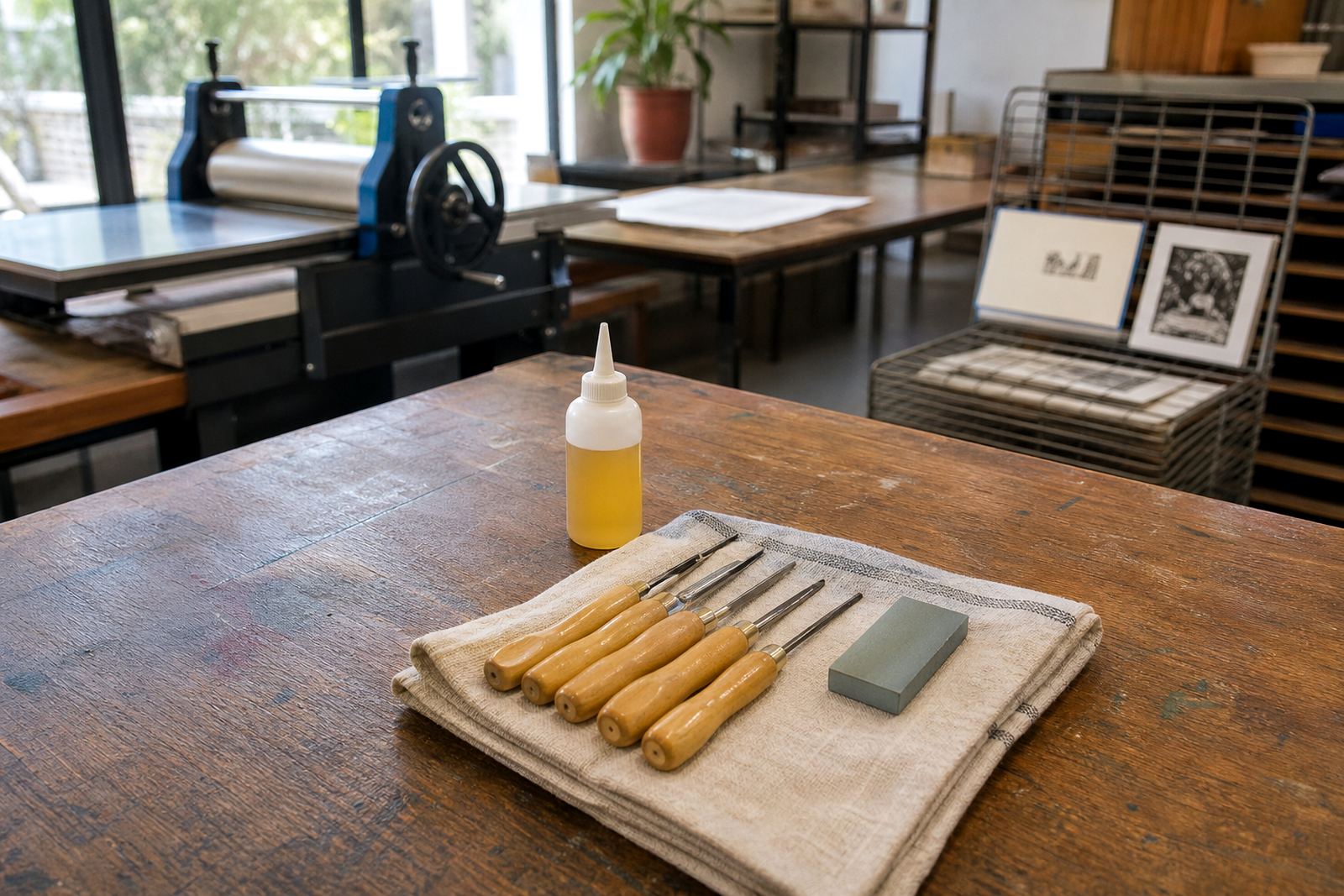
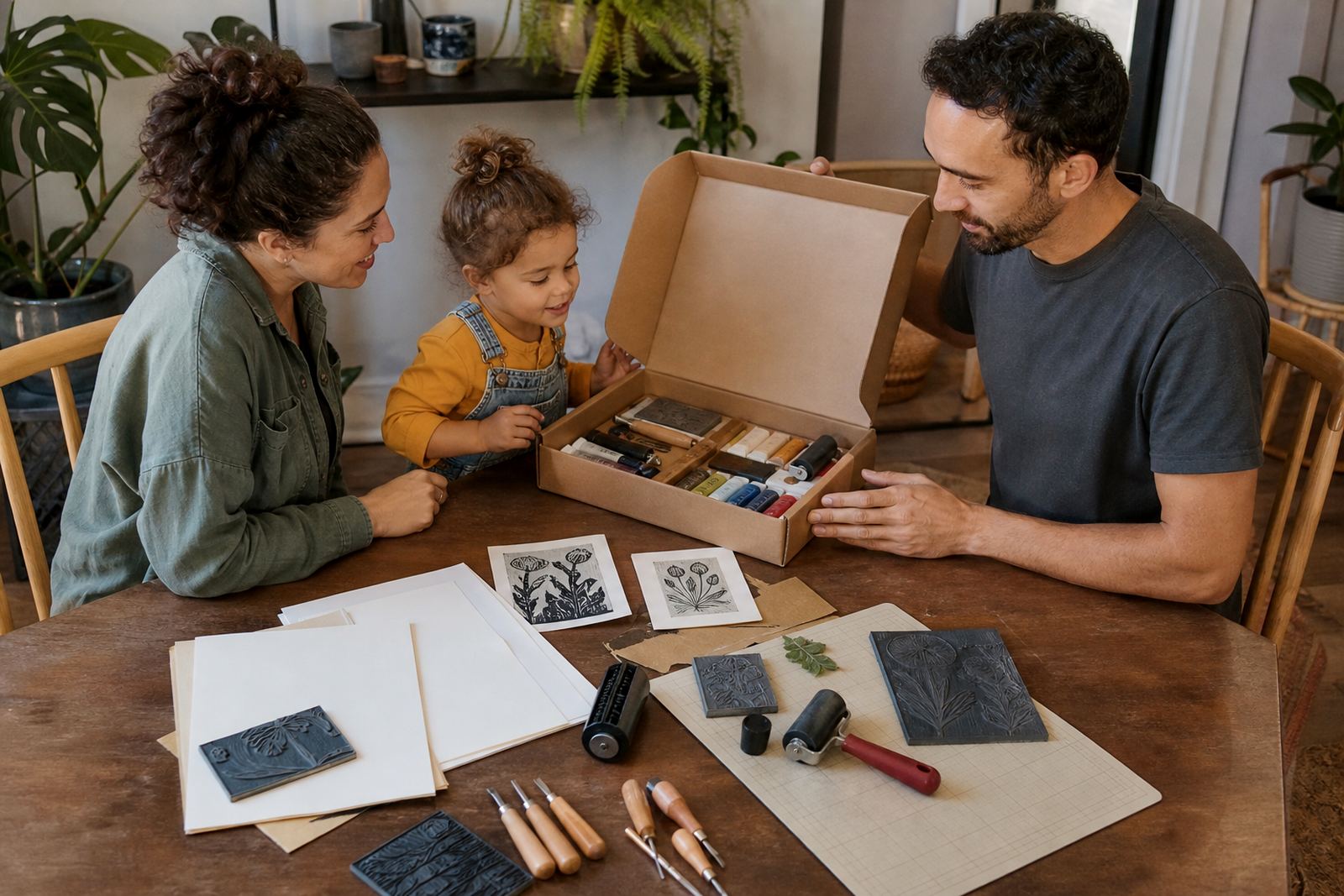
This box gathers the working pieces used in a first lino or soft-cut print session. It is set up for family use, with safer carving choices for younger hands, firmer tools for older children and adults, and enough paper to move from test prints to a small edition. The mix usually includes a printable block, carving tools with guarded handles, a brayer for rolling ink, a baren or hand press aid, proof paper, final paper and cleaning materials for the workspace.
The box is intended for hands-on learning. Families can sketch a design, transfer it to the block, carve the raised areas, roll on water-based block ink or oil-based block ink, then print by hand or with a press. The process teaches pressure, registration and how a clean image comes through when the block is cut well. It also helps children and adults work at the same table, with each person taking a clear role.
- Soft-cut or lino block for carving and printing
- Carving tools with V-tools and safer beginner gouges
- Brayer for even inking across the block
- Baren or hand burnishing tool for manual printing
- Sample papers for proofs and final pulls
- Basic cleaning cloths and wipe-down materials
Sizes and set-ups that suit real households
The Family Print Box can be set up in a compact version for one adult and one or two children, or a fuller version for larger family sessions and holiday projects. Block sizes are usually kept manageable so the image fits a small table and the carving stage does not become awkward. A smaller block also helps younger printers learn to ink the surface without flooding the lines.
For home use, a box with a single block and a modest paper pack works well for first sessions. For families who want more experimentation, a set with extra blocks allows different marks, layered colour, or a repeat pattern across several sheets. Registration marks can be included where the image needs careful alignment, especially if the design uses more than one colour.
- Single-block starter option for one image and a few proofs
- Two-block option for layered colour or parent and child pairing
- Paper packs in A4 or similar working sizes
- Choice of block thickness based on carving depth and handling
- Optional registration guides for repeat printing
Where the box works best
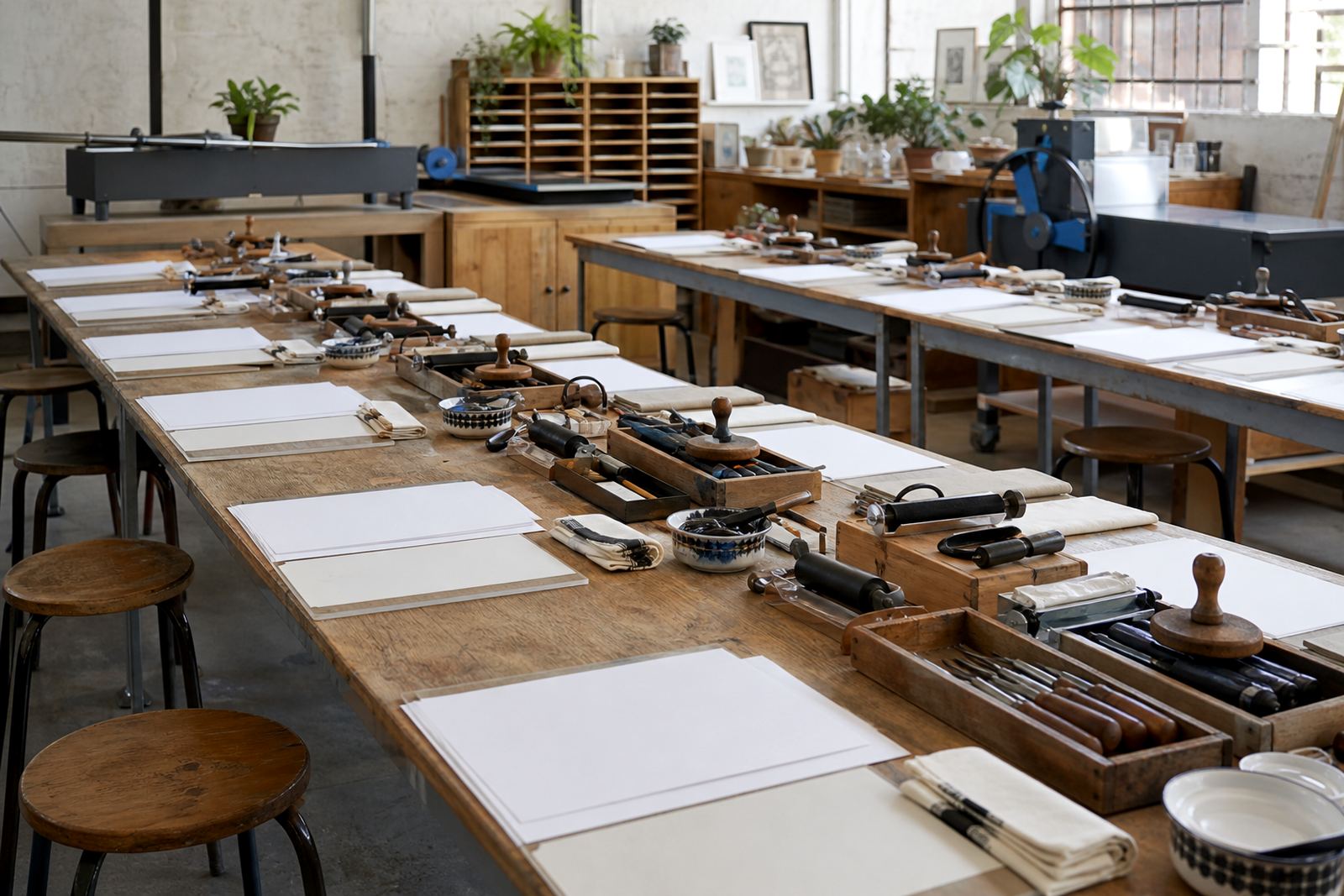
This product suits homes, school holiday groups, family gatherings and small workshop tables where printing can happen without much clearing up in between steps. It also works for birthdays, weekend activities and table-top sessions in shared spaces where people want something practical to do together. The materials are easy to spread out on a flat surface, with enough structure to keep the carving, inking and printing steps in order.
In Cape Town homes, especially where the air carries a bit of coastal damp, block and paper should be kept dry between uses so the surface stays clean and the paper does not cockle. In drier inland towns such as Johannesburg or Pretoria, paper can hold its shape well, but the ink roll still needs an even hand to avoid patchy areas. If the box is taken to a school hall or a venue, a protective covering under the papers helps keep the area tidy.
- Kitchen tables and flat worktops
- School holiday programme spaces
- Family gatherings and children’s activity tables
- Small studio rooms and venue sessions
- Indoor areas where ink control matters
Carving, printing and the feel of the tools
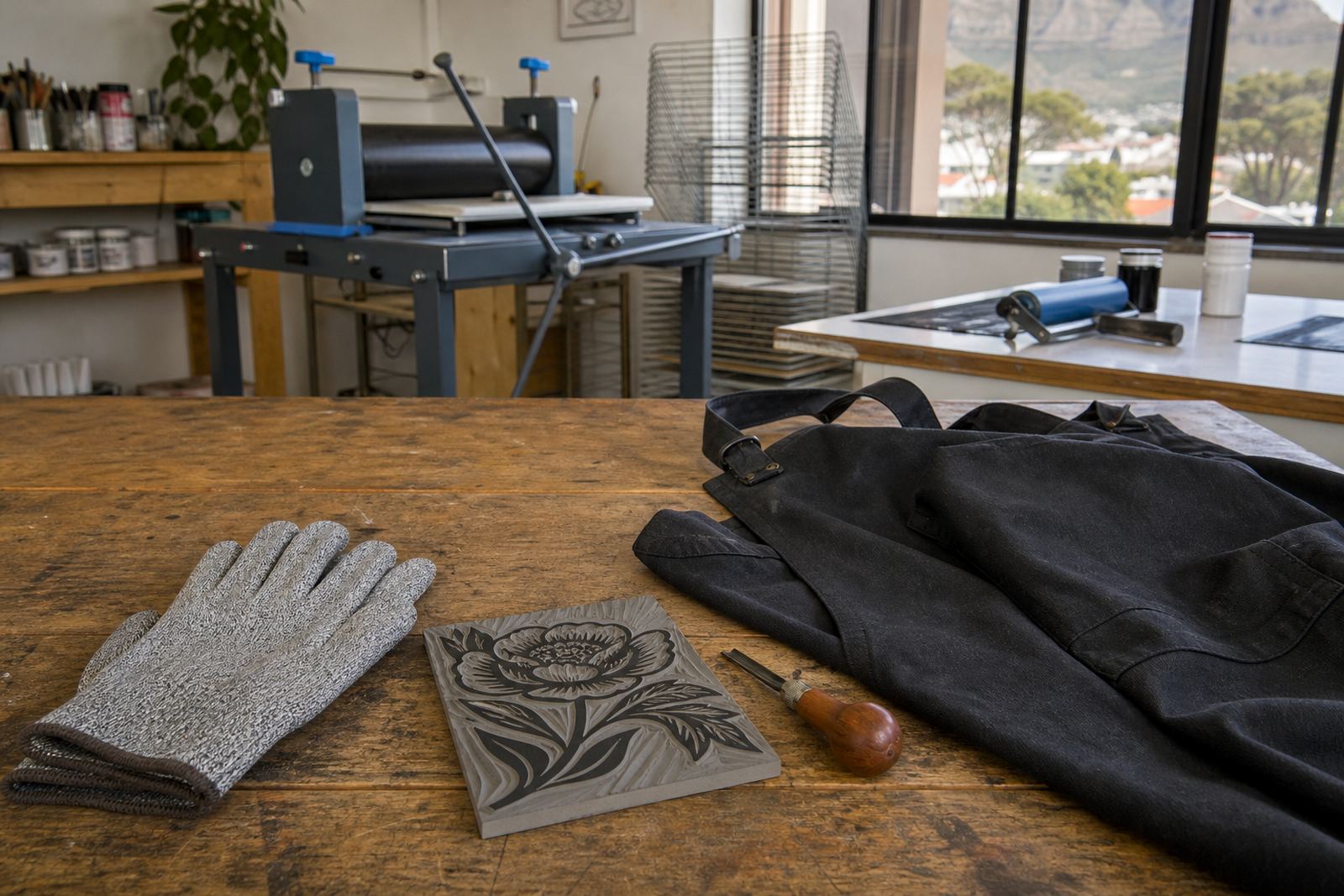
The carving stage uses lino or soft-cut block, depending on the age and confidence of the makers. Soft-cut is kinder for first-time printers and younger hands, while lino gives a firmer cut and a crisper line for older children and adults. A V-tool makes narrow grooves, and broader gouges clear larger open areas. Safe carving still needs attention, with the block held steady and the tool moving away from the body.
Printing can be done by brayer and baren for a hand-pressed finish, or by a studio press where a firmer impression is wanted. Water-based block inks are easier for family sessions and cleaner to pack away, while oil-based block inks stay open longer and can suit more detailed work. The choice depends on the session style, paper absorbency and how much cleanup the family is happy to do after printing.
- Soft-cut for beginner carving and softer resistance
- Lino for firmer lines and deeper cutting
- V-tools for line work and edge detail
- Gouges for clearing open background areas
- Brayer, baren and press options for different pressure levels
Paper, ink and edition details to confirm
When ordering, it helps to confirm the paper weight, block size and the number of prints the family wants to pull. Some papers suit water-based ink better, while others hold a sharper line with a heavier press. For edition work, the number of planned prints should be clear, along with whether the family wants a proof sheet, a final signed edition or a mix of both.
It also helps to state whether the kit is for left-handed, right-handed or mixed-use carving, because tool placement and handling can be planned around that. If the box is for a school or venue programme, let us know whether the session will use a table press, baren printing or a mix of both. That changes how the papers are packed and how much room is needed for drying between pulls.
- Paper size and paper weight
- Block size and number of blocks
- Water-based or oil-based ink choice
- Expected edition count and proof requirements
- Hand printing, press printing or mixed method
- Left-handed or right-handed handling needs
Looking after the box between print sessions
After use, the brayer should be wiped clean before the ink sets, and blocks should be stored flat so the carved surface does not chip. Paper should be kept dry and away from direct sunlight, especially in humid coastal conditions where sheets can curl if left exposed. Tools need a dry cloth wipe and a safe storage place where blades are not rubbing against each other.
If water-based ink was used, cleanup is straightforward with water and cloths, though the block should still be dried properly before packing away. Oil-based ink needs a bit more care, with solvent-free cleaning methods or the right workshop cleaner where appropriate. Families who print often tend to keep a small container for scraps, proof offcuts and used wipes so the main kit stays ready for the next session.
- Dry blocks flat after every session
- Wipe brayers before ink skins over
- Store papers in a dry sleeve or folder
- Keep cutting tools covered and separated
- Sort proof sheets from final edition prints
Key facts
| Product type | Home family block-print kit |
|---|---|
| Block options | Soft-cut or lino block |
| Tool set | V-tools, beginner gouges, brayer and baren |
| Ink options | Water-based block ink or oil-based block ink |
| Paper options | Proof paper and final print paper |
| Typical use | Family making, home workshops, holiday sessions and small group printing |