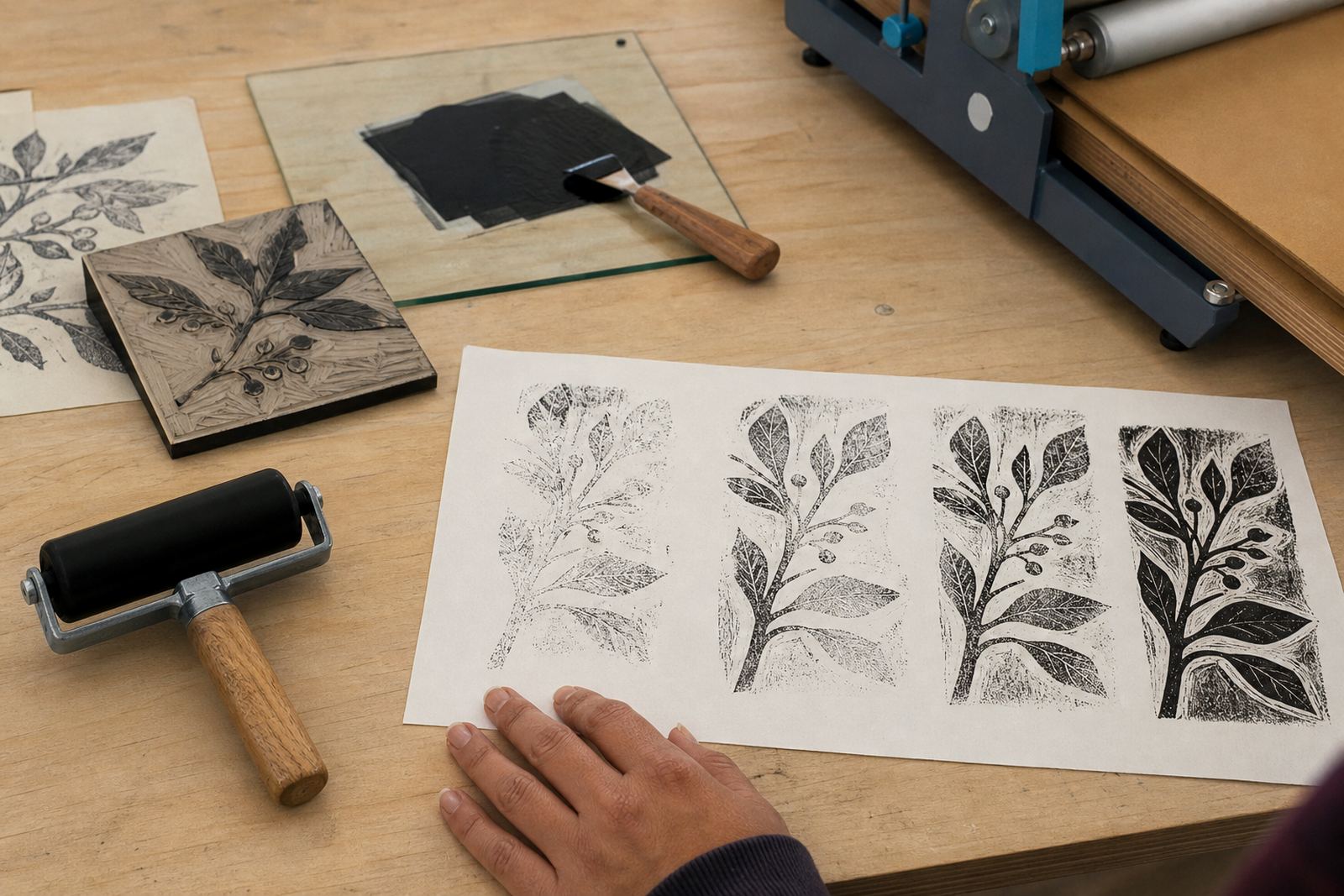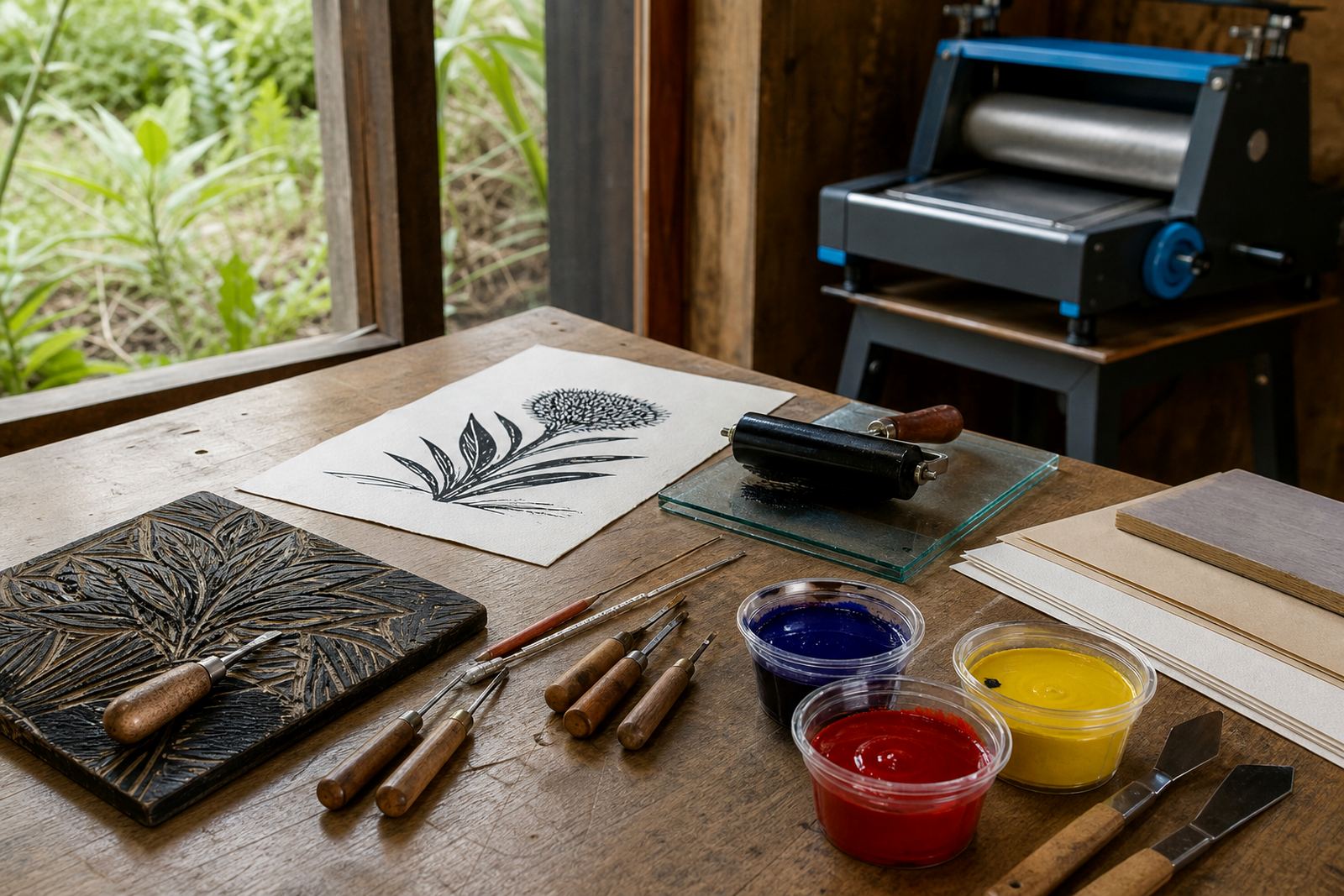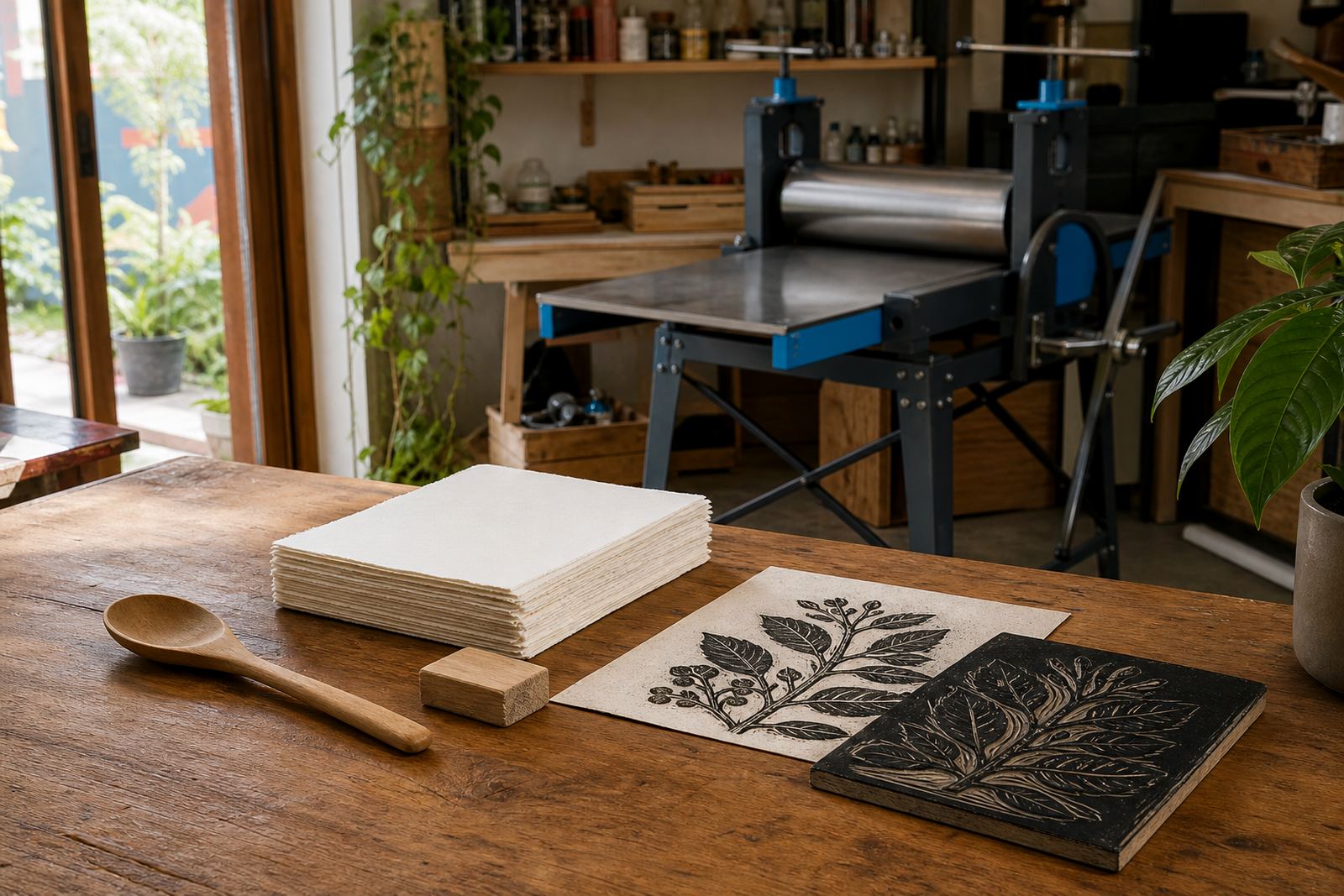
What a baren does at the press table
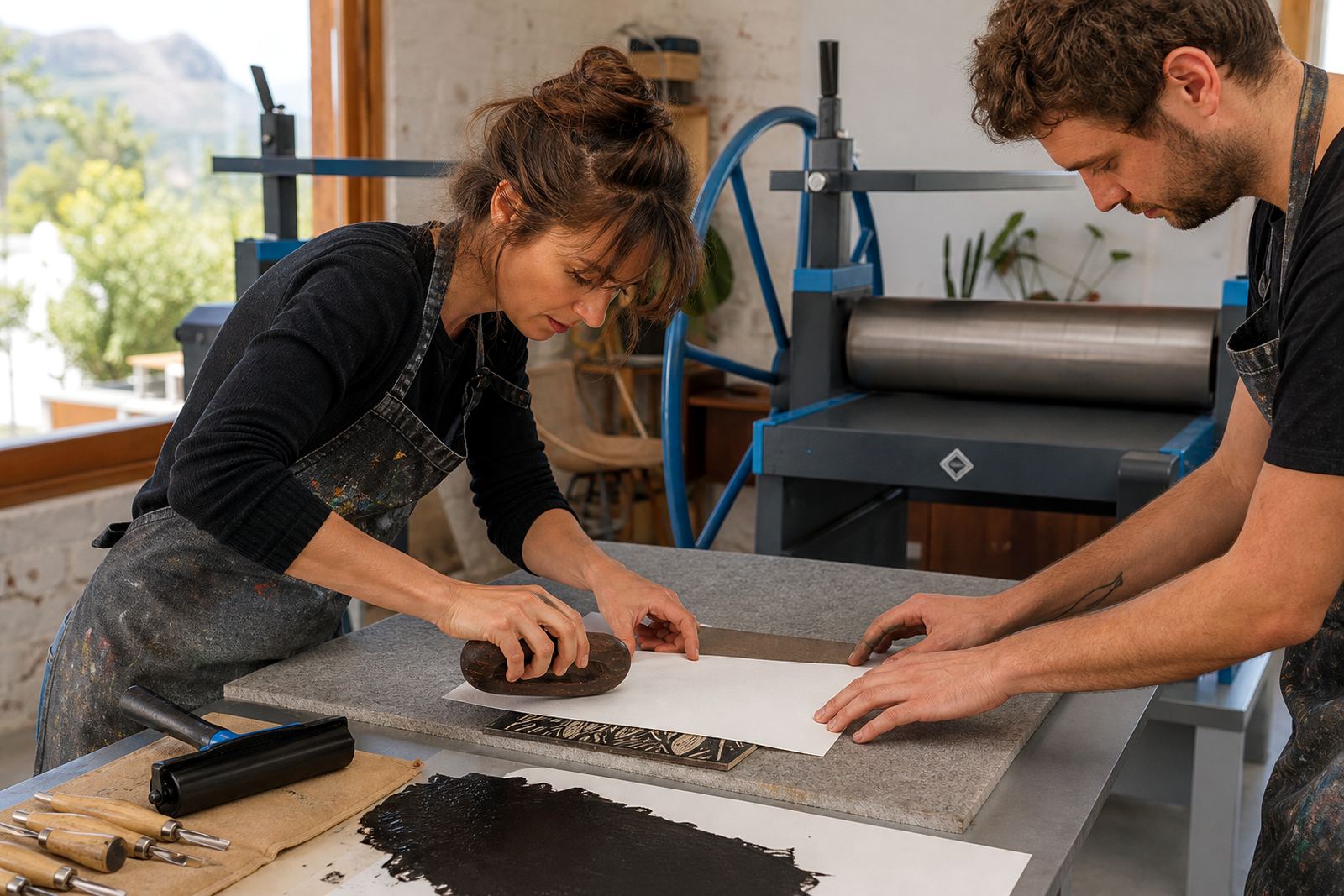
In hand-printing work, the baren sits between the carved block and the back of the paper. It is moved in small circles or firm passes so the pressure reaches the raised image evenly, especially around fine lines, small text and open spaces around a cut block. For relief printing, that controlled burnish can be enough to pull a tidy impression without setting up a full press bed.
We use barens with lino, soft-cut and similar relief blocks when the paper, ink load and carved surface suit hand pressure. A good baren helps when you are pulling a short edition, teaching a first print session, or working with a small sheet where you want close control over the transfer. It also suits demo printing where the printmaker wants to show how much hand pressure matters to the final image.
For workshop use, the tool must feel steady in the hand and move without dragging. A smooth underside, a comfortable grip and a surface that does not catch the paper are all important when the paper has already been aligned on the block and the ink is waiting. In a busy studio the baren becomes part of the rhythm of inking, laying the paper, burnishing and lifting the print.
Sizes, surfaces and workshop options
Barens are usually chosen by palm size, printing area and how long the printer expects to work with them. A small tool suits postcard and A5 sheets, while a broader face helps when printing larger cuts or a wider paper margin. Some workshop groups prefer a lighter tool that is easy to pass around, while others want a heavier burnisher for more direct pressure on thicker papers.
- Round face for general relief printing and circular burnishing.
- Flat or slightly domed base for even pressure across the sheet.
- Light body for student classes and family sessions.
- Heavier body for stronger transfer on textured paper.
- Smooth contact surface for clean movement over the back of the print.
The right choice also depends on whether the workshop uses water-based block ink, oil-based block ink, or a mix of both across different papers. Softer papers often take the mark easily, while heavier cotton or textured sheets may need a firmer hand and more passes. In a studio class we often match the baren to the paper fibre, block depth and edition size rather than treating one tool as suitable for every job.
Where a baren fits into lino and block-print classes
A baren works well in beginner carving sessions, edition print sessions, school pop-up workshops and smaller studio classes where a press may not be the main printing method. It is also useful for pop-up venues where tables, space and transport matter, because it gives the group a practical way to print safely with hand pressure and simple setup.
For teaching groups, the baren helps explain the full chain of relief printing. Participants see how the carved block holds the image, how the ink sits on the raised areas, how registration keeps the sheet in place, and how pressure affects the final pull. That makes it easier to compare a hand-burnished print with one taken on a press, and to notice what changes between the two.
In schools and team sessions, we often use barens for smaller editions, named prints and quick proofing. The tool suits tables that already have paper, masking, registration guides, brayers, cutting mats and cleanup cloths in place. It is a natural fit when the group wants a direct, tactile part of the process rather than a machine-driven impression.
Safe handling and practical care
Because a baren is used close to carved lino and soft-cut blocks, the studio routine matters. The block should be fully secured before printing, with clean edges and a clear working area so hands do not move over fresh cuts. Students are shown how to hold the tool, keep fingers clear of the blade marks, and work from the centre of the image outwards rather than pressing across loose paper edges.
- Wipe ink from the face after each session.
- Keep it away from sharp gouges and open cutting areas.
- Store it flat or in a sleeve so the surface stays true.
- Avoid grit, dried ink and rough table tops that mark the base.
- Check the grip if the tool feels loose or uneven in the hand.
With oil-based ink, a little solvent-safe cleaning is usually needed on the surrounding studio tools, while water-based ink can be lifted with the normal wash routine used on the printing table. The baren itself should not be soaked or left in standing water. A dry, clean tool prints more evenly and lasts better through repeated workshop use and edition work.
Check all details before placing your order
When ordering a baren for workshop or studio use, the first details to settle are size, weight, face shape and intended paper size. A tool that feels right for A4 proofs may be too small for a larger edition sheet, while a heavier model may tire younger hands during a family session. If you print on textured paper, mention that too, because the surface feel changes what kind of pressure works best.
- Printing area and paper size.
- Whether the tool is for lino, soft-cut or mixed relief work.
- Preferred weight for hand use across a full workshop.
- Surface finish on the contact face.
- Need for a single class tool or repeated edition use.
- Any storage, packing or transport requirements for pop-up sessions.
If the baren is going into a schools programme or travelling kit, it helps to note the table setup, class size and whether the tool will sit alongside brayers, inks, papers and registration aids. For larger studio work, the print technician may also want to check the block format and the impression style so the baren matches the pressure needed for the edition.
A small tool with a clear job on the printing table
In relief print work, a baren gives a direct hand between the carved block and the final sheet. It is simple to carry, easy to teach, and useful wherever people print by hand. For lino and block-print sessions, it brings a clean transfer, a steady burnish and a hands-on part of the process that learners remember because they can feel the image forming under the palm.
For our workshop team in Woodstock and the classes we run across Cape Town, Stellenbosch, Johannesburg, Pretoria and Durban, the baren sits naturally beside carving tools, brayers, papers and ink trays. It is one of those small items that does a very specific job, but does it well when the block is cut properly and the paper is laid with care.
Key facts
| Tool type | Hand-held burnisher for relief printing |
|---|---|
| Primary use | Transferring ink from lino or soft-cut blocks to paper |
| Compatible methods | Hand burnishing, edition pulling, proof prints and small workshop runs |
| Typical sizes | Palm-sized to larger face options for A5, A4 and wider sheets |
| Common materials | Smooth burnishing face with a comfortable grip body |
| Workshop fit | Suitable for studios, schools, pop-up classes and travelling print kits |