
Room plan first, printing second
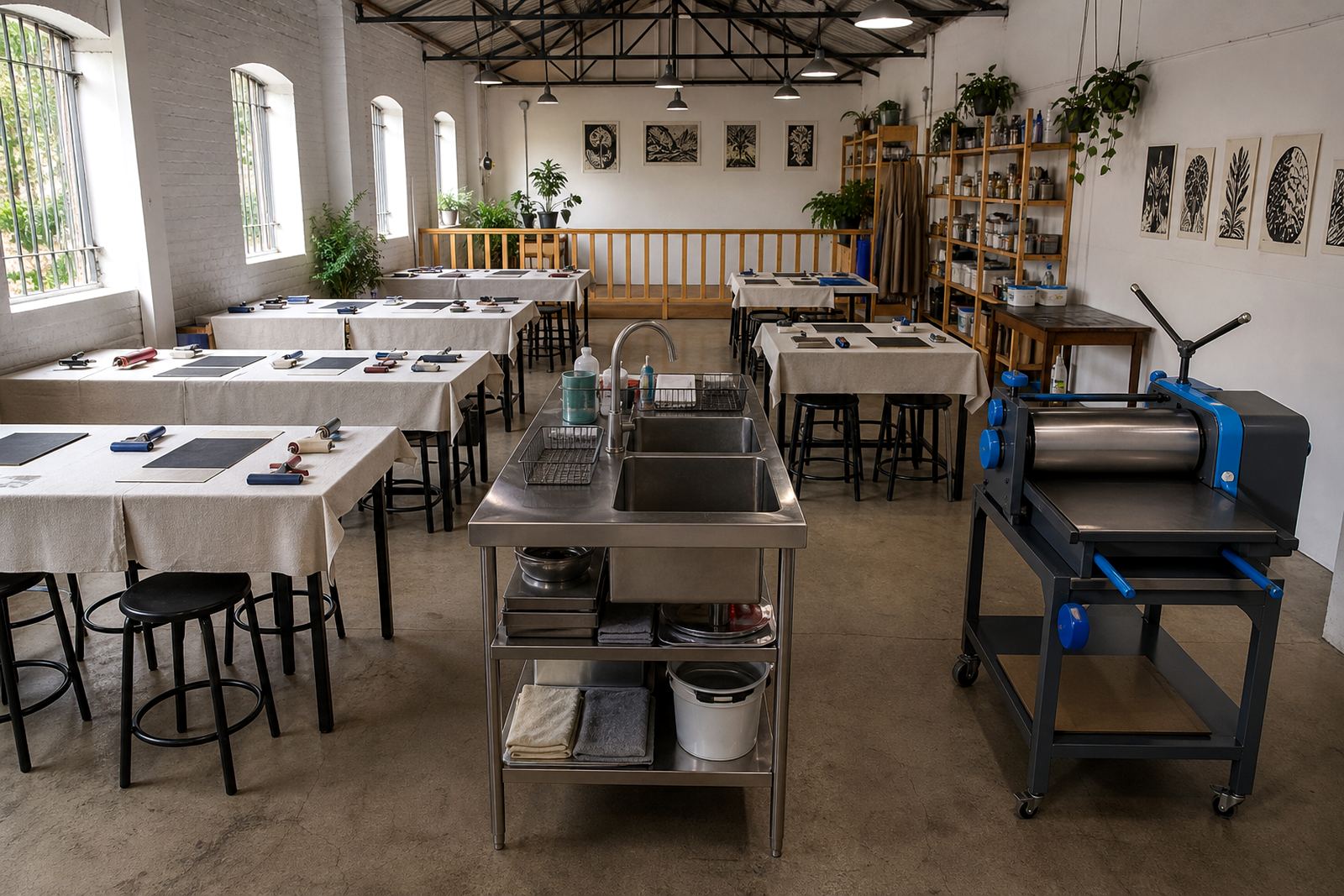
Every venue has its own limits, from school halls and studio floors to boardrooms, galleries and community spaces. We start by reading the room size, door positions, table count, floor finish and light levels, then shape the layout around safe movement and clean print handling. A good setup gives each person enough elbow room for carving, inking and pressing without crossing over someone else's work.
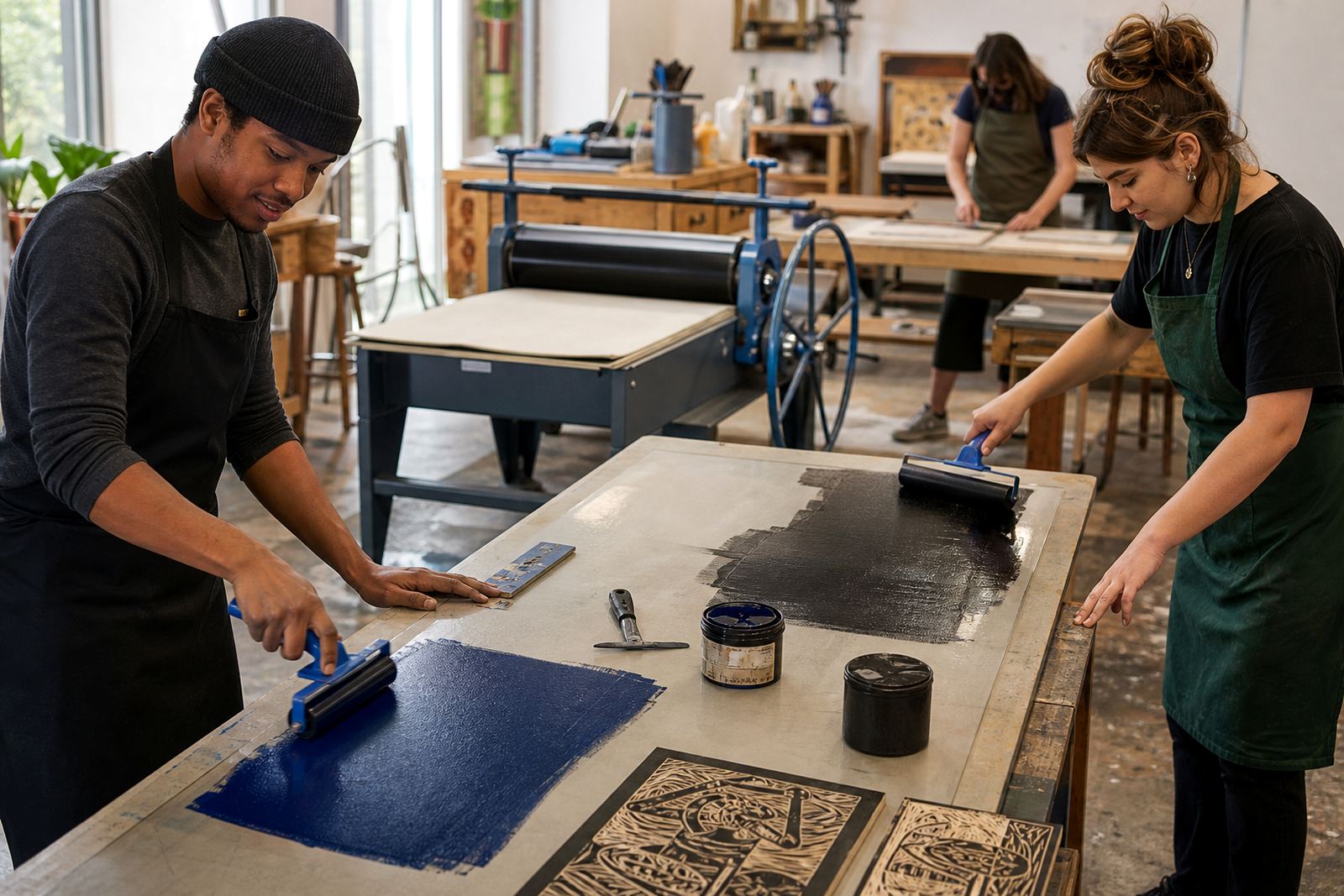
The station plan usually includes carving tables, inking tables, print stations, drying lines or flat drying zones, and a clear space for finished sheets. We also mark the route for moving wet prints so corners, taps and foot traffic do not cause smudges. Where the venue is tight, we split the class into working clusters and keep the drying side separate from the carving side.
- Separate zones for blades and wet ink
- Coverings for tabletops and nearby floor areas
- Drying space planned for the chosen paper size
- Clean route for moving wet sheets and editions
What we bring to the floor
The setup is built around the tools a linocut or block-print session needs. That includes protective coverings, masking and layout aids, drying supports, print blankets where required, and clear labels for each station. For workshops using lino or soft-cut blocks, the surface must be steady enough for safe gouge work and wide enough for brayer loading without crowding.
When a press is part of the session, we allow for stable placement, access on both sides and enough room for sheets, baren printing or press-fed printing depending on the class format. We also account for water-based or oil-based block inks, paper stacks, scrap sheets and clean-up containers so the print area stays workable through the full session. We set the room up so it copes with twenty people carving, inking and drying at once.
- Surface coverings and spill protection
- Space for brayers, inks, barens and papers
- Safe placement for press printing or hand printing
- Clear station labels for teachers and participants
How the setup is planned on site
We begin with the venue shape and the workshop format. A family session needs a different pace from a student class, and a school hall needs another layout again. Once the group size and activity type are known, the station count is planned so people can carve, ink and print without waiting at the same point in the room.
The practical checks include table height, chair spacing, electrical access where a press light or equipment table is needed, and the amount of floor that must stay open for movement. In coastal spaces like Woodstock, Somerset West or Durban, we also factor in airflow and humidity, because damp air can change how quickly prints settle and how neatly sheets stack. The layout is adjusted to suit the venue instead of forcing the venue to fight the workshop.
- Group size matched to table count and working space
- Layout adjusted for schools, studios and hired venues
- Airflow considered for coastal conditions and paper handling
- Room flow mapped before participants arrive
Turnover between carving, inking and drying
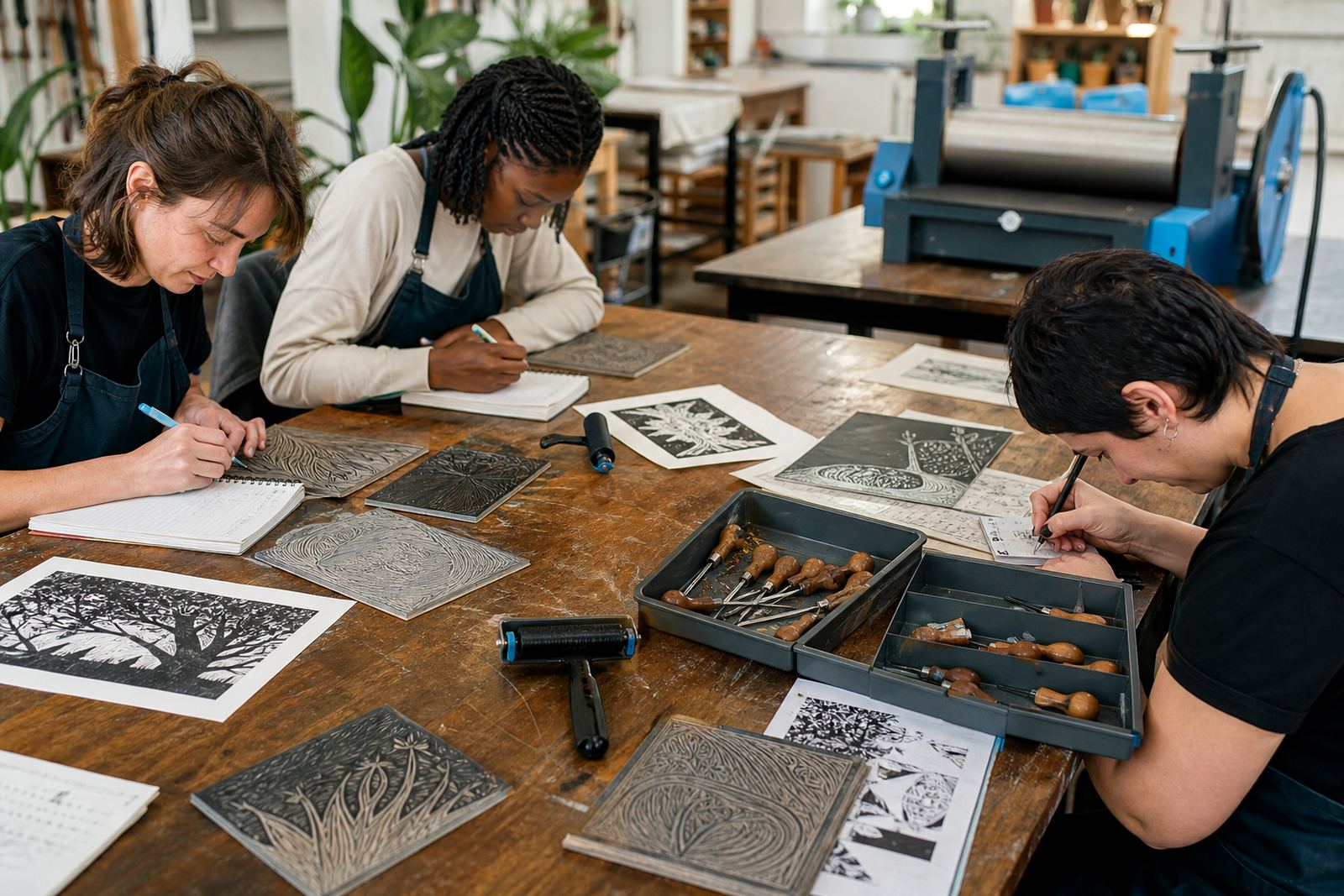
Block printing works best when each stage has a clear place. Carving needs a calm station with enough margin for safe gouge and V-tool work. Inking needs a clean surface where rollers can be loaded evenly. Printing needs room for alignment, pressure and paper placement. Drying needs a separate area that stays clear once sheets are pulled.
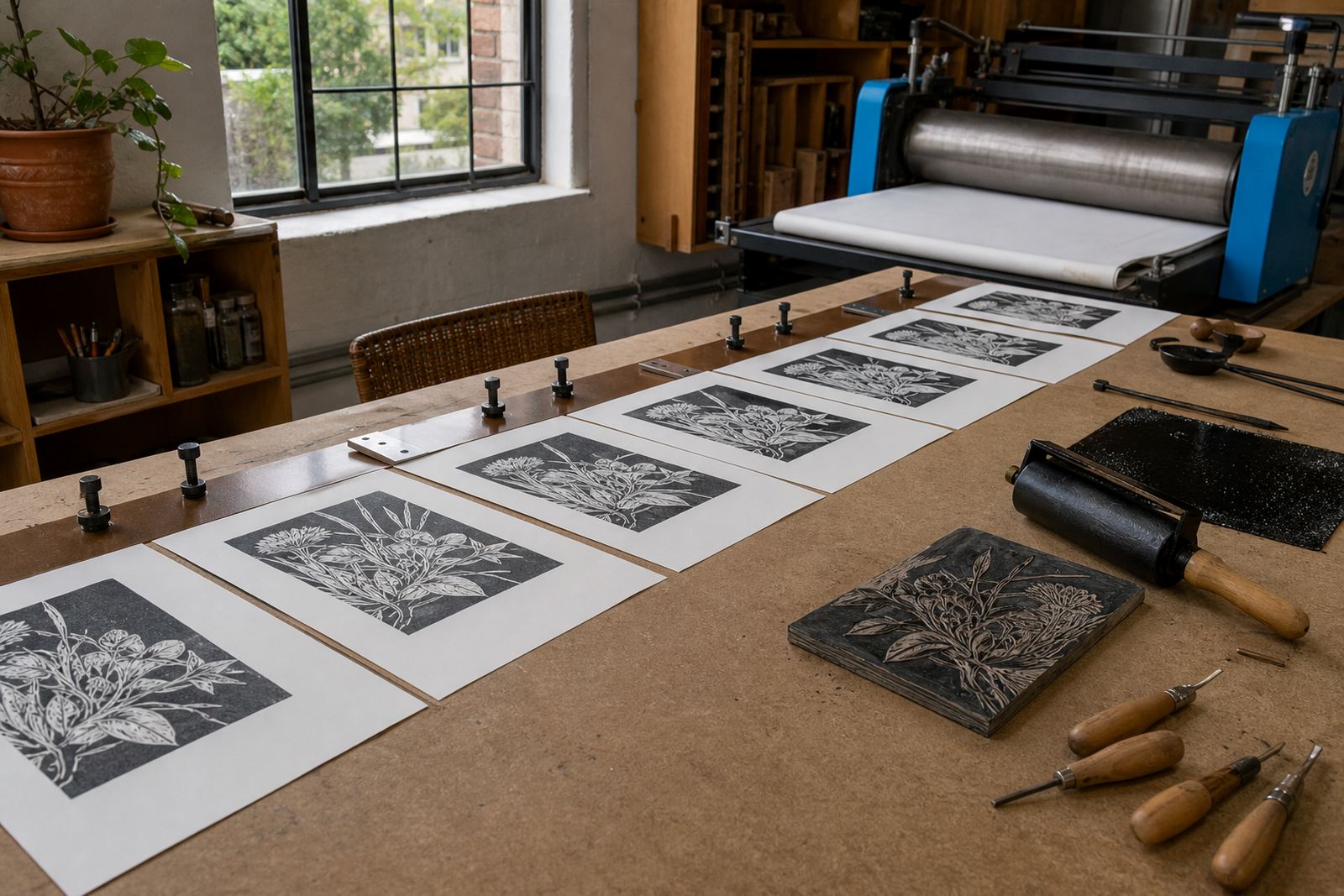
Our venue setup service is built to stop those stages from collapsing into each other. We position the drying area away from the inking zone, keep finished sheets flat where possible, and leave a sensible gap between active stations and the exit path. For edition printing, this matters even more because the order of sheets, proof prints and final pulls must stay readable throughout the session.
- Separate zones for carving, inking, printing and drying
- Space kept for proofs, editions and final sheets
- Movement planned so wet prints do not cross busy walkways
- Alignment space left open for registration work
A pricing approach that fits the venue and the group
Pricing is shaped by the room, the group size, the level of setup needed and whether the venue is a bare hall, a fitted studio or a temporary pop-up space. A small workshop with existing tables and easy access takes a different amount of preparation from a school event with multiple stations and heavier cover requirements. We quote around the actual setup load.
For larger groups, the layout can include more protection, more drying capacity and more hands-on station control. For simpler sessions, the setup may only need a lean floor plan, table covering and a clean print flow. The cost structure follows the practical work involved in making the venue ready for lino carving, block inking and edition handling.
- Quoted from the venue plan and workshop format
- Scaled to stations, coverings and drying requirements
- Suited to schools, private sessions and group bookings
- Adjusted for press work or hand-printing formats
After the session, the room still has to work
Good aftercare means the venue is left tidy, sheets are moved safely, coverings are removed without damaging the room and the print area is handed back in order. We also make sure any wet work is isolated from clean work so there is no accidental transfer of ink onto tables, floors or door handles. That matters in shared venues where the next group may be walking in after a short reset window.
For teachers, hosts and event coordinators, the value is in knowing the print area has been thought through from the first table to the last drying sheet. If the session includes a press or multiple ink colours, the close-down step is planned as carefully as the setup. The result is a clean room that can be used with confidence for the next activity.
- Tables and floors cleared after the workshop
- Wet prints separated from packed materials
- Venue handed back in working order
- Close-down planned with the same care as setup
Key facts
| Service type | Venue setup for linocut and block-print workshops |
|---|---|
| Typical venue | Schools, studios, halls, galleries and hired rooms |
| Workshop methods | Hand printing, baren printing and press printing |
| Setup elements | Layout planning, coverings, drying areas and workflow mapping |
| Paper handling | Flat drying zones, proof space and edition sorting |
| Service area | Cape Town, Stellenbosch, Johannesburg, Pretoria and Durban |