What the edition session includes
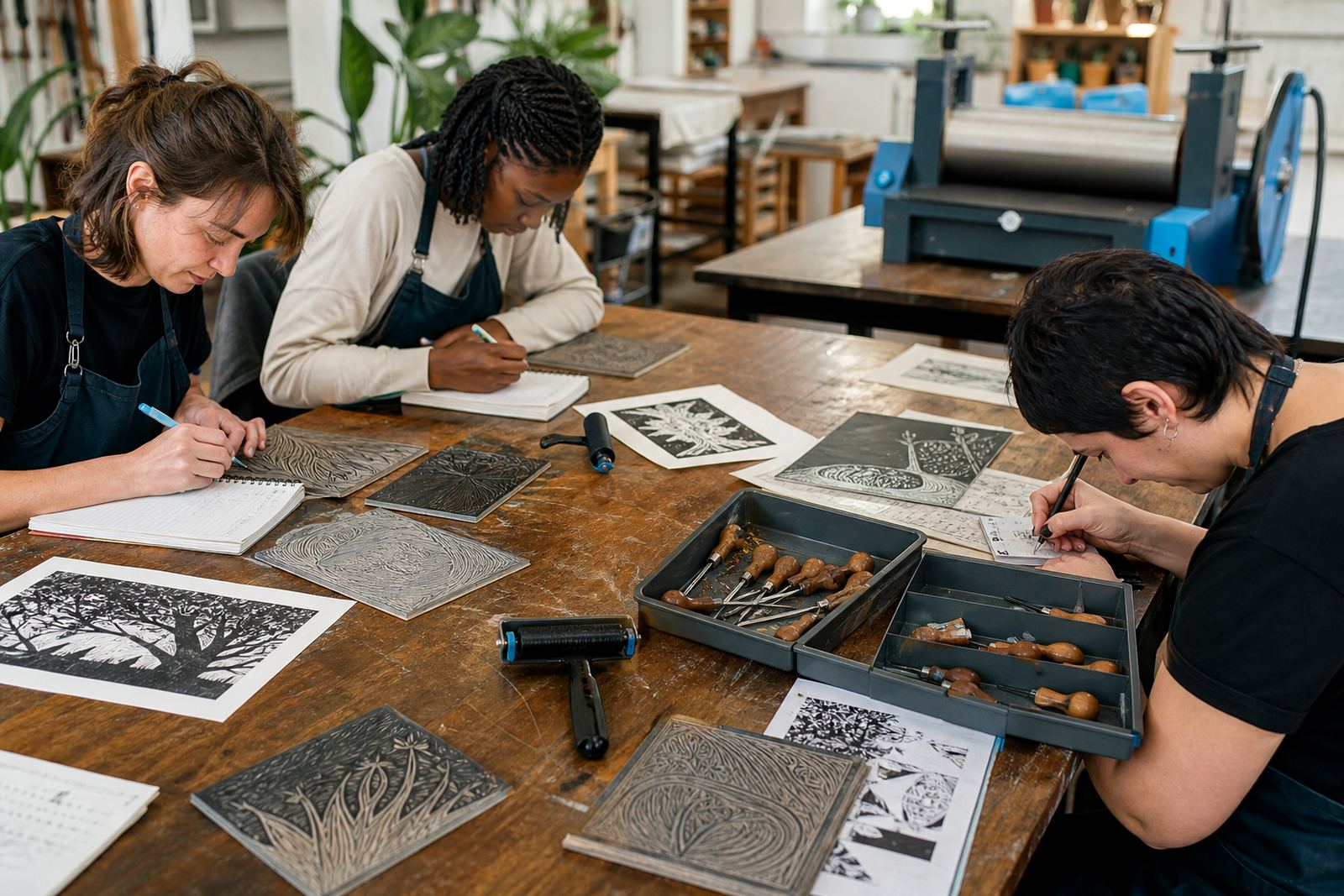
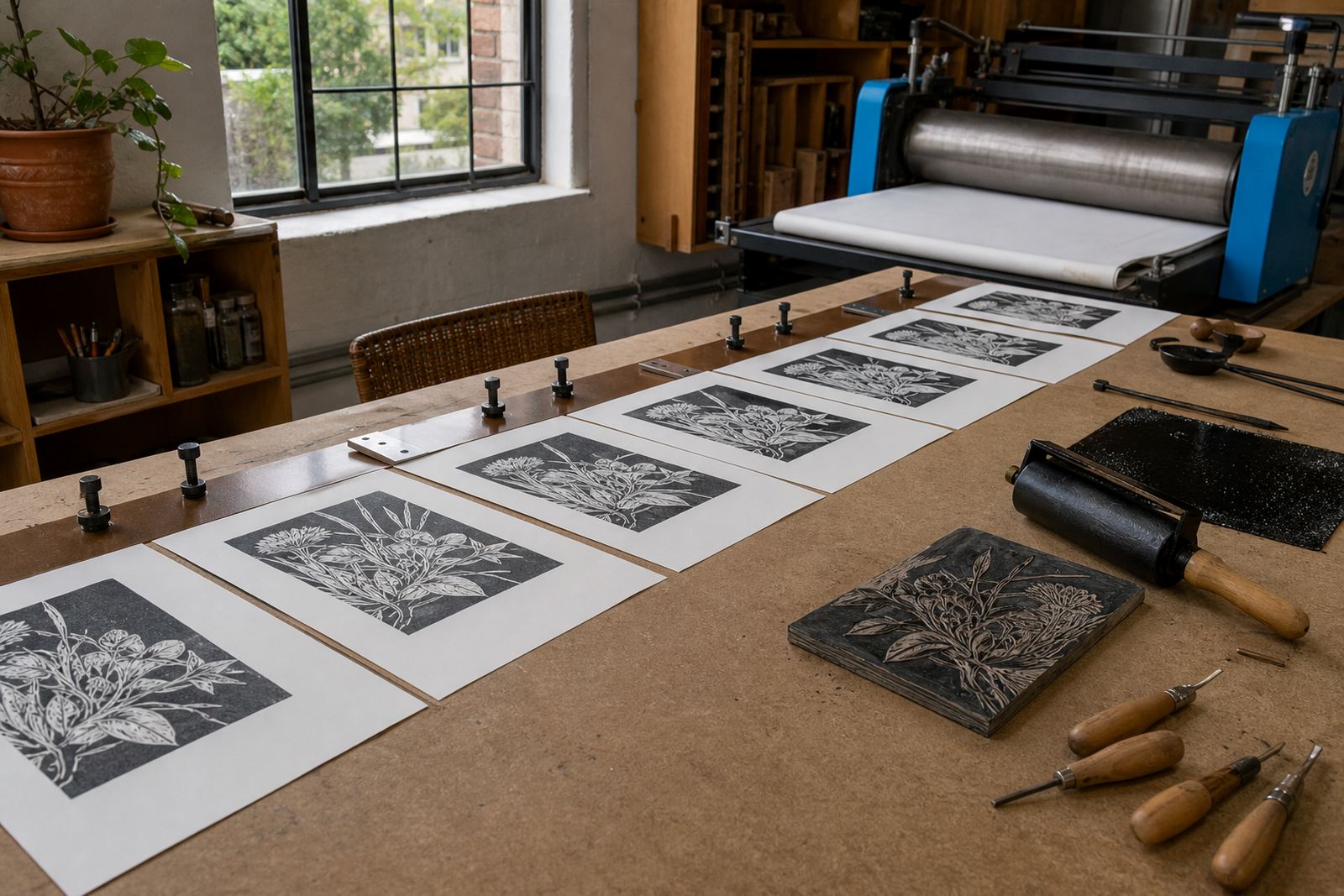
This session suits adults, students, families and workplace groups that want a neat printed edition rather than a loose one-off demo. The block is prepared in advance, then the group works through inking, registering, printing and stacking the sheets so each pull keeps the same image area and edge detail.
We work with linocut or soft-cut blocks, depending on the image and the level of detail needed. Gouges and V-tools are used for cutting where the brief includes minor block touch-ups, while the print stage focuses on safe handling, even pressure and a steady inking rhythm. Papers are chosen for the ink system and the final look, from smoother sheets for fine linework to more textured papers that hold a stronger hand-printed character.
- Prepared block for the chosen image
- Water-based or oil-based block inks
- Brayers, barens and press printing where suited
- Registration marks for consistent alignment
- Paper selection for the edition size and finish
How the print run moves through the studio
The process begins with a short briefing on the image, the number of prints needed and the paper choice. Once the group understands the order of work, we mix the ink to the right tack, test the first pull and make any small adjustments before the edition starts in earnest.
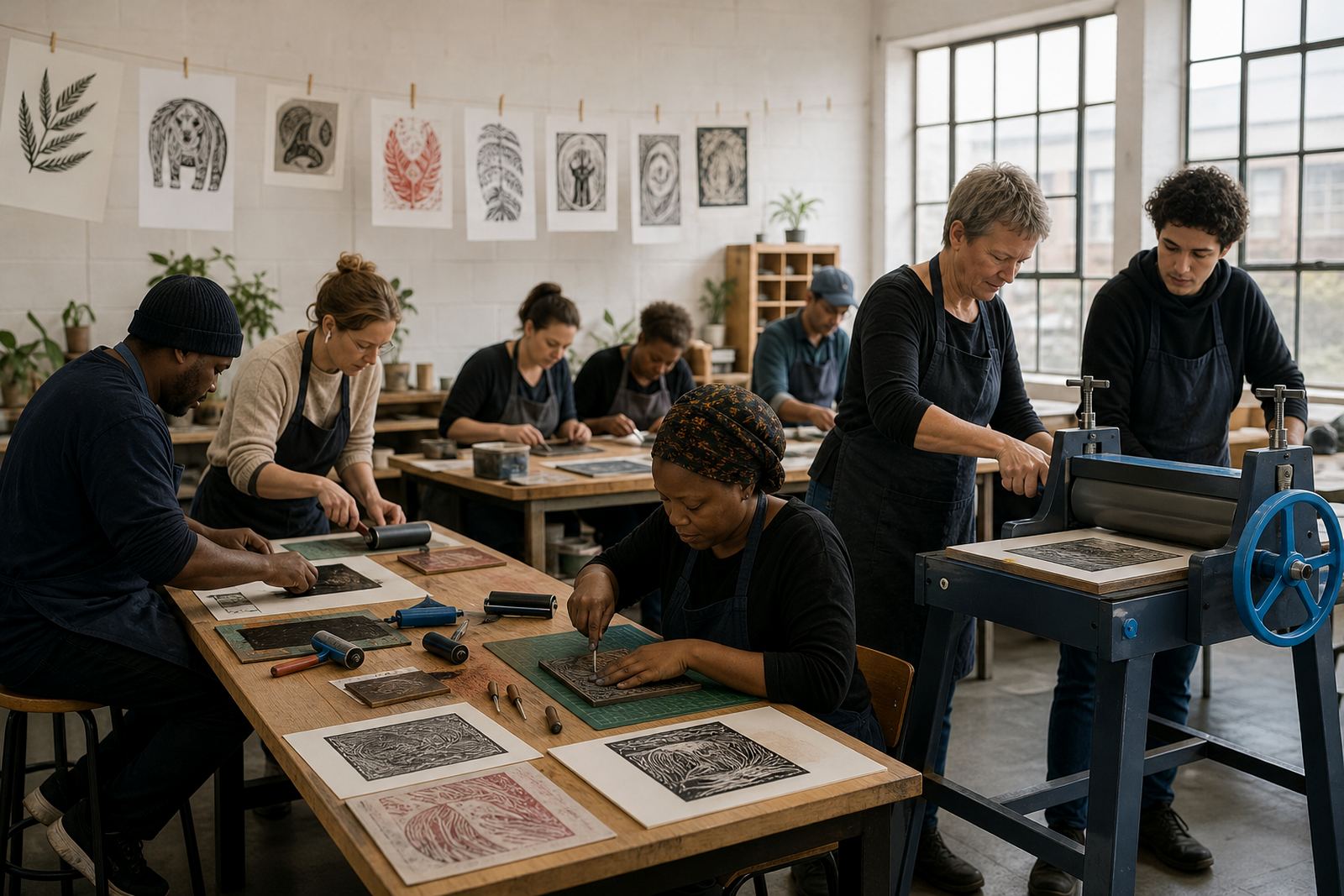
From there, each print follows the same sequence. The block is inked evenly, the sheet is placed on registration, and the image is transferred by baren or press depending on the setup. The pace stays measured so the line, tone and pressure remain stable across the run, which matters when a group wants a short edition with matching impressions.
- Briefing and print plan
- Ink testing and registration setup
- Edition printing in sequence
- Drying and stacking with care
- Final count check before pack-up
Studio specs that shape the session
Edition work is more controlled than a casual print workshop, so the studio arrangement needs to support repeatable results. We allow enough table space for inking, drying and sorting, and we keep the work area clear so sheets do not pick up dust, damp marks or stray ink. In Cape Town, especially near the coast, paper handling matters because humidity can change how quickly sheets take ink and dry flat.
The session can be run with water-based block ink for quicker clean-up, or oil-based ink for a deeper surface and longer working time. Press printing is used where the block, paper and edition size suit that method, while baren printing works well for smaller groups and a more direct hand-pressed finish. We keep to the paper weight and block size agreed for the session so the edition holds together from first print to last.
- From postcard blocks to A3 sheets
- Paper weight matched to the chosen ink
- Ink system set before the session starts
- Drying space for finished sheets
- Tools for safe, controlled printing
Timing and edition size
The length of the session depends on how many prints are needed, how many colours are in the block, and whether the group is working by hand or with the press. A short edition can move cleanly through setup, test prints and the final run in one session, while a larger brief needs more time for drying, sorting and checking the stack.
We keep the edition size realistic for the workshop format. A short run is usually the best fit when the aim is a consistent hand-made set rather than a large production batch. If the brief includes a second colour, a proof state or a special paper, the workflow is adjusted so the registration remains accurate and the finish stays tidy.
How edition sessions are priced
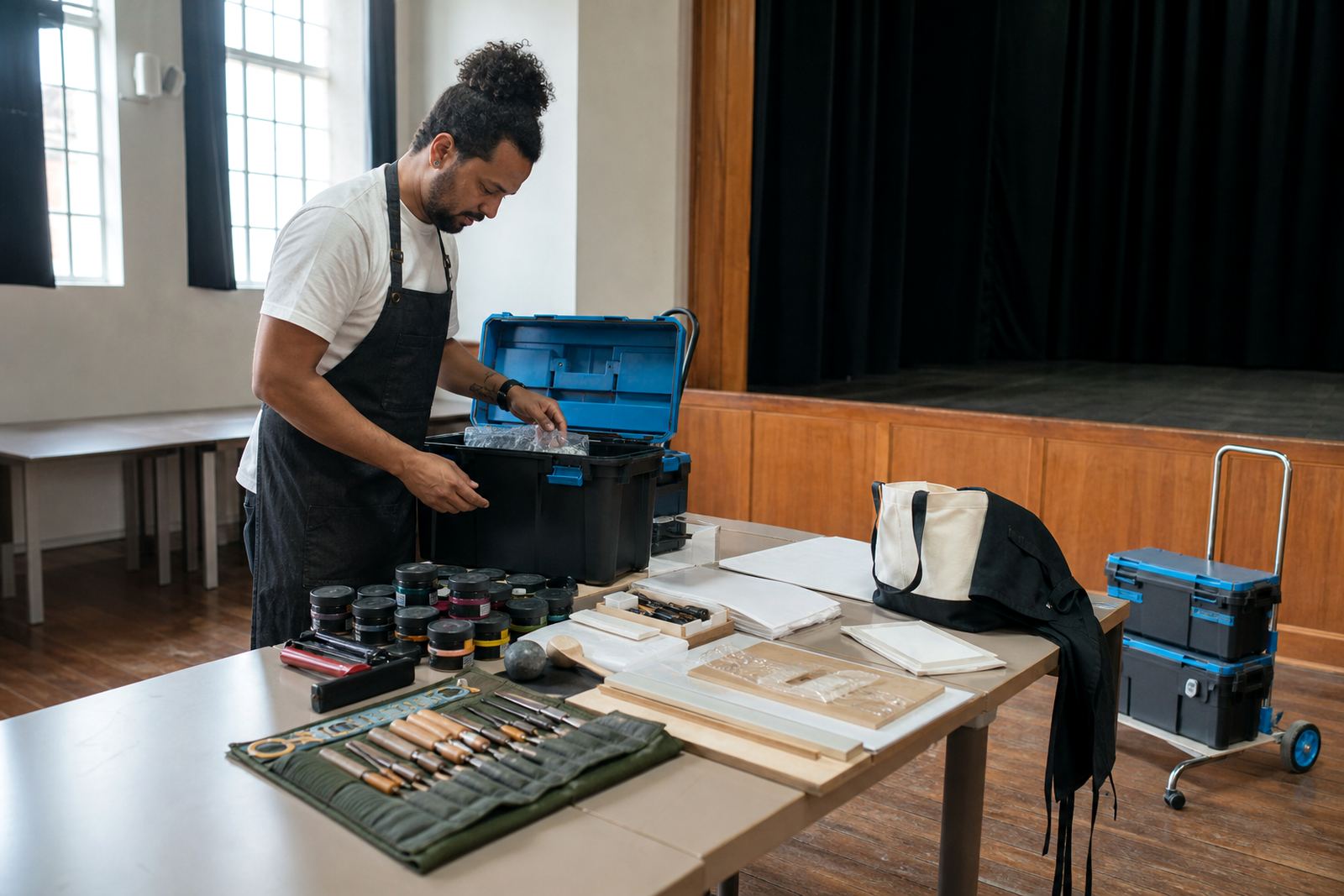
Pricing is based on the number of participants, the edition size, the block type, the ink system and whether the session takes place in our Woodstock studio or at a school, venue or company space. A group that needs only the printing stage is priced differently from a session that includes block touch-ups, paper sourcing, transport and setup.
For outside venues, we also factor in access to tables, drying space and a workable surface for registration and press use. Schools and team groups often need a clearer materials list, while family sessions may need a lighter setup with fewer sheets per person. The quote follows the actual brief.
- Group size and age range
- Studio or pop-up venue
- Paper and ink selection
- Press use or hand printing only
- Transport and setup where needed
Aftercare for the finished edition
When the printing is done, the sheets need calm handling and space to dry fully before packing. We talk through stacking, drying, and how to keep the printed surfaces clean while the ink settles, especially if the session used oil-based ink or a heavier paper stock. That guidance matters when the edition will be framed, shared in class or taken back to a studio or office.
If the group wants to continue working with the block later, we can also cover cleaning the tools, protecting the carved surface and storing the block flat. That keeps the image ready for another short run without rough edges, crushed corners or ink build-up on the surface.
- Drying and stacking advice
- Safe handling of fresh prints
- Cleaning the tools and block face
- Storage guidance for carved blocks
- Framing or flat filing
Key facts
| Service type | Edition Print Session for groups |
|---|---|
| Workshop format | Studio session or pop-up venue session |
| Printing method | Baren printing, press printing, or both |
| Block types | Lino and soft-cut blocks |
| Ink options | Water-based block ink or oil-based block ink |
| Base area | Woodstock, Cape Town with sessions across South Africa |