Ink body that stays open longer on the block
An oil-based ink set is a richer printmaking ink made for hand-printed work where the image is built in stages. It gives more open working time on the slab and on the block, so the colour can be rolled out evenly, checked for coverage and printed without the surface drying too fast during a class or edition run.
For lino and soft-cut blocks, the slower drying rhythm helps when a design needs more than one colour pass, a clean edge, or a second pull after test sheets. In a studio session, that matters when learners are still balancing pressure, amount of ink and the way a carved area holds detail.
- Used for relief printing on carved lino and soft-cut blocks
- Works with brayers, barens and press printing
- Better suited to papers made for heavier ink application
- Helpful for layered prints, block-splitting and edition work
Sizes and set options for studio use
The set is usually chosen by the size of the block, the number of learners and the kind of edition planned for the session. A small studio class may only need compact tubes or tins for colour tests and single-block printing, while a larger workshop can use bigger containers for group tables, school groups and team sessions with several brayers in use at once.
Sets can be supplied in individual colours, mixed workshop packs or grouped inks for a planned palette. Black, process-style primaries and earth tones are common starting points, but the final selection depends on the paper, the subject and whether the work is being printed by hand or on a press.
- Small tubes or tins for short sessions and test prints
- Workshop packs for shared tables and multiple blocks
- Single colours for edition corrections or one-colour images
- Palette sets for layered printing and colour reduction work
Where this ink set earns its keep
Oil-based ink is often the right call for workshop work that needs richer coverage and a more deliberate printing pace. It suits woodcut-style marks, linocut textures and soft-cut blocks where the cut line, raised surface and paper contact must hold a firm print without looking flat or chalky.
In Cape Town, Durban and other coastal towns, many printmakers like the steadier feel of oil-based ink when paper storage and studio humidity change through the week. It is also useful for school pop-ups, student print classes and edition print sessions where the same image must print clearly across several sheets.
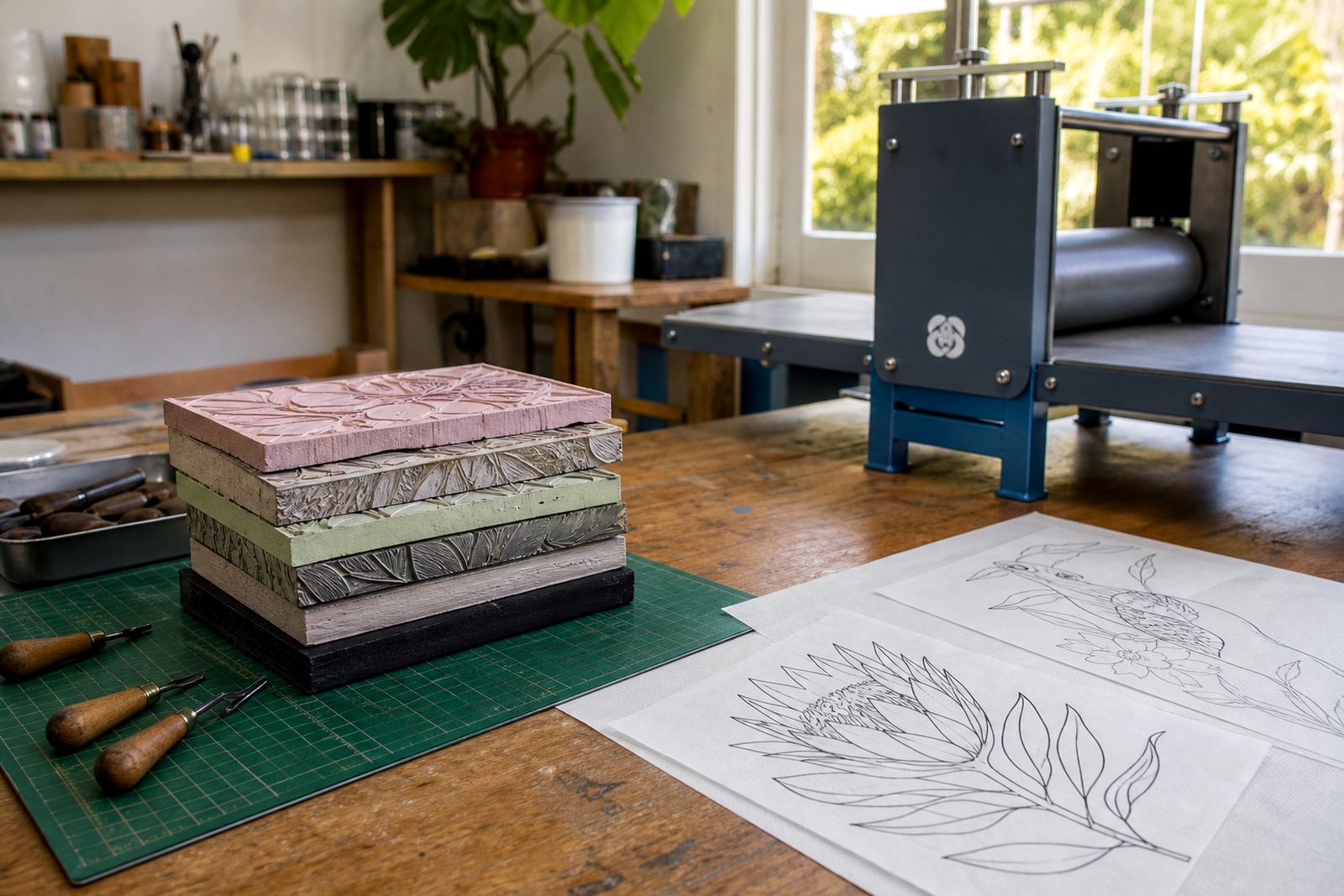
- Layered colour prints with registration marks
- Edition runs where each impression must match closely
- Class sessions that include block carving and printing
- Studio work on papers chosen for relief printmaking
Tools, rollers and clean handling on the table
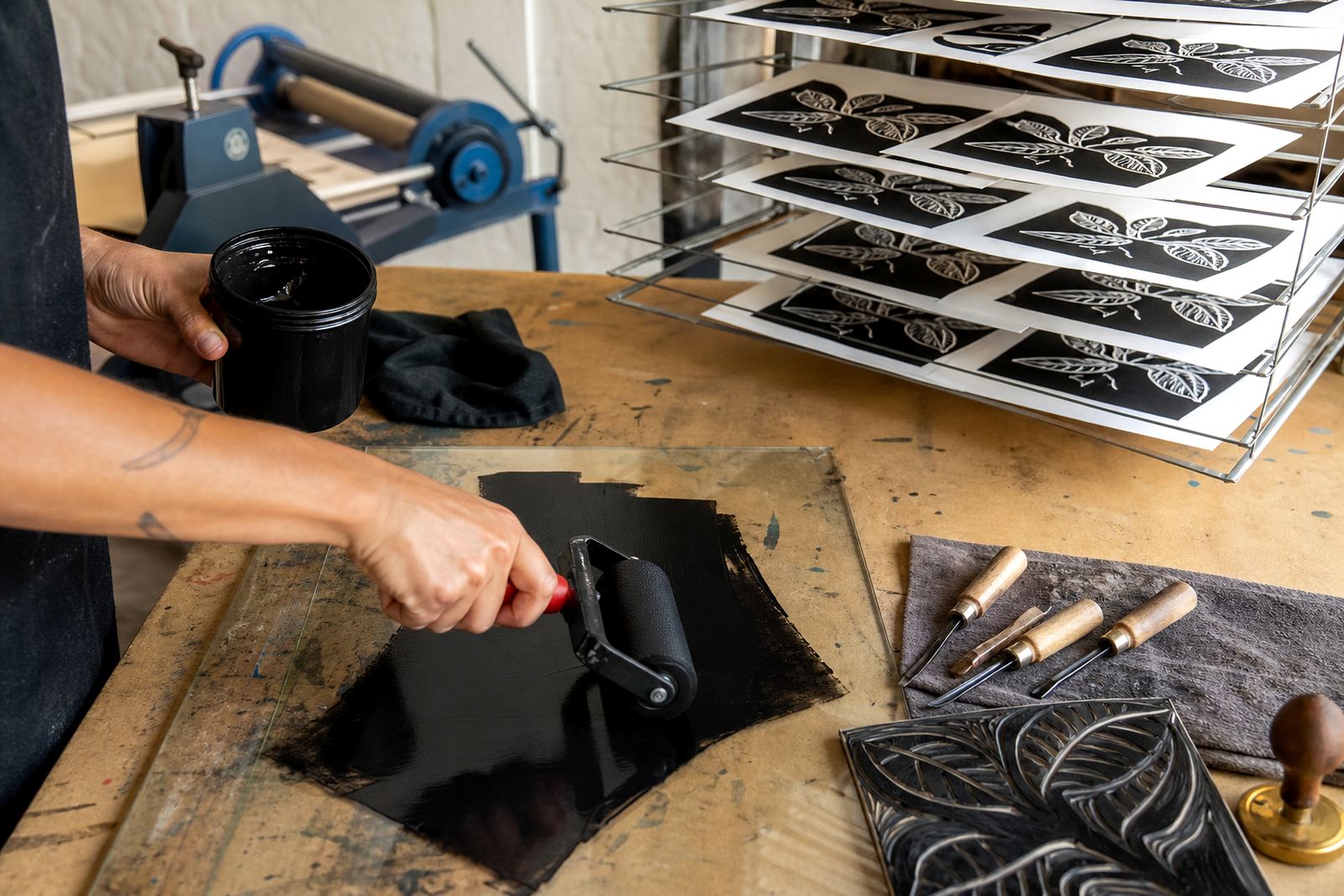
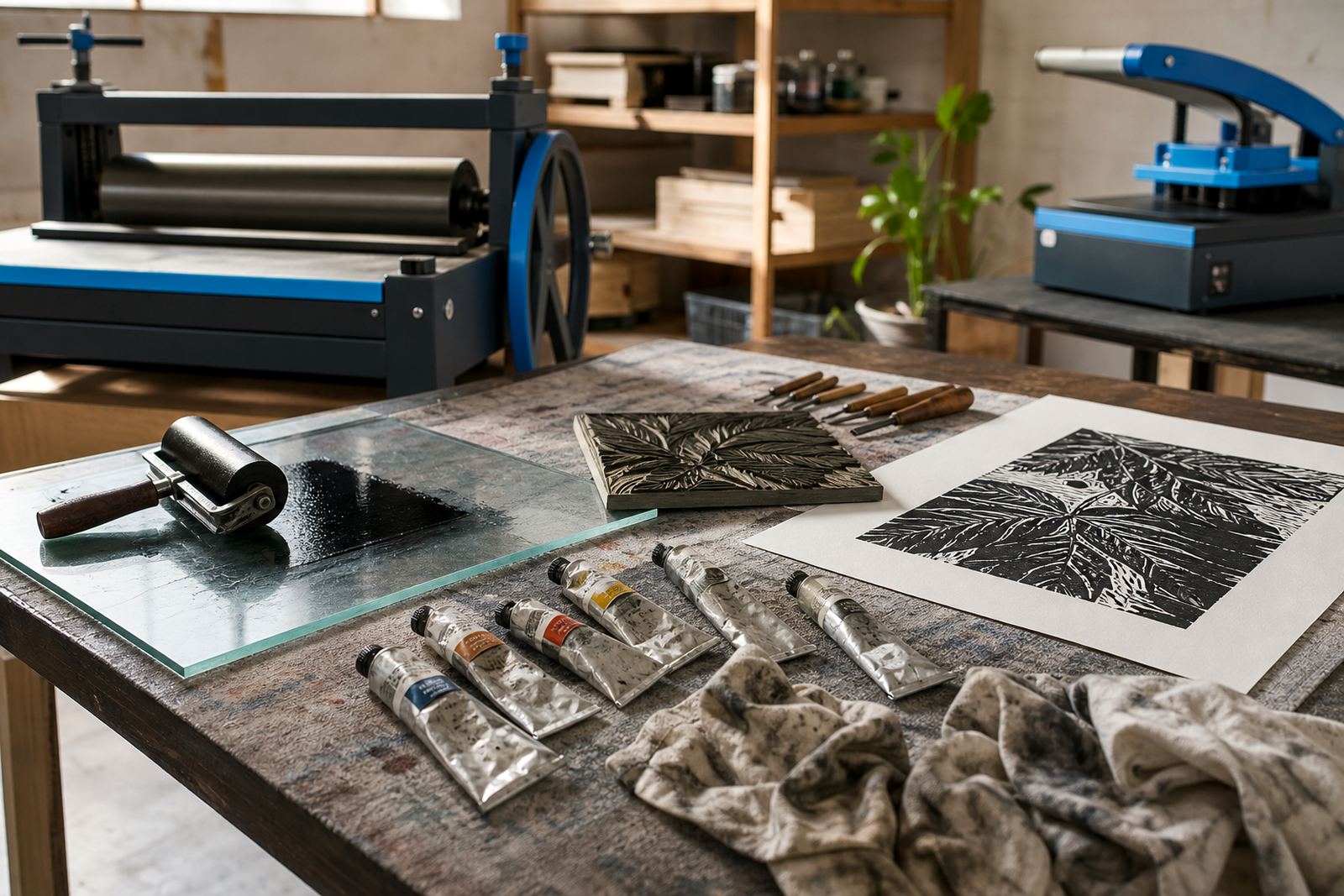
This ink set is used with a brayer or roller to spread a thin, even layer before printing. The ink is worked on a slab or inking surface, then rolled until it carries a smooth, tacky film across the block face. That lets the carved areas stay clean while the raised image takes the colour properly.
For hand printing, a baren can be used to transfer pressure on smaller sheets, while a press gives more consistent contact for larger editions or heavier papers. Registration marks, corner guides and careful sheet placement matter when a print needs more than one colour, because a small shift can change the edge of the image and spoil the edition.
- Brayer or roller for even ink transfer
- Baren for hand pressure on short runs
- Press printing for steadier repeat impressions
- Registration setup for multi-colour work
Paper choice and the print finish it leaves
Oil-based inks sit best on papers chosen for relief printing, especially where the sheet has enough tooth to hold the ink film without buckling badly. Smooth papers can still work, but the final finish changes with weight, sizing and how much pressure is used during the pull. A heavier sheet often gives a cleaner, fuller edge around the carved marks.
Because the ink dries more slowly, printed sheets need a sensible drying space where they can lie flat and stay clear of dust. In a workshop setting that usually means a drying rack, interleaving sheets or a protected table area. If the work is being sent out as an edition, the drying plan becomes part of the session rather than an afterthought.
- Works well on papers made for relief printmaking
- Heavier sheets help with press pressure and detail
- Drying space should stay flat, clean and ventilated
- Interleaving helps when several prints are stacked briefly
Care, cleanup and safe handling in the workshop
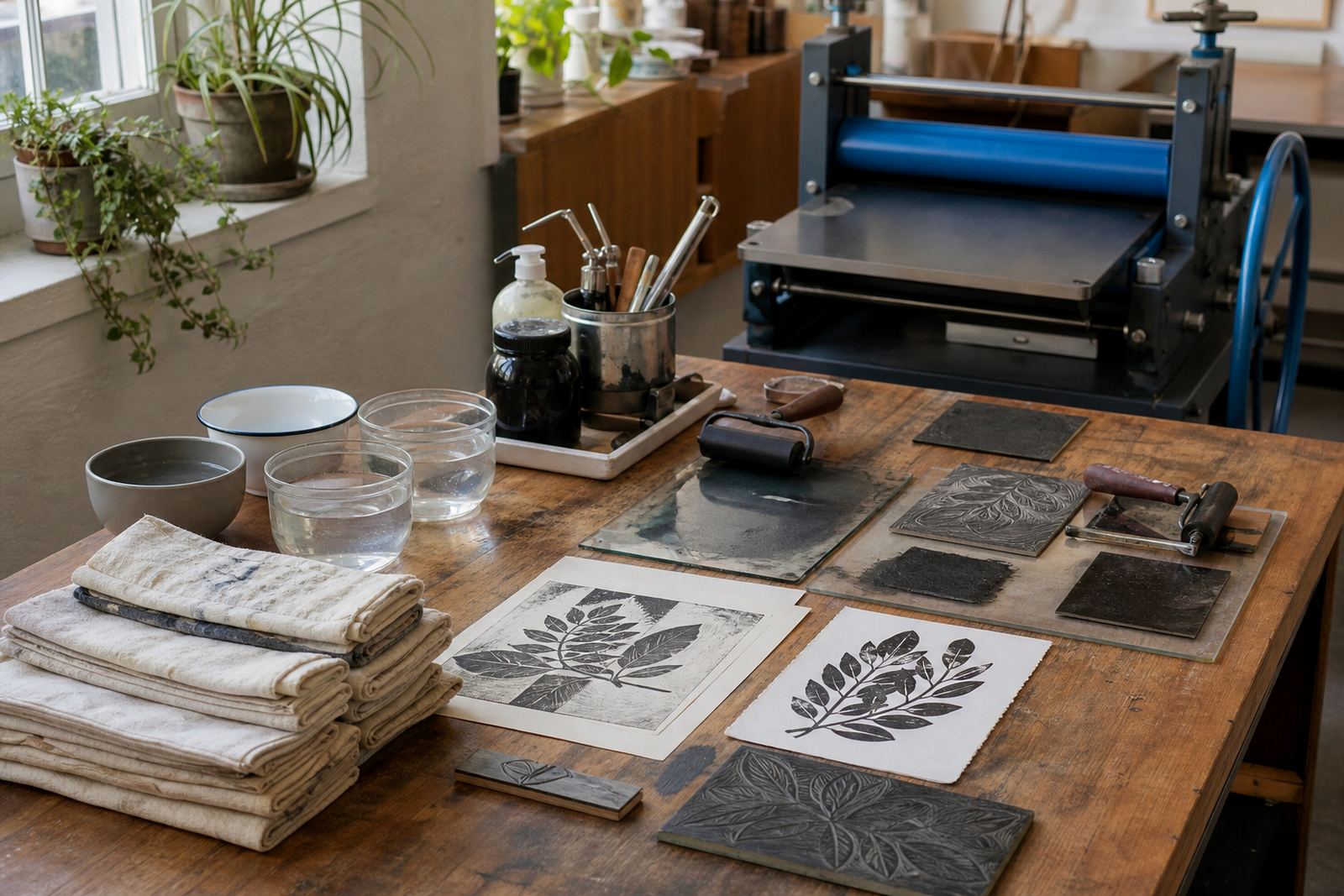
Oil-based ink needs a tidier cleanup routine than water-based classroom ink. Tools, slabs, brayers and hands should be wiped down carefully after printing, with suitable cleaning materials kept close to the inking area. That keeps the roller face in good condition and stops dried ink from building up in the grooves of a carved block.
In a teaching studio, safe carving still starts long before the ink comes out. Learners should have proper gouges, V-tools or similar carving tools, a firm work surface and enough space to handle the block without slipping. Once the block is carved, the inking stage should be slow and calm, with each print checked before the next sheet is pulled.
- Wipe tools and rollers before ink skins over
- Keep carved blocks clear of grit and lint
- Store prints flat until the surface has settled
- Use a firm carving setup before inking begins
Order details that keep the set matched to the job
When ordering an oil-based ink set for workshops or studio use, the main detail is how the ink will be used. A family print session needs a different pack from an edition class or a teacher skills workshop, and the choice changes again if the work is being printed by hand or on a press. The paper weight, block size and number of colours all matter.
It helps to confirm the intended image size, whether the set is for lino or soft-cut blocks, the number of learners at the table and whether registration will be part of the print. If the session includes press printing, that should be stated as well, because the pressure and paper handling are different from baren printing and hand burnishing.
- Which carving surface you use
- Print method: baren, hand pressure or press
- Colour count and edition size
- Paper weight, sheet size and surface finish
For HandPrinter Art workshops in Woodstock, Cape Town and pop-up sessions in Stellenbosch, Johannesburg, Pretoria or Durban, the oil-based ink set is usually chosen to match the class format, the paper and the final print goal. It fits neatly into beginner carving sessions, edition print sessions and print finish work where the surface needs a richer result.
Key facts
| Product type | Oil-based relief print ink set |
|---|---|
| Use | Linocut, soft-cut and block printing |
| Finish | Rich colour with slower drying |
| Application | Brayer, baren or press printing |
| Suitable papers | Relief print papers and heavier sheets |
| Typical workshop use | Layered prints, editions and studio practice |